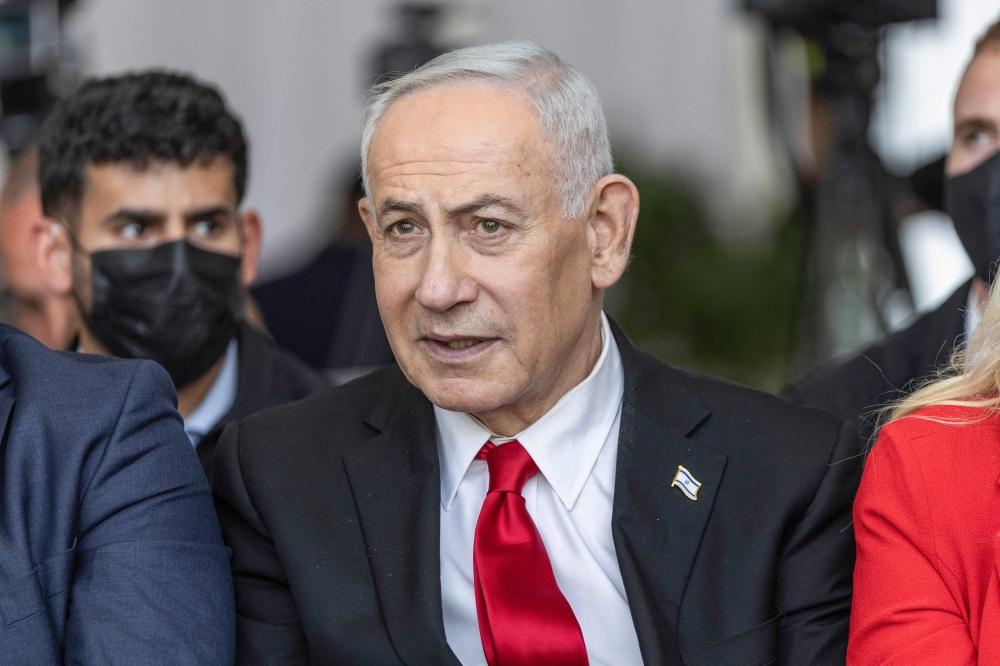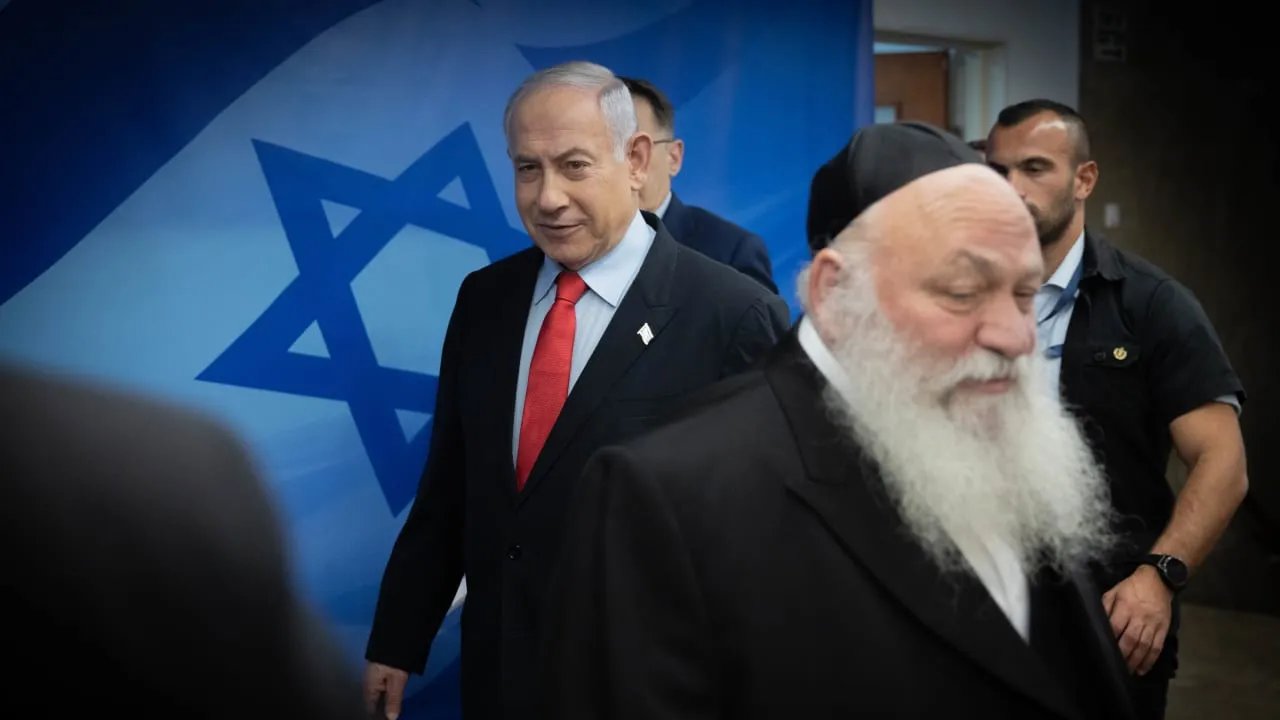
ByHERB KEINONJULY 7, 2026 19:41On September 28, before the next elections, Prime Minister Benjamin Netanyahu will mark 19 years in office, spread over three separate terms.It is a remarkable political achievement - astonishing, even, considering October 7 - and one that places him among the longest-serving democratic leaders in modern times.He did not get there by repeatedly misreading the Israeli public. Quite the opposite. One of Netanyahu's defining political strengths has been his instinct for sensing where the Israeli mainstream is heading and repositioning himself accordingly.Perhaps the clearest example came after the Second Intifada.Netanyahu understood before many others that the Israeli public had soured on the Oslo process and the idea of Palestinian statehood, had largely stopped believing territorial concessions would bring peace, and was most concerned with how to ensure security in the absence of peace. He built his politics around that shift, making security - not diplomacy - the center of his campaigns and the organizing principle of his governments.Prime Minister Benjamin Netanyahu arrives at Knesset plenum to vote in favor of Basic: Law Torah Study bill, shaking hands with Degel Hatorah leader MK Moshe Gafni, Wednesday, July 1, 2026. (credit: Noam Moskovitz/ Knesset Press Office )Can Netanyahu still read the public mood?That episode illustrates a hallmark of Netanyahu's politics: reading the public mood. For years, that instinct served him extraordinarily well.Which is precisely what makes the coalition's current legislative blitz so striking.The legislation appears less a response to the Israel that emerged after October 7 than an effort to complete the coalition’s pre-war agenda.From the proposed Basic Law: Torah Study to legislation delaying the arrest of haredi draft dodgers, splitting the attorney general's office, and creating a political rather than a state commission of inquiry into October 7, the coalition's priorities appear to run against - not with - the prevailing public mood.Which raises the obvious question: What is Netanyahu seeing that everyone else isn't?The legislation he is backing appears out of sync with the post-October 7 public mood. The massacre reordered the country's priorities. Shared sacrifice, accountability, national unity, and rebuilding trust in public institutions moved to the forefront.Yet the coalition's current legislative agenda points in almost the opposite direction: haredi exemptions, weakening enforcement of conscription, reshaping public institutions, and changing the mechanism for investigating October 7.Even supporters of these measures should recognize that they are not what the overwhelming majority of Israelis are preoccupied with today.The electoral logic, therefore, appears counterintuitive. A Channel 12 poll released Monday found that 21% of coalition voters said they are considering voting for a party outside the coalition because of the government's last-minute legislative blitz.Politicians usually spend the weeks before an election trying to broaden their appeal. Netanyahu appears to be narrowing his. Why?Who is this 'legislative blitz' aimed at?The answer may be that these bills are aimed less at voters than at future coalition partners.The Likud is unlikely to attract opposition voters—or even retain all of those on its own soft right—by shielding draft dodgers or equalizing benefits for yeshiva students who do not serve with those who spend months each year in reserve duty.But by delivering on long-standing Haredi demands, Netanyahu strengthens his standing with Shas and United Torah Judaism while giving those parties something tangible to take back to their own constituents, many of whom have grown frustrated with their leaders' inability to secure these measures.New elections are a given. They must be held by October 27. As a result, this legislative blitz is no longer about preserving the current coalition. It is about shaping the next one.Netanyahu appears to be making an investment in the post-election coalition, signaling to the haredi parties that when it mattered, he delivered on their core demands, even at a steep political cost. The calculation seems to be that a somewhat smaller Likud that retains the confidence of the Haredim is preferable to a larger Likud whose most natural coalition partners no longer trust him.That also helps explain Netanyahu's recent calls for a broad national government. In his mind, such a government is not to be built without the Haredim, but alongside them.Another factor reinforces that interpretation.Much of the legislation being rushed through the Knesset could be reversed relatively easily by a future government. Ordinary laws can generally be repealed by another majority of 61 MKs. Even a Basic Law, such as the proposed Basic Law: Torah Study, could be amended or repealed by a future Knesset.If these measures are not necessarily permanent, then their principal value may lie elsewhere - not in their durability, but in the political message they send.The message is straightforward: Netanyahu delivered for the Haredim when he had the votes, paid a political price for doing so, and expects that to be remembered when coalition negotiations begin after the election.Whether that calculation proves correct is another matter.Will Netanyahu's loyalty to the Haredim be reciprocated?While Netanyahu is bending over backward to demonstrate his loyalty to the haredi parties, it is far from certain that the loyalty will be reciprocated. In recent months, as the prime minister repeatedly failed to deliver a haredi conscription bill, leading rabbis and haredi politicians publicly attacked him. In mid-May, the head of Lithuanian Jewry, Rabbi Dov Lando, declared that the historic haredi bloc with the Likud was over.Nor should the political pragmatism of the Haredim be underestimated. Over the years, they have joined Labor governments of Yitzhak Rabin and Ehud Barak when doing so served their interests.The difference this time is that the public mood surrounding haredi military service has changed so dramatically that it may prove far more difficult for opposition leaders - and for potential coalition partners such as Avigdor Liberman’s Yisrael Beytenu and Naftali Bennett's Yahad party - to justify sitting with the haredi parties.Ultimately, the coalition's legislative blitz is less about voter arithmetic than coalition arithmetic. Netanyahu is betting that securing the loyalty of his future coalition partners matters more than maximizing today's vote.If he is right, this will be remembered as yet another example of the political instincts that have enabled him to serve as prime minister for nearly two decades. If he is wrong, it may be remembered as one of the rare occasions when Israel's most accomplished political tactician misread the public he has understood so well for so long.Follow us on Google
Netanyahu’s coalition strategy behind legislative blitz | The Jerusalem Post
Netanyahu’s controversial legislative push risks voter backlash, but could strengthen his ties with the parties he may need to form his next government.
1,049 words~5 min read