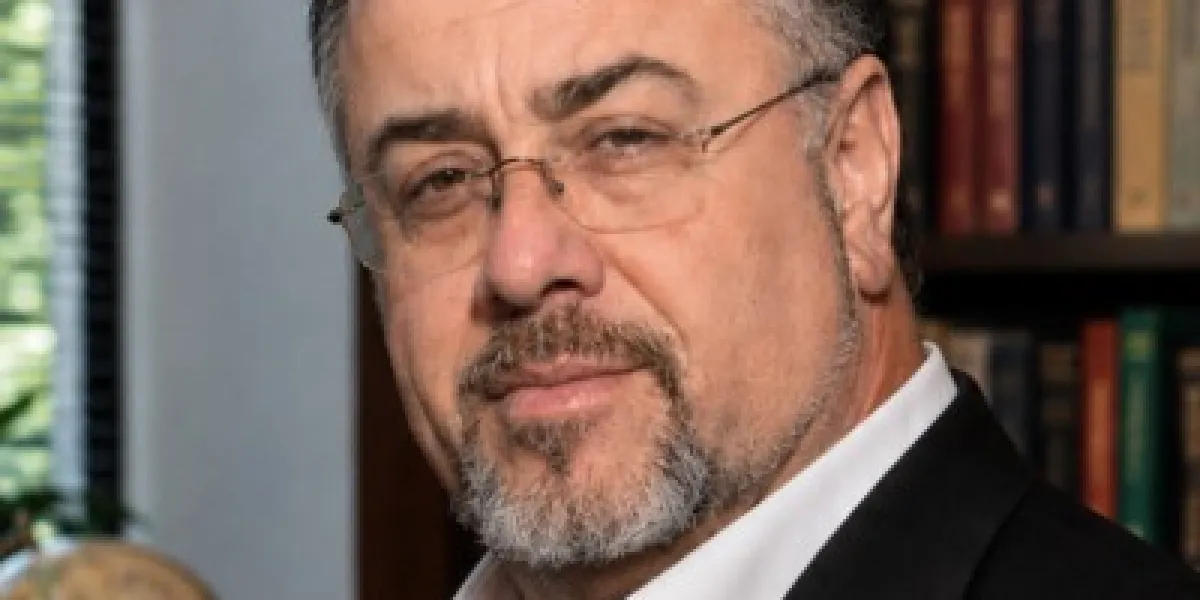
Education or knowledge to growth career path, working skill to success in work, learn or study new course for business success concept, businessman fly graduation mortar hat balloon see future vision.gettyIt’s a hard time for American colleges and universities. New grads are reporting having a harder and harder time getting jobs in their fields, and companies are cutting entry-level hiring, turning to automation. Even for those who cling to the idea that a large student loan debt is going to springboard their careers, there’s that echo of the now-departed Christopher Evan Welch, playing Peter Gregory on Mike Judge’s Silicon Valley tv show, morosely intoning:“The value of snake oil is intangible as well.”And so, schools are changing. They’re trying to meet the challenge. Here’s a blurb from the World Bank Group talking about how schools need to do this:“Higher education in Latin America and the Caribbean requires urgent and creative actions to overcome the challenges affecting millions of university students in the region. Our goal is to provide the necessary tools to ensure that institutions and students make the most of the opportunities offered by AI.”That same idea, of course, applies to education all over the world.Talking EducationI recently sat down with Joseph Aoun, president of Northeastern University, to talk about AI being, in his words, a “game-changer” for higher education. Aoun has had a front row seat to all of this, and believes that the time to work on solutions is now. He has been active in some of our Imagination in Action events that I help to put on in the MIT community and elsewhere, to shine a light on these issues and examine the integration of these powerful technologies into our societies.Two QuestionsRight off the bat, I asked Aoun two thought-provoking questions. The first: “are you an AI?”His response was interesting. Aoun pointed out that his input reflects both AI and human intelligence, because, as a user, he takes in the fruits of AI and it has influence on his own thought. Then I asked him: do you accept AI? That, he suggested, is a moot question, because AI is already here. We don’t get to decide if it’s going to exist. We get to decide, to some extent, how we are going to work with it.“They don’t need to apply,” Aoun said, when asked. “They don’t need us.”He also noted that apparently “the Buddhist group” has appointed an AI to “be a monk,” which is, well, interesting.The Path ForwardAoun also talked about what schools can do.“You have two groups that we are facing,” he said, “a group saying that AI is going to solve everything, and a group, as I mentioned, saying AI shouldn’t be there. In fact, if you look at what's happening with the role of higher education, you know, we are forgetting the role of humans … when we are pursuing artificial intelligence and general artificial intelligence, you know, we are saying it's going to displace us. We are talking about the impact of work, we are talking about the impact of society, but at the same time, as humans, we have the centrality in society. we shouldn't give up this centrality.”Schools, he suggested, should continue to incorporate the humanities, for that reason.More Human WorkAoun went over a list of “human attributes” that machines find it hard to copy, among them: creativity, entrepreneurship, teamwork, working with ambiguity, and what he called “cultural agility.” He also mentioned context, and something called “far transfer” that is another feather in the human’s cap.“This is where experiential education plays a role,” Aoun said. “We do something that machines cannot imitate at all, for the time being. We take our knowledge, and we transfer it from one domain, to another very far domain.”With that in mind, he again called for human oversight.“We have to be able to manage AI, override AI when it doesn't fit the purpose of humanity,” Aoun said.The Robots Enter“I don't think society's fully gotten the memo that physical AI is coming now,” I said, broaching the question of how all of this is going to work, and referencing Aoun’s book. “You can put small language models on robots, you don't have to go up to the cloud, and technology can interact with people and society.”I asked him: what does an adapted university actually look like?“The first aspect, as we mentioned, is to understand the balancing act between AI agents and human agents,” he said. “Second, focus on human centrality, and that means making that move towards the humanities. We integrate that through the combined majors, in terms of research … the machines run with it, but focus on the output, focus on the series, focus on the imagination.”He kept mentioning the limitations of AI, set against the power and experience of living, breathing, sleeping, eating and functionally complex humans.“Frankly, the AI is very limited,” he said. “It lives in a prison of data. Imagination is computation, and we have to remember that, so we have to practice this aspect of the human intelligence that is not implicated, we can think about new approaches to life that are not bound by data, and that's the attribute that we need to come to.”There’s a lot more in the talk. If you were there, you heard us go deeply into the concept of job displacement, and all of that math around education as a vocational tool. Toward the end, Aoun was talking about the fraying of the previous social contract where the government agrees to support the schools, if they educate the citizenry and provide breakthroughs in research. He gave American schools a mandate to be proactive on the effects of AI. “If we’re not going to reaffirm our relevance, we’re going to be history,” he said.Stay tuned for more of what came out of this June 23 TED talk series.We cannot, we should not, look at AI as only a new technologyFor the first time we have an entity that is inorganic, that is agentic – this entity is going to change society, it’s going to change education, it’s going to change research.
The Changing Face Of Education
Colleges must embrace AI while prioritizing human creativity, humanities, oversight, and adaptability to remain relevant and competitive.
1,016 words~5 min read