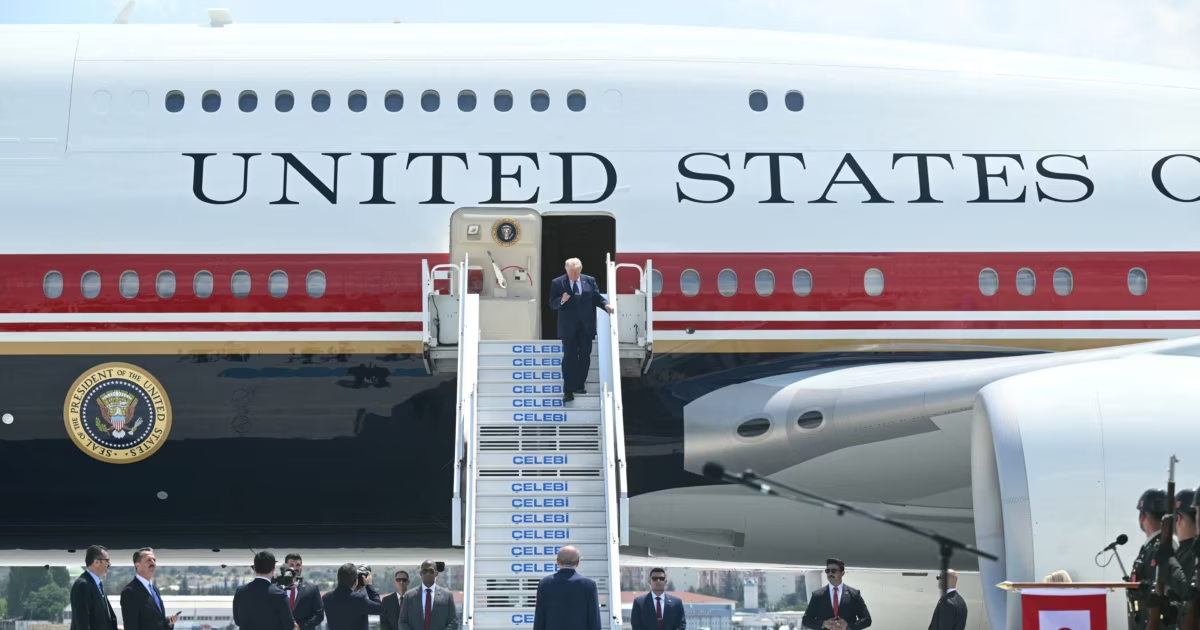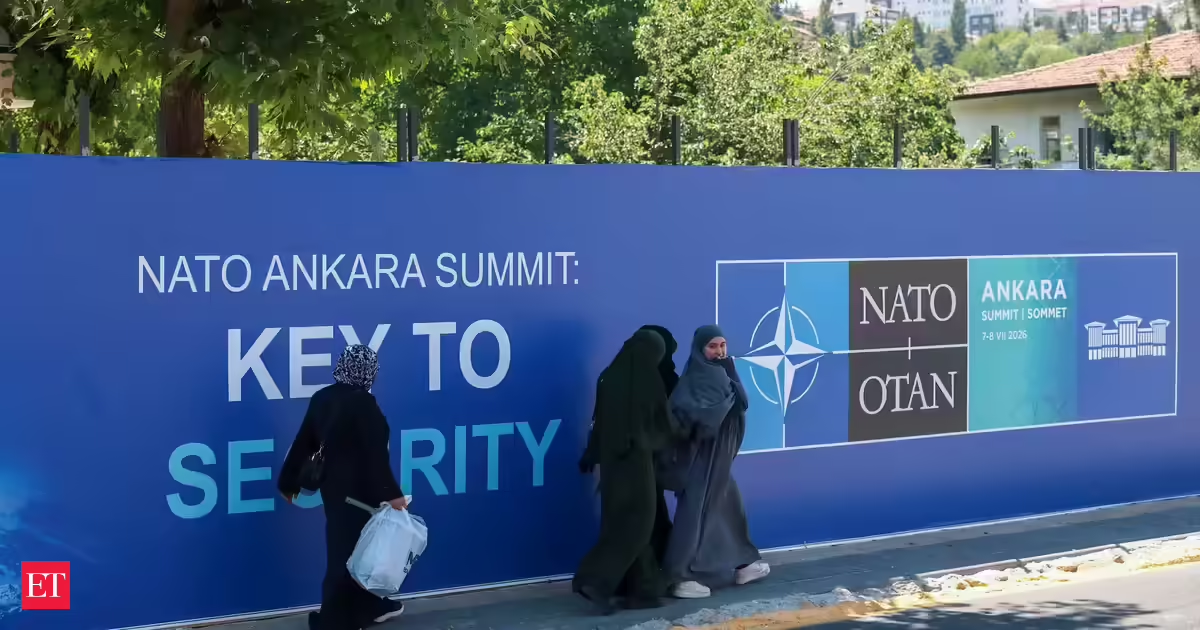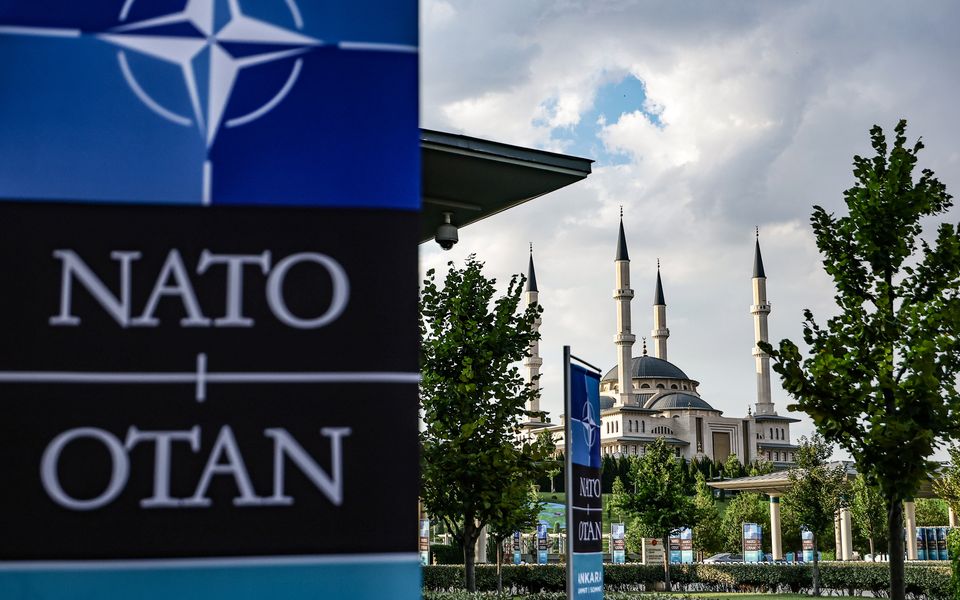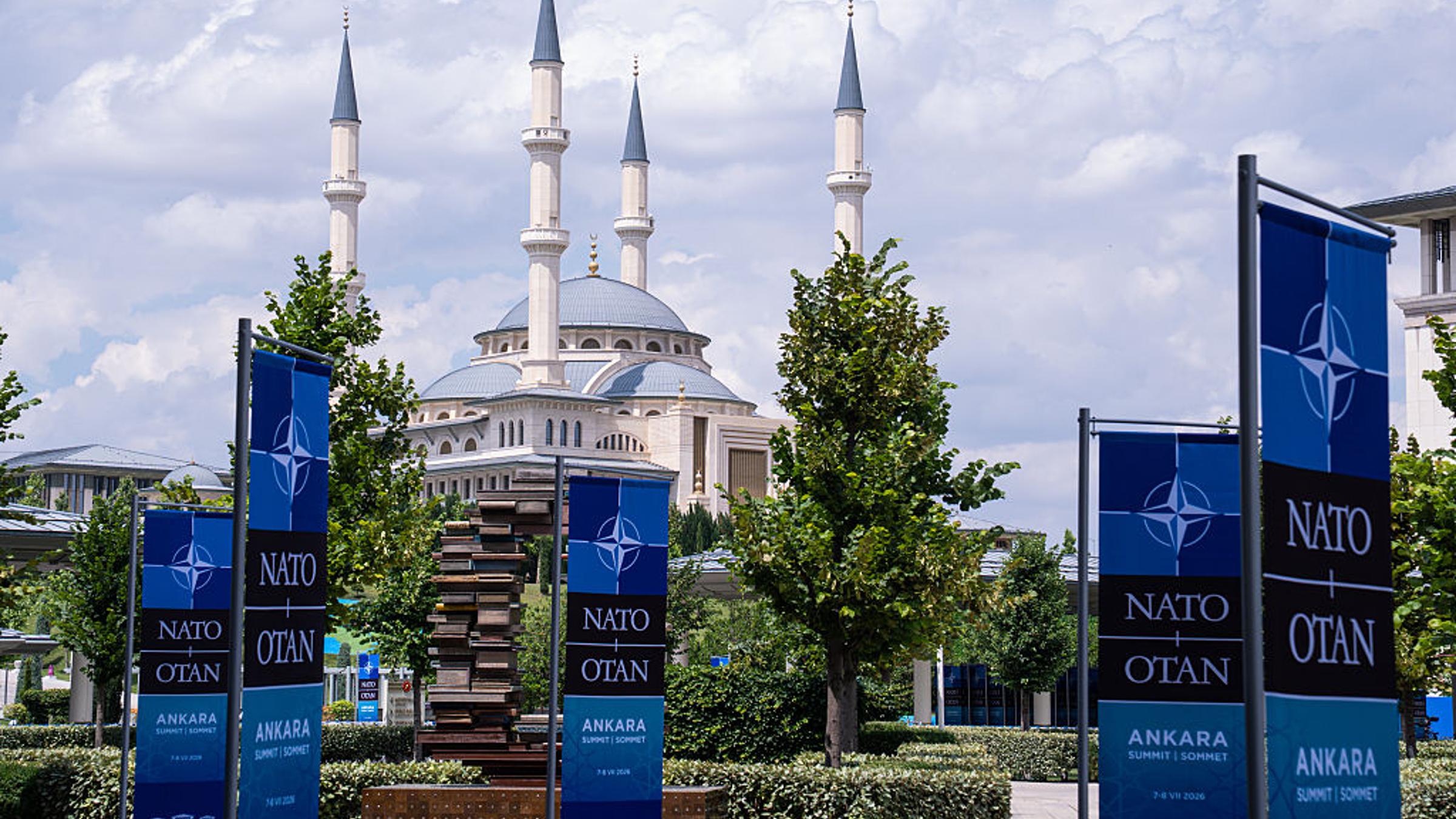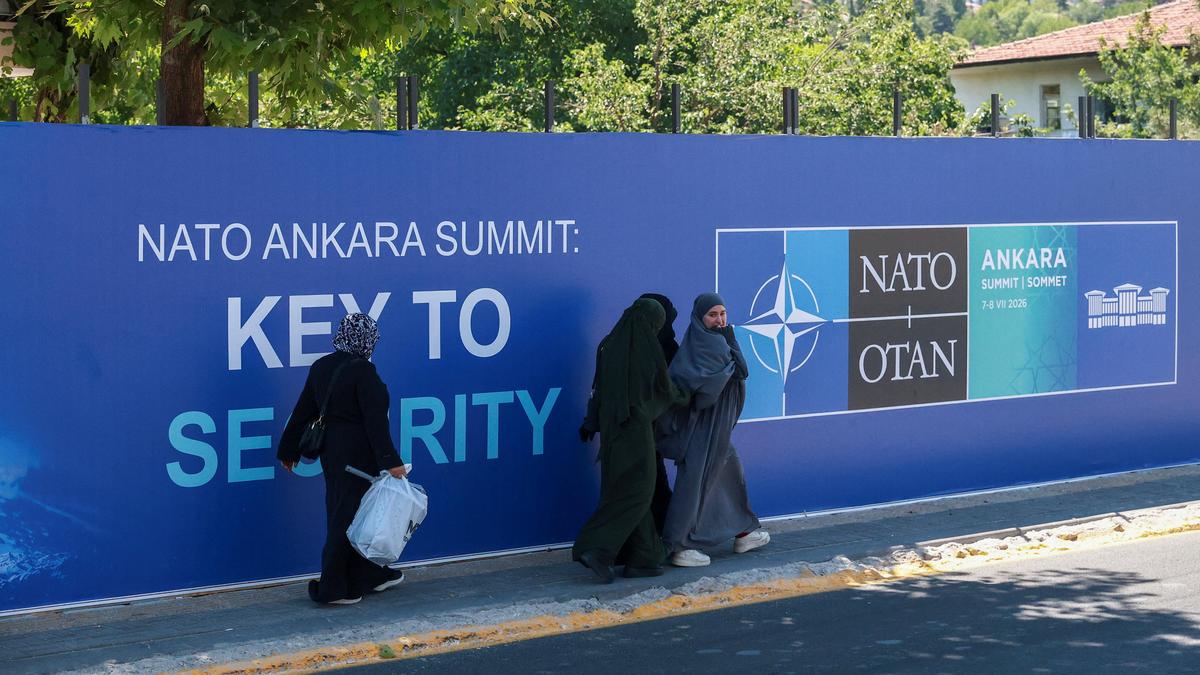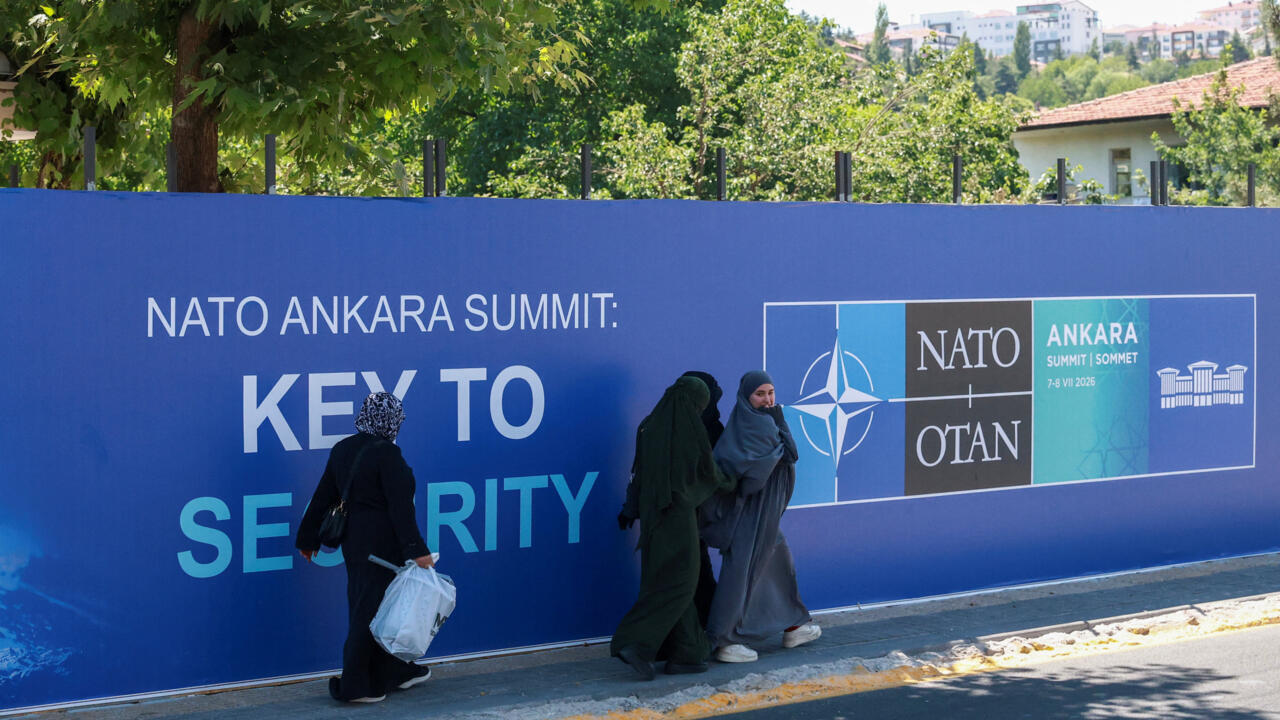
NATO leaders are meeting in the Turkish capital, Ankara, for the alliance’s annual summit on July 7-8 in the shadow of the Iran war and American complaints that not all European allies are pulling their weight when it comes to defense spending.The expectation is that US President Donald Trump will have harsh comments for several of his European counterparts as they meet for a dinner on the first day and then an expected three-hour session of the North Atlantic Council on the second and final day.The following are six things to watch for during the two-day meeting.Defense SpendingMake no mistake: This summit will be dominated by defense spending.At last year’s gathering in The Hague, the alliance ceremoniously agreed that all 32 allies would spend 5 percent of GDP on defense by 2035, with 3.5 percent of that being so-called “hard defense spending,” such as purchasing arms and other military equipment. The remaining 1.5 percent could then be dedicated to investment that helps bolster military capabilities, such as infrastructure.In Ankara, it will be all about demonstrating how to get there. Or as the draft declaration of the summit put it: showing a “credible path” toward the target.Some NATO officials who spoke to RFE/RL fear many countries will defer major defense investments over the next few years because of strained public finances, only to splurge on expensive military equipment in 2034-35 in what is known within the alliance as the "hockey stick approach, in which years of relatively flat spending are followed by a sharp final spike to meet the target.The Trump FactorIt is on defense spending that Trump likely will come out swinging.He has long been skeptical of NATO and days before the Ankara summit he again questioned the alliance on social media by writing that it is “ridiculous for the U.S.A. to continue along this one sided path when the relationship is not reciprocal.”He also included a graph showing that Washington spends a lot more on its military than any single European ally.It is here that the NATO Secretary General Mark Rutte once again will try his best diplomatic efforts and point out that Europeans and Canadians actually are stepping up.Speaking just ahead of the summit, he said the other 31 allies “already are investing around 4 percent of their GDP in defense and security,” often by buying American-made equipment.This trend, Rutte noted, would mean that the other 31 members were now on “a trajectory to equalize their defense spending with the United States.”While several NATO officials RFE/RL spoke to admit that -- although they fear the US President will be harsh at the summit -- many still think the meeting will run relatively smoothly with minimal drama.Oana Lungescu, a former NATO spokesperson who is now a fellow at the Royal United Services Institute for Defense and Security Studies (RUSI), said there is optimism that the positive mood from the recent G7 summit in France will carry over to Ankara."Diplomats hope that the 'spirit of Evian,' the constructive atmosphere of the recent G7 talks in France, will extend to Ankara -- including on the need to support Ukraine as momentum on the battlefield seems to be shifting," she said.Lungescu said officials also believe the personal rapport between Trump, Rutte, and Erdogan could help keep the summit on track. While Trump may criticize some European leaders over the Iran war or defense spending, she said, "he will not want the summit to fail and Erdogan to lose face on home turf."US Troops In Europe And Industrial AmbitionsIn parallel to this debate there is also the issue of US boots on the ground in Europe.Today’s figure of roughly 80,000 troops might be reduced, as there is talk of Washington redeploying both strategic assets and manpower elsewhere, notably to Asia.With US Defense Secretary Pete Hegseth saying in May that the US will undertake a six-month review of its force posture in Europe, few NATO officials believe that this will be a major topic at the meeting even though potential bilateral negotiations and lobbying efforts on the sidelines by European nations hosting US bases might very well occur.In the meantime, NATO's top military commander in Europe, Alexus Grynkewich, said European allies have largely stepped up to fill capability and reinforcement gaps left by recent US troop and asset reductions in Europe.The draft Ankara declaration, which all allies will endorse, explicitly mentions NATO’s mutual defense clause, Article 5, even though there are fears in some European capitals about whether the alliance would uphold it if Russia tested NATO in the coming years.Anther thing that alliance officials also hope will trigger defense spending is the NATO defense industrial forum, which will take place on July 7 hours before the summit starts.This is where big defense actors and politicians will announce plenty of multilateral cooperation deals on defense, including various transatlantic joint ventures.With Canada taking the lead, several countries will also announce a “global defense bank,” which will make it easier to lend money to small- and medium-sized defense enterprises.One can also expect Ukrainian companies to be very active in striking deals, as Kyiv is keen to secure some sort of licensing to build Patriot missiles (or their equivalent) in Ukraine.But other countries will perhaps be even more keen to tap into Ukraine’s technological know-how, with one senior NATO official telling RFE/RL that Kyiv could soon produce produce its own domestic version of a Patriot Advanced Capability-2 (PAC-2) interceptor.“Ukrainians are telling us they can develop an interceptor that is basically an equivalent to a PAC-2 in less than a year,” the official said “And that they can produce them in big numbers. If they're able to do that, we applaud it.”Nonetheless, although the spending splurge will continue, the question will remain whether Europeans are spending the money wisely.Olga Oliker, European security director for the International Crisis Group, cautioned that "spending does not translate into capability by itself." She said European governments and manufacturers are still grappling with how to balance investment in "fast, cheap and adaptable weapons" with the urgent need to produce more advanced air defenses.Ukraine: The Resilient UnderdogWhile Ukrainian President Volodymyr Zelenskyy will be busy both at the industrial forum and the leaders’ dinner, the most anticipated meeting will be his bilateral meeting with Trump on the sidelines of the summit.With Russia again killing dozens of people in Kyiv after another missile attack just before the summit, there is hope that some sort of US-led peace talks, which a senior NATO official recently described as “comatose,” can be revived.The mood surrounding Ukraine within NATO has otherwise changed considerably.Several officials have been impressed by Kyiv’s ability to strike deep inside Russia.“Ukraine is in a better place on the battlefield compared to some months ago,” said one European official, noting that the United States is much more supportive of Ukraine now.“The US loves an underdog as long as the underdog has a chance of winning,” he added.Unlike last year, there is no debate this time about whether Zelenskyy will be at the summit (though not at the main session as this is for NATO members only).There is also a pledge in the summit declaration to provide the country with 70 billion euros ($80 billion) for 2026 and the equivalent for next year, even though some discussion ahead of the summit suggested that the declaration would only mention a financial pledge for Kyiv for 2026.The US will not contribute to this, and 30 billion of the 70 billion euros comes from a 90 billion euro EU loan to Ukraine agreed earlier this year.In other words, there is not a lot of fresh money.Speaking to journalists ahead of the summit, Ukraine's ambassador to NATO, Alyona Hetmanchuk, said a financial commitment in the summit declaration could help hold allies to this year's funding pledges while generating additional support for Ukraine."We hope that if there is a financial obligation spelled out in the declaration, it will help. Firstly, to oblige countries to fulfill the financial promises made this year. And secondly, generate additional funds," she said.In another small victory for Ukraine and its supporters, Russia is also mentioned in the declaration, with Moscow described as “a long- term threat to Euro-Atlantic security.”This is the same language used in the declaration adopted at last year's summit in The Hague, but this time NATO officials say there were no objections and no attempts to water down the wording.Iran IssuesThe Iran war has created tensions within the alliance as well, with President Trump bemoaning the lack of “loyalty” among some allies after they limited or initially stopped Washington from using bases in their countries for US attacks on Iran.US Ambassador to NATO Matthew Whitaker told reporters earlier this month that "there is no doubt that the president expressed disappointment," but said the alliance had since moved on, adding: "those days are past us, thankfully."The NATO declaration will call on Tehran to fully respect freedom of navigation in the Strait of Hormuz and there will also be a number of representatives from various Persian Gulf states present in Ankara.No distinct NATO role in the Gulf is envisaged, however.Instead, a coalition of the willing led by France and the United Kingdom, with other countries expected to join, is preparing to contribute assets such as minesweepers and diving teams.However, the coalition’s rules of engagement are still unclear, according to one NATO official, who pointed out that “mixed signals” were coming out of Iran about whether other countries' vessels would be allowed to operate in the Strait of Hormuz.Another challenge is that few European naval vessels have adequate defenses against drone attacks, making any wider coalition in the strait very vulnerable if they were to be deployed any time soon.When And Where For The Next Summit?The final issue to resolve at Ankara is where the next summit will be held and when it will take place.The Hague declaration stated that Albania would host the event after Turkey, but no location or date is mentioned in the draft Ankara declaration -- at least not yet.This is because some at NATO have expressed doubt that a country spending just under 2 percent of GDP on defense should be hosting a summit.Albania is pushing to get a defense budget approved for this year that will take its spending up to 2.6 percent, but it is possible that a final decision on whether Tirana will host the next summit won't be taken until later this year.Separately, there have also been discussions about whether NATO should go back to having summits every two years, which was the case before Russia’s full-scale invasion of Ukraine in 2022.While some argue that NATO should continue to meet annually as long as there is a war in Europe, others believe that the lack of concrete political deliverables on an annual basis should allow the alliance to meet at the highest level less frequently.By RFE/RLMore Top Reads From Oilprice.comShell Signals Oil and Gas Trading Windfall in Q2 Amid Iran WarColombia's Oil and Gas Reserves Keep ShrinkingLargest Data Center Project Ever Proposed Is Officially Dead
Six Key Issues to Watch at NATO’s Ankara Summit | OilPrice.com
NATO leaders are meeting in Ankara with defense spending, Ukraine, U.S. policy under President Trump, and Middle East security expected to dominate the agenda.
1,836 words~8 min read