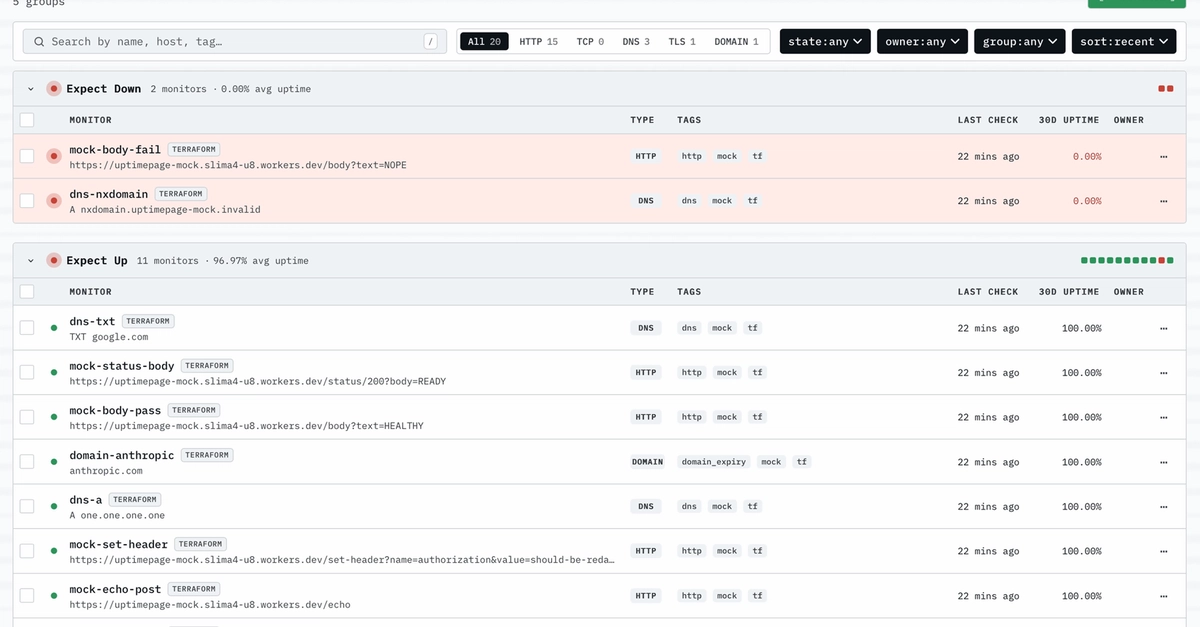
TL;DR. An uptime prober is a strange HTTP client, so I swapped reqwest for raw hyper. It needs the opposite of what a normal client gives you: no connection pool, so the cold path gets measured instead of hidden; every phase timed, even when connect fails; a hard SSRF block on the URL the user typed; and exact failure reasons instead of one flat error. Four tricks below, each worth copying even if you never build a monitor.
I built an uptime checker in Rust. Like most people, I used reqwest first. Then I dropped it and moved down to raw hyper.
Not because reqwest is slow. It is great, and for app code you should use it. But a prober is a strange kind of HTTP client. It makes one request, and its whole job is to measure that request and report exactly what happened. A normal client is built to do the opposite: make requests fast and hide the messy details. Every trick below is a messy detail I needed to keep.
Here are four things building it taught me. Each one is a habit worth copying, even if you never write a monitor.
1. A connection pool lies to a monitor