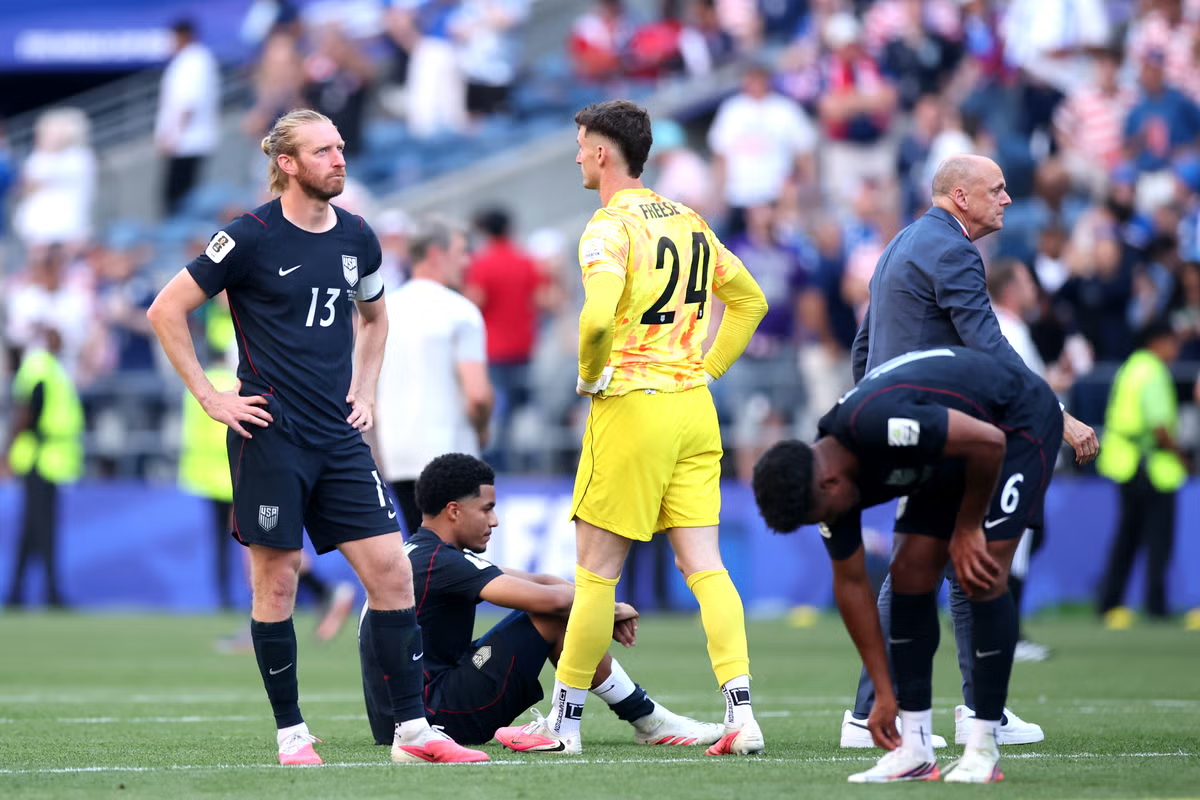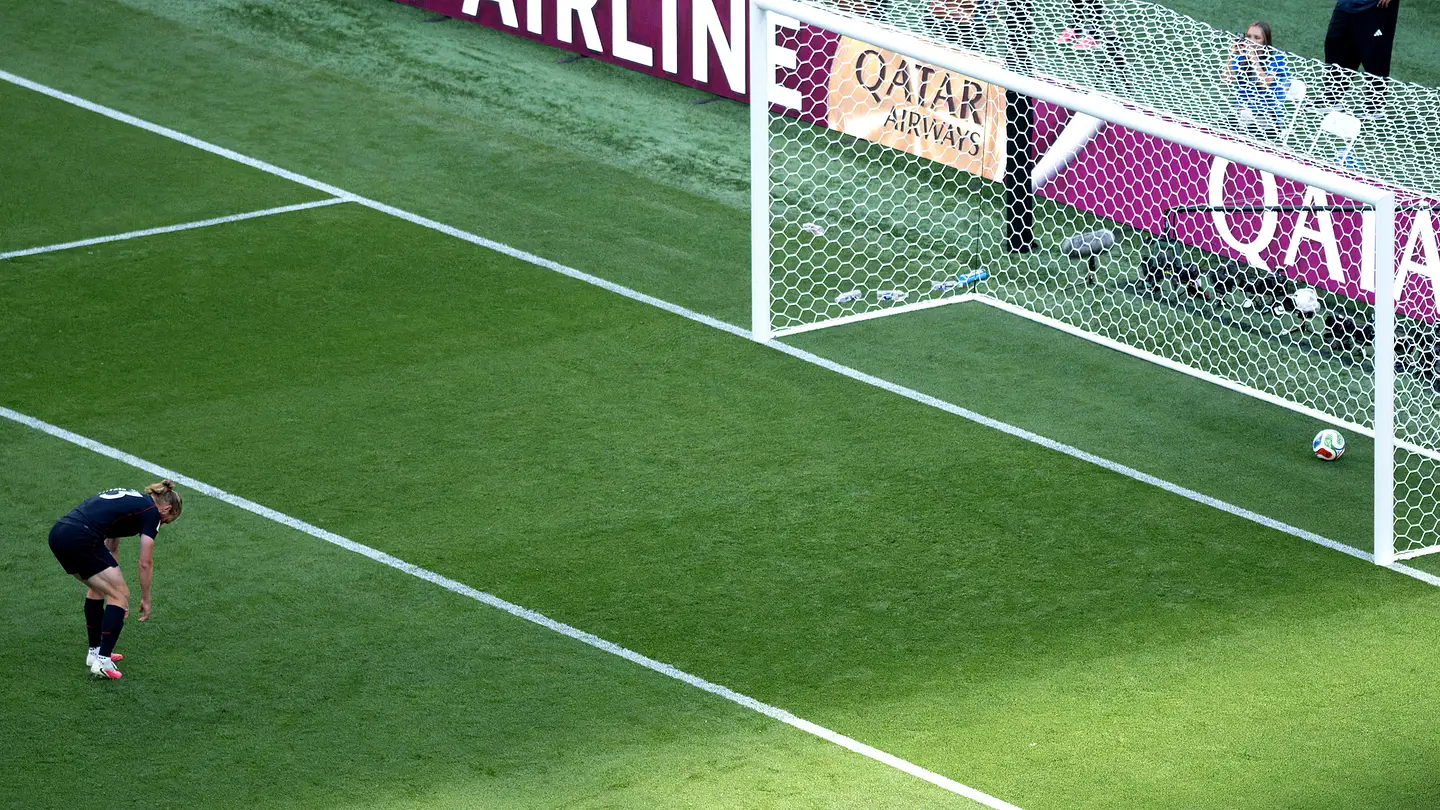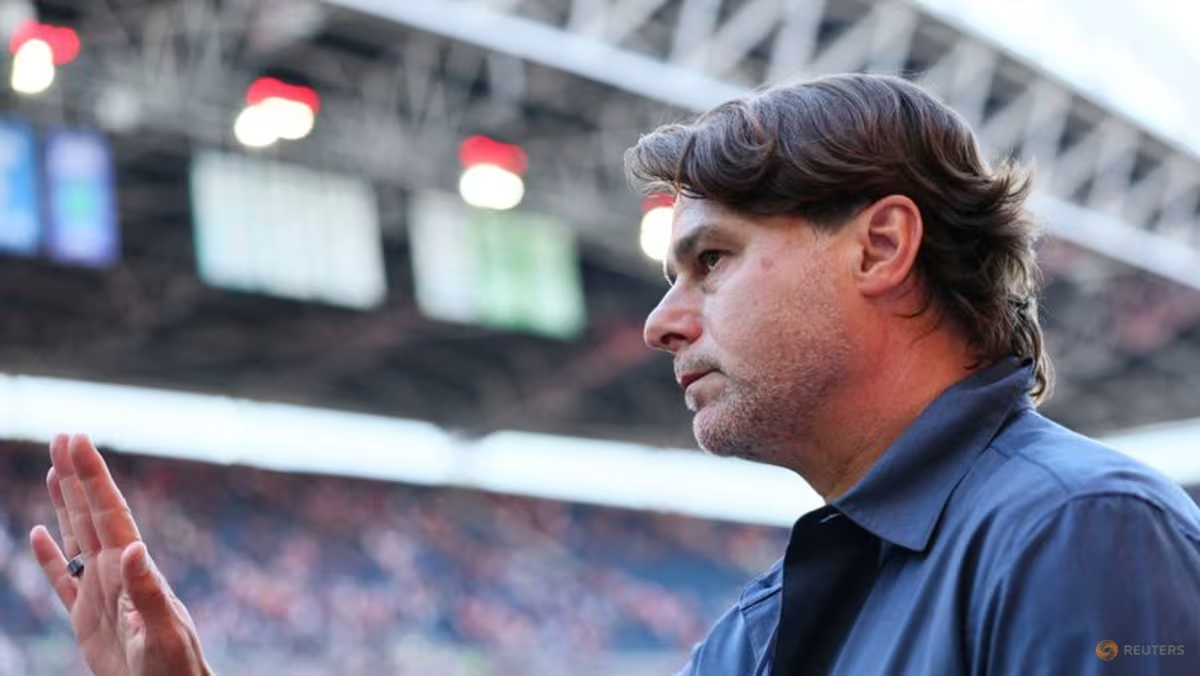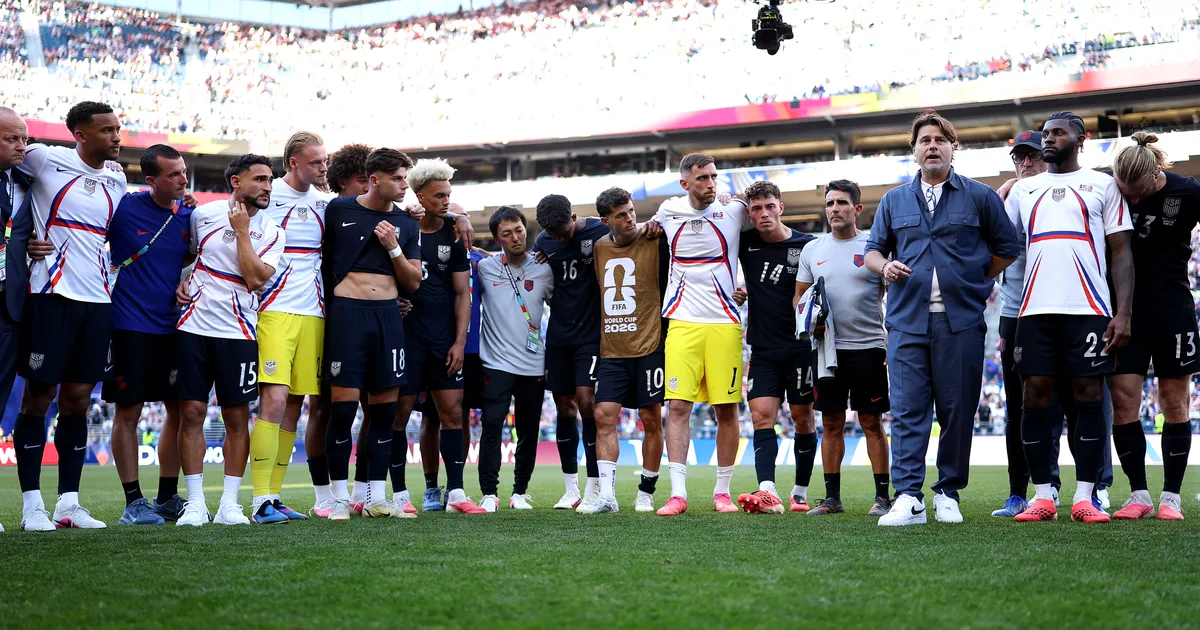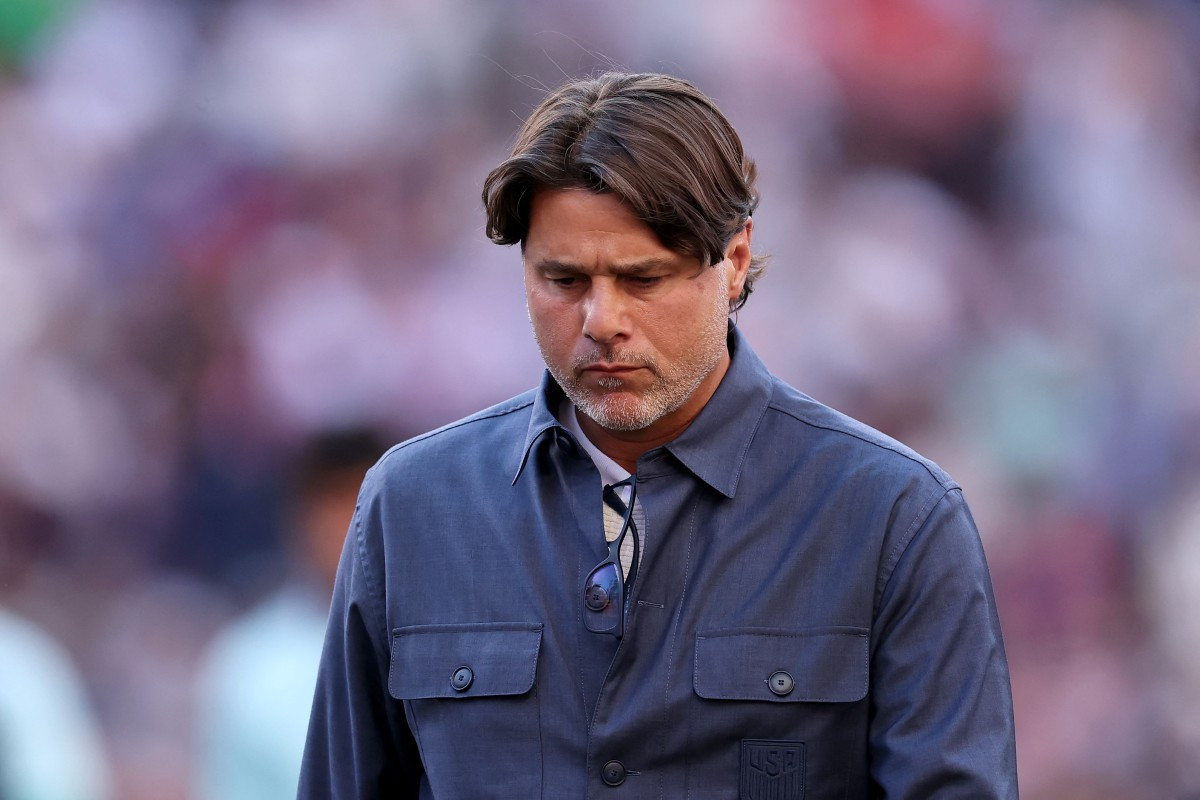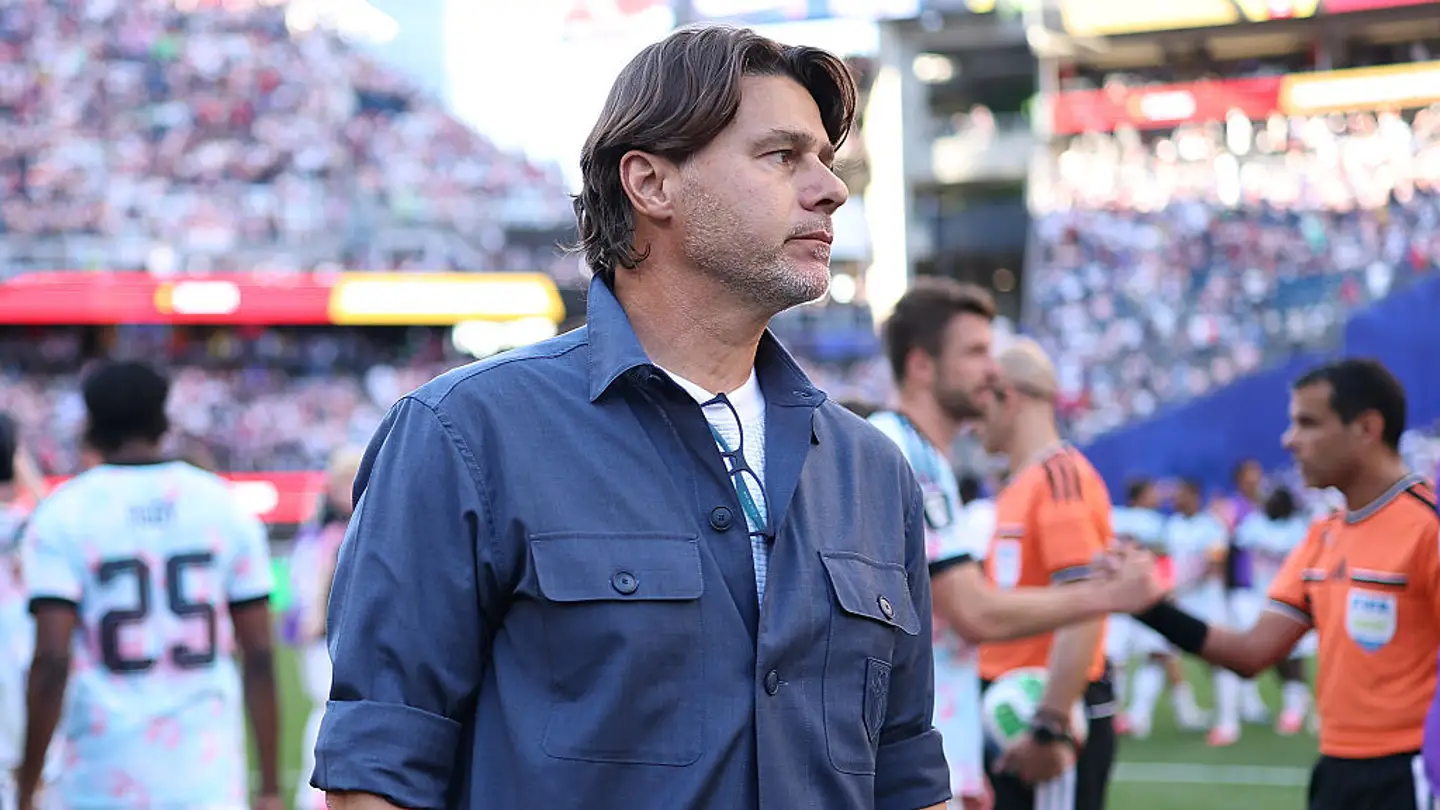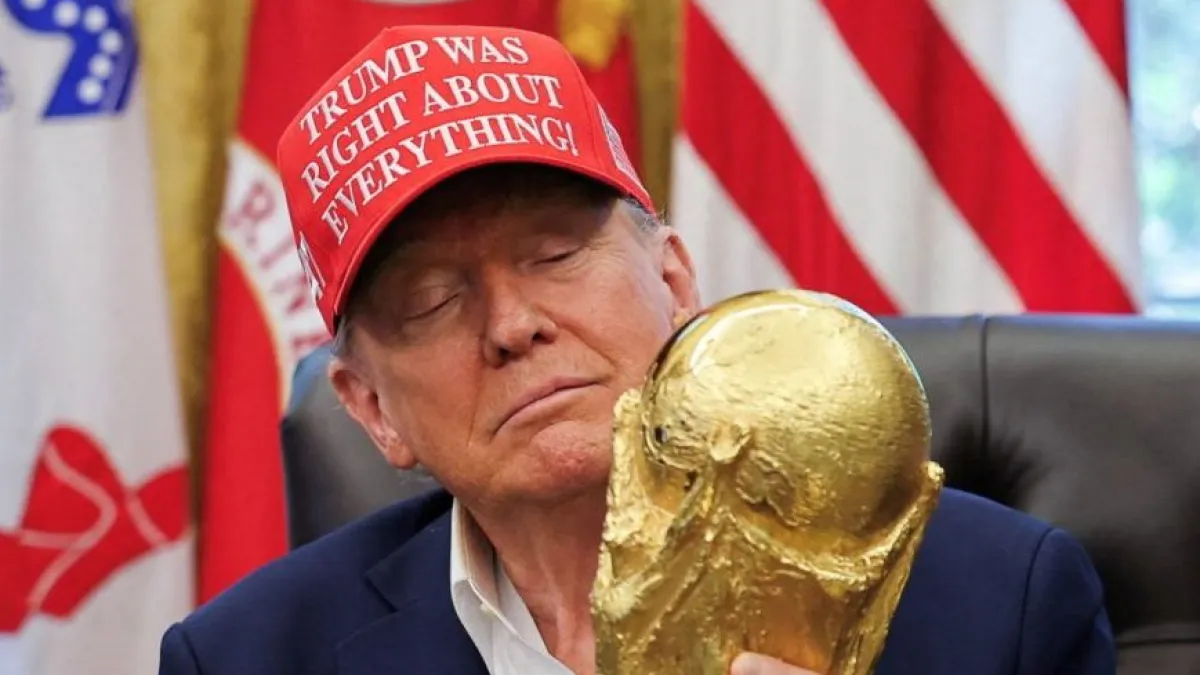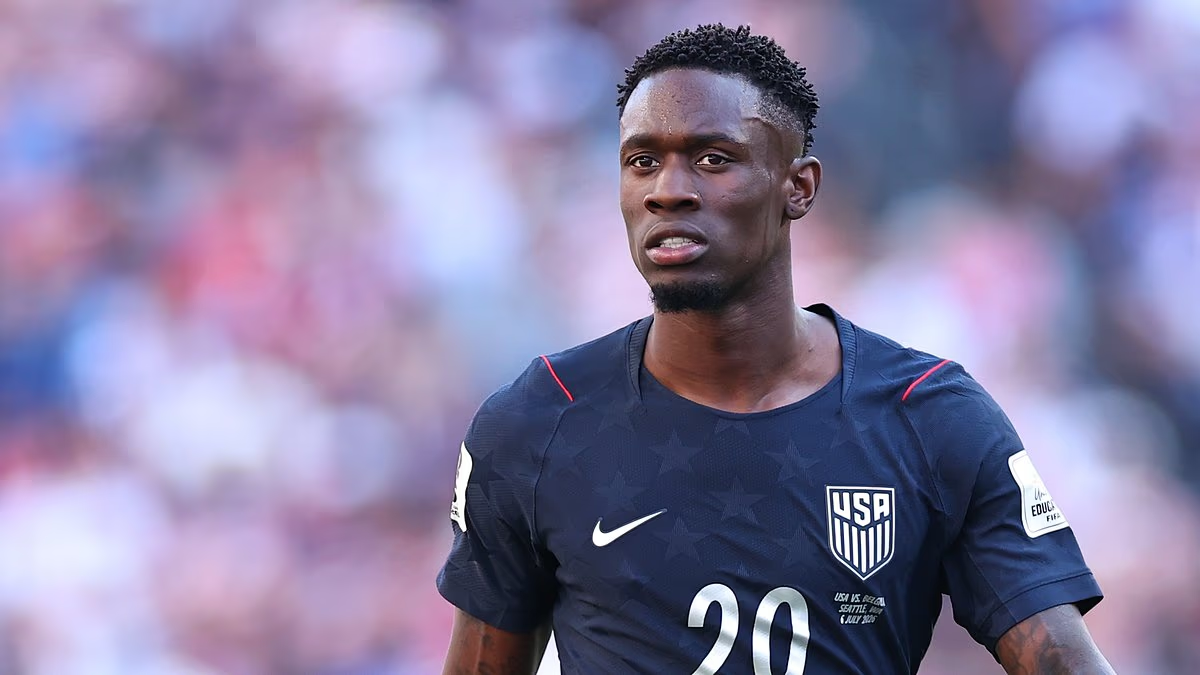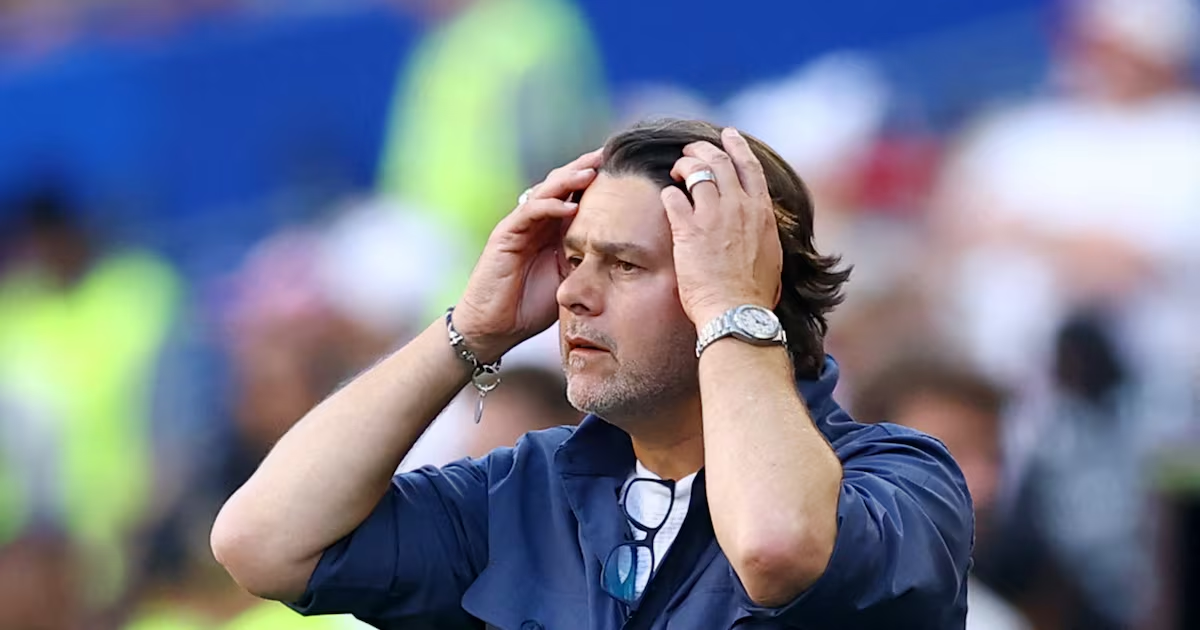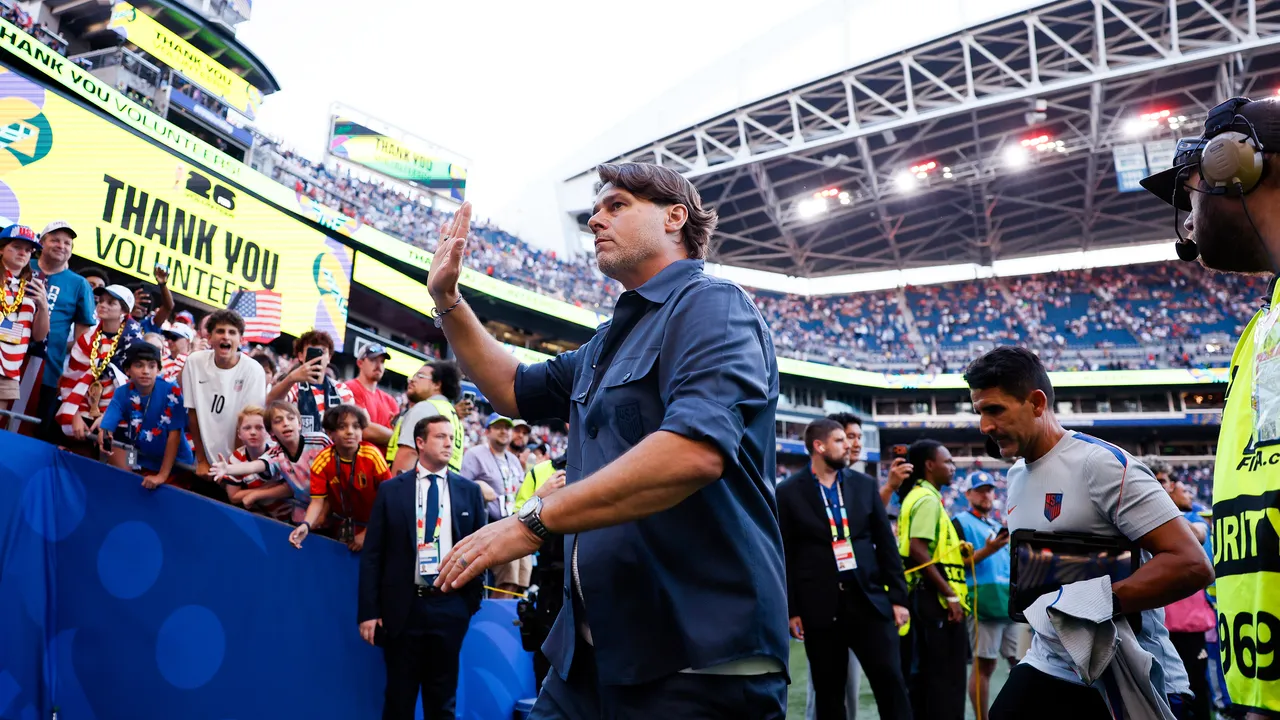
Mauricio Pochettino has always been serious about the lemons in his office. They absorb negative energy, he has explained, and energy is everything. Energy determines decisions, capabilities, limits, relationships. And so, for good energy, Pochettino kept a tray of lemons in his office in Tottenham, where he coached Spurs to a second-place finish in the Premier League and to a Champions League final; in Paris, where he brought Paris Saint-Germain the Ligue 1 title and the Coupe de France; and in Chelsea, where he spent a year before the U.S. Soccer Federation lured him away. Then, last month, shortly after the U.S. beat Paraguay in its first game of the World Cup—an astonishing victory, unexpected in its totality—when Pochettino met with a group of reporters, they noticed a bowl with four lemons on his desk.It is the kind of telling detail that reporters find irresistible and soccer insiders indulge as a quirk. Pochettino could get away with the woo-woo stuff, the talk of “universal energy” and of his ability to read “auras,” because he was, obviously, a good coach: modern in the right ways, savvy in his use of analytics, devoted to positional discipline. His signature tactical approach was the high press, in which the back line moves up the pitch, swarming opposing players in the midfield—essentially, defending by attacking. Done right, it creates opportunities to ambush the other team with counterattacks. It is an exhausting way to play soccer, requiring relentless intensity, spatial awareness, and skill, but it’s also brave and stylish, and highly effective when done right. When U.S. Soccer decided it needed to overhaul its program after a humiliating loss in the 2024 Copa America, securing Pochettino was near the top of the list. His hire was considered a coup, a ratification of the country’s promise and its ambition, just in time for the U.S. to host its first World Cup in more than thirty years. (U.S. Soccer got an assist on Pochettino’s six-million-dollar salary from a couple of hedge-fund-manager soccer fans, Scott Goodwin and Ken Griffin.)The lemons on his desk at the team’s base camp in California weren’t a joke. To win, you had to think you could win. Not arrogance, but possibility. “Why not us?” he asked the team, and then adopted it as his slogan: “Why not U.S.?” He had it painted on the wall of his office. He talked about the need to develop emotional connections between the players and the game, and between the fans and the players. It all came back to the quasi-cosmic force surrounding everything—hence the mantras, hence the lemons.It seemed to be working, whatever it was. Coming into the round of sixteen, for a game against Belgium, the U.S. team had been riding high on a surge of good feelings. Even the challenge of facing the Belgians without Folarin Balogun, the U.S.’s new star and their main scoring threat, who’d been given a controversial red card for a hard tackle during their game against Bosnia and Herzegovina, seemed doable. The U.S. were young, appealing, hungry underdogs—bigger underdogs without Balogun, yes, but still up against just the type of high-profile but past-their-prime European power the team was built to beat. The vibes were immaculate.Then came word that FIFA had ordered Balogun’s “suspension be suspended” for a probationary year, making him available for the game against Belgium. That news was followed by reports that President Donald Trump had called FIFA president Gianni Infantino directly to ask for a review of the penalty. Other details leaked: Howard Lutnick, the Commerce Secretary, and Goodwin, one of the hedge-fund managers who partially funded Pochettino’s contract, had marshalled a team of lawyers to challenge FIFA’s initial claim that the suspension could not be appealed. There was even oppo research on the referee.At a press conference in the Oval Office on Monday, Trump confirmed the call with Infantino in a characteristically rambling monologue. “I understand sports really well, really well, and that wasn’t a foul. That wasn’t even an infraction,” Trump said. He claimed that, at first, he didn’t know what a red card was, but, once he learned that Balogun would receive an automatic suspension for the U.S.’s next game, he decided the rule was very unjust. And so Trump phoned his friend Infantino, who had, seven months earlier, honored him with the inaugural FIFA Peace Prize, and asked him to undo what was supposed to be a done decision.Then, on Sunday, FIFA announced that, by complete coincidence, after a very rigorous, independent review process, and invoking Article 27, which more or less lets FIFA do what it wants regarding disciplinary matters, Balogun was in fact eligible to play against Belgium. The reversal was met with glee by many U.S. fans, who’d disagreed with the original red card—and who understood lawyering up as a cultural tradition. But even many U.S. supporters were uncomfortable with the appearance of favor-trading, and the rest of the world was aghast. “It’s a bad, bad, bad, bad decision for the World Cup,” said the Norwegian coach, Ståle Solbakken, when asked about it. UEFA, never one to turn down a chance to criticize FIFA, huffed about crossed “red lines.” Within a day, the U.S. team went from lovable underdog to . . . it was hard to say what the U.S.M.N.T. now represented. Arrogance? Overreach? Corruption? Those didn’t seem like quite the right words to associate with the players. Balogun, after all, had done and said all the right things, acting with restraint and humility, despite having been harshly sent off. He hadn’t asked to be at the center of an international incident. And his teammates weren’t the ones lodging protests; they learned about FIFA’s decision via social media, just like everyone else.Still, it wasn’t possible to disassociate Trump’s meddling from the U.S.M.N.T. altogether. It’s possible that Trump, who, during his comments to the press, joked about taking credit for the two-hundred-and-fiftieth anniversary of the United States, had less of an impact on FIFA’s decision to let Balogun play than he liked to imply. (Infantino, like Trump, clearly wants stars on television—and the money that goes with that. A few months earlier, FIFA had suspended a suspension of Portugal’s Cristiano Ronaldo, after he received a red card during the World Cup qualifying round, so that he could play in Portugal’s first two World Cup games.) Historically, FIFA has been known for its—let’s say—flexible approach to ethics, but even so, there was no real precedent for this kind of naked political involvement in matters directly related to the flow of a particular game. What did it mean for the integrity of the tournament?Not everyone was conflicted. “We celebrate the decision,” Pochettino declared. No doubt—the U.S. had their best goal scorer for their biggest game. And they could tell themselves that leaders from other countries would have tried to do the same, which is almost certainly true. Before kickoff, as I watched fans fill Seattle’s Pioneer Square, I couldn’t see much of a difference from what I’d witnessed when the U.S. team played Australia in the group stage. The fans marched. Everyone seemed to be wearing red, white, and blue. There were spontaneous chants of “U.S.A.!,” face paint, flags as capes. Inside the stadium, Balogun got a huge cheer when he was announced. “The Star-Spangled Banner” was sung with gusto. And loud boos greeted the Belgians the first few times they touched the ball.But the enthusiasm was fragile. Within the first minute, a Belgian charged down the field and rocketed the ball toward the goal; the keeper, Matt Freese, had to dive for the save. The pressure continued in front of the U.S. goal, and less than ten minutes into the match, the U.S. defense ground to a stop, and Belgium scored. The crowd gasped, then reeled, as if sucker-punched.It was a bloodbath. When the U.S. tried to press, Belgium played through it. When the U.S. tried to move the ball up through the channels, they gave it away. Christian Pulisic, long the team’s most prominent and important player, had eleven turnovers in the first half alone—more than anyone else had all game. But he was hardly the only culprit. The midfield, which had been the team’s strength, its purring engine, was disorganized. Dribbles were loose, and easily deflected. The back line was under siege.The Red Devils, meanwhile, were sailing. Their coach, Rudi Garcia, showed some tactical daring, holding out two of his more prominent players until partway through the second half, injecting some energy into the game when the starters began to flag. The team seemed united, galvanized—the opposite of the U.S. team, which showed little urgency. Thirty minutes into the match, it felt like Belgium could have been up by seven goals. But, abruptly, a penalty was called, and, for the second time in two games, Malik Tillman netted a free kick to even the score. The U.S. were in it—for some fifty more seconds. Then Belgium scored again. Pochettino kicked over a water carrier. (So much for good energy.) Greater humiliation was still coming. In the second half, Freese stepped off his line to control a ball, hesitated, stubbed his foot against the ground, and lost the ball. Belgium’s Hans Vanaken thumped it into the goal past defender Tim Ream, who flailed lamely as Belgium scored. The home crowd jeered.Belgium scored one more goal in the final minutes of extra time. An hour or so later, Ream appeared in the press area, still wearing his uniform and his captain’s armband, his face red and his raw eyes redder. The controversy over Balogun’s red card meant nothing, Ream said. The guys had played badly, all of them. More than twenty million people had watched them beat Bosnia. They’d become celebrities overnight. They’d had a chance to inspire the country. And yet they ended with the same result as in 2022, 2014, 2010, and 1994. Their lone quarterfinal appearance during that stretch was in 2002, when the tournament was in South Korea, and the games were played during the middle of the night in the U.S.And what about Balogun? He was mostly invisible during the match, launching a few nice runs but barely touching the ball. Only a month before, he’d been anonymous to everyone but hardcore soccer fans. Then he scored a brace against Paraguay and became a household name in the U.S overnight. Never mind that he’d been making his way through the English-national-youth-team system, not the American one, only a few years earlier. Many of the players on the team had choices about what nation to represent, but Balogun’s story was special, beginning with his birth in Brooklyn, which had happened only because his Nigerian mother had been turned away from the boarding gate of a plane heading back to London after she was deemed too far along in her pregnancy to fly. Which meant that, at the very moment the U.S. was celebrating its two-hundred-and-fiftieth birthday, and as the Supreme Court was weighing Trump’s push to end birthright citizenship, millions of Americans were cheering for a player who was only eligible because of the Fourteenth Amendment.There was, as many people pointed out, a certain irony to Trump’s going to bat for a birthright citizen. But I didn’t really see it. Trump doesn’t care about consistency. What he does care about is Trump. In the middle of his monologue about calling Infantino, Trump claimed that the World Cup was being played in the U.S. because of him. When he was reëlected, he said, “I realized, you know, I just got the Olympics and I totally got that myself. And I just got FIFA; I got that myself. We gave a little piece to Canada, gave a little piece to Mexico. I got that myself,” he reiterated. What he hadn’t realized at the time, though, was “how successful it was going to be. I didn’t know. I said, Gianni, is anyone going to show up?”And they did. A tournament that had seemed like an exercise in exploitation—FIFA put itself in charge of ticketing for the first time, leading to the most expensive World Cup in history—has become the country’s biggest party, in cities and towns and Costcos and hardware shops and little mail depots. Now the party goes on without the U.S.M.N.T., and tens of millions of new soccer fans in this country have a decision to make: What are they going to do with the lemons now? ♦
The U.S. Crashes Out of the World Cup
Despite a strong start to the tournament, and an egregious intervention by President Trump into FIFA’s suspension of its star striker, the U.S. men’s soccer team couldn’t keep up with Belgium.
2,070 words~9 min read