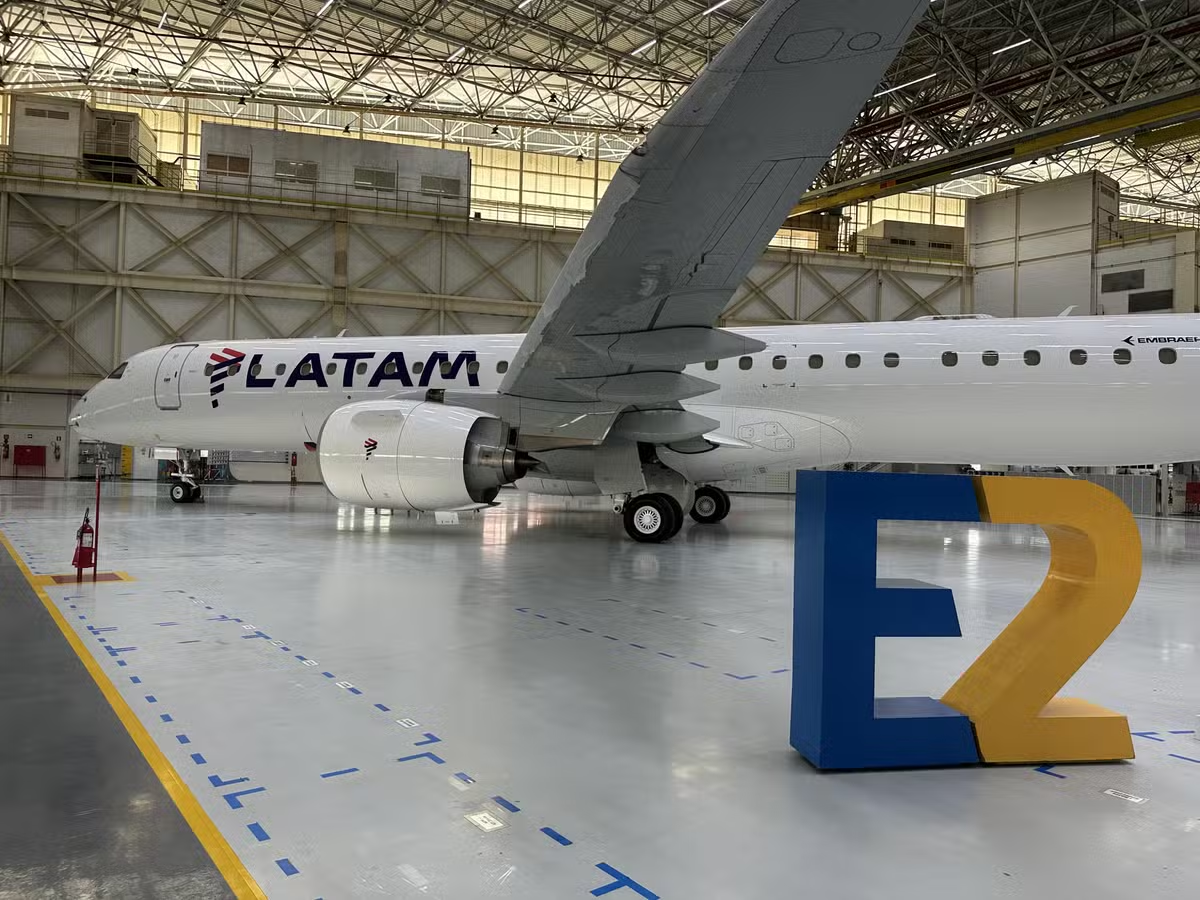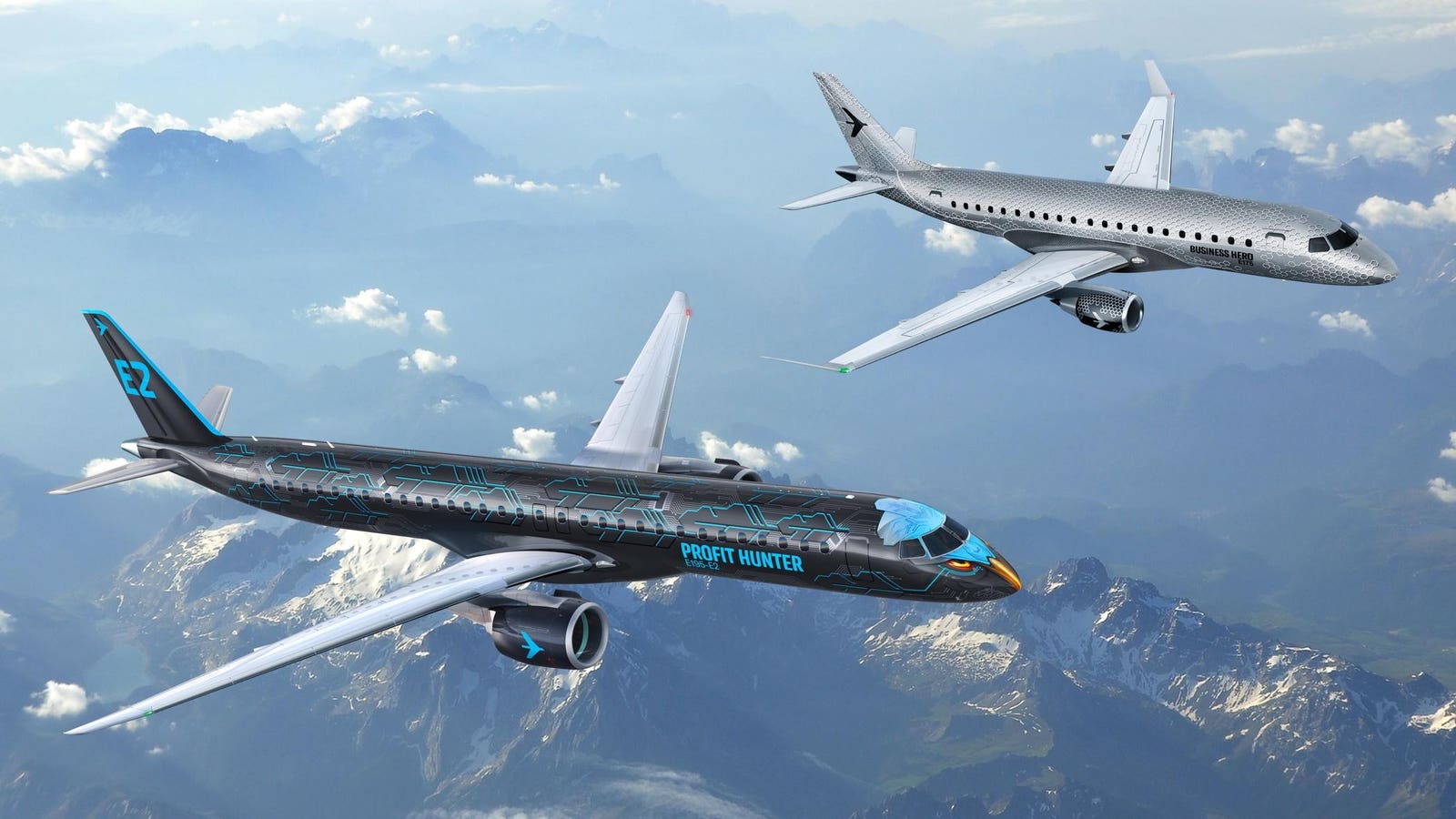
Embraer has received type certification from India’s Directorate General of Civil Aviation (DGCA) for its larger E-Jet variants, including the E190, E195 and E195-E2, allowing their entry into service in India. (file photo)
| Photo Credit:
Embraer has received certification from the Directorate General of Civil Aviation for the larger variants of its E-Jets, paving the way for their entry into service in India.Currently, there are around 50 Embraer civil and military aircraft in India. Regional airline Star Air, Embraer’s only airline customer in India, operates eight E175 jets seating 76-78 passengers. The airline is leasing two E190 aircraft with 108 seats, and the DGCA nod will facilitate its introduction in India.“We welcome the type certification of Embraer’s aircraft and thank the DGCA for its thorough assessment,” said Raul Villaron, Embraer’s senior vice president (sales and marketing) for the Asia Pacific region.DGCA approval covers E190, E195 and E195-E2 variantsThe DGCA’s type certification covers multiple variants of the E-Jet family, including the E190, E195 and E195-E2. While E175 can seat up to 88 passengers, the maximum capacity of E190 and E195s is 114 and 146 seats, respectively.In the last 25 years, the Brazilian plane maker has delivered over 1900 E-Jets to 80 airlines worldwide. It has a backlog of over 470 planes across variants. Its latest commercial jet, E195-E2, entered service in 2019 with Brazil’s Azul Airlines as its launch customer. The plane maker has secured orders for 489 E2 jets globally and delivered over 200 units. However, there are no orders from India yet.Certification to support airline expansion“The E-Jets offers enhanced range up to seven hours and performance capabilities to operate from challenging airports with short runways or low pavement strength,” said Adity Shekhar, regional vice president (sales), Embraer. “The certification enables us to support airlines expanding their networks and opening unique routes by tapping into blue ocean opportunities that are too small for a large narrowbody or too far for a turboprop,” she added.Published on July 7, 2026