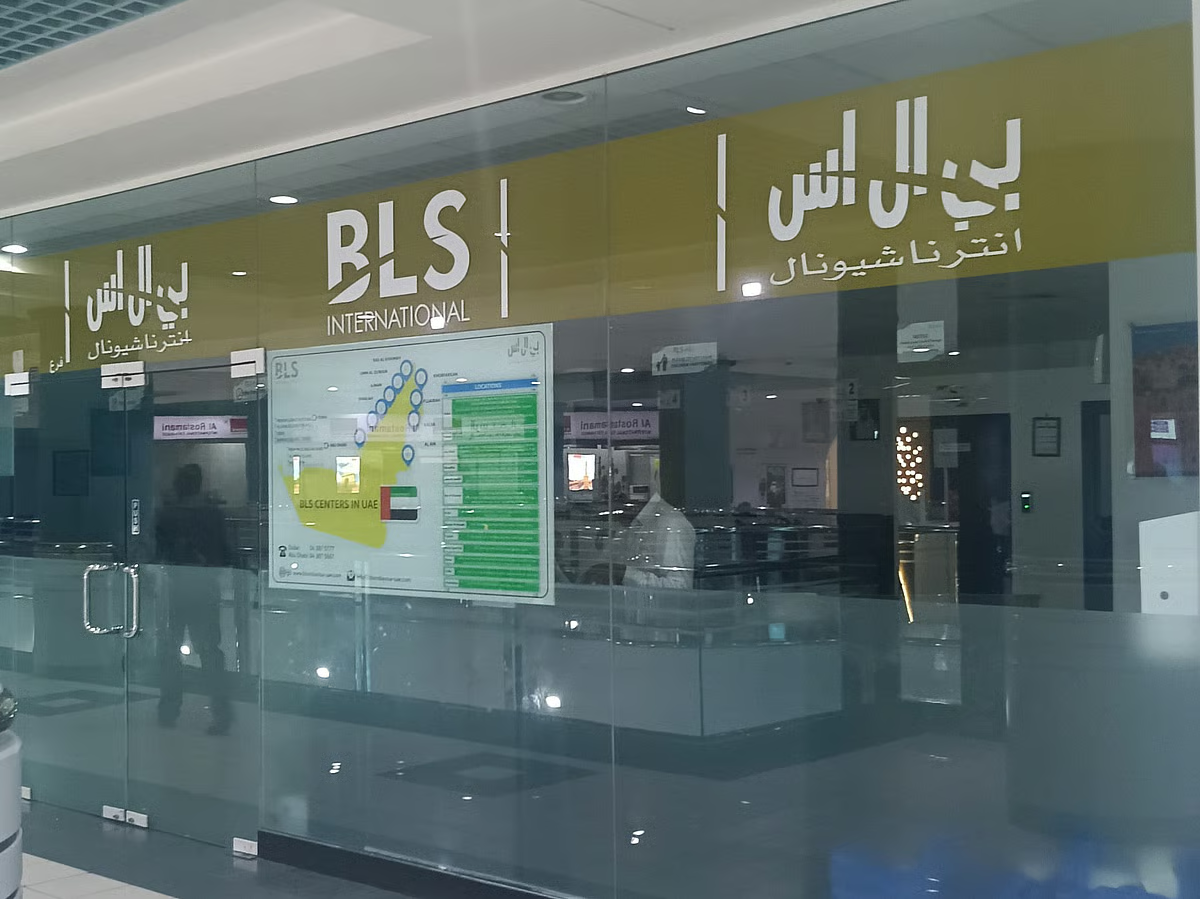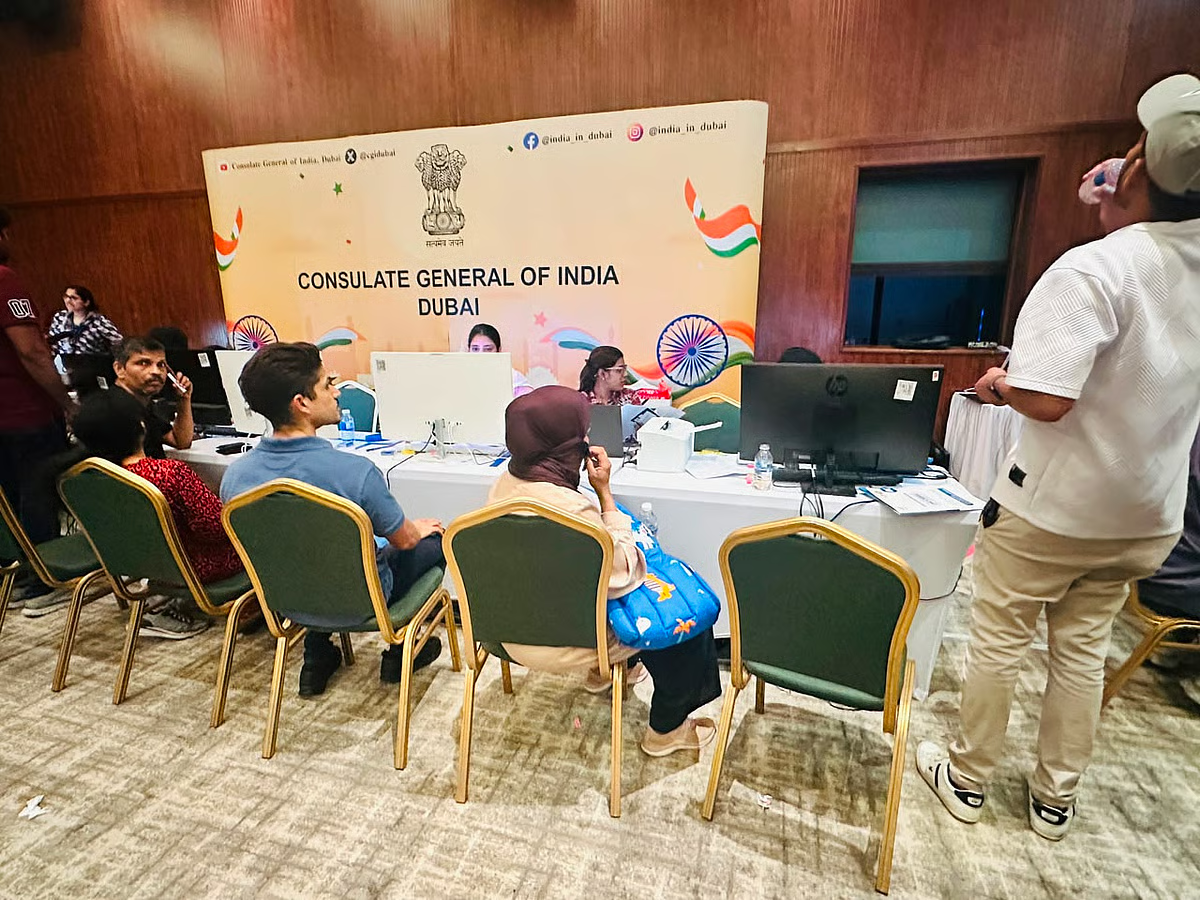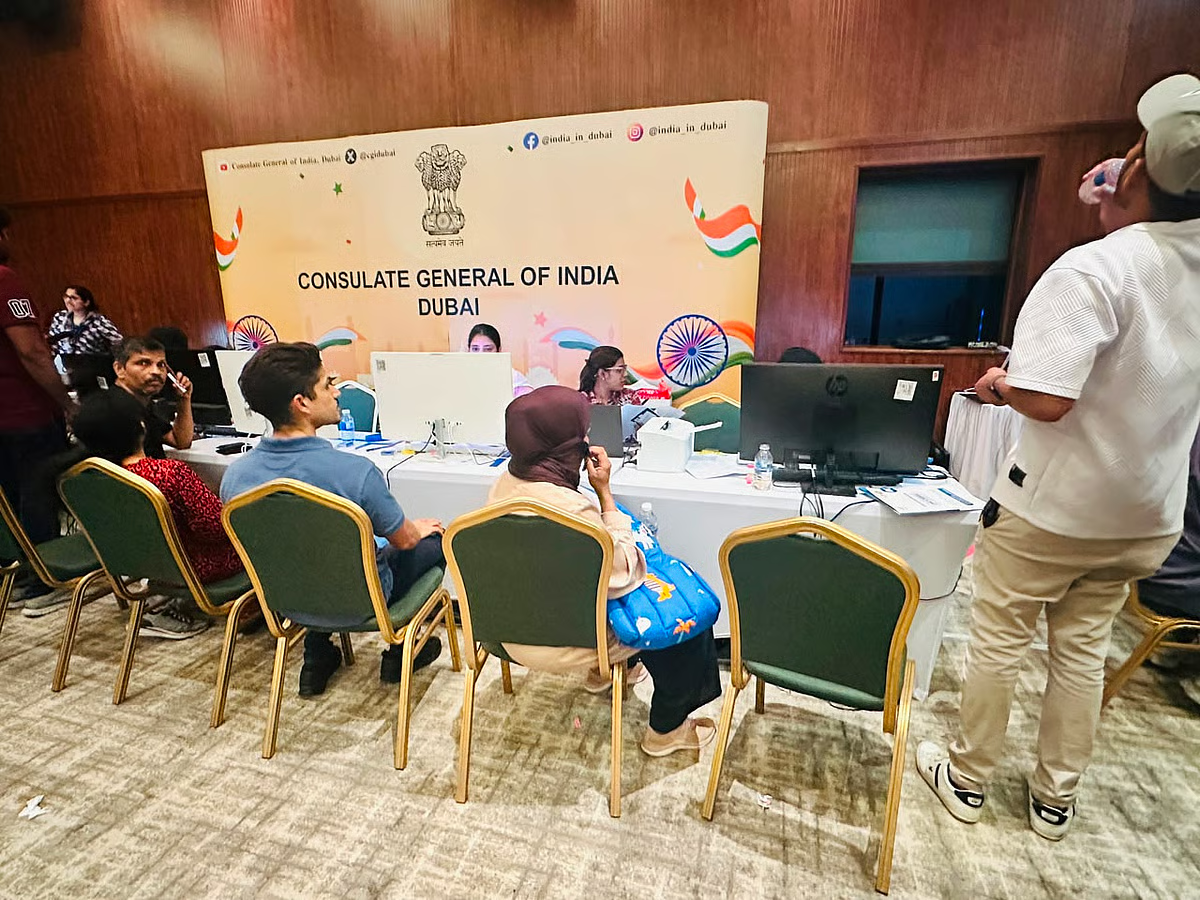
Abu Dhabi/ Dubai: Behind every passport renewal, attestation or visa application lies a business worth chasing. The Indian Embassy in Abu Dhabi and the Indian Consulate in Dubai together process around 600,000 transactions in the UAE in a single year.That scale explains why the contract to run these services for the world's largest Indian expat community, 4.5million-strong now, has become the subject of a bitter legal fight, leading to applicants queuing outside missions’ gates in the sweltering summer while private players wait in the wings.A week after the controversy surrounding Indian passport, attestation, and other consular services began, here is what Indian expats in the UAE need to know now.The one-roof planIt was to fix a system long criticised for fragmented services and add-on charges, that the Indian Embassy proposed a single-window model: Indian Consular Application Centres, or ICACs.Fourteen centres were proposed across the UAE, bringing passport, visa, attestation, OCI, Police Clearance and other consular work under one roof.Under the new terms, the winning operator is required to run appointment booking, biometric enrolment, a live service dashboard and a 30-minute turnaround per applicant, with a single, all-inclusive service fee, no separate courier charge, and no revision of that fee for the life of the contract, which is three years.These requirements are seen as a direct response to years of complaints by passport applicants about long waiting time for regular appointments and add-on pricing at premium lounges with quick appointments under the previous setup.17 years of outsourcingIndian passport application services in the UAE have been run by outsourced agencies since 2009, when Empost became the first Outsourced Service Provider (OSP).BLS International took over passport and visa services in 2011, while attestation services were later outsourced to SGIVS Global Services (formerly IVS Global) from 2013.On top of government-set service fees, the OSPs could charge for extras such as photocopying, photographs and SMS alerts.BLS later introduced premium lounges in Dubai and Abu Dhabi with value-added services at a higher fee. Some applicants and community groups alleged that the expansion of premium appointment services limited the availability of regular slots, resulting in longer wait times and encouraging those seeking faster access to pay additional fees.Meanwhile, at SGIVS, applicants could allegedly avail attestation services via authorised attestation agents, who do bulk booking, by paying additional fee.Rocky tender roadThe ICAC model aimed to put an end to such complaints and controversies. However, getting to the ICAC model took several attempts, with earlier tenders annulled amid litigation between OSPs and the Ministry of External Affairs (MEA).Then, in October 2025, the MEA debarred BLS International from bidding on its tenders for two years, a move the company publicly attributed to allegations including court cases and complaints from applicants.BLS had said the debarment would not affect its existing UAE contract, but the move effectively ruled the incumbent out of the fresh tender floated in December 2025.The Embassy issued a new Request for Proposal, and following technical and financial bidding, the contract went to Alhind Tours and Travels LLC, signed on May 15, 2026, for a three-year term.Legal hurdlesHowever, the proposed July 1 launch of ICACs by Alhind was delayed again with two firms that lost out in the technical evaluation, E Trav Tech and Verasys, challenging the tender in the Delhi High Court, arguing they were not told how they had scored or why they had been disqualified.According to court documents, the RFP had indicated that bidders would be informed of their scores by email, though it set no deadline for this to happen.The High Court largely upheld the government's discretion in scoring bids, while agreeing that disqualified bidders deserved reasons for rejection.E Trav Tech, which also sought an interim relief, then moved the Supreme Court, which on June 24 ordered status quo without ruling on the merits, sending the matter back for urgent hearing. The High Court has since clubbed all related petitions, with no ruling yet.Caught in the middleWith BLS's and SGIVS's contracts expiring on June 30, and Alhind unable to formally take over, the Embassy and Consulate stepped in directly.Sixteen BLS branches — 14 regular centres plus its Dubai and Abu Dhabi premium lounges — and two SGIVS centres have shut their doors, though their facilities and staff remain in place.While the court case is between two other companies and the Indian government, the old OSPs have been waiting to see whether the Supreme Court’s status quo order eventually turns in their favour since they were still providing the services on June 24.However, at the time of that order, the missions had already announced the contract signing with Alhind, the winding-up schedule for the outgoing OSPs, and the planned opening of ICACs from July 1.Only if a court were to quash the contract outright would the missions need to float a fresh RFP. Even then, they don’t seem to be under any obligation to reinstate BLS or SGIVS, whose contracts have already lapsed. BLS, in any case, remains barred from participating in any new tender until its debarment period ends.In the meantime, both missions are offering limited consular services from their own premises. A new online appointment booking portal has been launched (book.passportindiauae.com) to provide appointments from 9am to 1pm.Applicants are now left scrambling to secure appointments online, with slots being released at 8pm for the following day.However, the missions are offering all consular services are at the standard government fee with no OSP charge and no premium pricing while payments have to made in cash.Who stands to gain?If it clears the courts, the ICAC model promises real gains for the UAE's large Indian expat community.The single-window-facility will mean one consolidated fee instead of layered add-ons, guaranteed appointment slots within five working days, four free SMS updates per application, a 30-minute in-centre turnaround backed by a smart queue system, and a website with a built-in fee calculator so applicants know exactly what they owe before they arrive.It would also close the door on the premium-lounge model that drew complaints.Alhind has announced that a total of 16 centres are all set to launch ICAC services at a total fee of Dh19 per application.What's really at stake?Beyond the legal arguments, the controversy centres on who will process consular service applications, particularly passport application services which form the bulk of the work, for the world’s largest Indian diaspora community, and on what terms.A debarred incumbent, two disqualified challengers demanding answers, and a newly chosen operator unable to start work all have very different stakes in how this plays out.For now, it is the applicant waiting for passport, attestation and other consular services who is absorbing the cost of that uncertainty, 17 years after outsourcing was first introduced to make things easier.With the matter still sub judice, the future of the ICAC implementation remains subject to judicial determination, while applicants continue to navigate evolving service arrangements.
Indian passport service controversy: Everything that Indian expats in UAE must know now
Who gains, who loses out as launch of Indian Consular Application Centres by Alhind is stuck in court, and Embassy, Consulate fill the gap
1,136 words~5 min read