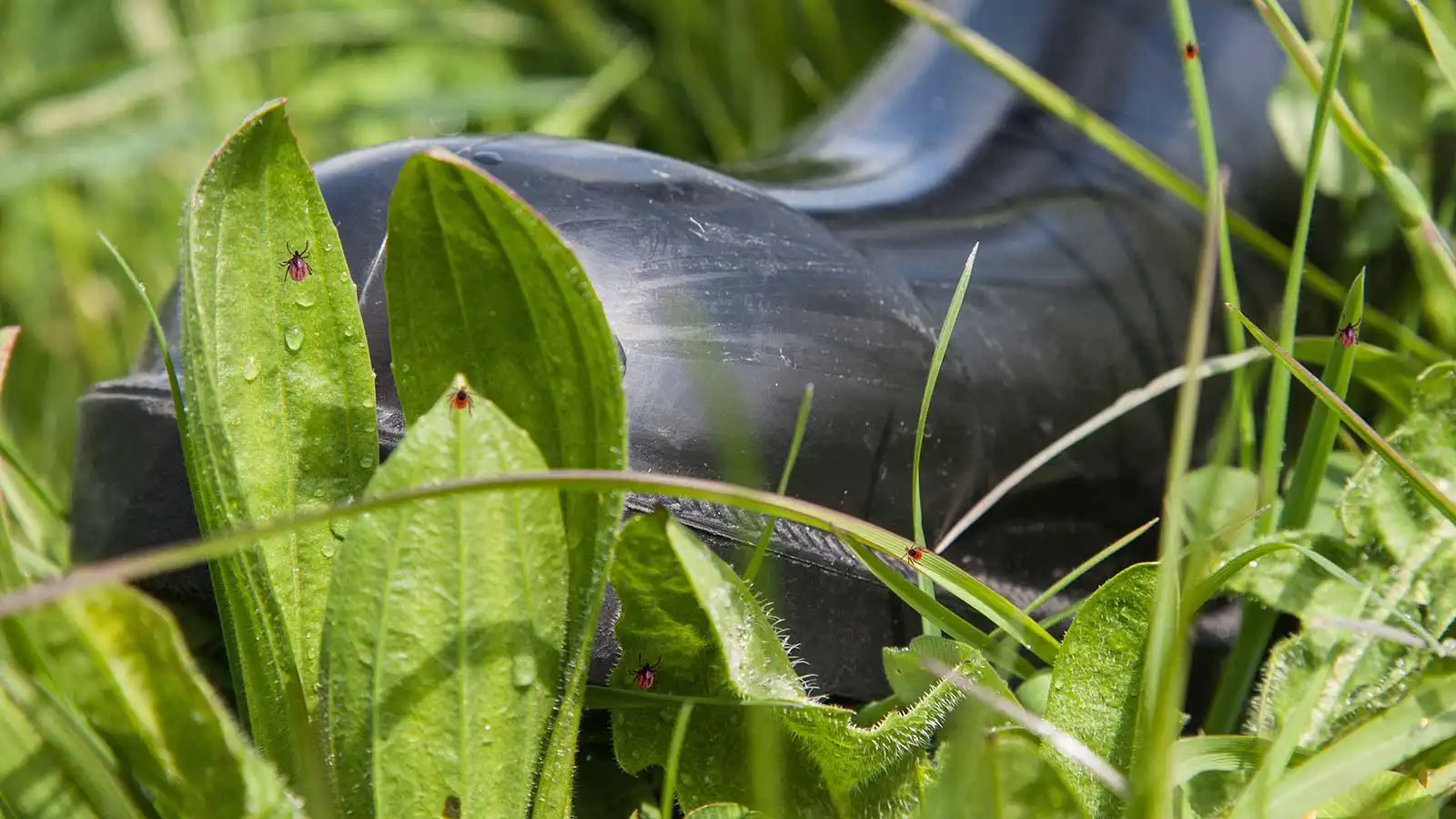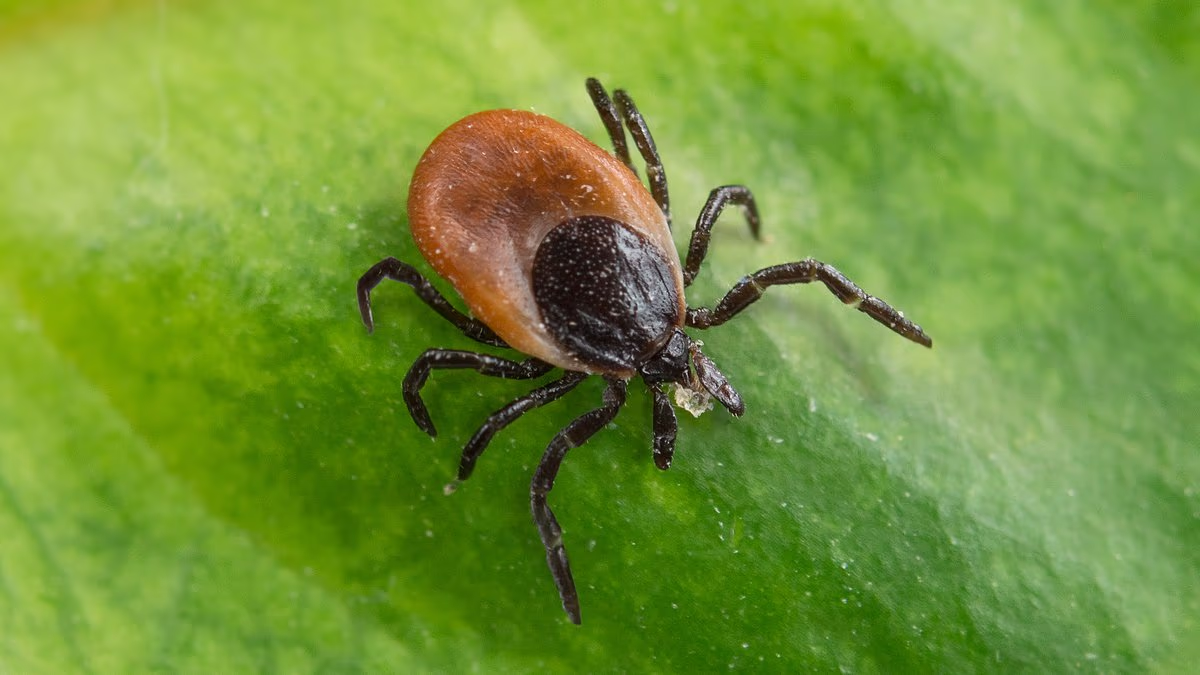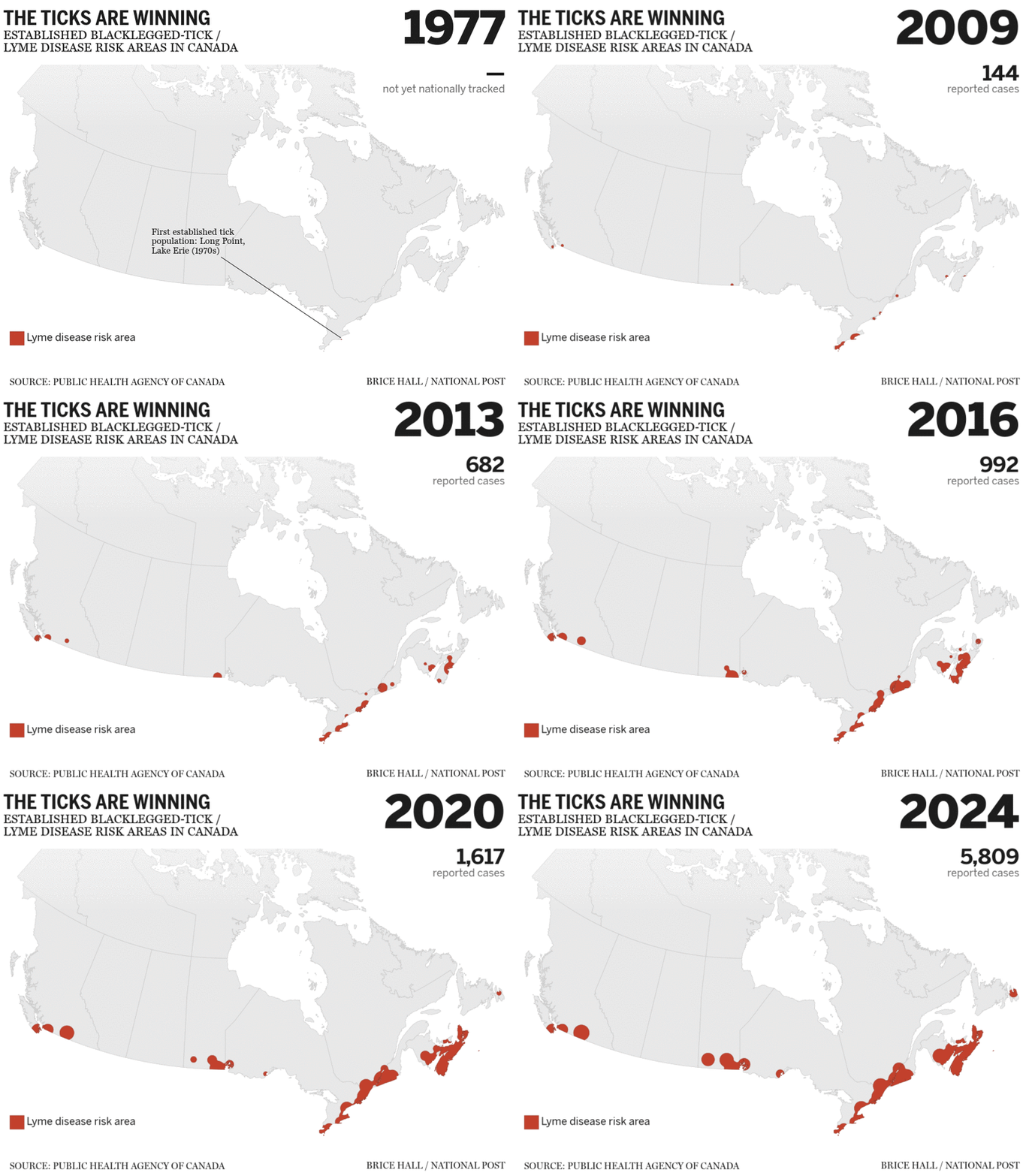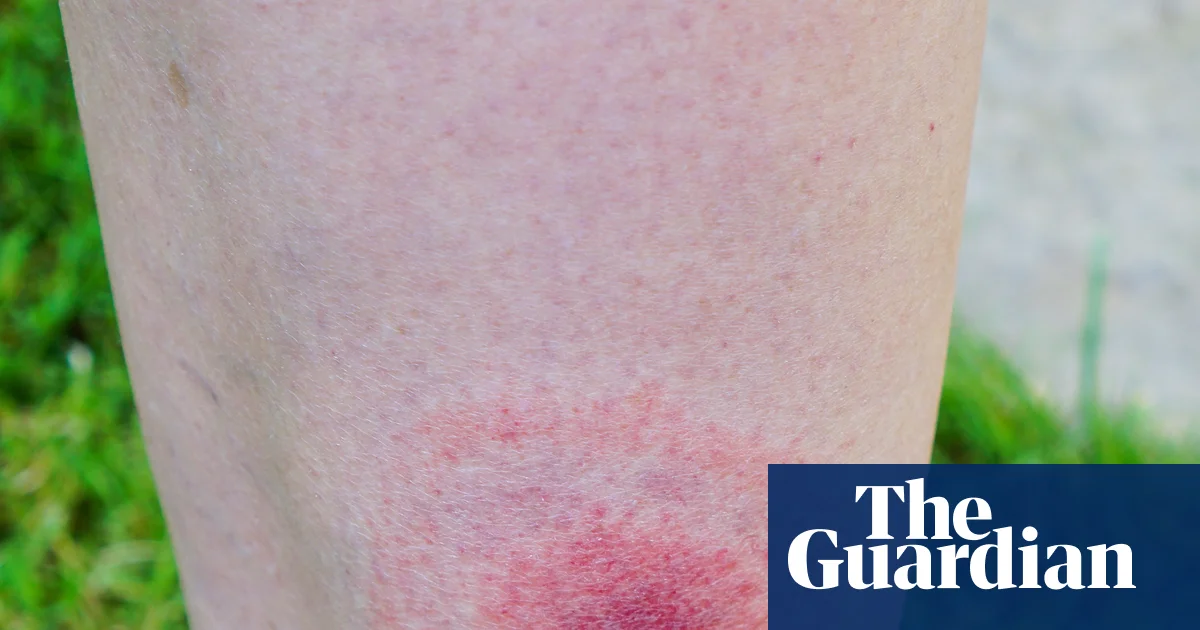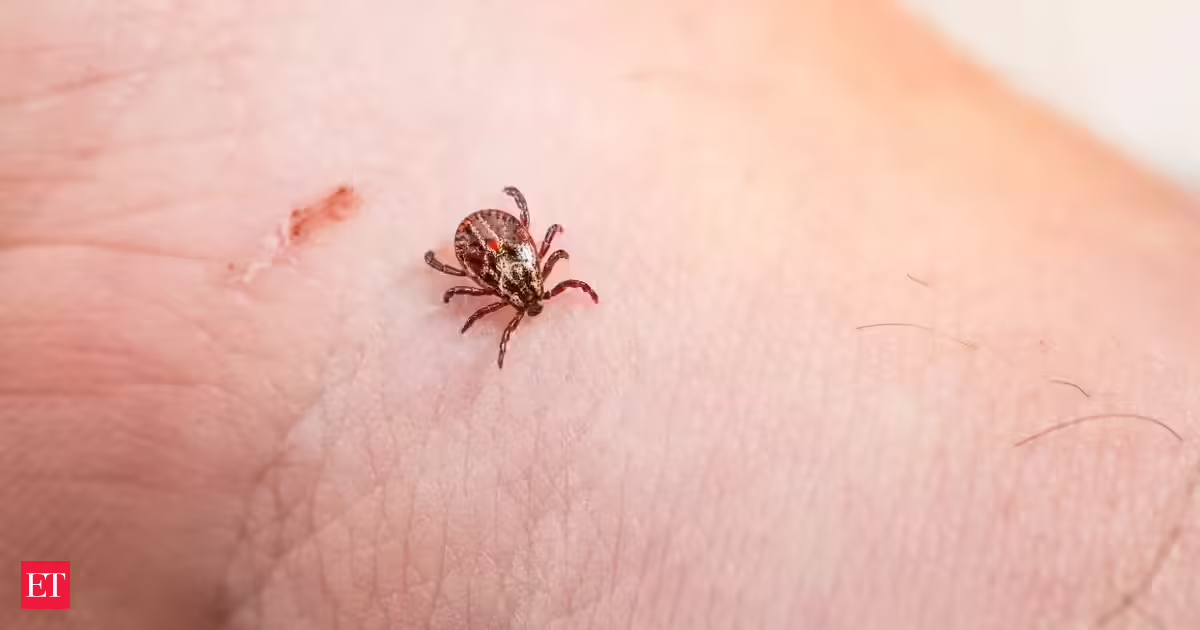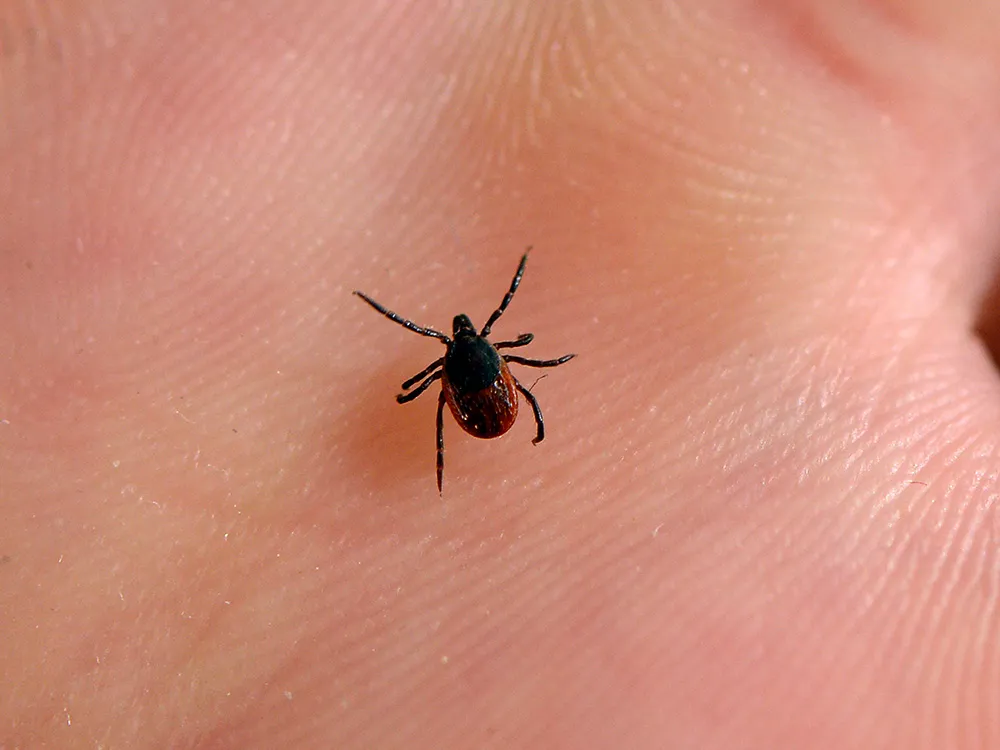
Skip to Content Subscribe Our Offers My Account Manage My Subscriptions FAQ Newsletters Canada Canadian True Crime Canadian Politics Health World Israel & Middle East Financial Post NP Comment Longreads Puzzmo Diversions Comics NP News Quiz New York Times Crossword Horoscopes Life Eating & Drinking Style Sponsored Play for Ontario Travel Travel Canada Travel USA Travel International Cruises Travel Essentials Culture Books Celebrity Movies Music Theatre Television Business Essentials Advice Lives Told Tails Told Shopping Buy Canadian Home Living Outdoor Living Kitchen & Dining Tech Style & Beauty Personal Care Entertainment & Hobbies Gift Guide Travel Guide Amazon Prime Day Deals Savings National Post Store More Sports Hockey Baseball Basketball Football Soccer Golf Tennis Driving Vehicle Research Reviews News Gear Guide Obituaries Place an Obituary Place an In Memoriam Classifieds Place an Ad Celebrations Working Business Ads Archives Healthing Epaper Manage Print Subscription Profile Settings My Subscriptions Saved Articles My Offers Newsletters Customer Service FAQ Newsletters Canada World Financial Post NP Comment Longreads Puzzmo Diversions Life Shopping Epaper Manage Print Subscription HomeHealthLyme disease is on the rise. Here's how to prevent it and what to do if you get bittenCanadian Lyme disease cases increased by 3,934 per cent in just 15 yearsLast updated 34 minutes ago You can save this article by registering for free here. Or sign-in if you have an account.Lyme disease is spread to humans through the bites of infected blacklegged ticks (deer ticks). Photo by Bertrand Guay/AFP via Getty ImagesLyme disease and other tick-related illnesses are on the rise across Canada. In just 15 years, the number of reported human cases of Lyme disease has increased by 3,934 per cent. A lack of awareness and nonspecific symptoms may be resulting in even more cases going undiagnosed or unreported, according to experts.Enjoy the latest local, national and international news.Exclusive articles by Conrad Black, Barbara Kay and others. Plus, special edition NP Platformed and First Reading newsletters and virtual events.Unlimited online access to National Post.National Post ePaper, an electronic replica of the print edition to view on any device, share and comment on.Daily puzzles including the New York Times Crossword.Support local journalism.Enjoy the latest local, national and international news.Exclusive articles by Conrad Black, Barbara Kay and others. Plus, special edition NP Platformed and First Reading newsletters and virtual events.Unlimited online access to National Post.National Post ePaper, an electronic replica of the print edition to view on any device, share and comment on.Daily puzzles including the New York Times Crossword.Support local journalism.Create an account or sign in to continue with your reading experience.Access articles from across Canada with one account.Share your thoughts and join the conversation in the comments.Enjoy additional articles per month.Get email updates from your favourite authors.Create an account or sign in to continue with your reading experience.Access articles from across Canada with one accountShare your thoughts and join the conversation in the commentsEnjoy additional articles per monthGet email updates from your favourite authorsSign In or Create an AccountorCaused by the bacterium Borrelia burgdorferi and spread through the bite of infected blacklegged ticks, provincial public health units have reported more cases of Lyme disease each year.“That’s not just because people are increasingly aware of it — including public health and health care providers — it’s also because there is just more Lyme in Canada,” says Dr. Isaac Bogoch, a professor at the University of Toronto in the Department of Medicine, and an infectious diseases specialist and general internist at the Toronto General Hospital.Ticks typically live in wooded or grassy areas, but they aren’t just an issue when venturing deep into the great outdoors. “I’m sitting in Toronto, and I diagnose cases of Lyme in people who have never left Toronto. Like, they got it in a park in Etobicoke, or some place in the GTA. There’s Lyme here. We have Lyme. There’s a lot of Lyme out there.”Generally shorter and milder winters have allowed ticks “to survive and thrive” in northern latitudes, meaning there’s a larger geographical area exposed to Lyme disease, explains Bogoch.In 2009, there were only 144 reported human cases of Lyme disease. According to the most recent Public Health Agency of Canada (PHAC) data, there were 5,809 reported cases in 2024, representing an annual growth of more than 20 per cent. The vast majority (96 per cent) of cases were reported by Ontario (2,369), Nova Scotia (2,350) and Quebec (834).This number is “probably a gross underestimate,” says Bogoch. “There likely are way more than 5,000 cases of Lyme in the country, despite about 5,000 being reported in the most recent data.” This graph shows the rise of ticks in Canada, and the rate of their population spreading across the provinces from 1977 to 2024.Various factors could play into Lyme disease going undiagnosed. “Number one is the signs and symptoms of Lyme might not be completely obvious,” says Bogoch. The “bullseye” rash often associated with Lyme disease doesn’t always resemble a perfect target, and roughly 25 per cent of people don’t have it.Some of the symptoms of Lyme, such as fatigue, muscle and joint aches and pains, can be nonspecific. “We still need to do a better job informing the general public that there is Lyme out there, and to suspect Lyme if they have such symptoms,” says Bogoch. “We also have to continue to inform frontline health care providers about Lyme, especially given its expanding geographic area of endemicity in Canada.”Though ticks are a nuisance, Bogoch says they shouldn’t prevent anyone from enjoying the outdoors. “We should be outside as much as possible. It’s so healthy to be out there, and we’re so lucky to live in the most beautiful place on the planet.”To prevent tick bites, wear pants and long-sleeve shirts, use insect repellents containing DEET or Icaridin and do a tick check after being outdoors. “Look head to toe to see if there are any ticks. And often it’s helpful to have someone look at hard-to-see places like the back of your legs to see if there’s a tick present.” Blacklegged ticks are often found in wooded and forested areas, especially areas with thick underbrush. Photo by Getty ImagesIf you find a tick, remove it promptly to reduce the risk of infection. Use tweezers to pull the tick straight out, without twisting or squeezing, and visit your health care provider if you can’t remove it or have concerns.Post-exposure prophylaxis may be recommended in certain scenarios following a tick bite. “You can receive a single dose of antibiotics,” says Bogoch. “And it does a really good job at reducing the risk of Lyme.” In provinces including Ontario, Quebec, New Brunswick and Nova Scotia, pharmacists can prescribe antibiotic prophylaxis to prevent Lyme disease.Watch for signs and symptoms, and talk to your physician if you’re concerned about Lyme disease. Tests are available at provincial health laboratories, and treatment is a course of widely used antibiotics. “It’s not that hard to diagnose, and it’s not that hard to treat. We just have to be aware of it.”While Lyme disease is, “by far,” the most dominant tick-transmitted illness in Canada, others are becoming increasingly common and are also “completely underdiagnosed,” says Bogoch. Anaplasmosis and babesiosis, which are transmitted by the same ticks, and alpha-gal syndrome, which causes an allergy to red meat, and Rocky Mountain spotted fever are also spreading.Bogoch highlights the need for bolstering laboratory capacity and informing the general public and frontline health providers about these infections. “We’ve got a lot of work ahead of us.”Our website is the place for the latest breaking news, exclusive scoops, longreads and provocative commentary. Please bookmark nationalpost.com and sign up for our newsletters here. Join the Conversation This website uses cookies to personalize your content (including ads), and allows us to analyze our traffic. Read more about cookies here. By continuing to use our site, you agree to our Terms of Use and Privacy Policy.
Lyme disease is on the rise. Here's how to prevent it and what to do if you get bitten
Canadian Lyme disease cases increased by 3,934 per cent in just 15 years
1,307 words~6 min read