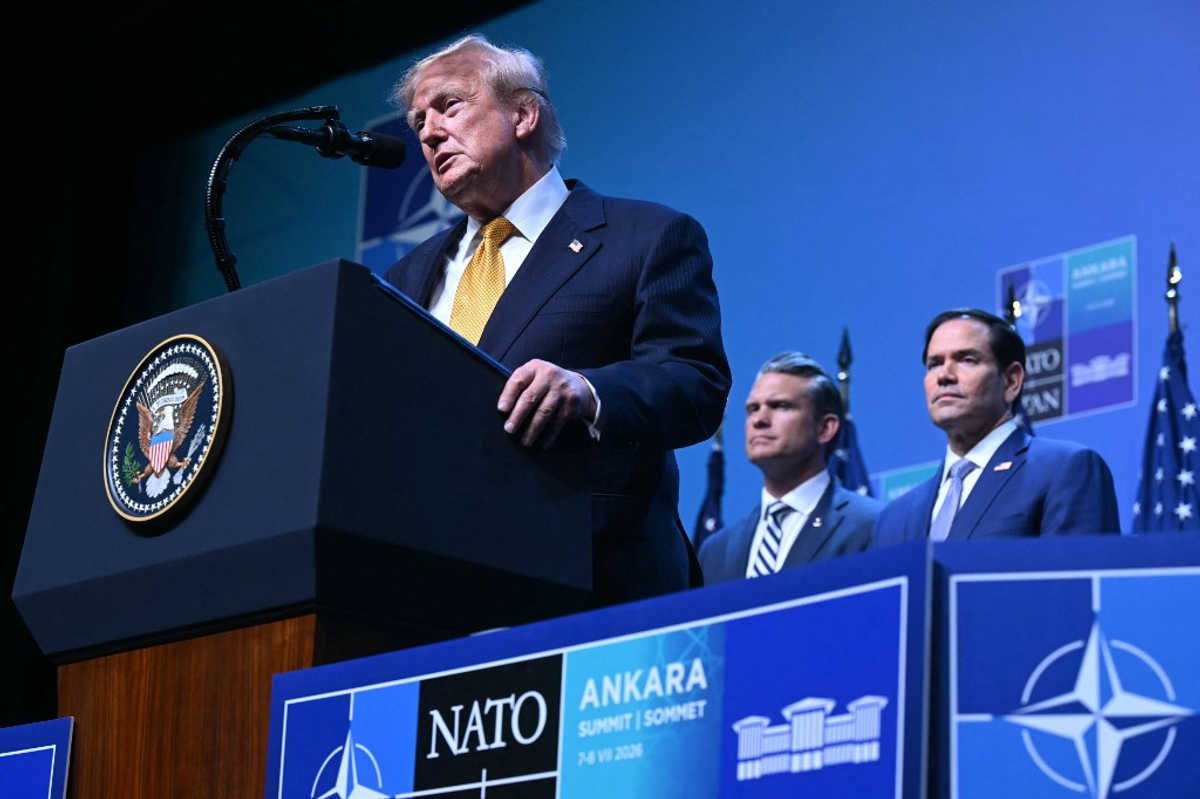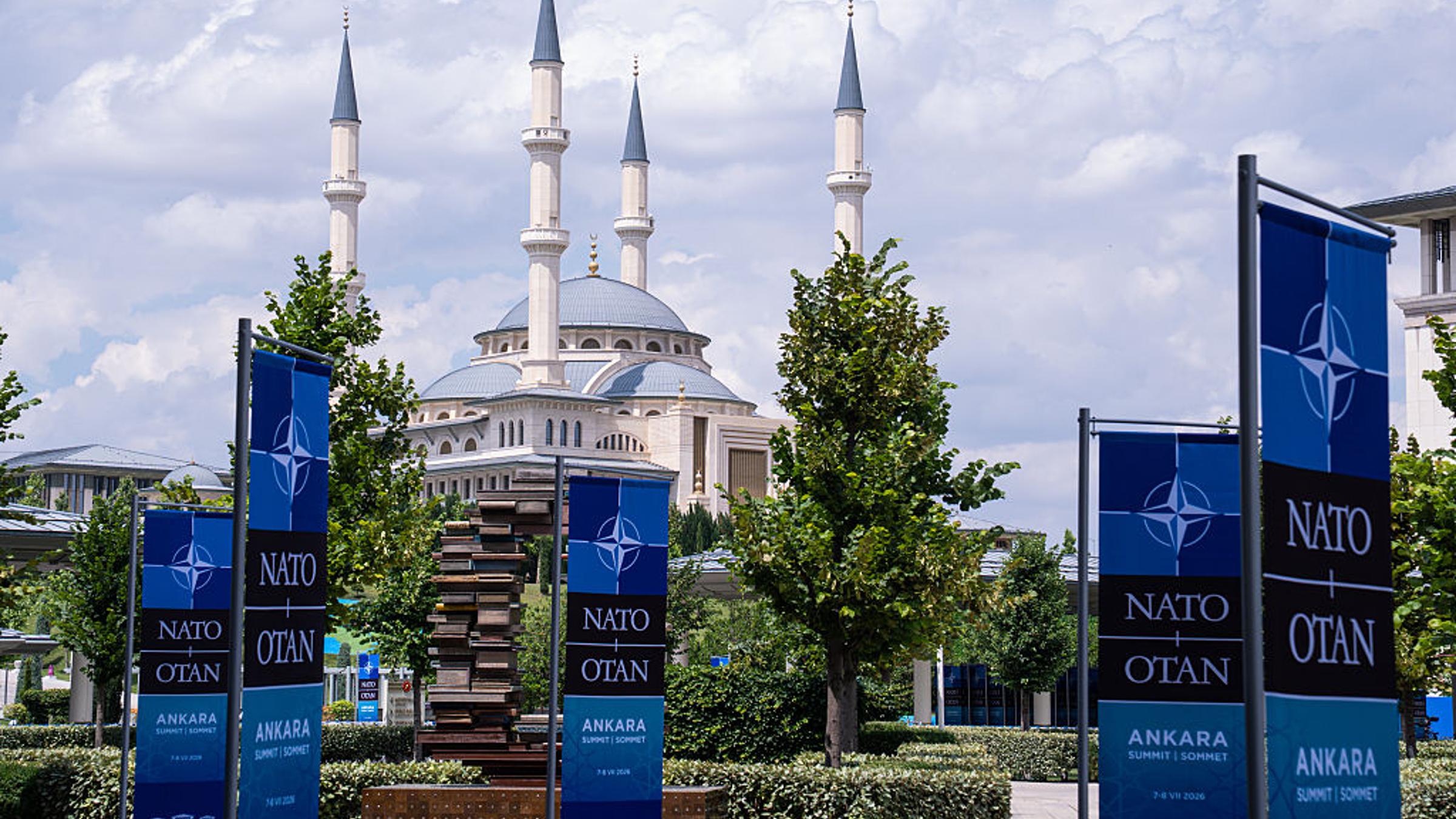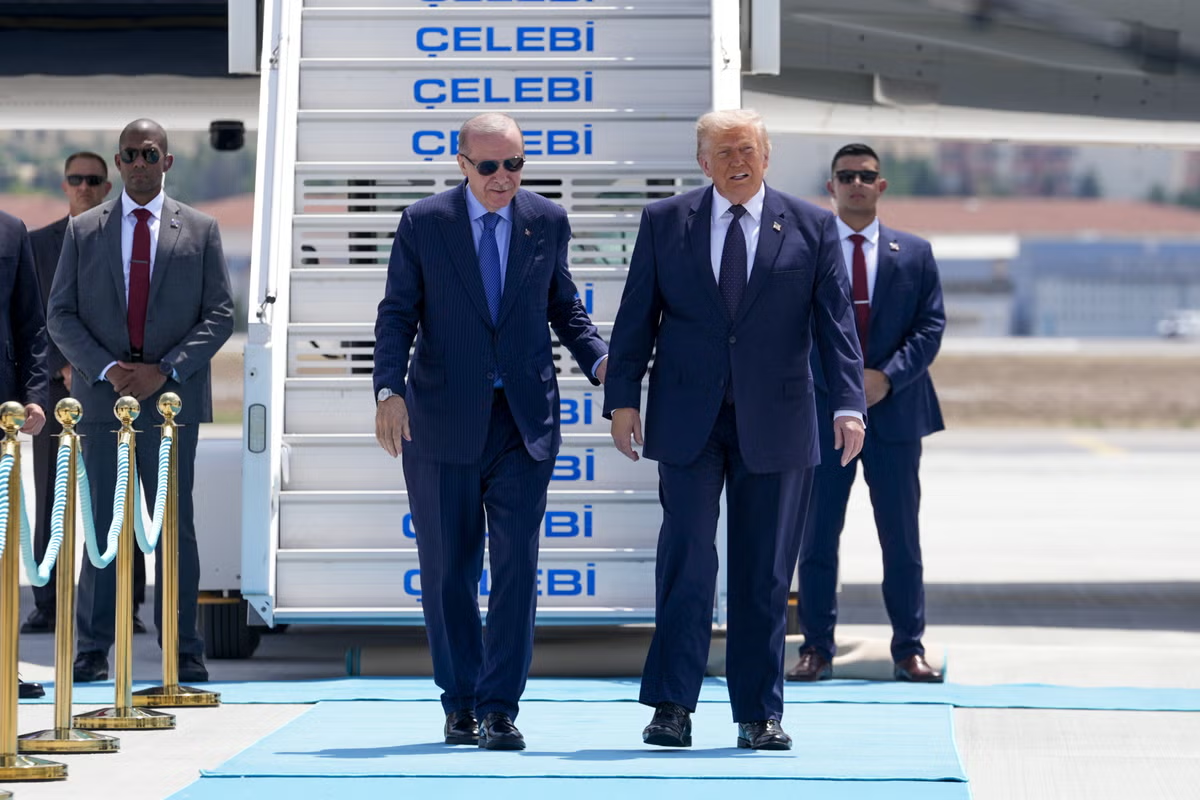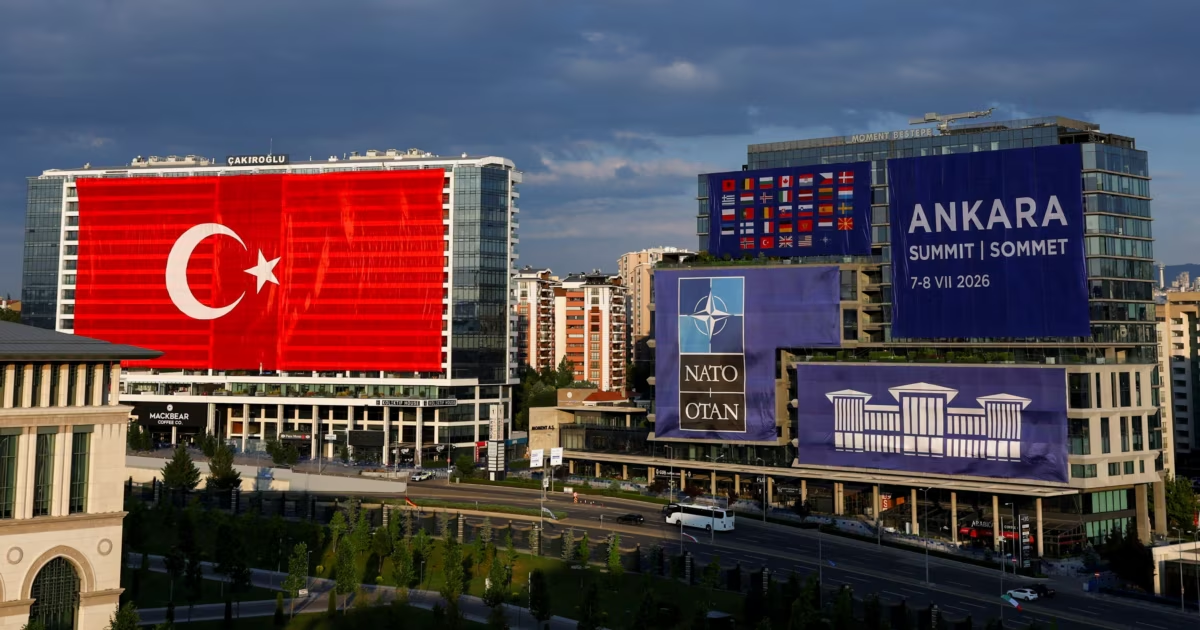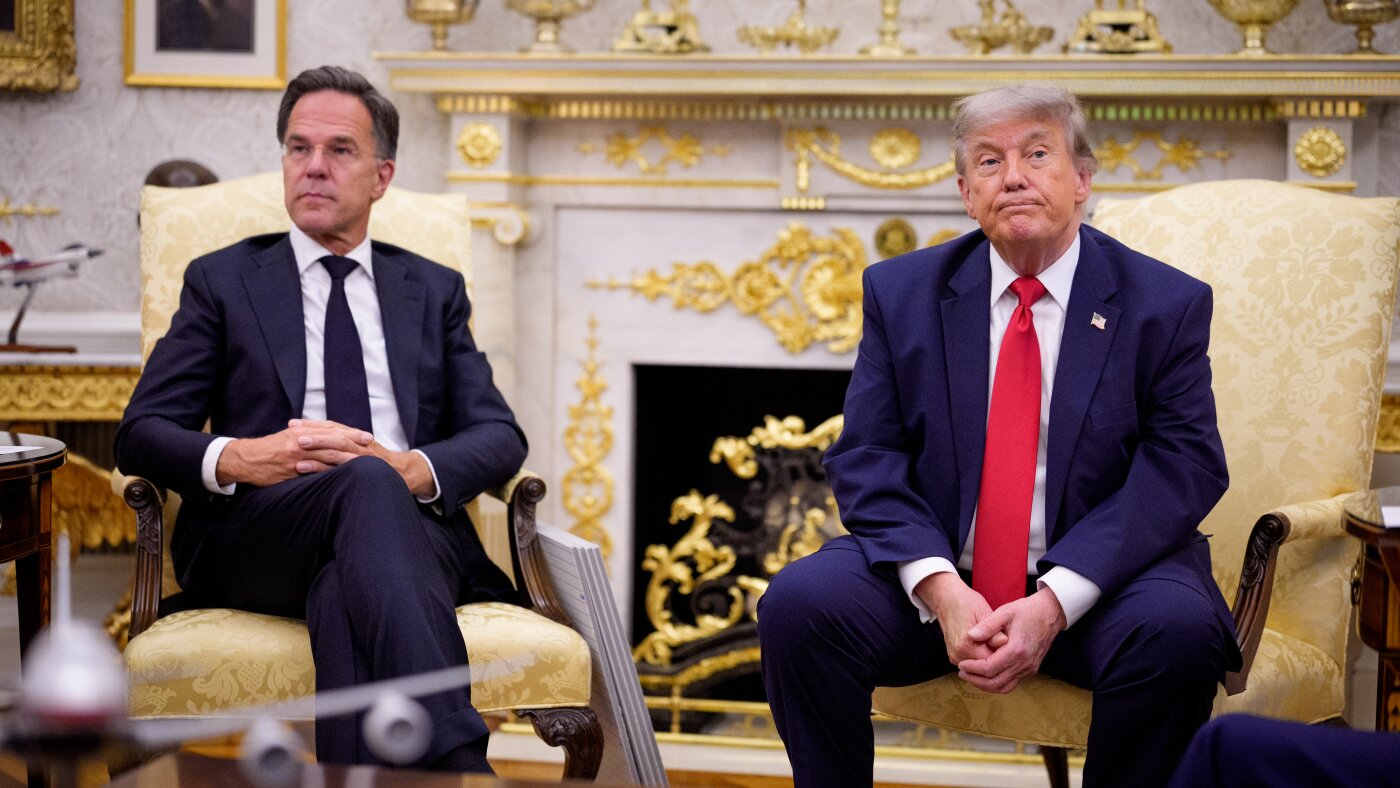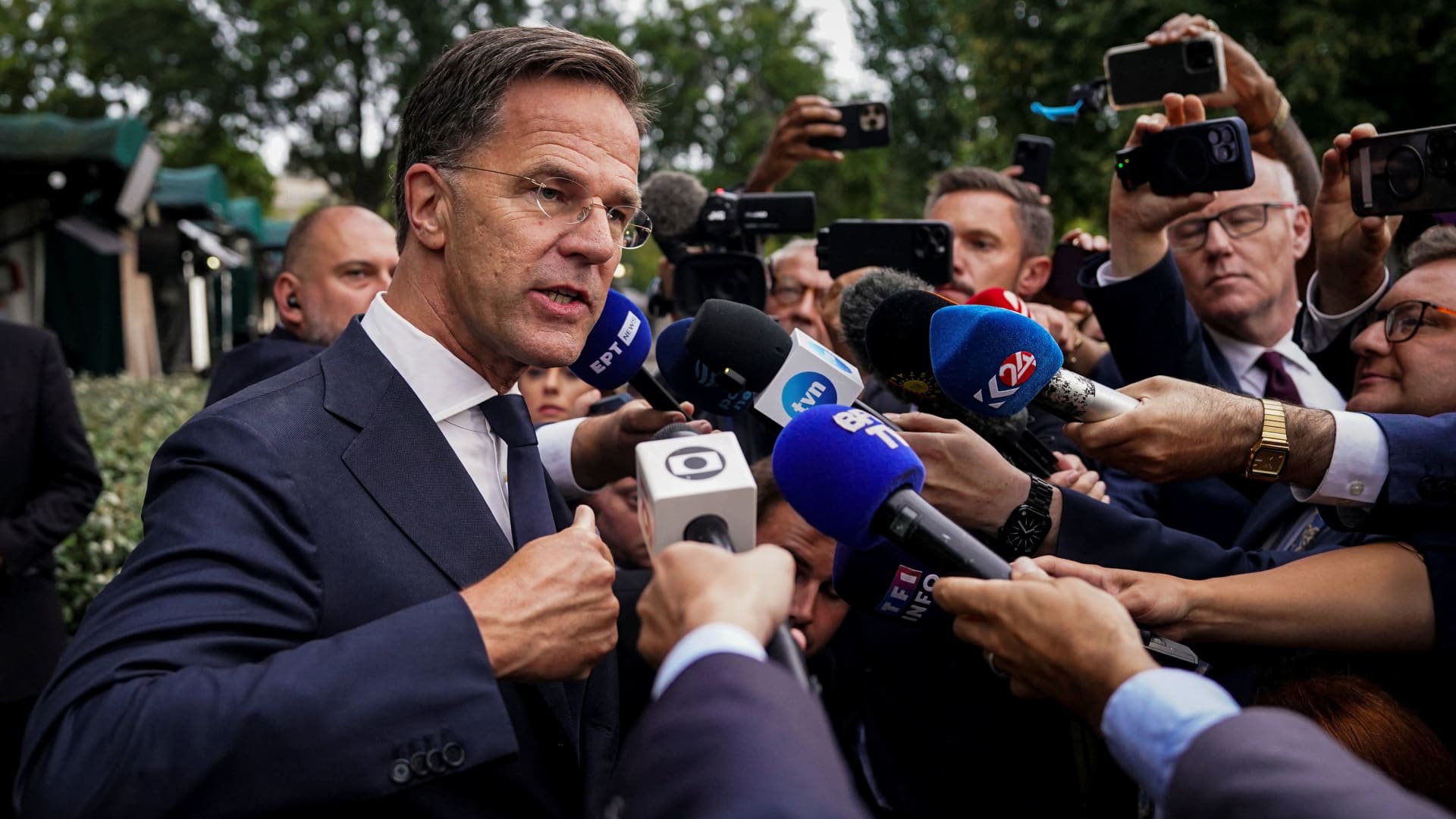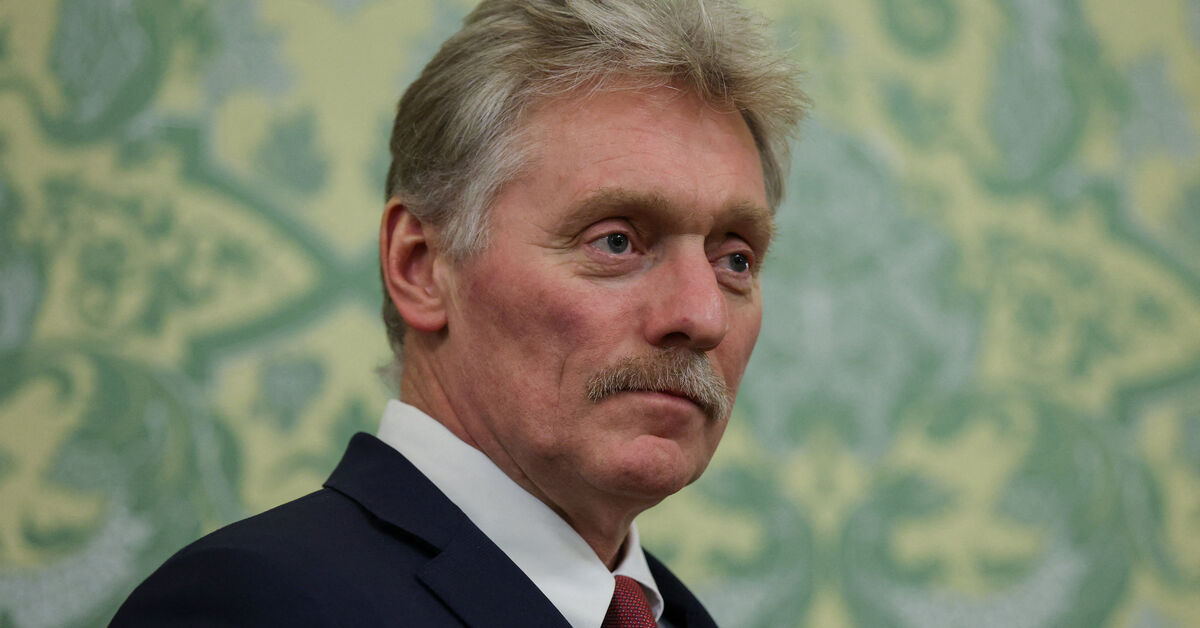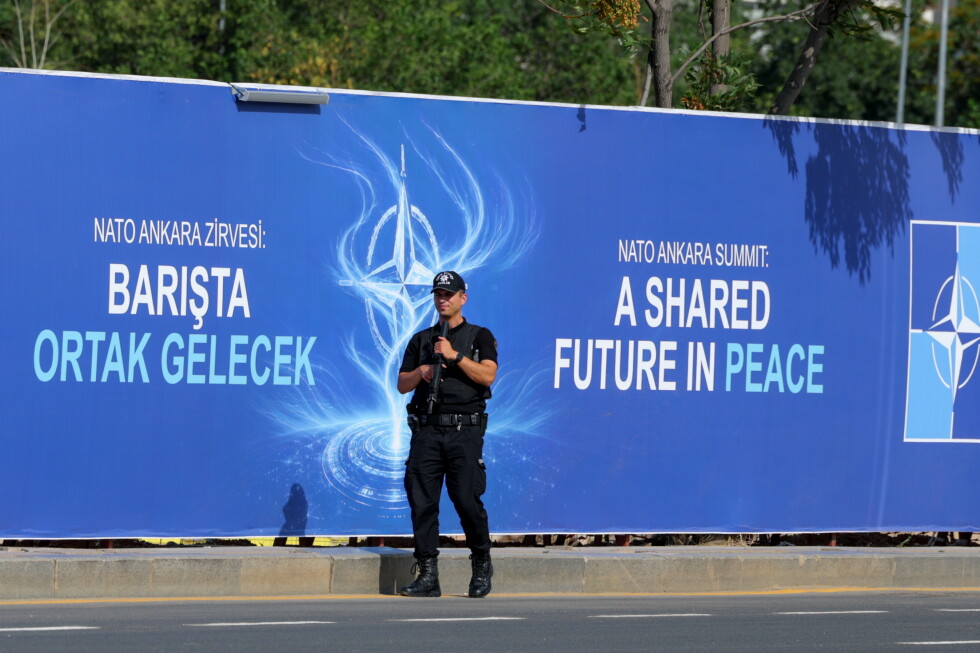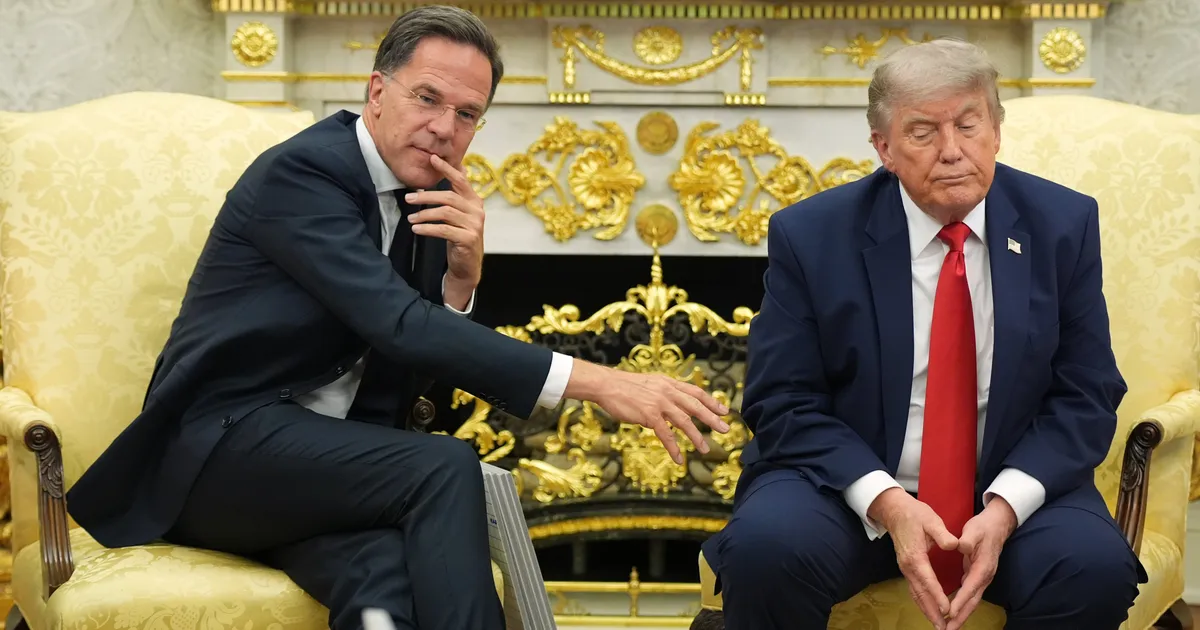
WASHINGTON – As NATO leaders gather in Turkey this week to deal with an increasingly erratic Russian dictator and his now four-year-old invasion of a neighbor, they will simultaneously have to mollify the increasingly erratic head of the organization’s principal founding member, President Donald Trump.A year ago, at the first summit of the North Atlantic Treaty Organization since Trump’s return to the White House, planners conspicuously avoided discussing Vladimir Putin’s attack on Ukraine, the largest war in Europe since World War II, to keep from setting off Trump’s temper. Unlike just about every other leader of a democracy on the planet, Trump has sided with Putin rather than Ukraine.This year, though, the agenda puts Russia and Ukraine front and center as Putin has ramped up lethal attacks against residential buildings in Ukrainian cities. European leaders argue that Putin’s aggression must be confronted, or they will face possible attacks in the near future.“As Ukraine continues to defend its sovereignty, allies and NATO partners must continue to ensure Ukraine gets what it needs,” NATO Secretary General Mark Rutte said at a news conference in Ankara Monday. “Because Ukraine’s security is so closely linked with our own.”How that will sit with Trump, who last summer literally rolled out a red carpet for Putin at a meeting in Alaska, is an open question.Russia's President Vladimir Putin received a red-carpet welcome for his summit with President Donald Trump on Aug. 15, 2025, at Joint Base Elmendorf-Richardson, Alaska.AP Photo/Julia Demaree NikhinsonAfter Putin rained ballistic missiles and drones on Ukrainian cities late last week and again on Sunday and Monday, NATO leaders were quick to condemn the strikes against civilians, actions that are by definition war crimes.Trump, however, remained silent on the matter, not mentioning the latest attacks even once. When asked about them on Monday, Trump refused to criticize Putin and instead blamed both Russia and Ukraine equally.“He wants to end it, and Ukraine wants to end it, and we’re in talks, and we’ll see if we can get it ended. It’s a terrible thing. I ended eight wars and this was, in my opinion, going to be an easier one,” Trump told reporters at an Oval Office photo opportunity.How aggressively, if at all, other leaders will try to coax Trump into more actively supporting Ukraine is unclear. Trump enraged most of them with his threat to seize Greenland – the semi-autonomous territory of NATO ally Denmark.Before departing for the summit late Monday, Trump already hinted that he would likely pick fights with them.“The United States spends more money on NATO than any other country, by far, to protect them, without getting any benefit from so doing,” Trump also wrote, falsely, on social media last Thursday.“Ridiculous for the U.S.A. to continue along this one sided path when the relationship is not reciprocal. They were not there for us!!!” he added later that night.Trump’s nemesisWhile supporting Ukraine and its democratically elected leader to fight off a war of conquest by an autocrat is the obvious choice for leaders in Europe, that has never been how Trump has viewed Ukraine or Volodymyr Zelenskyy.After openly accepting Putin’s help to win the 2016 election, Trump accused Ukraine of aiding his opponent, Democrat Hillary Clinton. He even sent his personal lawyer, Rudy Giuliani, to Ukraine to find evidence for his claim. Giuliani returned full of Russian disinformation purporting to confirm Trump’s suspicions, which in turn led to Trump trying to extort the newly elected Zelenskyy in 2019 into opening an investigation against Trump’s 2020 opponent, Joe Biden.That action ultimately led to Trump’s impeachment on December 18, 2019. Although the Republican-led Senate declined to remove Trump from office, the episode appeared to color Trump’s view of both Ukraine and Zelenskyy going forward.When Putin launched his full-scale invasion of Ukraine in 2022, Trump praised it as “genius” and “savvy.” After retaking office in 2025, Trump essentially blamed Zelenskyy for getting invaded and told him he had “no cards” with which to negotiate a favorable peace agreement.A year later, Zelenskyy has managed to scrounge up a number of cards, including a domestic cruise missile industry that allows Ukraine to hit military and oil production infrastructure more than 1,500 miles deep into Russian territory. Its anti-drone industry has become the envy of the world, enabling it to strike partnerships with countries in both Europe and the Middle East.The display of grit and ingenuity has impressed even Trump, who grudgingly acknowledged that Ukraine and Zelenskyy have been defying expectations.“Well, he’s doing pretty well. Look, no matter how you look at it, he’s doing pretty well. He’s holding his own at least. A lot of people dying on both sides, but I think he’s doing pretty well,” Trump said last month.That has generated the hope that Trump, whose predilection for disparaging “losers” and siding with “winners” is well known, can be persuaded into backing Ukraine now. A joint statement last month by leaders of the G7, the world’s largest democratically run economic powers, actually managed to mention Trump by name three times.“We consider this the right moment to proceed with additional measures, as President Trump has delivered a deal that we support in reopening the Strait of Hormuz,” the post-summit statement read in the section addressing Ukraine.While Trump’s election in 2016 was seen as a one-off, black-swan event that merely had to be ridden out, the fact that American voters chose to return him to power in 2024 has led to a far grimmer global outlook.AP Photo/Julia Demaree NikhinsonManaging a toddlerAmong themselves, European leaders are coming around to the view that Canadian Prime Minister Mark Carney expressed openly in his remarks at the World Economic Forum in January: that the United States is no longer a reliable partner in maintaining the post World War II, rule-of-law-based international order. While Trump’s election in 2016 was seen as a one-off, black-swan event that merely had to be ridden out, the fact that American voters chose to return him to power in 2024 has led to a far grimmer outlook.“Regardless of what happens this week, NATO has already become a zombie alliance,” said Rebecca Lissner, a former White House national security aide and now an analyst at the Council on Foreign Relations.She and other experts said that some NATO members are ramping up their plans to counter Russia on their own, without the United States, but that they will realistically need a few years to build that capability. In the meantime, the consensus approach to dealing with Trump continues to resemble that used to deal with an unruly toddler: constant praise for even mildly positive behavior in hopes of avoiding tantrums.At last year’s NATO summit in The Hague, Rutte even praised him as a “daddy” figure whose firm hand was needed to get alliance members to increase their defense spending. During a visit to the Oval Office in June, Rutte repeated that theme, bringing with him a chart showing how Trump’s repeated cajoling had increased spending, which Rutte called “Trump’s Trillion.”And French President Emmanuel Macron, who had in April publicly scolded Trump for his constantly shifting claims about the Iran war and advising him that it was not necessary to speak every single day, nevertheless invited Trump to a dinner at Versailles, the ornate palace outside Paris, partly to deter Trump from disrupting the G7 summit.Retired U.S. Army Gen. Doug Lute, a former ambassador to NATO, has recommended since Trump’s first term that the alliance stop hosting annual summits because they serve mainly as a stage for Trump to act out. He scoffed at Rutte’s crediting of Trump for the defense spending increases by NATO allies when it was Putin’s aggression that was the motivating force.“His ‘Trump trillion’ should be ‘Putin’s trillion,’” Lute said.Both Macron and Rutte, though, have pointed out that the pandering strategy has worked with Trump before. After issuing his typical threats and insults against NATO partners for “ripping off” the United States ahead of the 2025 summit, Trump nevertheless praised them at his press conference just before he returned to Washington.“These people really love their countries,” Trump said. “It’s not a rip-off, and we’re here to help them protect their country.”And when Macron was asked by a French reporter after the G7 why he had rolled out the “red carpet” for someone like Trump, Macron defended his approach.“Versailles is an instrument of diplomacy and an instrument of power,” he said. “Whether by maintaining a firm position or by re-engaging and extending a warm welcome, I am defending my country’s interests. That is what matters.”European leaders hope to squeeze at least a few more years of partnership with the United States until their own defense production allows their countries to confront Putin and Russia without U.S. help, analysts said.“Trump has basically been on pretty good behavior in large groups of late, you know. He didn’t throw a fit at the G7,” said Stephen Sestanovich, former professor at Columbia University and a State Department veteran with expertise on the old Soviet Union. “Europeans know that they are not yet ready to handle this threat on their own, and as a consequence, they’re bending over backwards to keep Trump on side.”The end result, however, will not be a good one for America, warned Charles Kupchan, a former National Security Council staffer and now a professor at Georgetown University, even if it does mean more warplanes and ships deployed by allies.“There is this kind of enduring hostility toward Europe, which is, I think, really deteriorating our relationships,” he said. “Yeah, there’ll be more weapons and more ships and more tanks in Europe, but we’re going to be in a heap of trouble if nobody likes us anymore.”RelatedDonald TrumpVladimir PutinNATONATO summit
NATO Meets In Turkey To Counter Putin From The East And Trump From The West
The alliance is facing an overt external threat from Russia’s dictator and an internal threat from its principal founding member, the United States.
1,610 words~7 min read