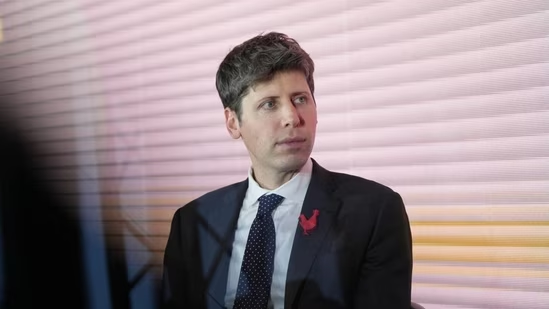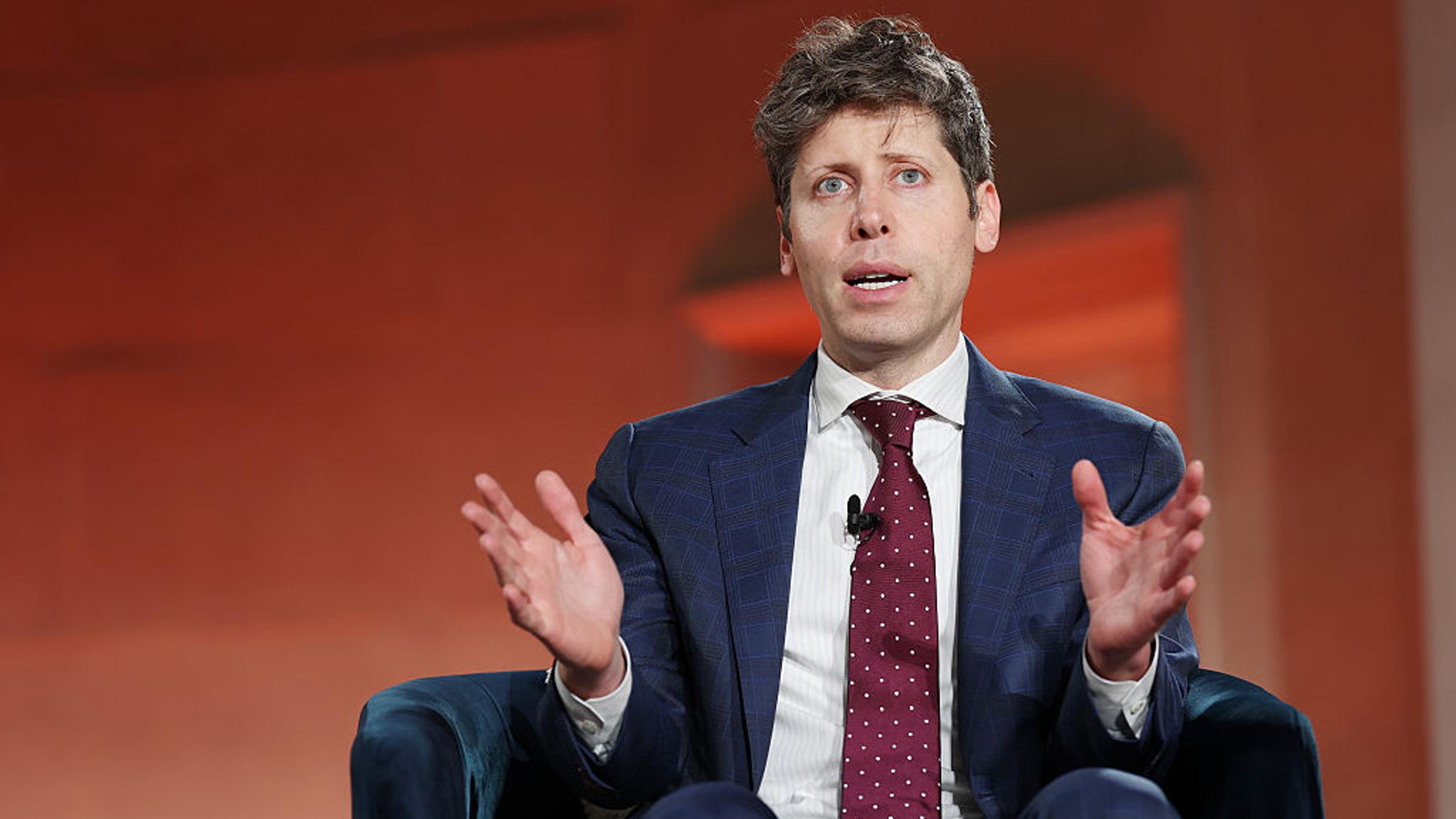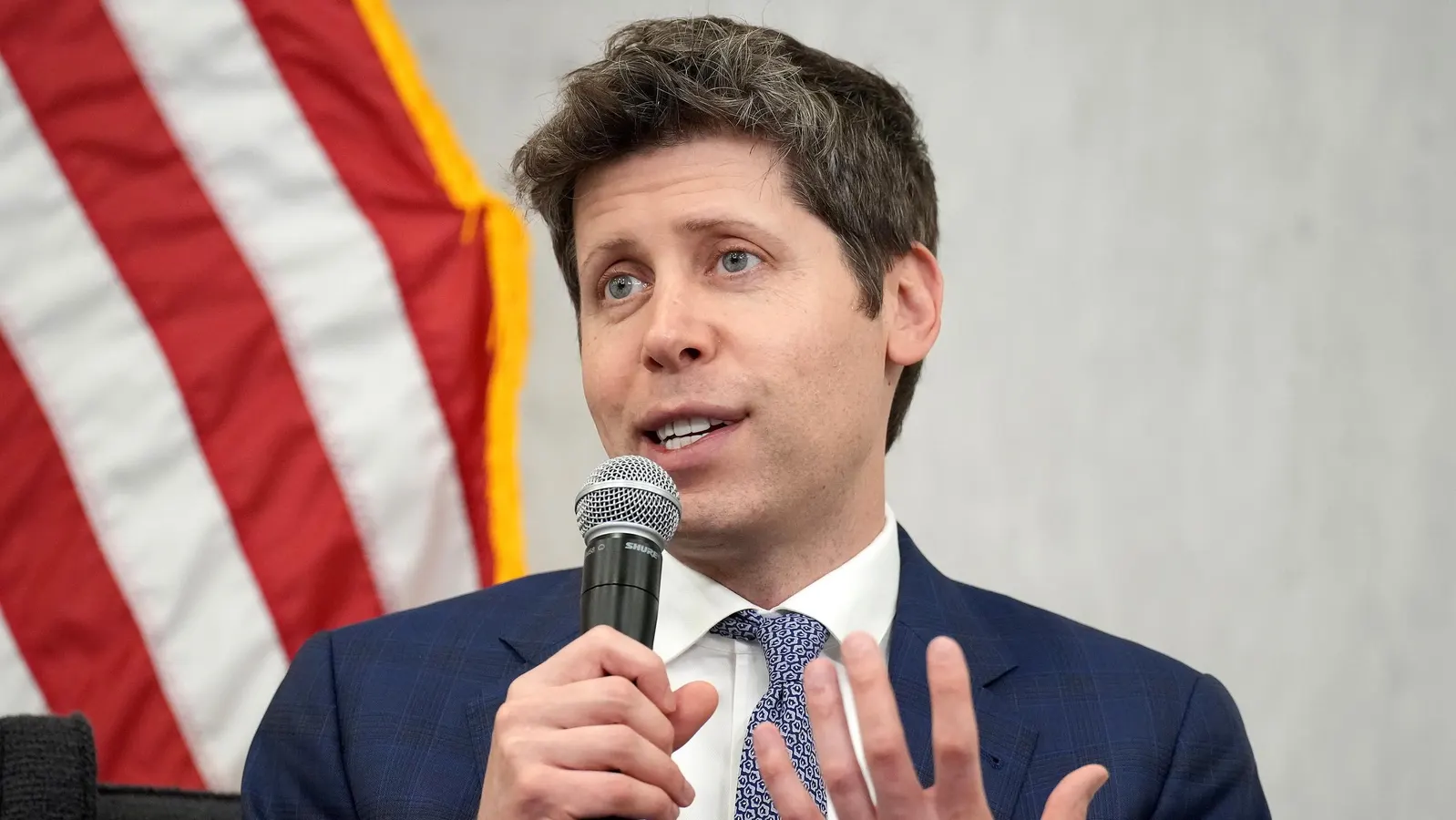
OpenAI CEO Sam Altman recently said the industry has “underestimated how much we’re going to be able to keep people at the center of everything.”Getty ImagesOnly 6% of workers think AI will lead to more job opportunities for them in the long run, while 32% think it will lead to fewer opportunities, according to Pew Research Center. With so many headlines focused on AI job losses, it’s easy to see why workers are worried. The concern is not only whether AI will eliminate jobs, but how quickly it could change day-to-day work.A year ago, Ford CEO Jim Farley warned that artificial intelligence could replace “literally half” of white-collar workers in the U.S., capturing a fear that was already spreading across offices and industries. Since then, many executives have adopted a more measured tone. Instead of focusing only on replacement, more leaders are talking about productivity, growth and how AI can help employees work more effectively.The softer tone may be reassuring, but it also raises a fair question for workers. If companies were warning about major disruption not long ago, why is the message different now? Workers aren’t only listening to what CEOs say. They’re watching layoffs, hiring patterns, smaller teams and rising expectations for clues about where AI may affect jobs next.The Shift Is About Adoption As Much As OptimismThe change in tone is partly about what companies need from employees next. Not long ago, many of the loudest warnings about AI job losses came from executives building, funding or deploying the technology. That kind of language got attention, but it also fed the fear that AI was being adopted mainly as a way to reduce headcount. For companies trying to capture value from AI, that creates a practical problem. The technology can’t deliver much value if the employees closest to it are too anxious or skeptical to use it.There is also a business reason for the shift. An EY-Parthenon survey found that 78% of corporate growth leaders believe AI will accelerate their organization’s growth, while 63% are still using AI primarily for efficiency and productivity. To move AI from a cost-cutting narrative to a growth strategy, leaders need employees to see the technology as something they can work with, not just as something used to replace them.MORE FOR YOUWorkers Still Have Reasons To Worry About AI Job LossesEven with a softer executive message, workers have reason to be cautious. Layoffs may not always be described as AI-driven, but companies are increasingly talking about automation, efficiency and restructuring in the same breath. For employees, that makes it harder to separate reassurance from the reality of smaller teams, fewer backfills and higher productivity expectations.The labor market is also sending mixed signals. Challenger, Gray & Christmas reported that AI was the leading reason for job cuts in June 2026, with 14,029 cuts announced that month. Through the first half of the year, AI had been cited in 101,743 job cut announcements, or about 23% of all cuts. That doesn’t prove every job loss was directly caused by AI, but it does show why workers may be skeptical when the public message suddenly sounds more optimistic.AI Job Losses May Show Up As Job Redesign FirstPart of the problem with the phrase “AI job losses” is that it makes disruption sound like a single event. A company eliminates a role, replaces it with technology and moves on. In many workplaces, the change may be less direct. AI may first show up as fewer backfills, combined responsibilities, smaller teams or new expectations that employees use AI to produce more work in less time.That kind of redesign can be easier to miss because the job title may stay the same while the responsibilities change. A Harvard Business School working paper on AI-native firms found that AI-native startups were 25% smaller than comparable non-AI startups, with lower shares of entry-level workers and managers, yet comparable valuations. Although the study focused on startups, it points to a broader question employees should be asking: how is AI changing the way companies organize work before it changes the org chart?The Real Risk Depends On Your Task MixThe risk isn’t the same for every worker, even within the same industry or job title. Two people can have similar titles and very different levels of exposure depending on how much of their work is repetitive, rules-based or easy to standardize. The more a role depends on routine documentation, basic analysis, scheduling, reporting or content production, the more likely parts of that job will be affected by AI.Human value still matters, but it may need to show up in different ways. Work that requires judgment, trust, relationship management, ethical decision-making, cross-functional influence and accountability for outcomes is harder to automate fully. For workers, the more useful question is where their experience, judgment and business context still make them harder to replace.AI Fluency Is Becoming Part Of Career SecurityThe answer is not to become an AI expert overnight. A more useful goal is to build enough AI fluency to understand how the technology is changing their roles. That includes knowing which tasks AI can speed up, where it creates risk, how to check its output and how to use it in ways that improve business results.There is also evidence that AI skills can help candidates stand out in the hiring process. A March 2026 hiring experiment from researchers at the Oxford Internet Institute found that candidates who listed AI skills were significantly more likely to receive interview invitations, with AI skills increasing job interview probabilities by roughly 8 to 15 percentage points across graphic design, office assistance and software engineering roles. The takeaway for workers is not to add vague AI language to a resume. It’s to show how they can use AI to solve problems, improve quality or make better decisions.CEO Optimism Is Not A Career StrategyThe changing message from tech CEOs may be a sign that leaders understand how much fear surrounds AI, but workers should still pay attention to what companies do, not only what executives say. Are roles being combined? Are teams hiring fewer junior employees? Are open positions going unfilled? Are employees expected to produce more with smaller teams? Those patterns may reveal more about the future of AI job losses than any single public comment from a CEO. The goal is to watch how expectations are changing, build fluency where it matters and make their value visible before the next round of disruption arrives.If you’re tired of generic career advice and want practical guidance on navigating layoffs, toxic bosses, job searches, career transitions and AI’s impact on work, subscribe to my free newsletter, Corporate Escape Artist. Join more than 10,000 professionals receiving weekly career insights and strategies.
Why Tech CEOs Are Changing Their Message On AI Job Losses
Why are tech CEOs changing their message on AI job losses? Here’s what workers should watch as AI changes hiring, roles, and career security.
1,119 words~5 min read