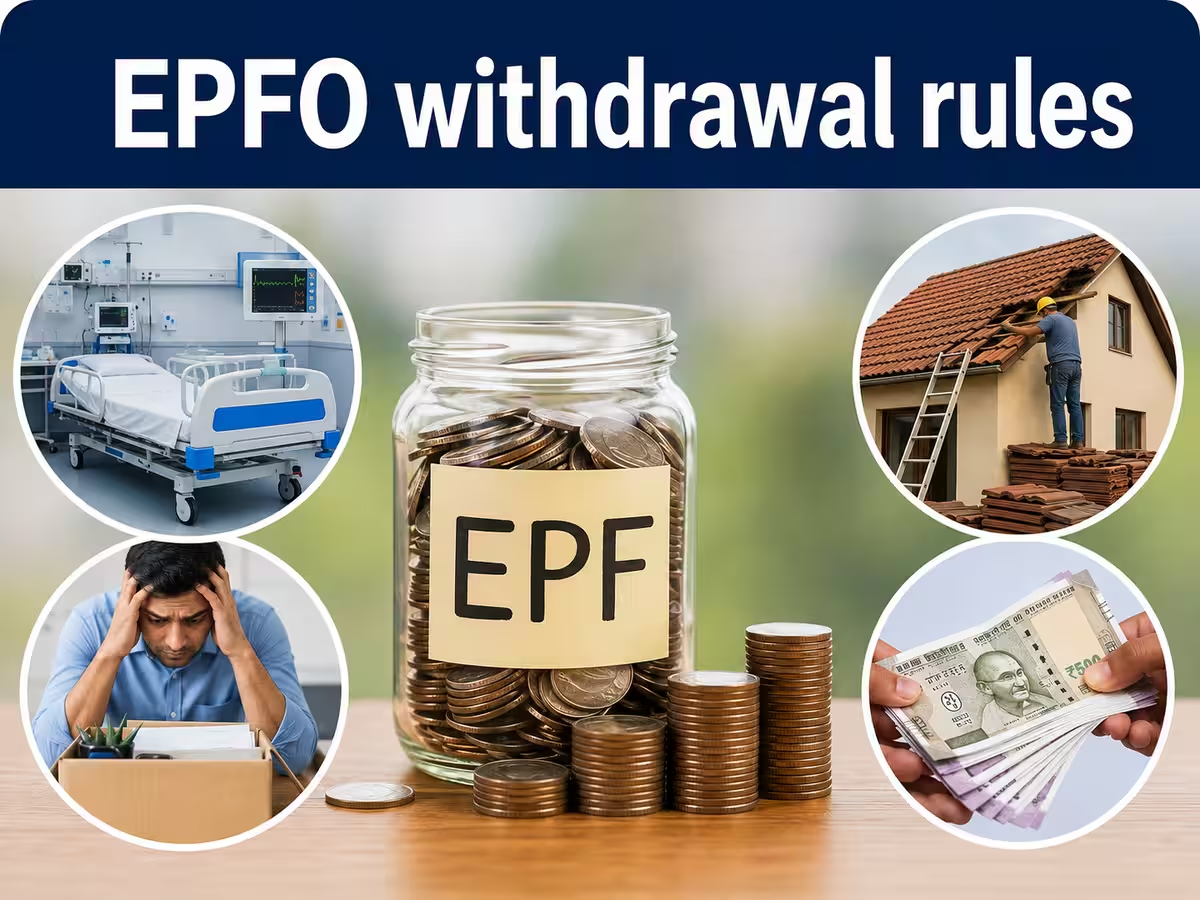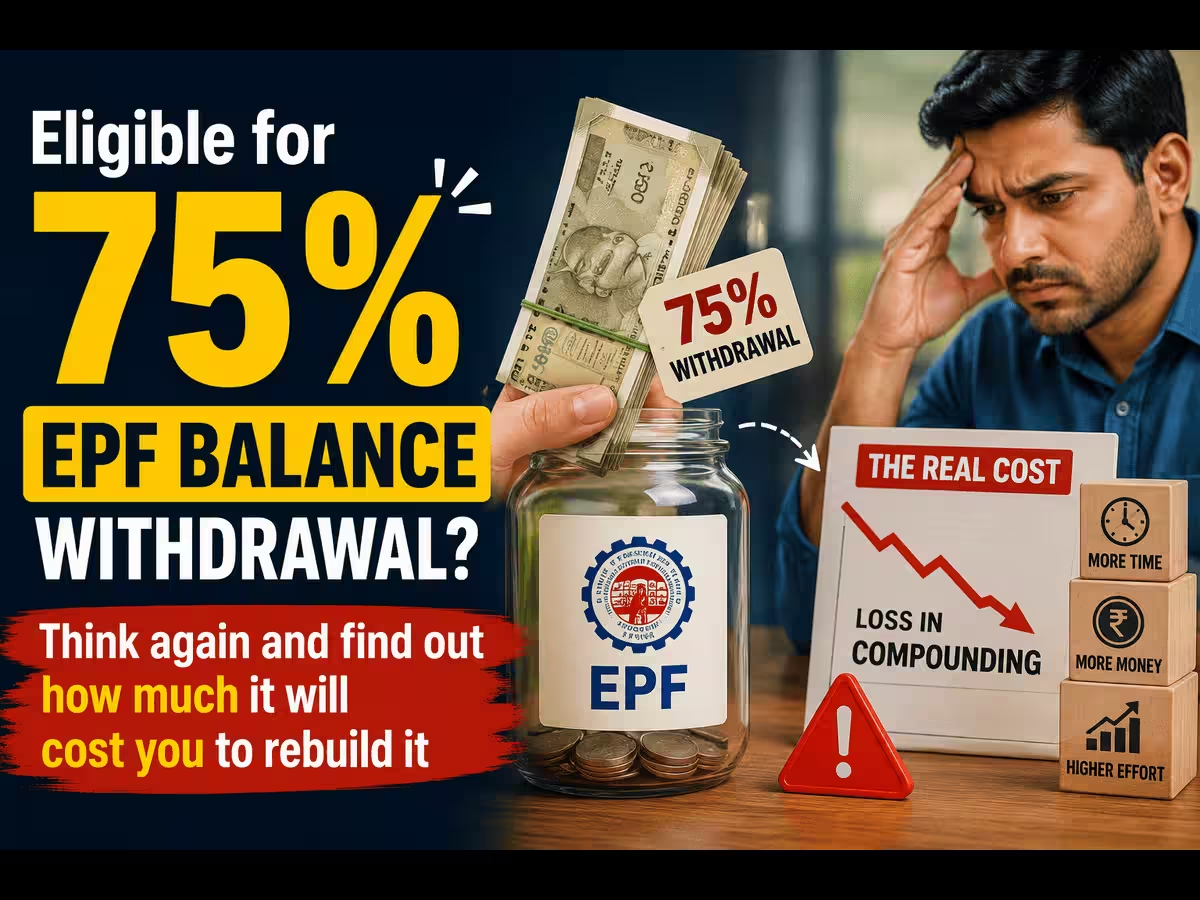
Many EPFO subscribers are wondering if the government has changed rules pertaining to withdrawals under the Employees' Provident Fund (EPF) after the central government announced the EPF 2026 Scheme last week.The Employees' Provident Funds Scheme, 2026, follows the Code on Social Security, 2020.Employees contributing to the Employees' Provident Fund (EPF) can withdraw part of their savings before retirement for specific purposes. Whether it's meeting medical expenses, paying for higher education, funding a wedding, buying or building a house, or dealing with an emergency, the EPF scheme allows advance withdrawals under prescribed conditions.The Employees' Provident Fund Organisation (EPFO) through a social media post on X (formerly Twitter) has issued a simple guide explaining how often members can claim EPF advances for different needs. While some withdrawals, such as those for illness, have no limits for the number of claims, others are capped based on the purpose.Puneet Gupta, tax partner, EY India, says, “The EPF Scheme, 2026, continues to permit withdrawals in specified situations such as retirement, migration for permanent settlement outside India and taking up employment abroad.”Gupta further explains, “However, one important change relates to employees who leave employment before reaching retirement age. Under the earlier framework, employees could claim full withdrawal after remaining unemployed for 2 months, subject to applicable conditions. Under the new scheme, employees will need to wait substantially longer for 12 months before becoming eligible for premature final settlement.”Partial withdrawals continue for important life eventsGupta says that under the new framework, members may be eligible to withdraw up to 100% of their ‘eligible member balance’ for specified purposes, subject to prescribed conditions. “However, members are generally required to maintain a minimum balance equivalent to 25% of aggregate contributions standing to their credit in the fund,” says Gupta.Here's a look at the six conditions when an EPFO member can opt for EPF advance withdrawals.1. EPF advance for illnessEPF members can withdraw money to meet medical expenses for themselves or their family members. There is no limit on the number of times an advance can be claimed for this purpose, subject to the applicable EPF rules.2. EPF advance for educationMembers can withdraw EPF money to meet education-related expenses for themselves or their children. This facility can be availed up to 10 times during the entire period of EPF membership.3. EPF advance for marriageEPF members can also withdraw money for marriage expenses of self or eligible family members. Such withdrawals are permitted up to five times during the membership period.4. EPF advance for housing-related needsThe EPFO allows advance withdrawals for several housing-related purposes, including:Purchase of a flat, house or residential plotConstruction of a houseRepayment of a home loanRenovation, alteration or improvement of a houseWithdrawals for these purposes can be made up to five times during the EPF membership, subject to eligibility conditions applicable to each category.5. EPF advance under special circumstancesMembers can also apply for EPF advances under certain special circumstances notified by the Central Board of Trustees (CBT), EPF. Such withdrawals are allowed up to two times in a financial year.6. Uniform withdrawal limit after 12 months of EPF membershipAccording to the EPFO's latest guidance, after completing 12 months of EPF membership, members can withdraw up to 75% of their EPF balance, including both the employee's and employer's shares along with accrued interest, subject to the rules applicable for the relevant advance category.Note: While the guide explains how many times EPF advances can be claimed, the actual withdrawal amount and eligibility depend on the purpose of withdrawal and the conditions prescribed under the EPF 2026 Scheme.
EPF withdrawal rules explained: How many times can you withdraw PF for illness, marriage, education, home purchase and special circumstances? - The Economic Times
Latest EPF withdrawal rules: EPFO subscribers can withdraw funds for specific needs like illness and education. Withdrawals for marriage and housing are permitted up to five times. Special circumstances allow advances twice annually under new guidelines.
587 words~3 min read