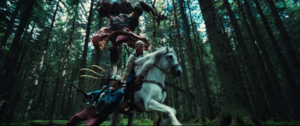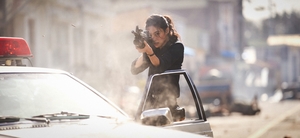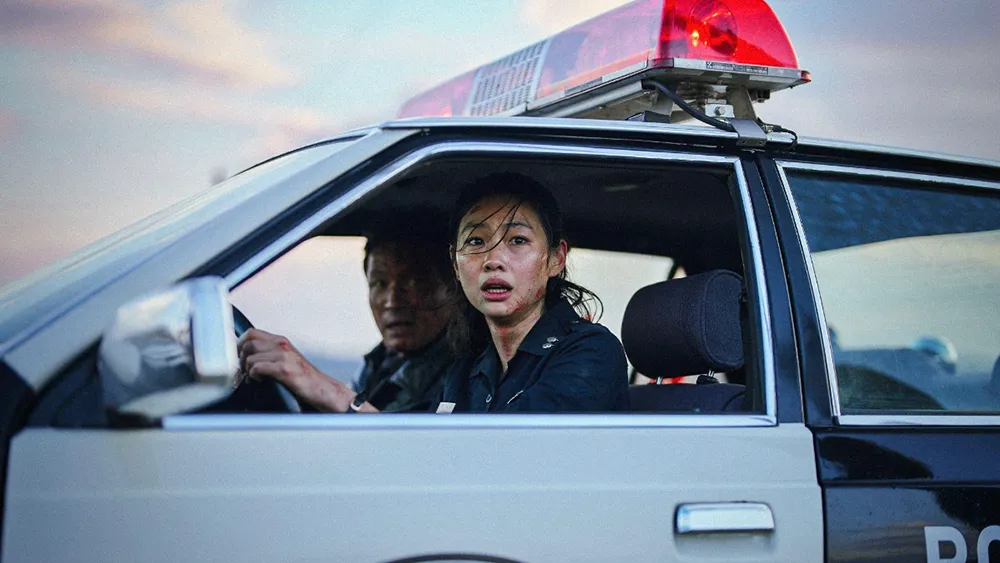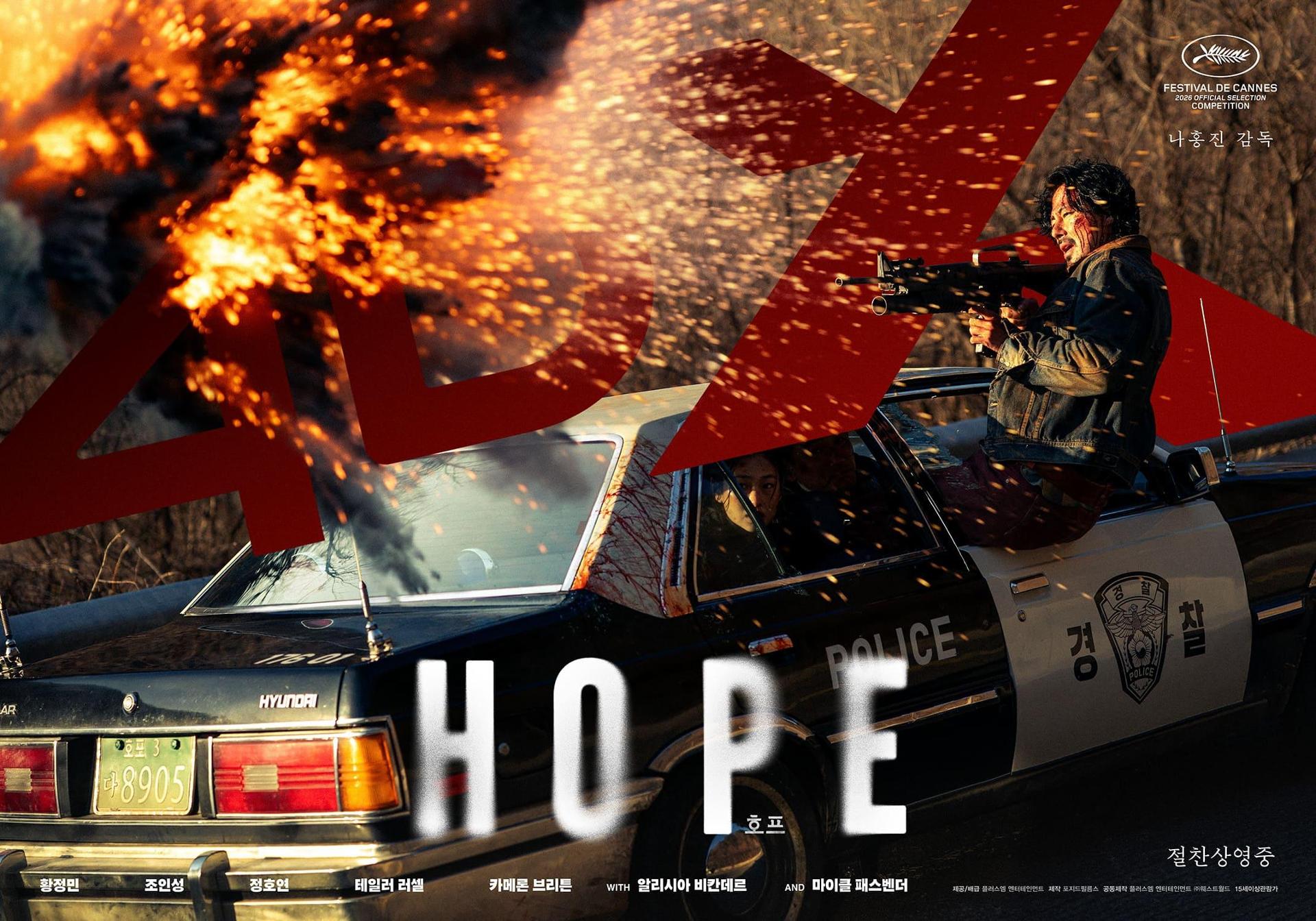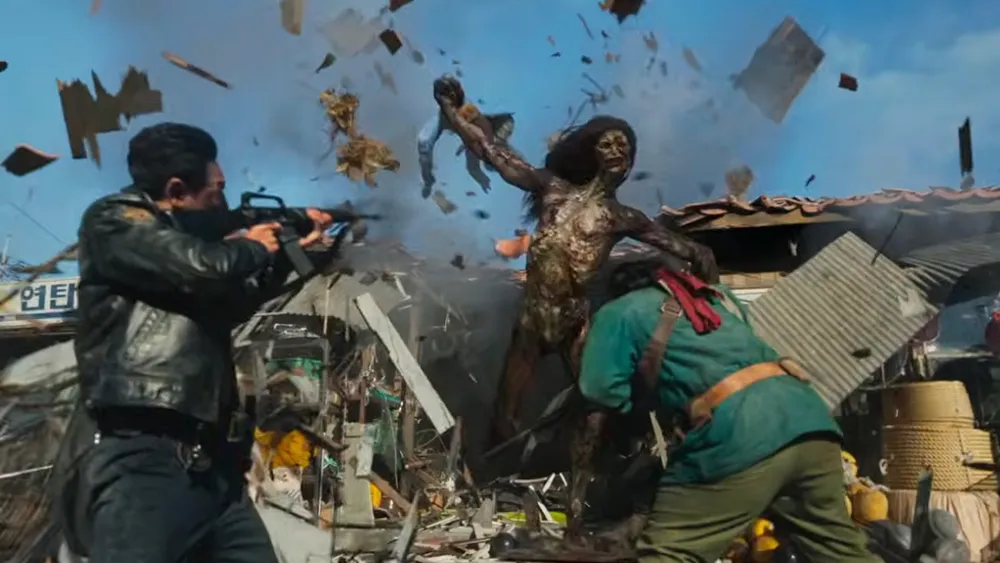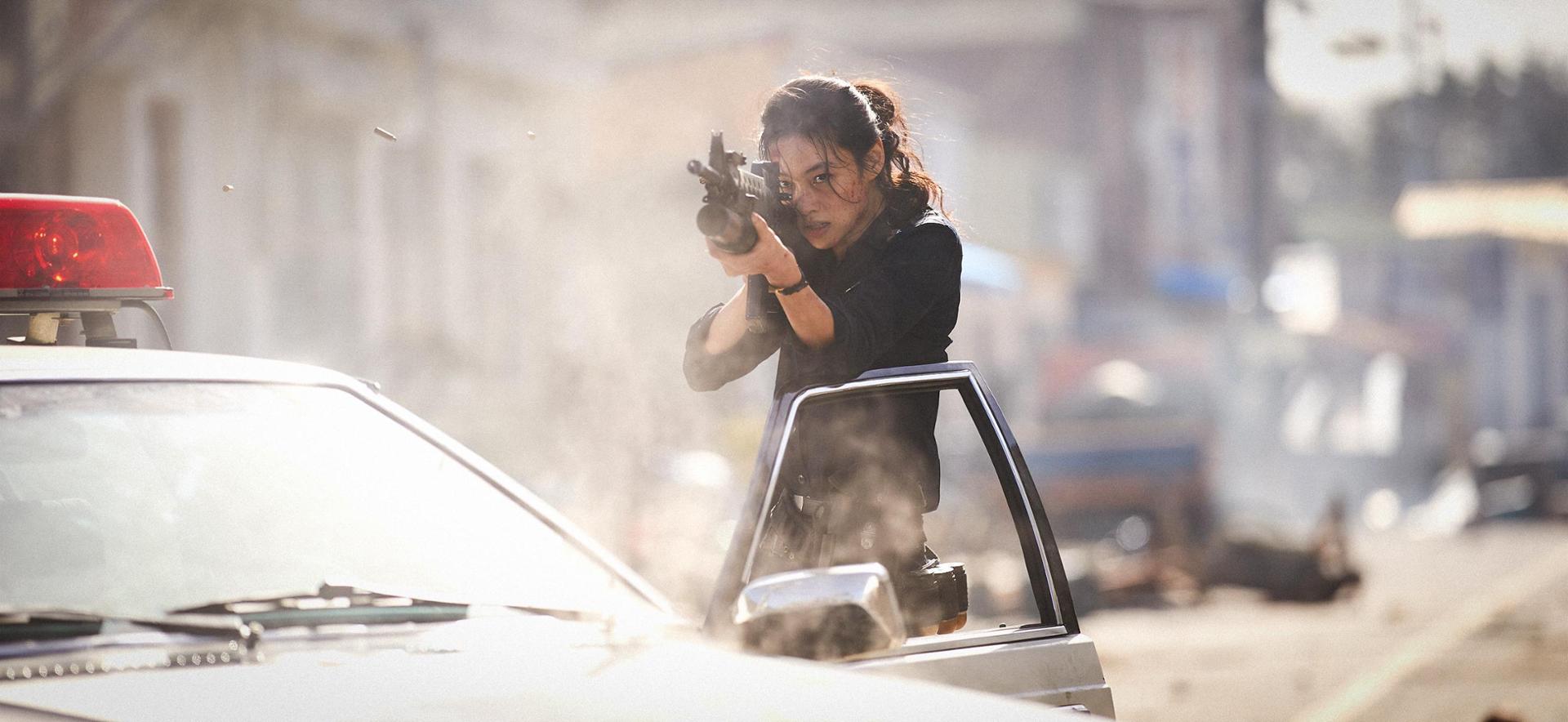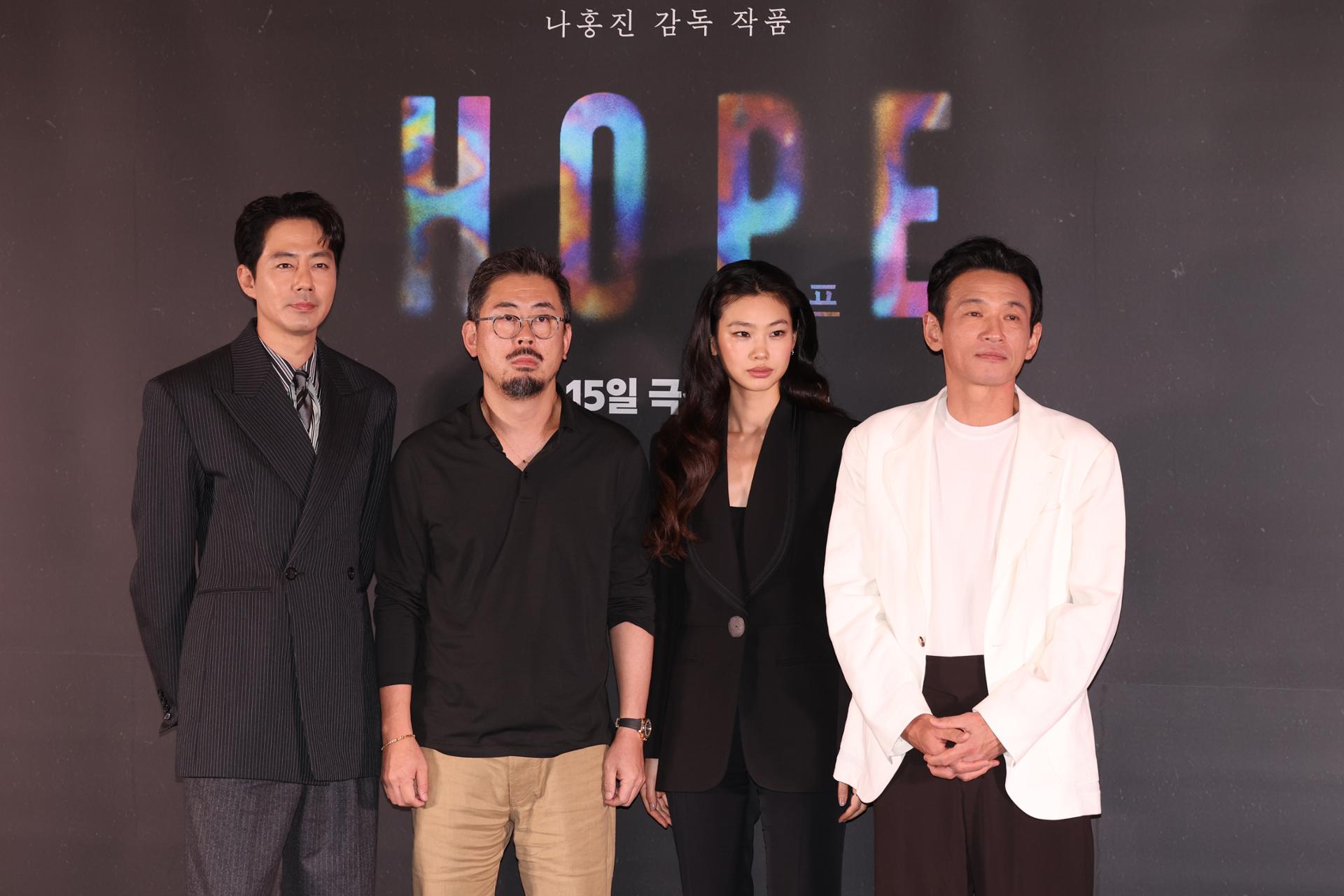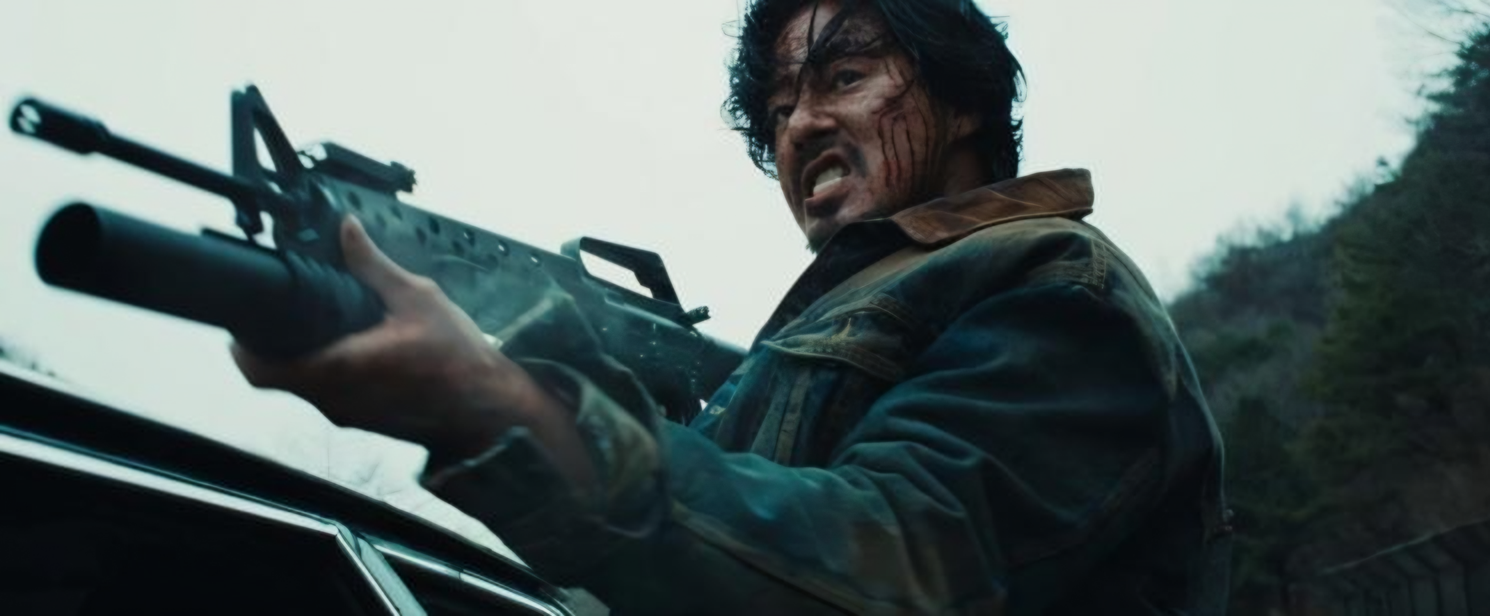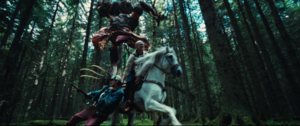
The most expensive Korean film ever made delivers spectacle worth the price — and an irresistible oddness that suggests its director is in on the joke "Hope" (PlusM Entertainment) "Hope" is a shock-and-awe monster rampage stretched to 160 minutes, and that might be all you could ask for.The set pieces are stunning: cars flung around like toys, torrents of gunfire raking creatures that simply will not die, storefronts ripped open and streets buried in rubble, all captured in tracking shots so fluid it's hard to say how anyone pulled them off. The monsters themselves are nothing special to look at — imagine "Attack on Titan" by way of "Resident Evil," with a little "Predator" thrown in — but in motion, they rip.The mayhem splits across two locales: first a small rural town, where the hunt plays out like urban warfare among mom-and-pop shops and narrow alleys, and later a deep primeval forest that gives way to a full-throttle, "Mad Max"-style highway chase. Cranked to the point of madness and shot with dazzling precision by "Parasite" cinematographer Hong Kyung-pyo, the spectacle alone is worth the trip to the theater.It also proves a point: Hand Korean filmmakers a big enough budget, and they can stage Hollywood-level carnage with style to spare — a kimchi creature blockbuster, if you will. "Hope" (PlusM Entertainment) All of which is to say that the story never enters into it. "Hope" barely bothers with setup, and the scene-setting it does provide is purely for vibes. The film runs on fever-dream logic, its world only loosely acquainted with the havoc unfolding inside it. As best one can tell, it's set in the 1980s, in a small harbor town near the Demilitarized Zone, but it could be almost anywhere; beyond the anticommunist propaganda signs scattered here and there, the movie shows little interest in period detail.A cow is found slaughtered on a country road. Police chief Bum-seok (Hwang Jung-min) shows up in a kitschy visor cap and black leather jacket — more Luftwaffe pilot than small-town cop — while Sung-ki (Zo In-sung) and his hunting buddies come along like drifters who wandered in from a revisionist Western. The hunters suggest a tiger might be the culprit, but that theory doesn't hold up for long.Soon enough, the town starts coming apart: bodies in the streets, buildings with holes torn clean through them, debris sailing overhead to a feral howl. Bum-seok, hopelessly out of his depth, falls in with locals who apparently already know about the monsters and turn up armed to the teeth — "Where did all these rifles come from?" he asks, not unreasonably — roaring around in truck beds like a guerrilla outfit. When the creature finally has Bum-seok cornered, Hoyeon's steely rookie officer pulls up with a squad car somehow full of heavy weaponry. It's that kind of movie. Hoyeon stars in"Hope." (PlusM Entertainment) Sung-ki's crew, meanwhile, ventures into a forest so outlandishly dense and green it resembles nothing in Korea — the production decamped to Romania for these stretches — though it does evoke the haunted woods of Na's previous work, "The Wailing." There, the aliens are waiting, and a second front opens up.The characters more or less get the same perfunctory treatment. Na grants them barely any interiority, and even less competence. Bum-seok spends the movie panicked and overwhelmed — first by terror, then by a baffling compassion toward the very creature he's chasing. Sung-ki has the swagger of an action hero and, it turns out, none of the nerve; the monster tosses him around like a rag doll, and his only reliable virtue is his cartoonish inability to die.Language constantly fails them, too. Aside from profanity, of which there's plenty, nearly everything these people say misses its mark or means nothing at all, and the sheer histrionics of their delivery push even the most dire scenes into self-parody — a point, one suspects, that went largely unnoticed by non-Korean audiences at Cannes. In fact, failed communication might be the one idea "Hope" commits itself to.The creatures' lone eyewitness, an elderly ginseng hunter, lets his crucial account drift into an endless story about his own feces; everywhere else, warnings go unheeded, orders unheard, and the heroes' schemes fall apart in the telling. Hwang Jung-min stars in"Hope." (PlusM Entertainment) Zo In-sung stars in"Hope." (PlusM Entertainment) And then there are the aliens, who arguably have it worst. Performed through motion and facial capture by Michael Fassbender and Alicia Vikander (with Taylor Russell and Cameron Britton), they've apparently come to Earth with cosmic stakes on the line — only to be harassed at every turn before spending the film's inscrutable final minutes solemnly reciting mock-profound gibberish with zero worldbuilding behind any of it.So "Hope" has the budget and scale of a four-quadrant tentpole and almost none of the machinery; it plays like parody until you suspect it is. There's no lost family to avenge, no rousing speech, no lesson about courage or sacrifice — none of the Spielberg awe, let alone the Michael Bay flag-waving, that's usually trotted out to rationalize this much destruction as a fight between good and evil. What the film offers instead is a quirky, off-kilter energy deployed at every peak, whether by way of toilet humor, morbid digressions, or absurdist asides that come out of nowhere — and make the whole thing all the more interesting for it. "Hope" (PlusM Entertainment) The longer it runs, the more the mayhem feels like an elaborate prank, almost as if the blockbuster is Na's delivery system for trolling.Part of it is sheer excess, the camera dwelling on flesh, blood and bodily fluids well past the point of taste (in one memorable scene during the forest chase, the severed lower half of a body rides past on horseback). But the stranger current is one of repetition, dreamlike and almost Lynchian, buried in the margins. Bum-seok and the townspeople keep trading the same awkward line — "You gonna stay here?" — until it becomes a sort of punchline.The props get in on the act, too: A potato randomly turns up mid-car chase, shoved into Bum-seok's hands, and later a sweet potato finds Hoyeon by way of a doctor in a field hospital full of casualties. Even the dead cow makes frequent comebacks, scattered across town and then standing, inexplicably, inside Bum-seok's police station. None of it adds up, but it all makes for something oddly transfixing.Is "Hope" meant as a send-up of Hollywood's bloated sci-fi assembly line? Are the incongruities deliberate, or seams left by a notoriously protracted production? And perhaps the question that matters most at home: Will Korean audiences find this unruly thing exhilarating or exhausting — and will enough of them buy tickets to push the most expensive Korean film ever made into the black and give its now-insolvent distributor, PlusM Entertainment, a shot at recovery?No one can tell for sure, but what seems certain is that Na has slipped the enigmatic unease of "The Wailing" into the pulpiest doomsday blockbuster imaginable. A decade of waiting, a record budget and, at the center of it all, a director who still refuses to explain himself — somehow, that feels exactly right."Hope" hits Korean cinemas July 15.
'Hope' is the weirdest blockbuster money can buy
"Hope" is a shock-and-awe monster rampage stretched to 160 minutes, and that might be all you could ask for. The set pieces are stunning: cars flung around like
1,201 words~5 min read