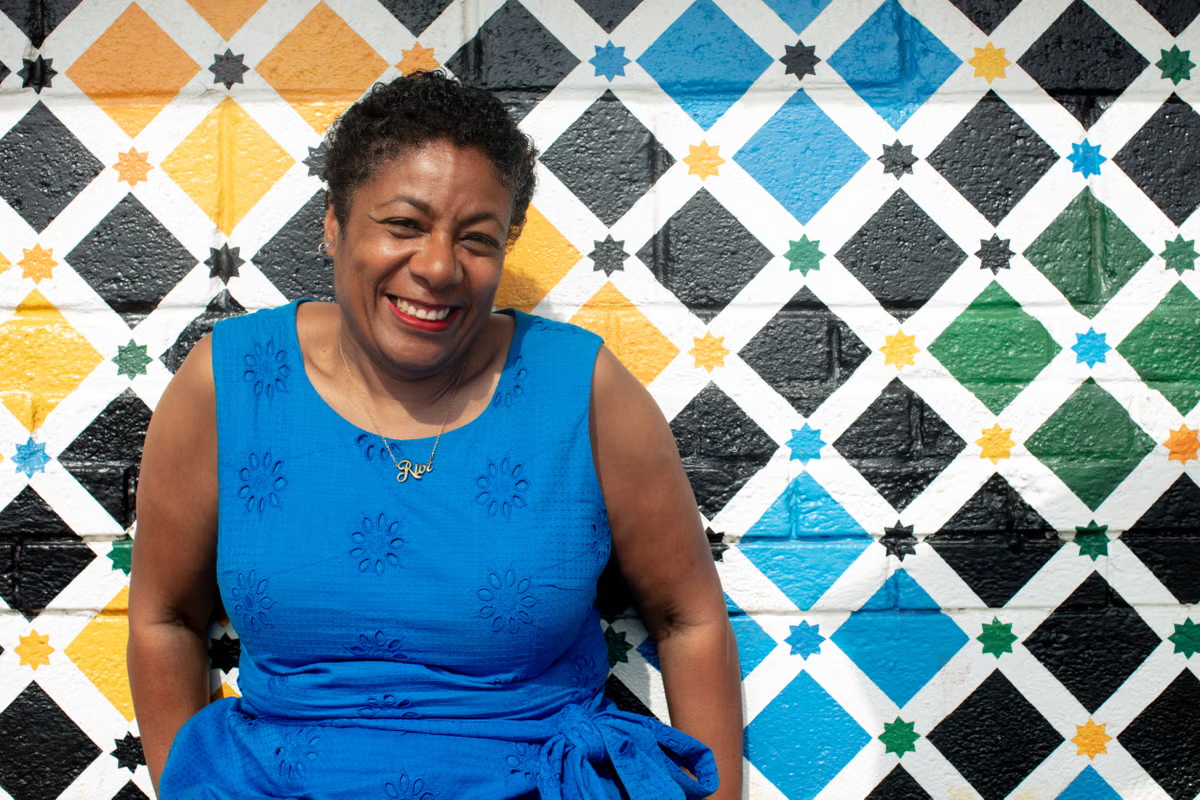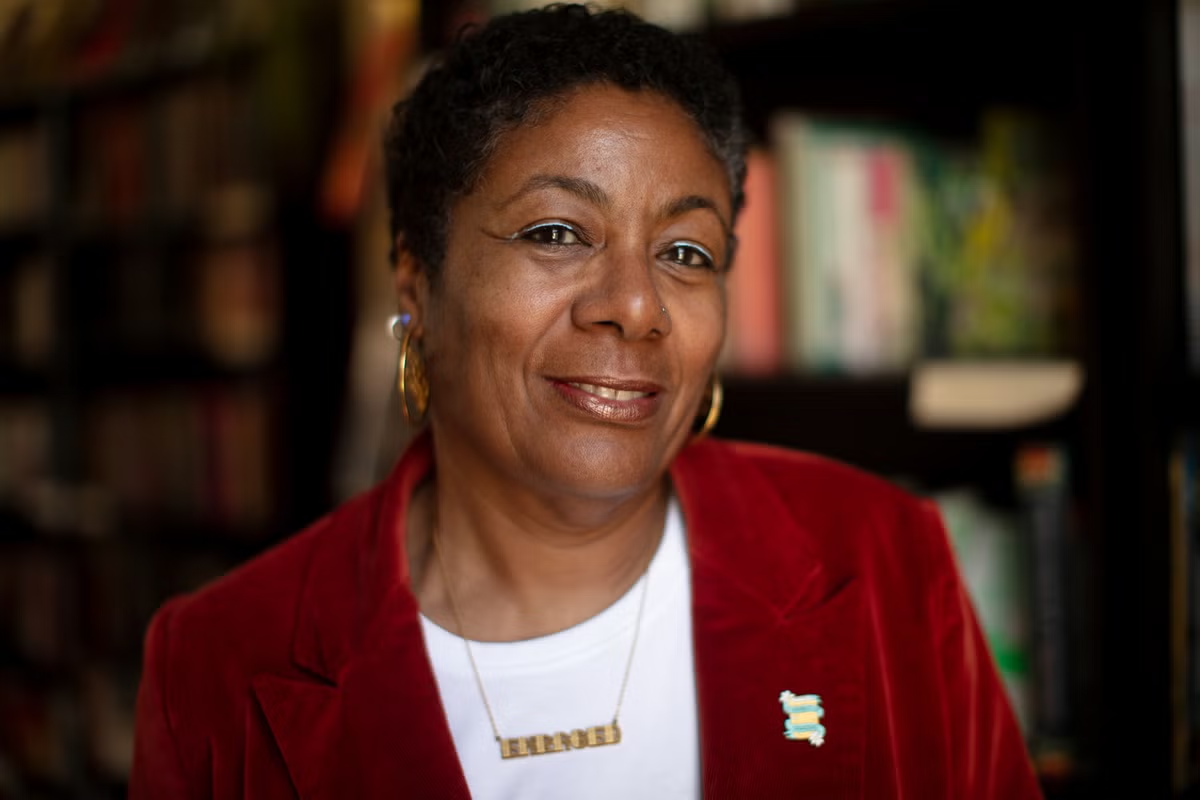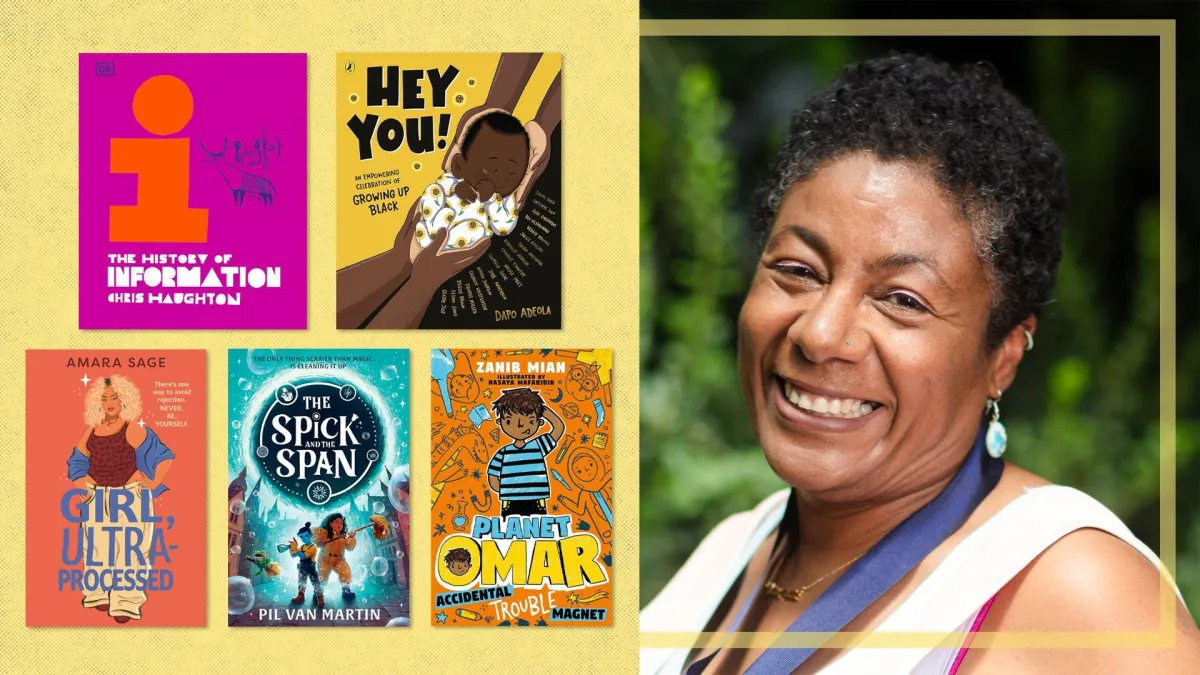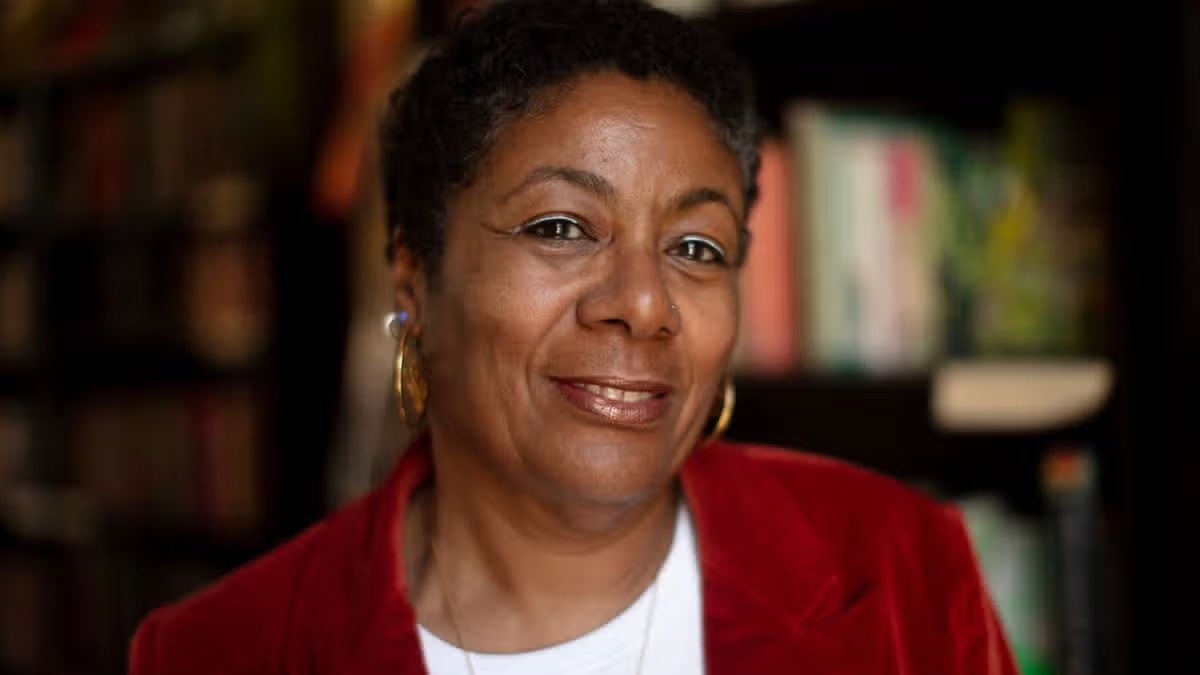
Books can transform young lives, opening new worlds of imagination and deepening empathy for fellow human beings. Yet reports from the National Literacy Trust show that just one in three children enjoy reading, so the work is cut out for the newly announced Waterstones Children's Laureate.The Laureate is the foremost representative of children’s literature, with the role awarded biennially to a renowned writer or illustrator in recognition of exceptional talent.Patrice Lawrence MBE, author of award-winning children’s books such as Orangeboy, was awarded the Waterstones Children Laureate (2026-2028) on 7th July. Previous awardees are giants of children’s literature, including Quentin Blake, Malorie Blackman, Michael Rosen, and outgoing Laureate Frank Cottrell-Boyce.Ahead of the public announcement, Lawrence sat down with The Mirror’s resident book critic Dr Aimee Walsh to discuss how her work on the ground with schools is transforming books from an academic chore to an act of community-building, which instils belonging, humanity and most importantly: joy.This award means the world to Lawrence, who has been on the front lines of promoting and celebrating children’s fiction for decades. Brimming with enthusiasm, she tells The Mirror that she wants her tenure as Laureate to explore "how we tell the stories of people who have been pushed to the sides of humanity [and] how we give them back their humanity and champion them as children who matter in our society.”Lawrence received an MBE for Services to Literature in the Queen's Birthday Honours 2021, but she said that the Laureateship is "the biggest, biggest opportunity I've ever had in my life.” She explained: "An MBE is about what you've done in the past and the Laureateship is very much about the future.”In a modern world where young boys and girls can be radicalised online by the far right to riot and to view peers with derision, Lawrence said "this role is even more important at this time.” The racist rhetoric has escalated to see riots on UK streets, most recently in Belfast. Lawrence said: "As a Black woman [and a] child of immigrants, that rhetoric has made me feel less safe. How on earth could that feel for children? It's just unacceptable.”The children’s author has appeared in schools up and down the country, from Barrow-in-Furness to London. As she tells The Mirror about her interactions with pupils, and their responses to her, her face lights up.She brings her "everyday” and "active” personality into events with school children, with experiences that resonate widely. She was born in Brighton and raised in an Italian-Trinidadian family in mid-Sussex. She has experienced foster care and a parent in prison - and she wears all of this on her sleeve, extending her experiences to the children so that they know they are not alone."I grew up in very non-typical families,” she said. "From the age of four months to four years, I lived in a privately fostered home. So basically my mum paid for me to live there because she was a lone Black parent in England and she had no family. She wasn't married and she was training to be a nurse.”Her foster family were a white working-class family in Brighton. From infancy, her foster mum signed her up for a library. "She really promoted my curiosity but also my creativity,” Lawrence added. "I've talked in schools about how frustrated I am about this generalisation of white working-class communities as being deficient in different ways, where actually my whole knowledge of white working-class communities is aspirational. [My foster mum] really wanted me to achieve, to read, to learn, to be curious.”When she returned to her biological mother at the age of four, reading and books remained a part of the fabric of life. She said: "We used to have the Daily Mirror every day. That was the one paper that my mum bought.”Yet, despite reading children’s books widely in her early years, it wasn’t until she was an adult who encountered the work of Malorie Blackman that everything changed. Lawrence described Blackman’s novels as giving her "permission” to centre Black children in her own work. She said:"I wrote white characters until I was 32 … I'd so internalised the idea that I couldn't write Black people."She added: “It never occurred to me that I could be a writer because everything I read was by somebody who was white and dead and I'm obviously not white and I didn't want to be dead. So it literally didn't occur to me.”Later, when she was in her twenties, her biological father was imprisoned for forging a cheque. This cost him his job as a psychiatric nurse and ultimately his life, as he became unhoused. "He ended up in Brighton unhoused and alcohol-dependent. [He] died in his 40s in a fire in a squat. So it was all quite traumatic,” she explained."You learn very early that these things, even though they're not your decisions as a child, you just don't talk about them… I learned not to talk about bereavement because you're dealing with other people's reactions…So you kind of hold it very much inside of you.”All of these experiences are told with her trademark approachability, bursting with honesty and inclusion. Kids with relatives in prison to others experiencing racism and isolation have resonated with this heart-on-sleeve approach.Growing up, Lawrence was one of a small number of kids who were not white in her school - which had 1,700 pupils. She explained that when Black history was taught it was usually in terms of slavery, adding that there was "no agency” to these stories.On one school visit as an author, Lawrence remembers one young woman of colour approaching her after her talk. This kid was, like Lawrence, one of a small number in the school who was not white. The pupil wanted to tell Lawrence "quite matter-of-factly about some of the really awful experiences of racism that happened to her and because she knows that I'm not going to deny it.”A teacher, who stood nearby, said that they didn’t know about the racism occurring. Lawrence explained that literature can be a "springboard” that both adults and children can use to broach sensitive discussions. She said: "Books can almost still be quite cathartic for children and young people and a springboard for conversations that other adults might find quite difficult.”In another touching moment, a young boy nearly brought her to tears. "There was one boy with mixed heritage in the room and I talked about you know my family's from Trinidad. [He said]: “You're from Trinidad? Oh my dad's from Trinidad!”"He was so proud to get up and talk about his Trinidadian background. As an adult, it's obviously hard not to burst into tears; it's what I would have longed for as a child.”Love reading? Join Dr. Aimée Walsh and our community of fellow readers in the Mirror Book Club to dive deeper into the books everyone is talking about.
Tragic family past driving the new Children’s Laureate to change young lives
The new Waterstones Children’s Laureate Patrice Lawrence MBE spoke to the Mirror about her new role. She is on a fierce mission to use books to heal a divided Britain and bring joy to UK kids.
1,146 words~5 min read