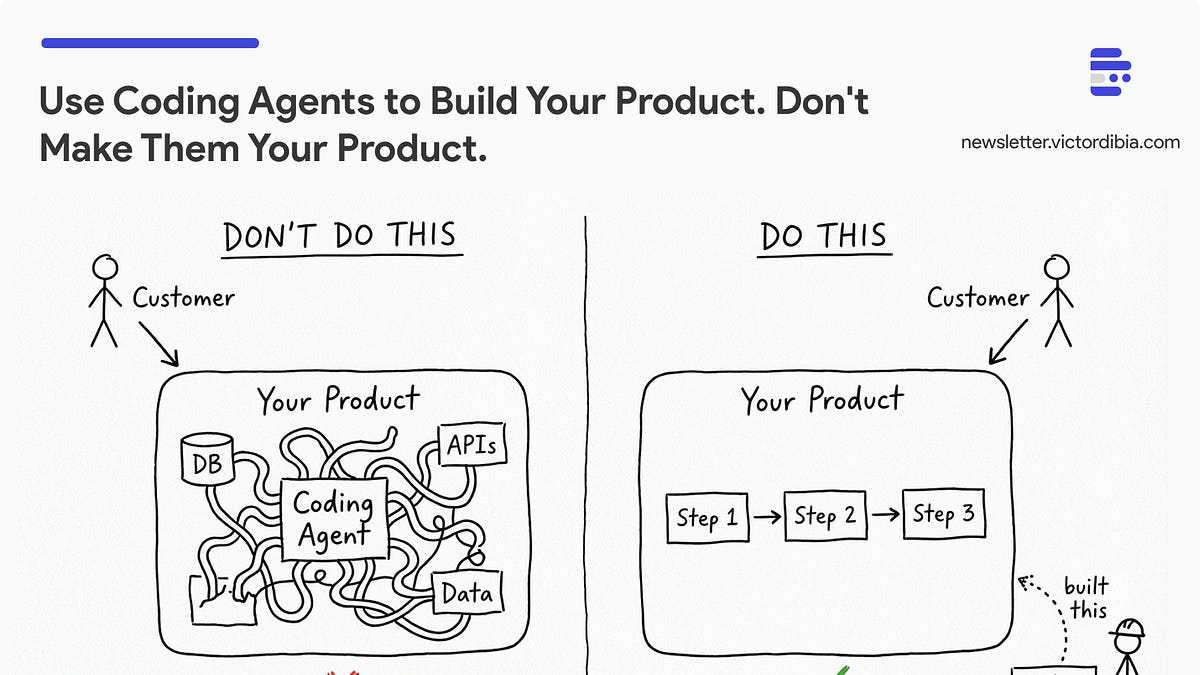
Cursor and Claude Code can take a 200-component design system and ship a working admin page without you writing a line. That's not marketing — I've watched it happen on an OTF SaaS kit. The catch is what the agent can do depends almost entirely on the shape of the repo you hand it. A codebase designed to be read by an agent looks nothing like the 4000-line single file most AI app builders produce.
The difference isn't prompt magic. It's five boring structural properties, each of which costs almost nothing to add and roughly doubles what an agent can reliably do. OTF kits are the worked example — they're built this way on purpose — but the pattern works in any repo.
1. Module boundaries come before component count
An agent extends a codebase the same way a new hire does: by finding the file it needs without scrolling. A repo where every concern lives in its own folder, with one component per file and a barrel export at the root, gives the agent a map. A repo where everything is in app/page.tsx is a single ball of mud the agent has to reason about whole.
The shape that works: