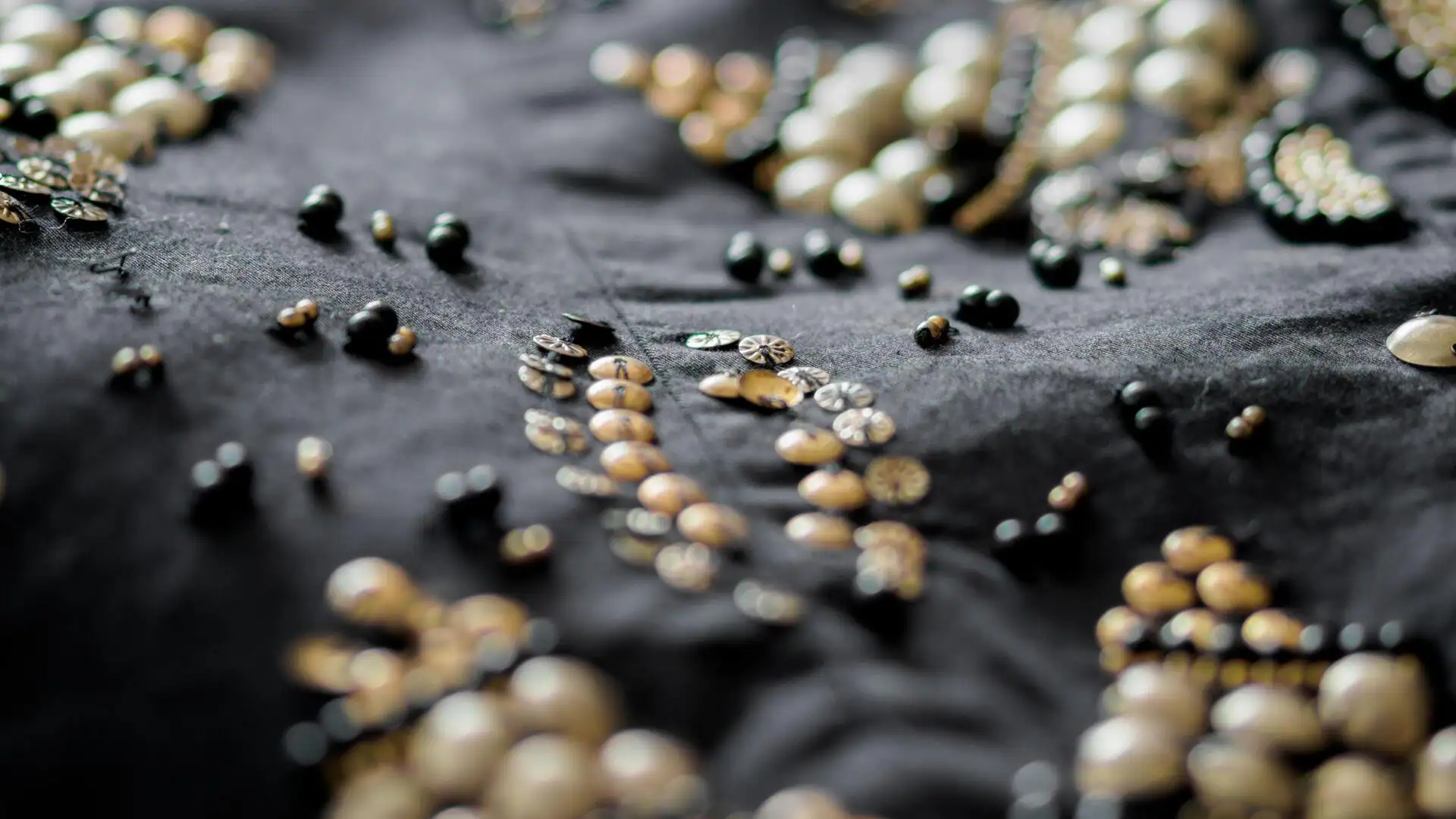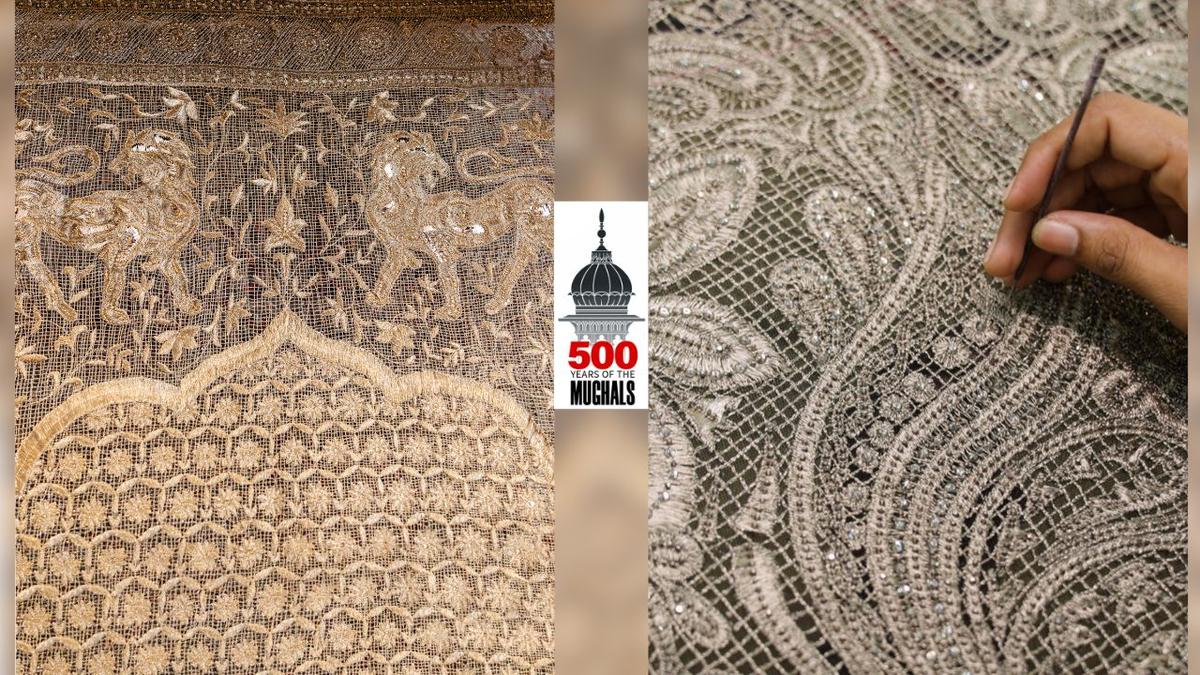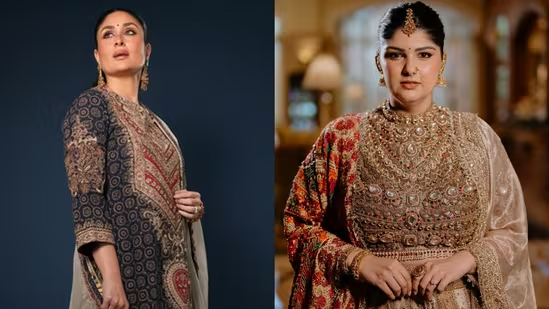
The debate surrounding Ritu Kumar's recent comments has prompted fresh interest in zardozi, one of India's oldest embroidery traditions Zardozi, an age-old embroidery technique, has found itself in the middle of new discussions around its origins. After veteran designer Ritu Kumar’s interview on The Masoom Minawala Show, where she credited herself with coining the term “zardozi” in the 1980s while naming a collection, the internet fact-checked her almost instantly. Fashion and history enthusiasts pointed out that a simple archive search reveals the word documented by the British as early as 1866. While Kumar deserves due credit for bringing the craft to modern runways, fashion aficionados assert that facts matter when it comes to heritage. So, what is the true story behind this centuries-old art, and how has it evolved?Kareena Kapoor in a zardozi-ajrakh suit; Anshula Kapoor's zardozi blouseWho coined the term and what is zardozi? Derived from the Persian words zar (gold) and dozi (embroidery), zardozi is a raised metal-thread embroidery that has long been associated with royalty. NID’s craft archive Gaatha tracks early records of Indian trade and court luxury, frequently pointing to the 14th-century writings of Arab historian Shihab al-Din al-Umari, who documented the gold-embroidered robes of Delhi Sultan Muhammad bin Tughlaq in his encyclopaedic work Masalik al-Absar fi Mamalik al-Amsar, making it one of the earliest written records of zardozi in India.“Zardozi reached its peak under Mughal patronage, where emperors used pure gold and silver threads to adorn royal robes, palace furnishings, and tapestries. Following a steep decline in the 19th century when British rule replaced royal patronage, the craft nearly vanished, surviving only in historic enclaves like Lucknow (which won a protective GI tag for its zardozi in 2013) and Hyderabad. Post-independence, it underwent a massive revival driven by the rise of the Indian fashion industry and designers like Bhanu Athaiya, Pallavi Jaikishan, and Tarun Tahiliani, transforming it into a modern bridal couture cornerstone,” explains Indian textile designer and craft revivalist Madhu Jain.What goes into creating a zardozi piece? Driven by the frustration of hunting for authentic craftsmanship in the city, designer Khushboo Khan took matters into her own hands by launching her own karkhana a few months ago. “I’ve always designed for my family, and while people love customising zardozi, most mainstream places don’t actually specialise in it; they use a generic running stitch that lacks authenticity,” Khan explains. Today, her karkhana handles the entire process entirely in-house. “During the Mughal golden era under Akbar, Jahangir, and Shah Jahan, zardozi was traditionally crafted by stretching fabric tightly over a flat wooden frame called an adda, and stitching together gold threads with elements like salma and sitara. We have retained a lot of that. We dye the fabric first. Then, if a client brings a design, we trace it onto a khaka, a sheet of butter paper. We pin the khaka to the cloth, stretch the cloth over the adda and carefully transfer the pattern before the embroidery begins.”The labour is intense: a minor piece can take anywhere from 7 to 15 days, while a heavy bridal lehenga can easily stretch over two monthsThe labour is intense: a minor piece can take anywhere from 7 to 15 days, while a heavy bridal lehenga can easily stretch over two months. “For smaller motifs, you have one or two karigars working eight to ten hours a day, paid hourly or by the project. Major bridal pieces might require up to four artisans working simultaneously on the frame,” she notes. The intense time investment directly dictates the price tag. “These pieces are an investment because a master karigar can take up to two decades to truly perfect their skill. Even a 100 grams of gold plated threads can go from ₹600 to ₹1500.” The modern revolution of zardoziThe biggest shift between the Mughal era and today is the metallurgy itself. Tracing this evolution, designer Leena Singh of the brand Ashima Leena, breaks down the stark difference between the old-school technique and modern couture, explaining: “The difference between then and now is entirely in the metallurgy: where royals once used heavy, real metallic gold threads to construct entire garments out of gold, modern craftsmanship has shifted away from real gold and silver. Today, we use lightweight gold-coated threads wrapped around a core wire or base thread, making zardozi far more wearable than the heavy pure gold embroidery of the past. Real gold is now used only on rare, bespoke commissions, typically for royal family weddings. In fact, I create pure gold zardozi for ensembles commissioned by royal households,” she explains. By moving away from pure, heavy gold wires and utilising lighter, gold-coated threads, contemporary designers have successfully made this heirloom craft wearable, fluid, and accessible for the modern wardrobe.Aadrika Sominder is a writer, but foremost an avid reader. With an unwavering commitment to the craft, she is convinced that there is nothing else she was meant to do with her life. Beyond the world of words, her hobbies include snacking and taking long trips.Read More
What is zardozi? The history, origins and craftsmanship behind India's royal embroidery
The debate surrounding Ritu Kumar's recent comments has prompted fresh interest in zardozi, one of India's oldest embroidery traditions
835 words~4 min read