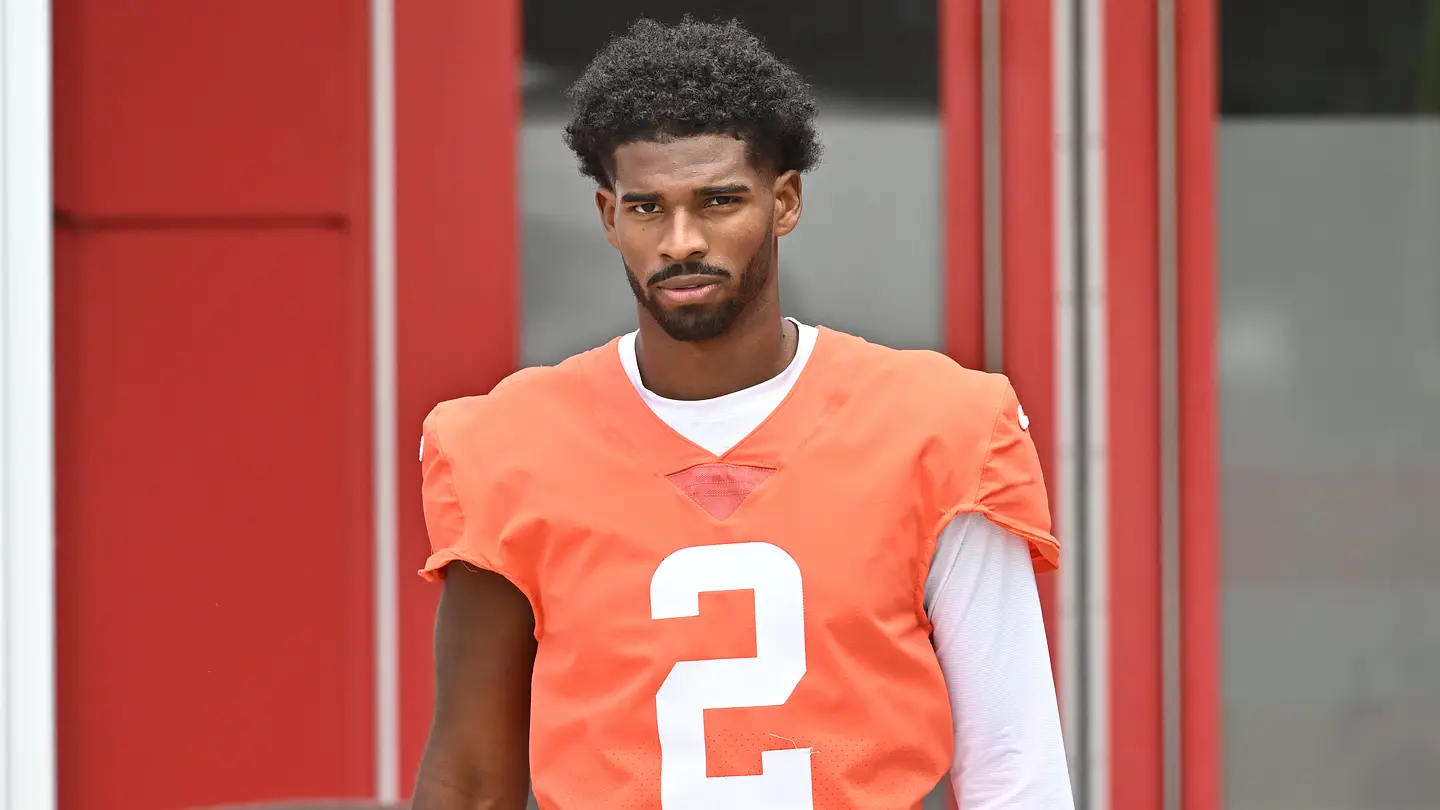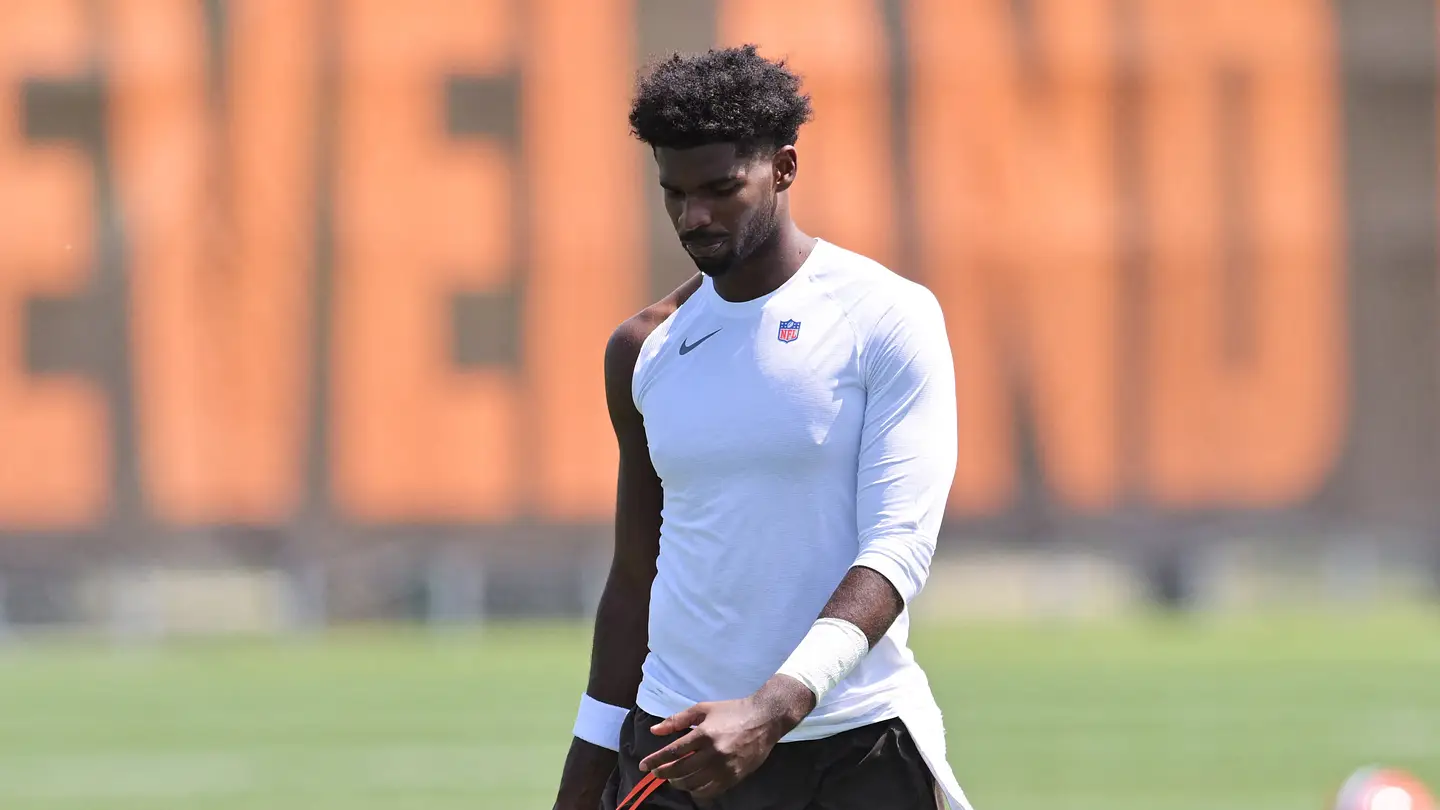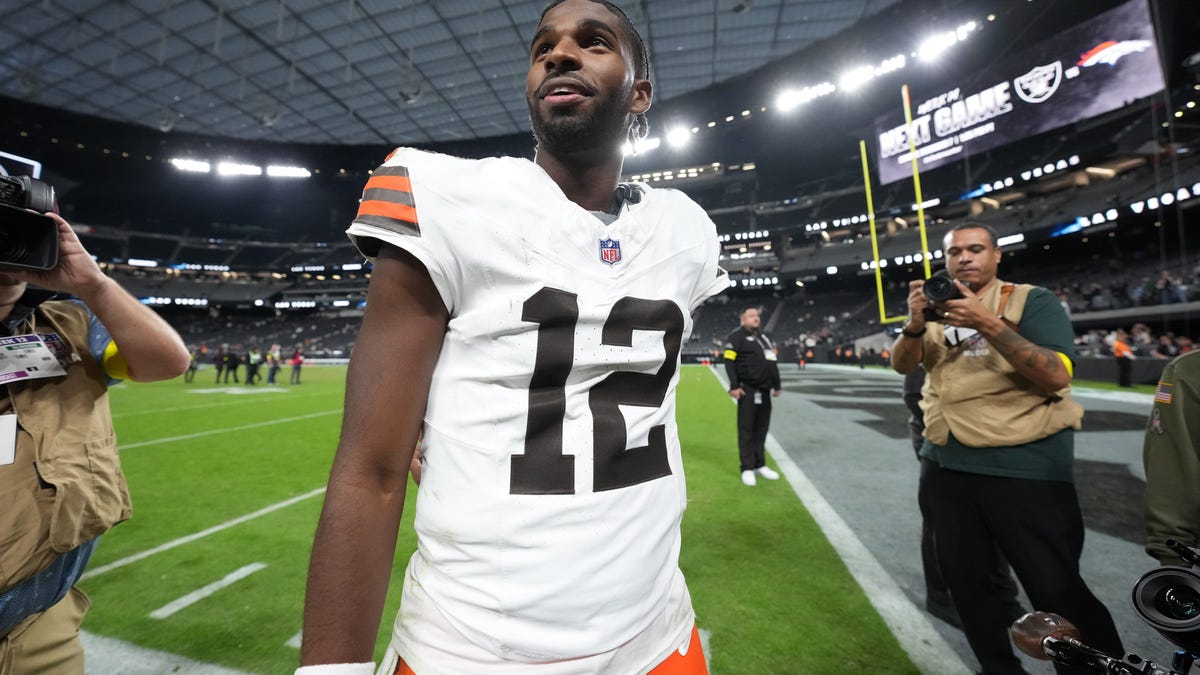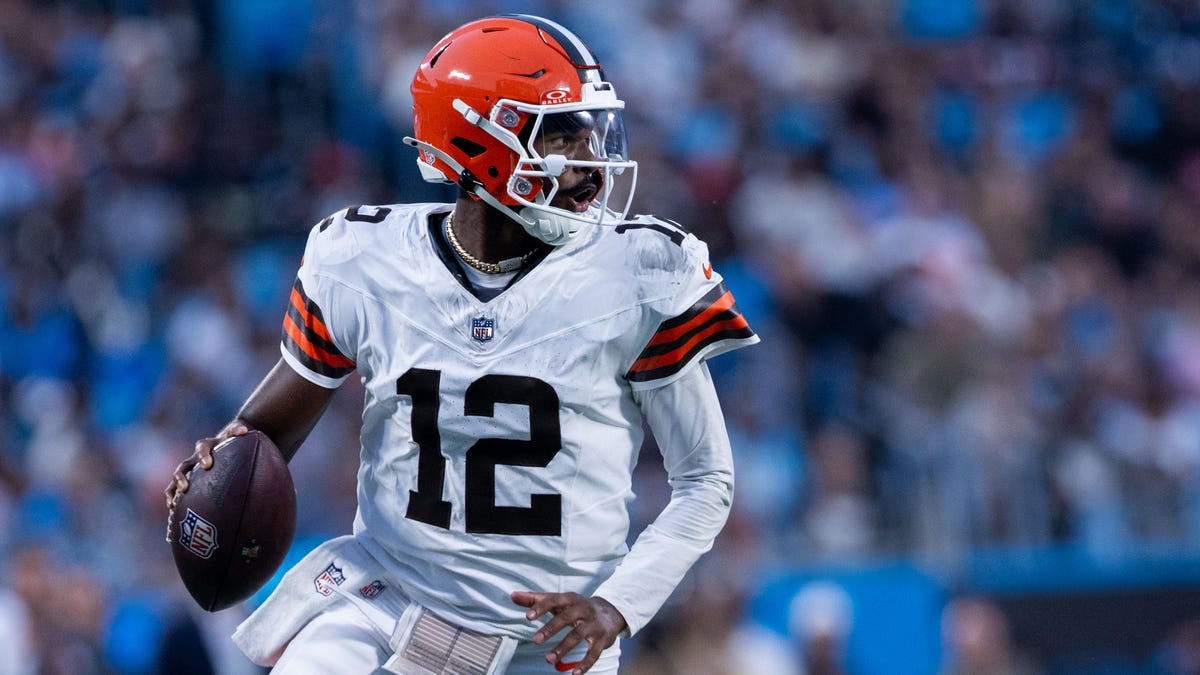
Purely from a football standpoint, Shedeur Sanders deserved to be more than a fifth-round prospect.As Sanders found out, however, not a single player in the league is viewed “purely from a football standpoint” when it comes to the NFL Draft.Sanders infamously endured a wild 2025 draft weekend that saw him fall much further than even his strongest pre-draft critics felt possible, all the way to No. 144 — he was the sixth QB selected. Sanders then spent his rookie season inside a strange Cleveland quarterback room that featured veterans Joe Flacco and Kenny Pickett, along with fellow rookies Dillon Gabriel and Taylen Green.Through it all, the former Colorado star still earned seven starts, and despite being the second of Cleveland’s quarterback selections in the 2025 draft, he proved to be the best young passer on the roster. Whether that means anything for his future remains to be seen.Before Sanders makes a potential run at pushing Deshaun Watson for the Browns’ starting gig in 2026, let’s unpack exactly how he performed as a rookie and figure out what type of NFL future might be in store for him.Rookie breakdownSanders should have been drafted toward the end of the third round of the ’25 draft. Ironically enough, that’s exactly where Cleveland selected Gabriel (No. 94 pick) — a player who carried more of an “undrafted” grade.At 6 feet 1 and 212 pounds, Sanders relied most in college on his arm efficiency and escapability. He’s an extremely polished, natural thrower who probably could’ve further followed in his father’s footsteps and been a good baseball player on some level.Sanders was one of the most accurate quarterbacks in college football over his final two seasons, and he carried that into the NFL. Among the 32 rookie starters since 2020, Sanders finished ninth (10.1 percent) in off-target rate. He also showed strong anticipatory skills in college, from the pocket and on the move, and flashed that ability last season. He ranked third among rookie starters since 2020 in yards per attempt between the numbers (8.55).Athletically, Shedeur Sanders is not his father (no one is). But you can absolutely tell he is Deion Sanders’ kid when you see his athletic instinct in tight spaces and his ability to smoothly deliver on the move.Like everything in his life, Shedeur’s football background is unique. His father not only was his head coach throughout college, but he also served as his offensive coordinator in high school. Every offense Sanders played in from high school through college was, more or less, designed to accentuate his strengths — quick-game and RPO situations, a lot of spread and plenty of freedom to freelance.His rookie year in Cleveland was truly the first time Sanders had to operate an actual pro-style offense that forced him to play on time and with consistent feet. He threw for 1,400 yards (56.6 percent completions), seven touchdowns and 10 interceptions in seven starts, while playing on one of the league’s worst teams. His -.25 EPA/attempt (per TruMedia) ranked 26th among the 32 rookie starters since 2020 (tied with Gabriel); he ranked No. 1 in pressure rate (55.3 percent).Where he struggledThe biggest flaw in Sanders’ game remains the same: His instinct isn’t to play on time with the offense, it’s to play on “Shedeur Sanders time.”One of the biggest challenges for NFL quarterbacks is reading through an entire pass progression in just two and a half to three seconds. If a QB pops up looking to throw too early, none of his routes are going to be ready; if he’s too late, he’s going to miss previously open targets. This is why you hear so much from scouts and analysts about “footwork” — a quarterback has to be able to read through a five-step drop progression by the time he springs up from that fifth step or nothing is going to work.Sanders’ footwork remains inconsistent, but processing from the pocket was his biggest problem as a rookie starter. He tended to be either too indecisive or in search of the fastest possible outlet, regardless of the coverage.As noted above, Sanders had success over the middle last season. However, that doesn’t mean he was always confident operating there. Here’s an example of a potential layered throw that could have been dropped between defenders into a tight window — a throw Sanders is capable of making:Shedeur Sanders' 2025 struggles, pt. 1Nick BaumgardnerInstead of coming up on time and confidently throwing the ball, he hitches, stalls and sort of freaks out. He’s not sure if he wants that shot over those linebackers and takes too long to decide, ultimately leading to a sack.Plenty of the sacks Sanders took last season were his fault (which was also a problem in college). He either got stuck on reads and bailed early or got lost and tried to fade backward, all of which stemmed from indecisive play in the pocket. He didn’t always trust his eyes or his play study, which led to a ton of off-platform plays that usually went nowhere.On this one, Cleveland sets him up for success — and it still doesn’t work.Shedeur Sanders' 2025 struggles, pt. 2Nick BaumgardnerSanders is at his best and most comfortable when he’s on the move, so in the above example, he gets put into run action with an over route and a corner route about to come open. When he lands his fifth step, that over route is open — and the ball needs to be thrown.Instead, Sanders pulls it back and still thinks (incorrectly) he has time to reset everything and look at the corner route. He picks neither route, leading instead to an awkward backpedal as he evades pressure before throwing a desperation heave for an interception.This is the worst part of his game, and it’s been that way since he first emerged as a prospect. Among NFL rookie starters since 2020, Sanders ranked dead last in average time to throw (3.20 seconds). There are supremely gifted passers, such as Caleb Williams or Josh Allen, who can live like that and consistently survive. Sanders simply is not among them. He cannot play that way and have a sustained NFL career, even as a backup.Sanders simply has to be better about playing within the structure of a pass concept, which means he has to be the best-prepared quarterback on his roster. He’s neither big enough nor talented enough to play with the margin for error he allows himself. This isn’t jazz — he needs to worry more about what’s designed for him.Where he thrivedNo one inside Cleveland’s offense can really claim to have “thrived” in 2025, but Sanders did have his flashes.Despite taking a lot of hits last year, Sanders — as he did in college — displayed an above-average aptitude for sensing the rush and, at times, smoothly and efficiently evading it.Here’s a good example from Sanders’ start against the Raiders:Shedeur Sanders' 2025 positives, pt. 1Nick BaumgardnerSanders does a nice job of identifying what’s coming before the snap and keeps his eyes up and downfield as he scrambles toward cleaner air. He is a capable scrambler, but he’s not a guy who lives off it. He moves to find calmer spots to throw, and he also doesn’t need a ton of time to reload and fire.This throw illustrates Sanders’ game as well as anything. When he’s playing fast, he’s usually at his best. It doesn’t always work out, as he’ll sometimes use open space on a rollout as an excuse to freelance, but Sanders looked very comfortable as time went on last year delivering catchable and accurate throws on the move.And this is probably my favorite throw from Sanders’ rookie year:Shedeur Sanders' 2025 positives, pt. 2Nick BaumgardnerEverything about it is so much better than what we consistently saw from him during his last year at Colorado, from the willingness to play in time with the offense to fighting the urge to bail out of the pocket to reading both sides of the field.There isn’t much hesitation on this example. Sanders keeps his drop in time with the route concept, checks off the frontside of the field and comes up ready to fire when he flips his shoulders to the backside. He delivers a confident, accurate throw with anticipation, and it arrives on time so the receiver can run afterward.Quite frankly, Sanders’ entire game versus the Tennessee Titans showed that he is capable of being a solid No. 2 NFL quarterback, at the very least. The Titans were terrible last season, but so were the Browns, and Sanders went 23-for-42 passing for 364 yards, three touchdowns (plus a rushing TD) and a pick in a narrow loss.Bottom lineWhen I see Shedeur Sanders the hopeful media tycoon, I see the son of an icon. When I see Shedeur Sanders the quarterback, I see Andy Dalton or Teddy Bridgewater.He’s not necessarily a year-to-year starter in today’s NFL, but he does look like a very capable thrower who, if his grasp of NFL offenses and defensive speed continues to improve, can be a reliable backup for a long time. He projects as the type of backup who can hold the fort for a few weeks if a starter gets hurt.The Browns had a strange draft in 2025. I still don’t understand taking Gabriel ahead of Sanders, but Sanders showed on the field last year that he is the keeper of that duo. Whether Cleveland starts Watson this season or drafts a future star early in 2027 (or both), there’s still a role for Sanders in Cleveland — and in the NFL at large.
Did Shedeur Sanders make any progress as a rookie? 2025 NFL Draft QB film study
Assessing Sanders' rookie season and evaluating what his NFL future could hold.
1,594 words~7 min read