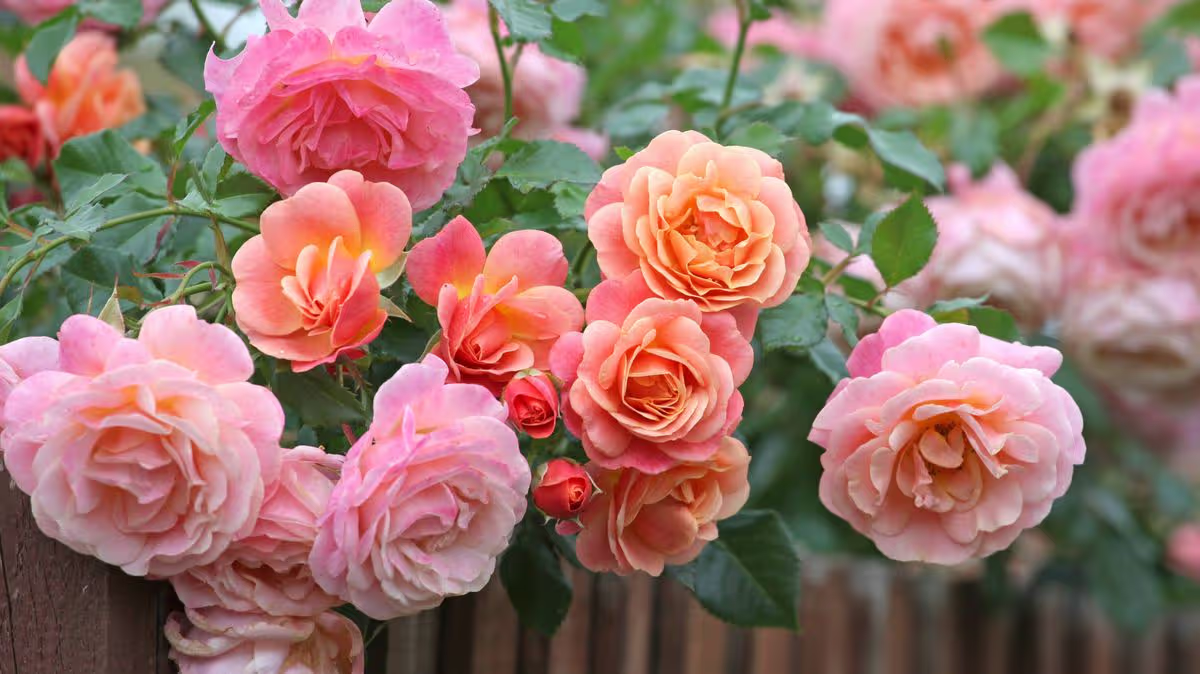
Roses are an instantly recognisable and beloved flower in UK many gardens - and Alan Titchmarsh has shared his expert gardening tips to guarantee beautiful blooms all season long08:23, 07 Jul 2026Beloved gardening expert Alan Titchmarsh has revealed his essential steps for keeping roses healthy and blooming all throughout the summer.Roses are among the most iconic and beloved flowers found in gardens across the UK. They're equally popular in bouquets for special occasions such as birthdays, anniversaries, Valentine's Day and beyond.Many prefer to enjoy from the comfort of their gardens, as their distinctive shape and vast array of petal colours are perfect for adding character and depth to outdoor spaces and green areas.However, getting them looking their absolute best can prove rather challenging - which is why celebrated gardener, horticulturist and much-loved TV presenter Alan Titchmarsh has stepped in with his expert guidance.The gardening legend regularly shares his knowledge and expertise with the public through his television work, as well as in frequent videos posted across social media platforms.In one roses-focused TikTok video, Titchmarsh first revealed his foolproof technique for spotting the difference "between dead stems and old stems".He said: "Dead has no living wood on it at all - a lot of these older stems have got green young ones coming out the top."If you inspect the bark of your shrub roses and notice green still showing through, this indicates the plant is alive, whereas discovering only brown stems suggests the plant has died.Carefully and consistently pruning your roses remains one of the most crucial steps towards helping them truly flourish. The same principle applies when it comes to pruning them.The gardener cautioned: "You do not cut right down to knee high, which is what you do with bush roses."Explaining the correct way to prune shrub roses, he added: "You tip them back and thin the framework out, which is what I'm doing now."This is because when a rose shrub becomes overcrowded with ageing stems, it can inhibit growth. Removing some of the older stems helps to reinvigorate the plant and encourages the roses to flourish.More substantial pruning is best carried out between February and March, once the freezing and frosty conditions have largely passed.Titchmarsh "created a well spaced branch framework" which allows for a regular "flow of air so mildew and black spot will be less likely".In a separate video, Titchmarsh said: "Roses are hungry, hardworking plants that can flower for months throughout the summer, but they need the right conditions to perform at their best."To produce all those blooms, they require plenty of moisture and a constant supply of nutrients at their roots."The expert explained the "key is to improve your soil with generous amounts of organic matter", be it "homemade garden compost, well-rotted organic material, or specialist rose, tree, and shrub compost."He continued: "The richer the soil, the better it can hold onto moisture and nutrients, creating the perfect environment for healthy growth and abundant flowers."Roses have traditionally thrived in heavy clay soils because they retain moisture so well, while light sandy soils can dry out quickly, often leading to problems such as mildew and black spot."Article continues belowTitchmarsh added: "Be generous when improving the soil, and your roses will reward you with stronger growth, healthier plants, and a spectacular display of flowers throughout the season."
Roses will bloom all summer as Alan Titchmarsh hands out vital advice
Roses are an instantly recognisable and beloved flower in UK many gardens - and Alan Titchmarsh has shared his expert gardening tips to guarantee beautiful blooms all season long
550 words~3 min read