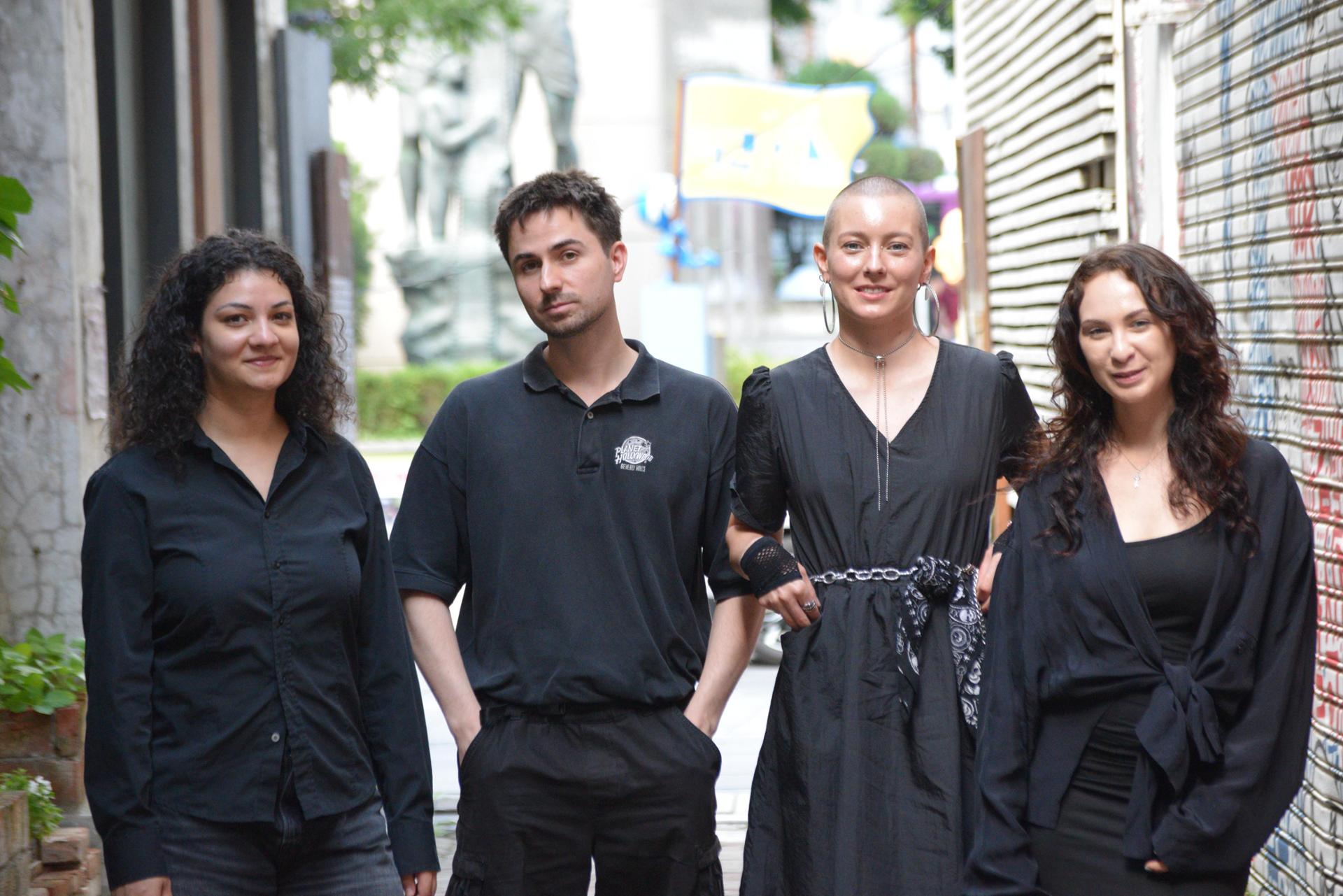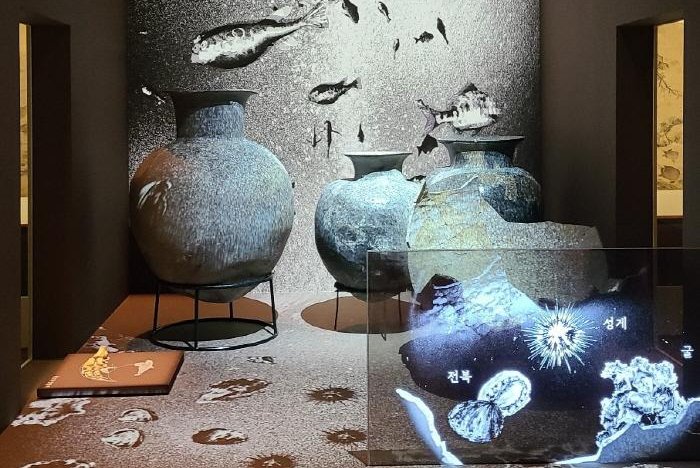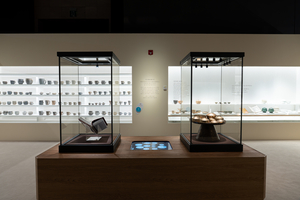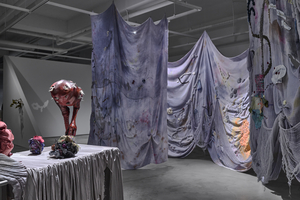
Installation view of "Faisandage" at G Gallery in Seoul (Courtesy of the gallery) For three women artists in their mid 30s to early 40s, conversations about food often began with an everyday question: "How have you been getting by?"As they shared stories about making a living, grocery shopping and cooking, those casual exchanges gradually evolved into a three-person exhibition at G Gallery in Seoul.Conceived by sculptor Woo Hannah, the exhibition “Faisandage” — a French culinary term for the aging of wild game — brings together works by Woo, Choi Su-jin and Chinese artist Shuyi Cao. Installation view of "Faisandage" at G Gallery in Seoul (Courtesy of the gallery) The three artists, similar in age and all navigating the uncertainties of sustaining an artistic practice, each approach cooking not simply as a domestic act, but as a way of thinking about survival, labor and memory."You can think of this exhibition as one that grew out of three women artists of the same generation talking about how they've been getting by," Woo told The Korea Herald on June 30.Woo created a pirate ship that doubles as a kitchen, where insects become chefs, meat hangs from hooks, and the roles of cook, diner and prey constantly shift. Inspired in part by Peter Greenaway's 1989 film “The Cook, the Thief, His Wife & Her Lover,” Woo uses cooking to question who consumes and who is consumed."I started thinking about why some are cooked, why some do the cooking, and who gets to eat," she said.“Rather than a winner-takes-all world where only one person keeps eating well and living well, I'd like those positions to change so there's room for everyone to breathe,” she said. Installation view of "Faisandage" at G Gallery in Seoul (Park Yuna/The Korea Herald) While Woo presents those ideas through dramatic installations, Choi approaches the subject more quietly.For this exhibition, Choi, best known for her painting, worked with fabric for the first time, layering linen with recipes, dreams and fragments of thoughts.“Choi uses the repeated acts of painting, cooking and falling asleep as a metaphor for digestion, unfolding painterly landscapes where traces of sensations and memories that have yet to be fully processed continue to drift," Woo said. Installation view of "Faisandage" at G Gallery in Seoul (Courtesy of the gallery) Cao, who was born in Guangzhou and now lives in Brooklyn, broadens the conversation beyond the kitchen to geology and ecology. Interested in the relationship between living and nonliving matter, she draws inspiration from her own family's rituals.For one piece, Cao draws inspiration from her parents' ritual of washing and drying seashells left after family meals. Her parents, who missed their daughter, stored the shells in a red tin for her until she returned home. Cao later scanned the shells and recast them in glass.For the artist, shells, sand and glass share the same geological origin despite taking different forms through time."The work ultimately deals with the earth's larger process of digestion," Woo said of Cao's works. "She weaves together fragments of materials shaped across different times and environments, constructing a dispersed ecosystem where the cycles of humans and the planet intersect." Installation view of "Faisandage" at G Gallery in Seoul (Park Yuna/The Korea Herald) Although the exhibition grew out of months of conversations over Zoom and chance meetings abroad, the three artists did not meet in Seoul until the exhibition was installed.After the interview, Woo said the artists planned to do the activity that first inspired the exhibition."We're going to eat together tonight — grill pork, grill squid and share kimchi that we've each brought," Woo said."More than how much money I've made from my work, I sometimes think what's most important is simply what I ate today."
How three women artists turned cooking into exhibition
For three women artists in their mid 30s to early 40s, conversations about food often began with an everyday question: "How have you been getting by?" As they s
620 words~3 min read