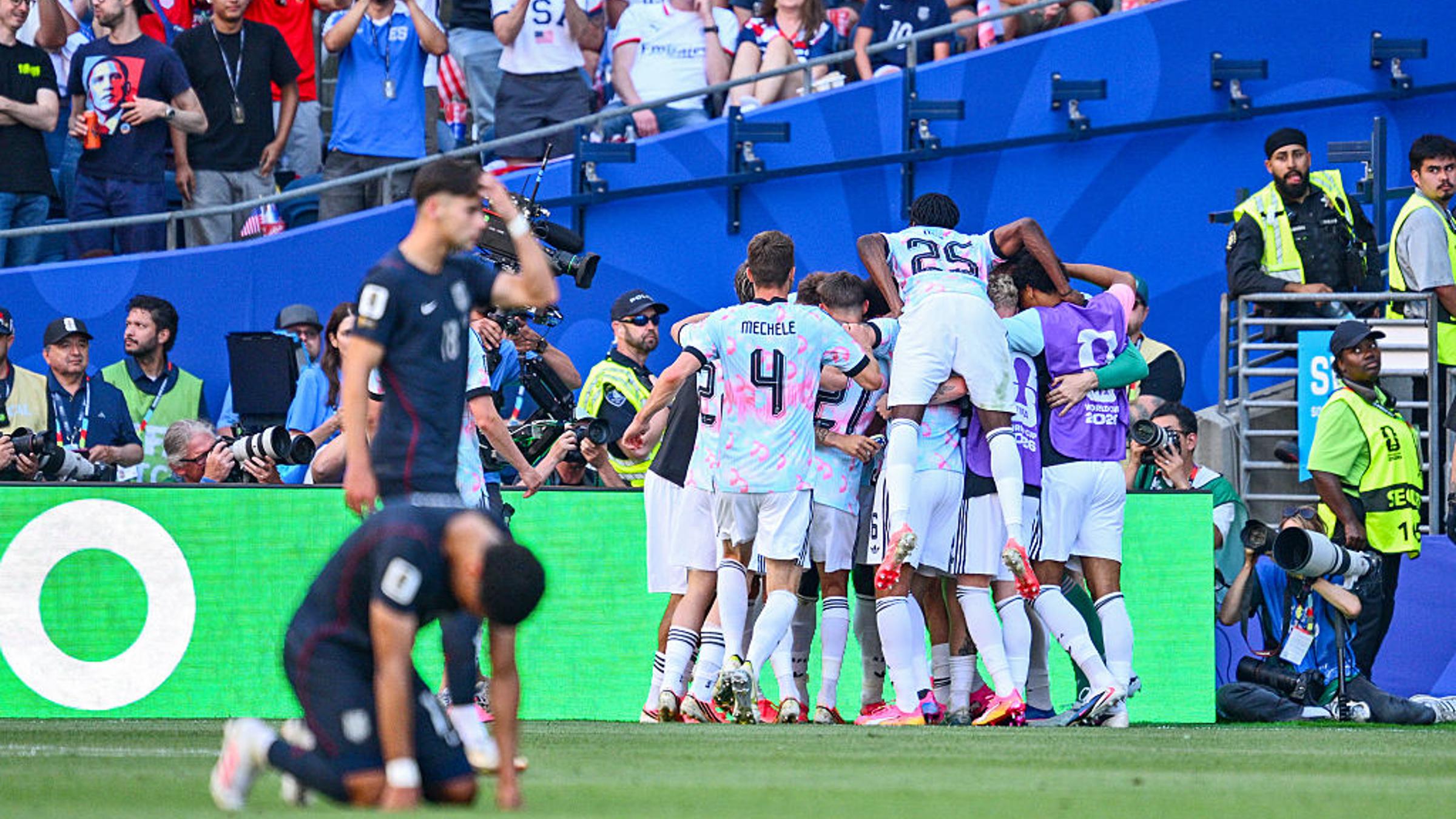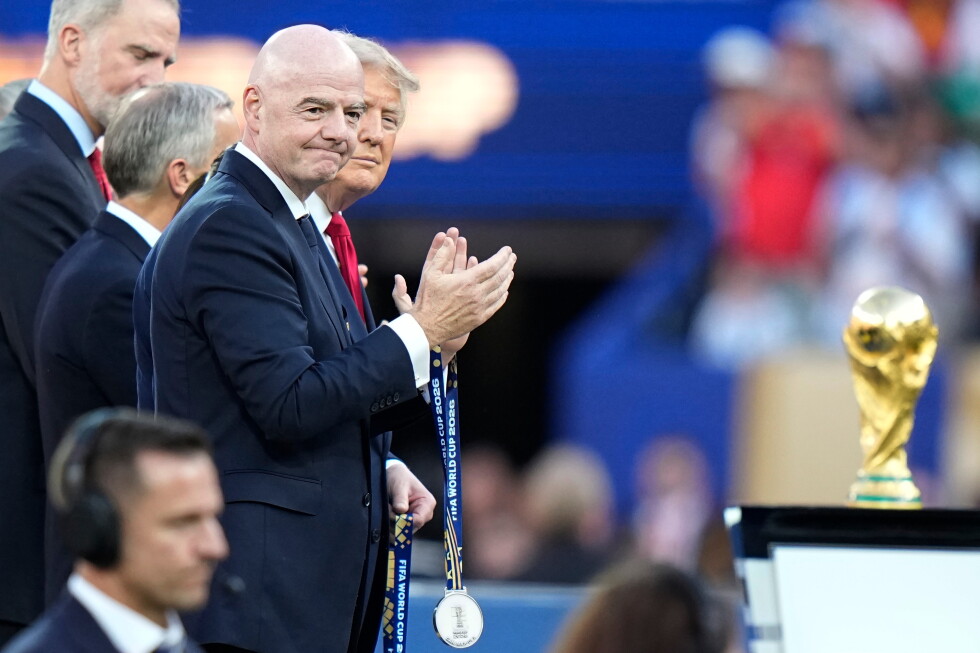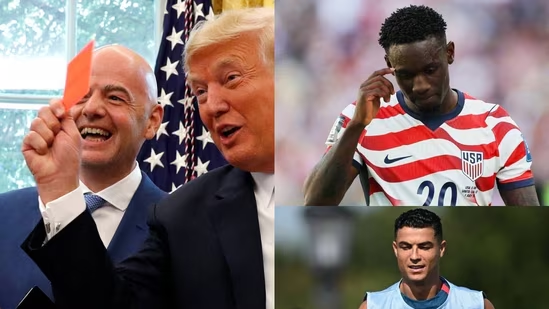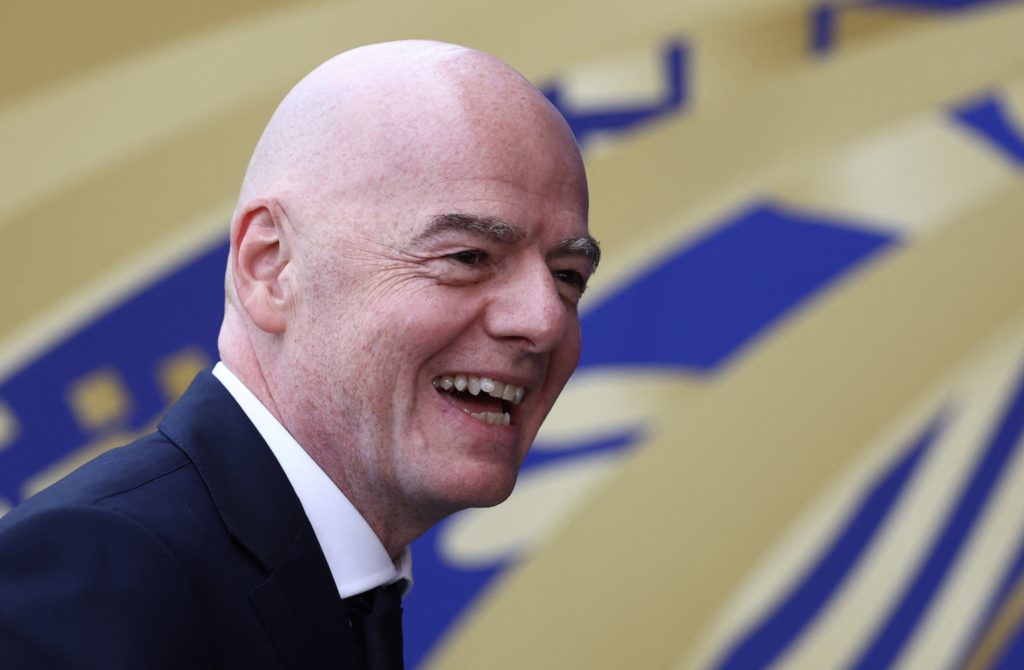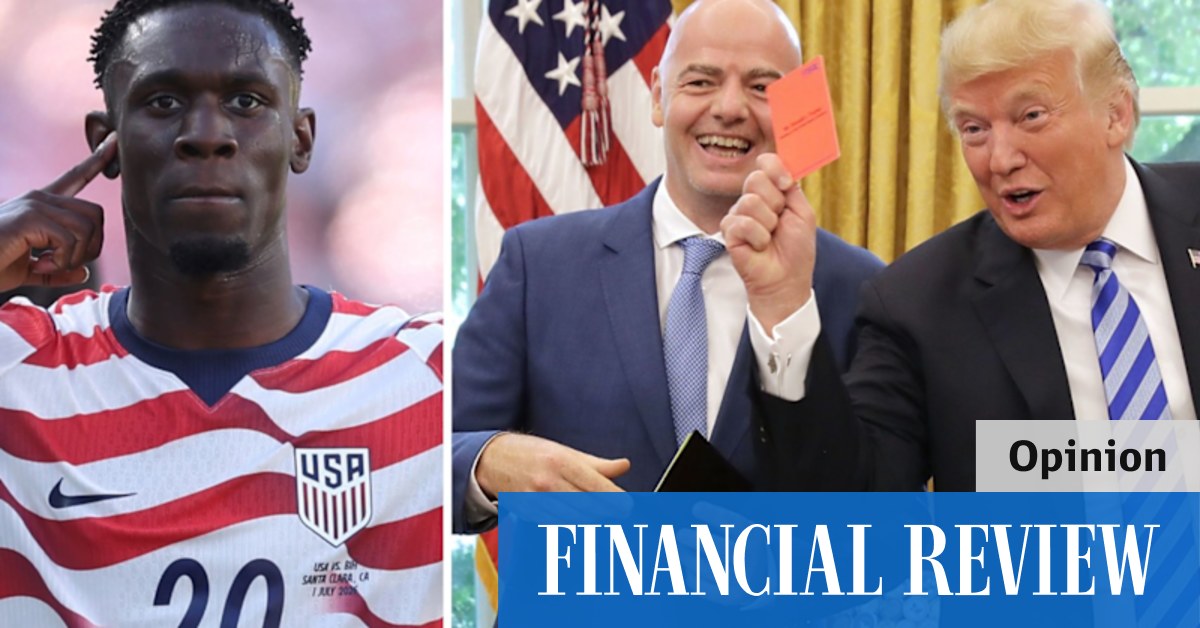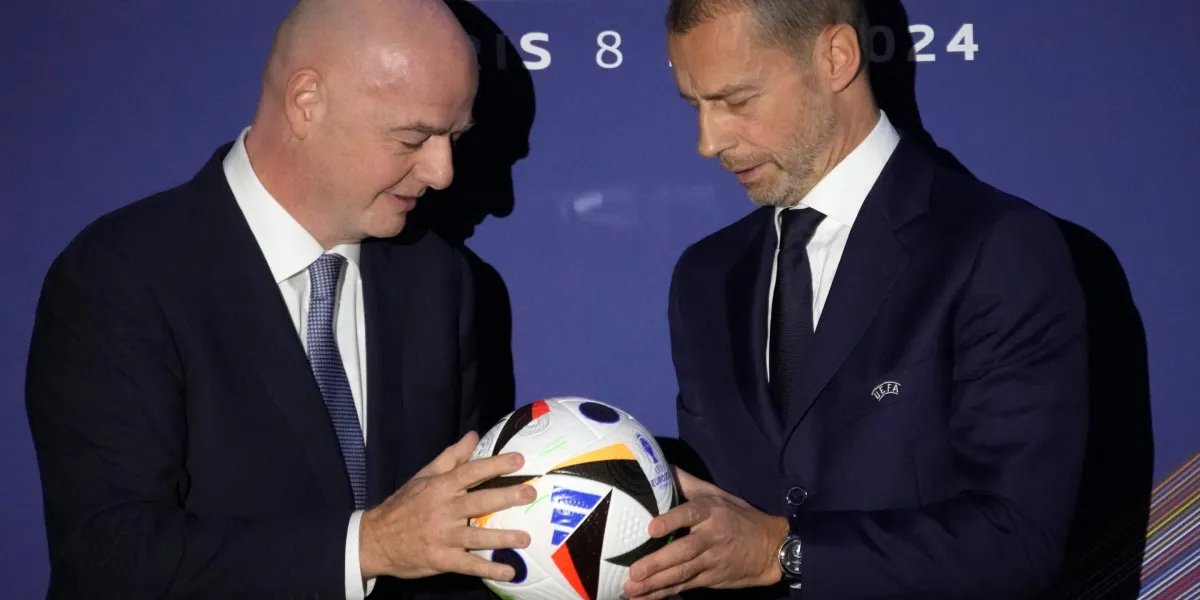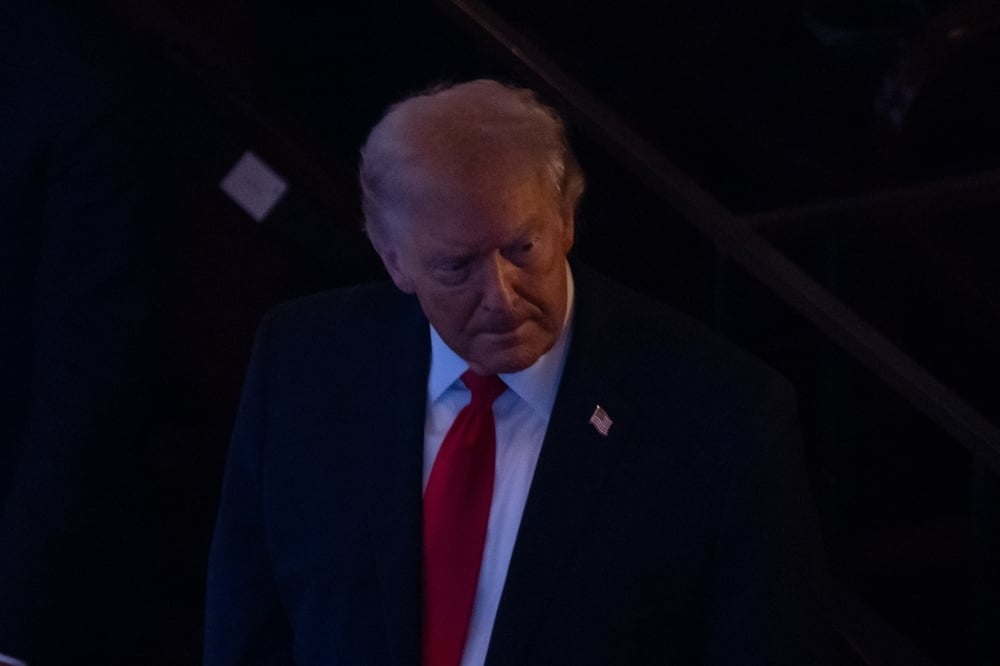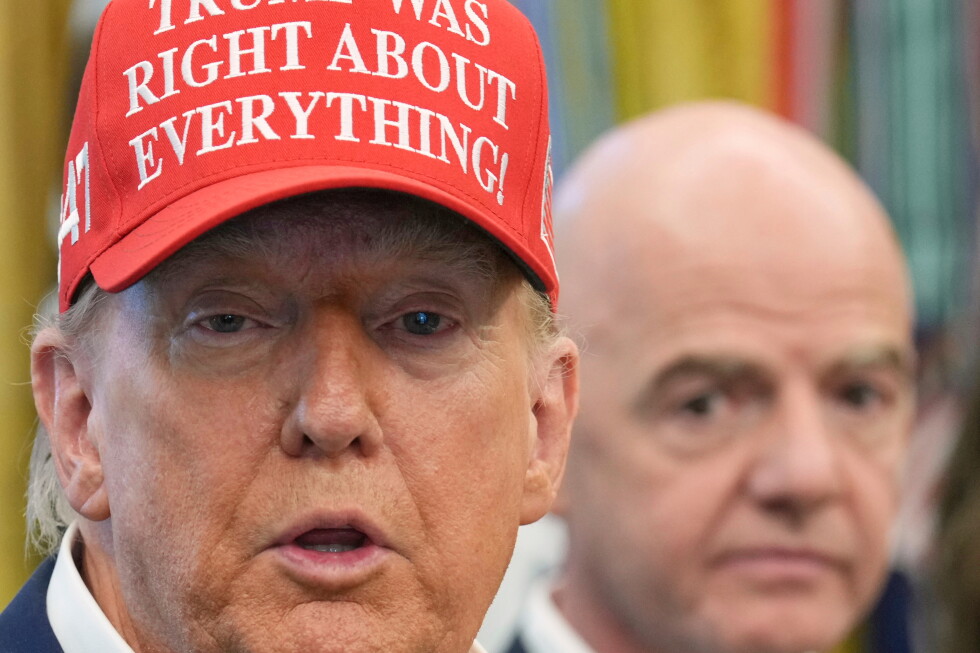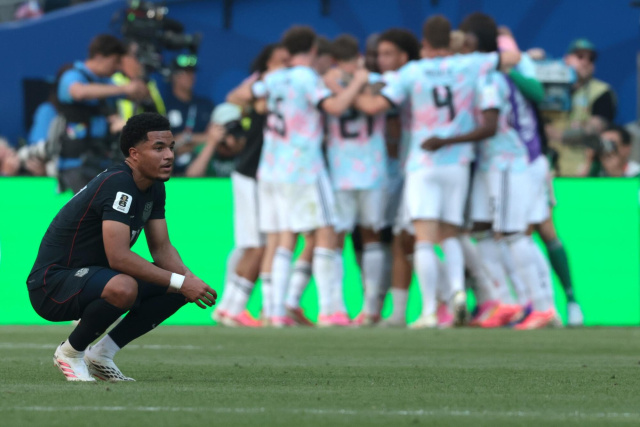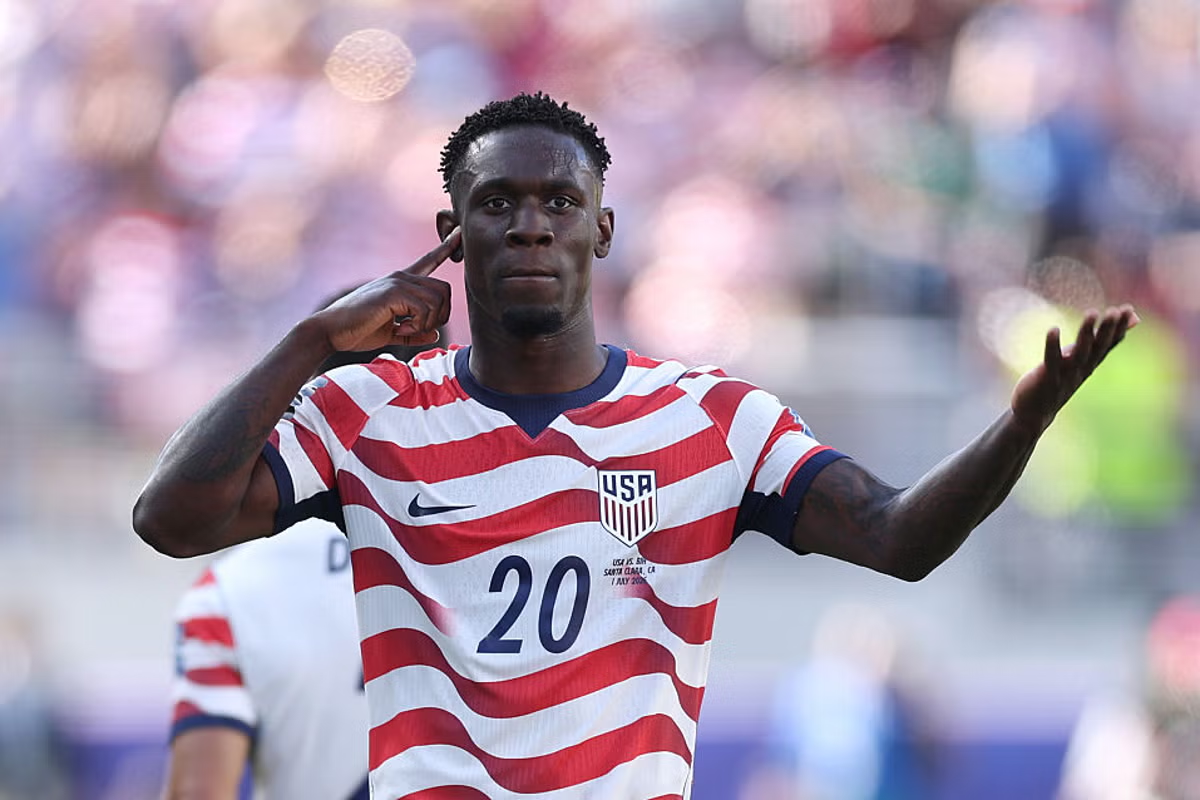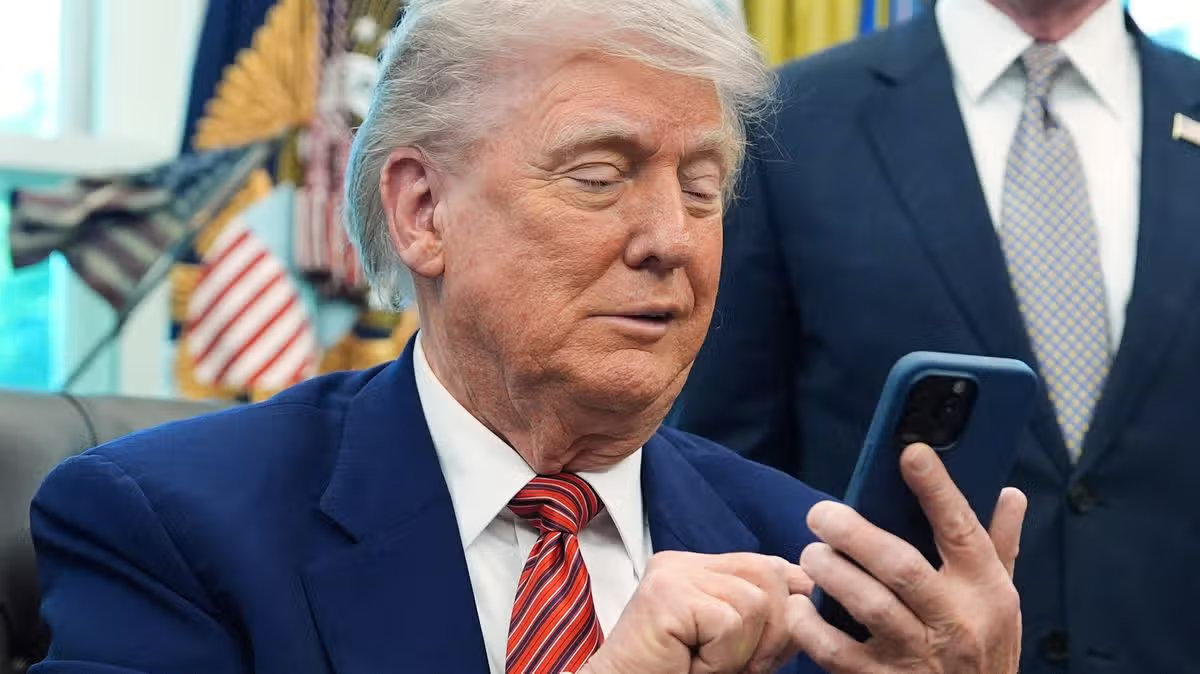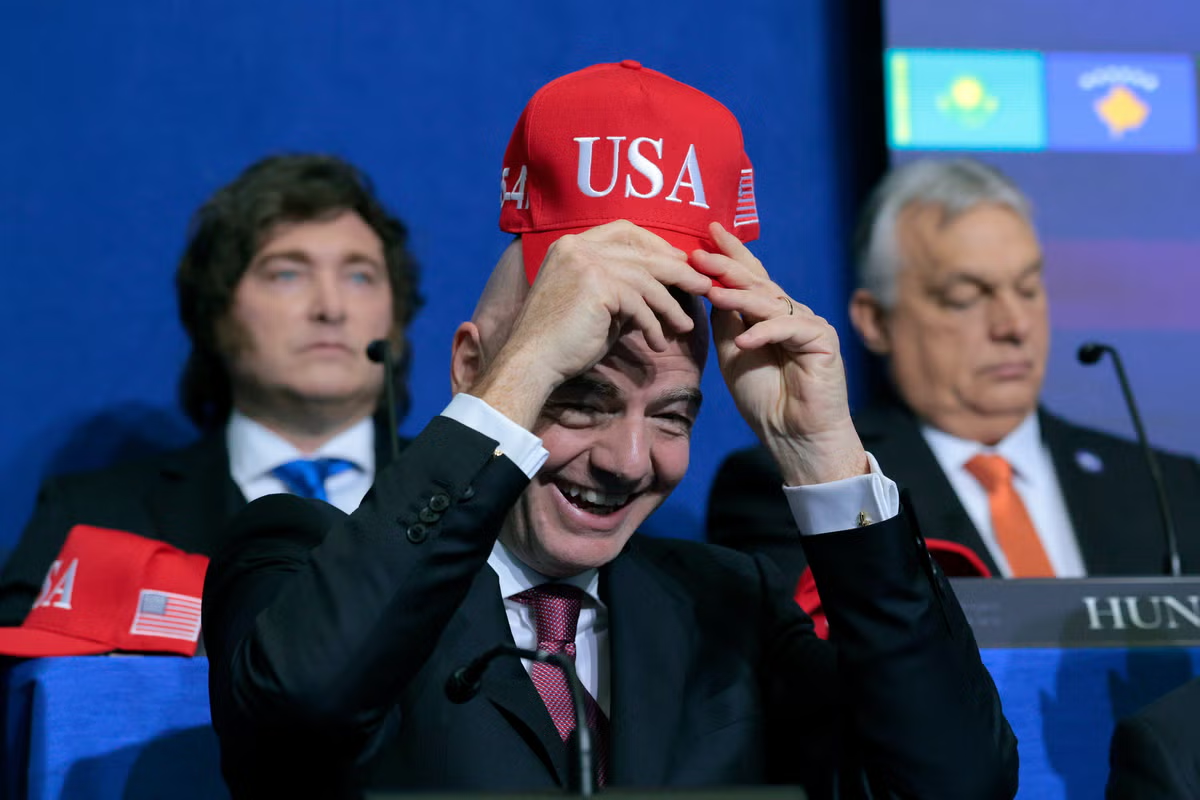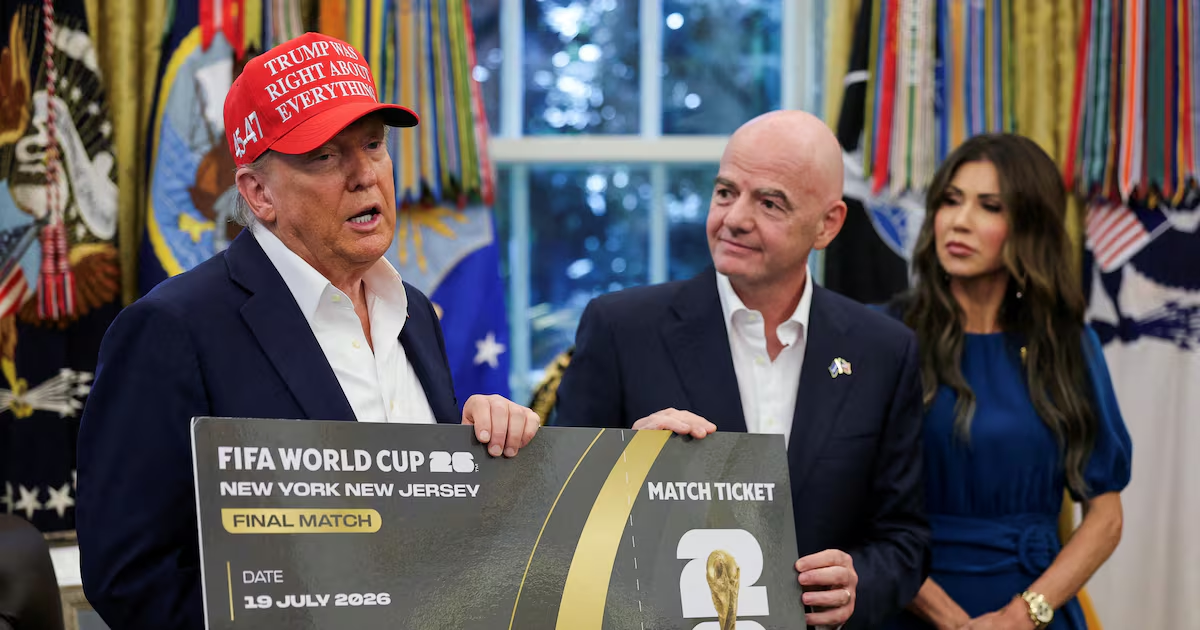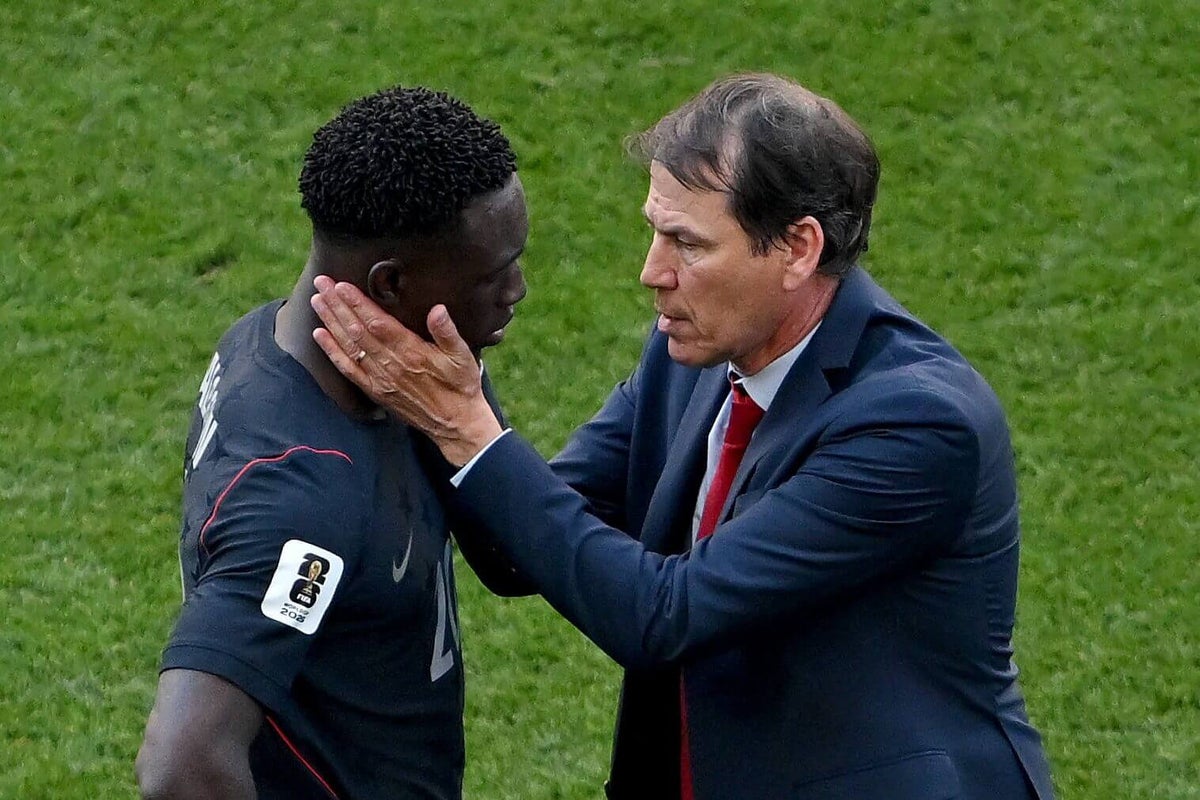
For FIFA president Gianni Infantino, a United States defeat against Belgium was probably the political outcome he required.Certainly, it lifted the pressure on Monday evening, for an organization which found itself besieged once more by the proximity of Infantino’s relationship to President Donald Trump. By now, football fans are accustomed to the liberties that Infantino takes with their sport. His reign has survived more than one may care to remember. At varying levels of seriousness, we have witnessed the horrors endured by migrant workers to build FIFA’s World Cup in Qatar, the absurdity of crowning Trump’s Peace Prize, and Infantino’s bewildering manoeuvres to create a six-nation, three-continent World Cup in 2030, which very usefully enabled Saudi Arabia to secure sole hosting rights for the competition in 2034.Yet Infantino has not only lived on, he has often become stronger, consolidating his increasingly concentrated power base within global football with only fleeting moments of opposition from within the game itself. When FIFA unveiled unprecedentedly high ticket prices for this summer’s World Cup, we heard mostly crickets from federations, even as fan groups pleaded with their associations to stand up to Infantino’s regime. In April, Infantino announced he would stand for re-election once again in 2027, securing unanimous backing from the South American, African and Asian confederations, with plenty of federations appeased by their rising shares of FIFA’s vast revenues.During the opening weeks of the World Cup, FIFA began to construct a story of success. Its ticketing strategy, which had outraged many, had not prevented close to full houses in most games at the competition. Infantino declared it a win that Iran, in the midst of conflict with a host nation, had been able to play World Cup games in the United States at all.The stars of the tournament — Lionel Messi, Kylian Mbappe, Jude Bellingham and Erling Haaland — swept headlines away from Infantino’s mishaps, reminding us all how wonderful football can be as a way to bring together people and cultures from all over the world. The host nations, mired in organizational challenges and cost concerns before the World Cup, all found unexpected form, each progressing to the round of 16, yielding newfound enthusiasm for the sport in the U.S. and Canada, and reigniting the passion that burns deep within Mexico. Many of the games have been fiercely competitive and hugely memorable.Trump spoke out about the Balogun red card on Monday (Anna Moneymaker/Getty Images)Trump, a polarizing leader, had kept his distance from the tournament, still to attend a game, while the masked ICE agents who raid major cities during his presidency have largely stayed away during the World Cup. On social media, footage emerged of uplifting cultural exchange, with supporters from all over the world charming locals with their unique fan rituals, and host cities endearing themselves by smothering visitors with kindness and hospitality.And then, in a flash, the old tensions resurfaced, in a mess of FIFA’s own making. When FIFA announced on Sunday that USMNT’s Folarin Balogun would have his one-game ban suspended, and it emerged that Trump and his allies had made representations on Balogun’s behalf, all those latent strains of hostility returned.Here was a ferocious burst of America First, as it appeared to all the world that Trump, his commerce secretary Howard Lutnick and World Cup White House Task Force director Andrew Giuliani had sought to gain an advantage for the U.S. that has not been traditionally afforded to other nations.FIFA continues to insist the Trump phone call did not influence matters, but in a series of statements by Infantino and FIFA’s Disciplinary Committee on Monday, the organisation neglected to provide a justification as to why a challenge deemed within the game to be serious foul play was no longer worthy of the usual punishment. FIFA has still not said the referee, or the video assistants, made a mistake, either in the decision or in how VAR was implemented.Almost as soon as the decision was made, anger bubbled up across the Atlantic. This was, in many ways, yet another crystallisation of America’s philosophy under Trump, where a rules-based international order can be swept aside when it is deemed to be in the interests of the U.S.One day, it may be climate change co-operation, or it could be economic tariffs on long-standing partners. On another day, it may be withdrawing from the World Health Organization, or threatening to seize Greenland or making Canada the 51st state.In this context, it is only logical that the regulations of a global soccer competition should be deemed amenable to the whims of the administration if American prospects are on the line. It did not help FIFA’s case that Trump spoke openly about his intervention in the Oval Office on Monday morning.“I did (call Infantino), I asked for a review, because I didn’t think it was a foul,” Trump said. “If they wouldn’t allow the top player, maybe the best, maybe among the best players on the (U.S.) team, to play, I think it would’ve had a big stain (on the World Cup). And I related just that feeling — I didn’t tell him what to do, I can’t tell him what to do.”But for European soccer federations, who are often more politically minded than many imagine, all those old anxieties came rushing back: the Peace Prize, the playing of the Y.M.C.A (an adopted Trump anthem) at the World Cup draw, the FIFA Congress in 2025 when Infantino turned up late after prioritizing a trip to Saudi Arabia and Qatar as an extended part of Trump’s entourage.Suspicions of favorable treatment were only amplified when Senator Ted Cruz (R-Texas) told Trump in the Oval Office: “On behalf of all Americans, thank you for getting rid of that ridiculous red card.”Trump smiled. Cruz continued, possibly in jest: “It was spectacular. There was a reason the FIFA trophy sat here for as long as it did.” Trump had replicas of both the World Cup and Club World Cup trophies in his office over the past year, provided by FIFA on his request.Late last week, secretary of state Marco Rubio had already claimed the U.S. was “screwed” by the red card. On Monday, Giuliani told ESPN that Raphael Claus, the Brazilian referee who made the call, had a “very checkered past” — Trump had already called the referee “suspect” — and Guiliani said that he, the president and Lutnick put their heads together to say “there has to be way to correct this injustice.” Taken together, the visuals were not comfortable for FIFA.FIFA, it appeared, had been naive in hoping this affair could pass by without it turning into a Trump victory lap. By now, any observers of the Trump administration should know that he will always be likely to claim credit for what he considers to be advancing American aims. He will also do so ahead of worrying about how it may be seen optically — even if the matter in question may have been achieved outside of usual conventions. If any of that happens to wind up those the Trump world considers to be buttoned-up Europeans, corseted by all those fidgety regulations, then all the better.Prior to Trump’s news conference, the Europeans were already out in force. Belgium’s coach Rudi Garcia, whose team sought to overturn the ruling ahead of the game against the U.S., said on Sunday the Belgians were seeking to defend soccer’s “integrity and ethics.” UEFA, European soccer’s governing body, said FIFA’s decision had “crossed a red line,” calling it “unprecedented and unjustifiable.”The Swiss football association said it was “incomprehensible.” The Norwegian Football Association president Lise Klaveness said the decision had raised concerns about “the integrity of the competition, political interference in sporting matters, and the credibility of football.” More came in from Germany and Italy, as European nations lined up behind Belgium.South America’s confederation, CONMEBOL, then released its own statement, defending referee Claus’ “honesty, independence and professional competence.” FIFA, eventually, followed up, with Pierluigi Collina, FIFA’s chief refereeing officer, saying FIFA retain “full confidence” in the referee.As Infantino took his seat at Lumen Field on Monday, he could not have been comfortable. Had the U.S. won the game, and Balogun had a decisive influence, one can only imagine how the matter may have exploded in the coming days. He was seated next to the Belgian football federation president Pascale van Damme. Her organization had considered the nuclear option earlier on Monday, eventually deciding to let the game play out instead of taking the matter immediately to the Court of Arbitration for Sport.Infantino and Van Damme, right, at Lumen Field (Getty Images)That decision ultimately made sense, mostly because her team turned up, aggrieved and motivated, and decided the best solution to this whole affair was to play their American opponents off the field.For Infantino, Belgium’s win was a blanket over the flames. The tension may ease for now. But for FIFA’s president, this is a stain on this World Cup which will not wash out easily. For all the off-field shenanigans he engages in, FIFA’s decision to reinstate Balogun threatened to mess with the field of play, the one area that all executives, participants and fans generally believe ought to remain sacrosanct.It appeared, ultimately, yet another moment where his desire to court Trump’s affections, showering him with gifts and praise, had its limitations exposed on the global stage.It is not the first time, or even the first time this administration has besmirched the reputation of a referee. The U.S. government began the tournament by forbidding entry to the U.S. for FIFA referee Omar Abdulkadir Artan due to “association with suspected members of terror organizations”. Iran’s captain Mehdi Taremi described this as the “disaster” World Cup, such were the restrictions and diversions inflicted upon his team during the tournament.Cape Verde’s goalkeeper Vozinha was one of the breakout characters of the group phases, but he claimed visa issues stopped his mother from witnessing his heroics against Spain in person — the State Department claimed it had “no record” of the goalkeeper’s mom applying for a visa. Senegal’s captain Kalidou Koulibaly questioned why Africans cannot have their people at their tournament, with four nations competing in the tournament remaining under travel bans.On Infantino’s planet, the World Cup is a tournament that unites the world. There have been moments during the past month, as diasporas danced and tourists rejoiced, where this promise appeared close to reality. And then there are the moments when it feels like this sport can tear the world apart.On the way to the stadium, an American fan was sipping from a beer bottle in the afternoon sun. Emblazoned across his T-shirt, the playful slogan read: “USA vs Everybody.” On this day, it could not have felt more appropriate.
Where a Trump controversy and a thumping U.S. defeat leaves Infantino’s stained World Cup
A Belgium victory was probably the result FIFA needed but the dark marks on this World Cup will not be removed easily
1,785 words~8 min read