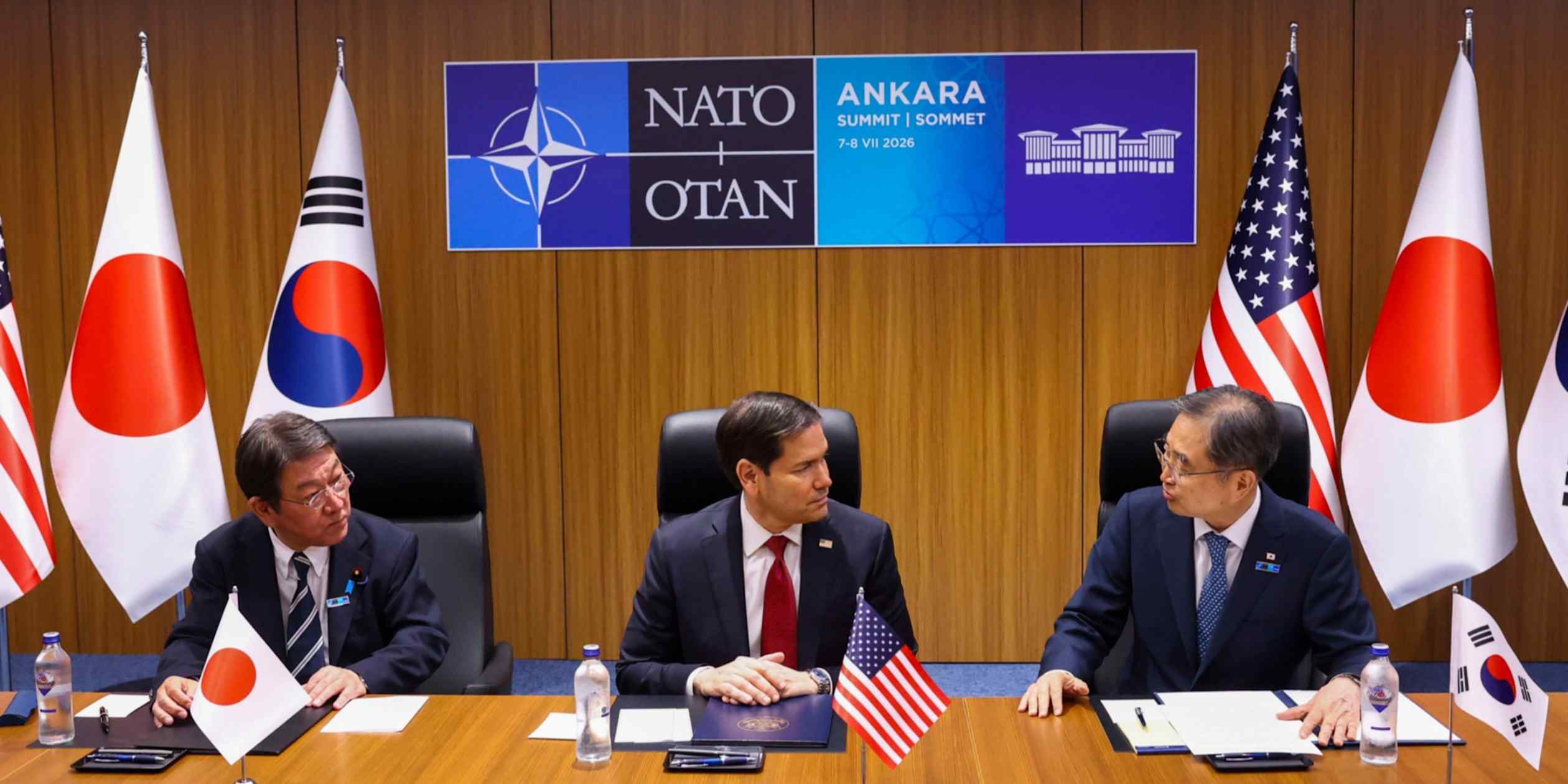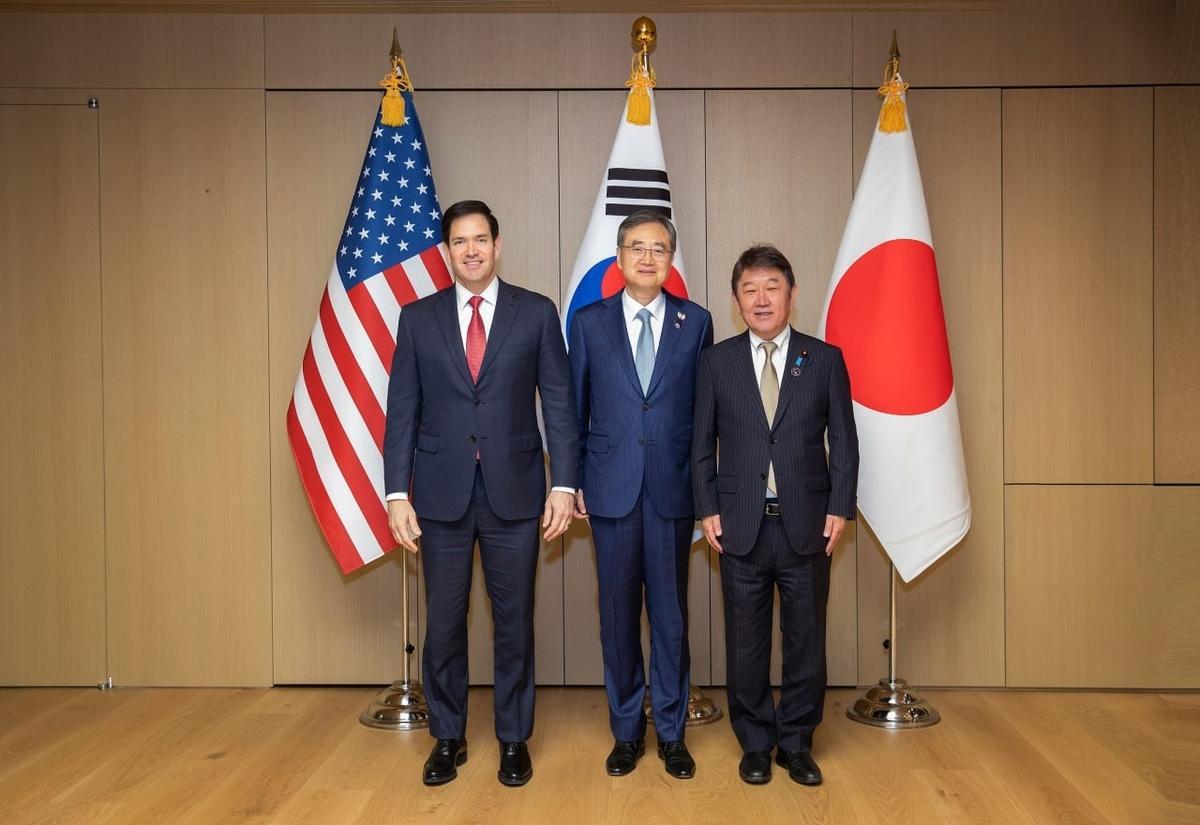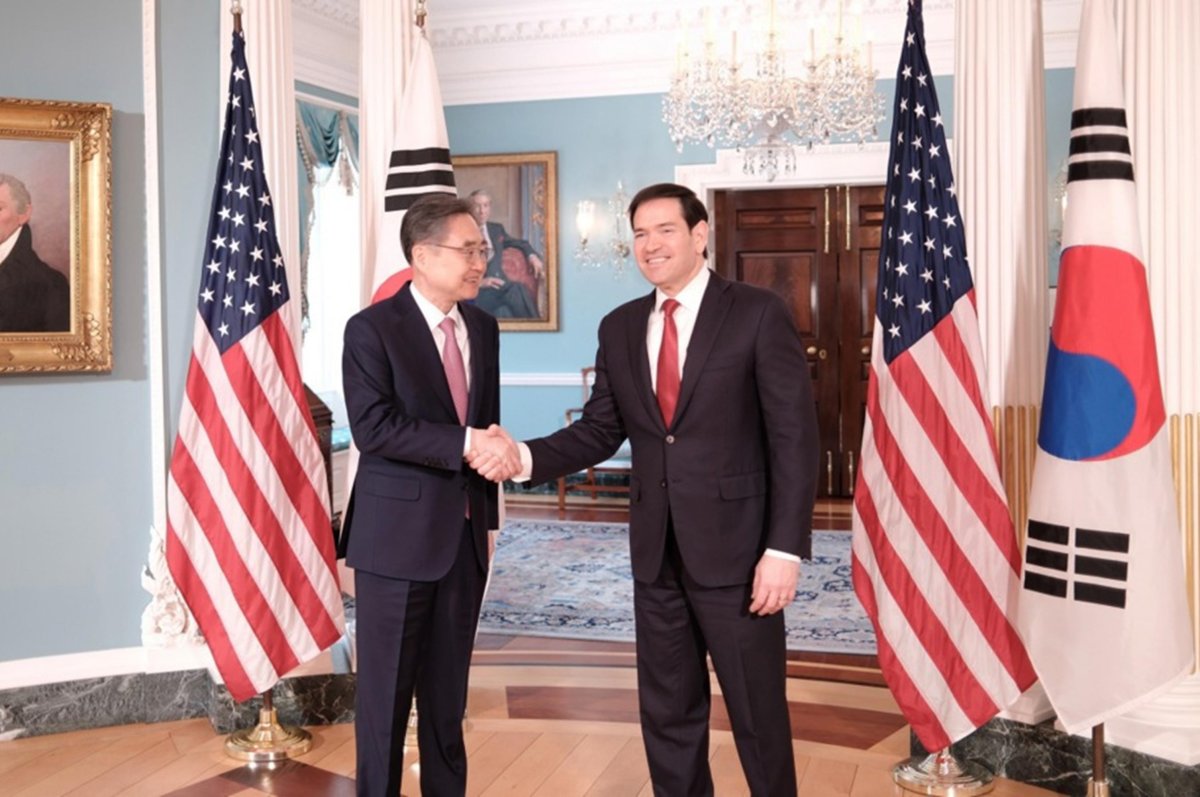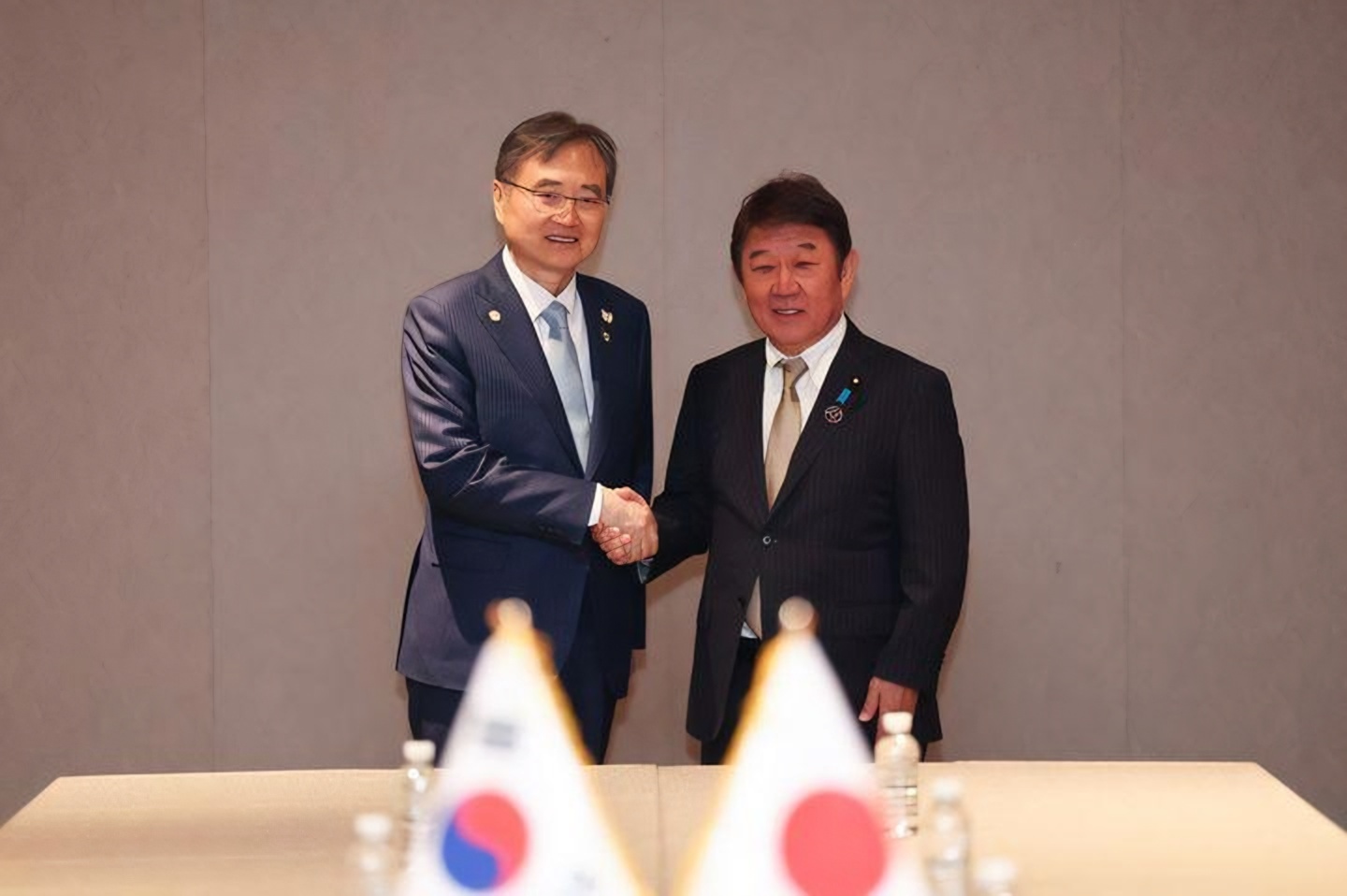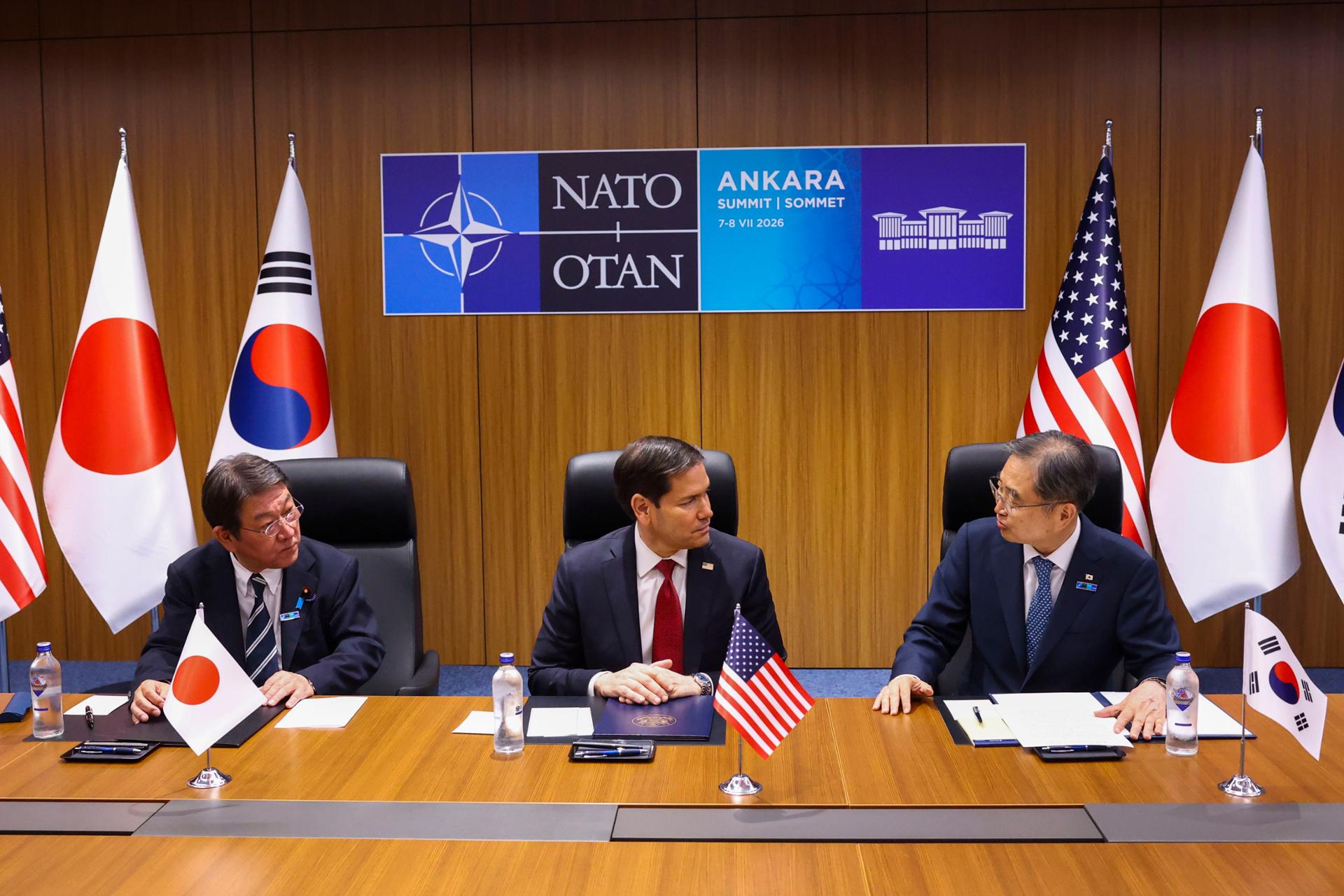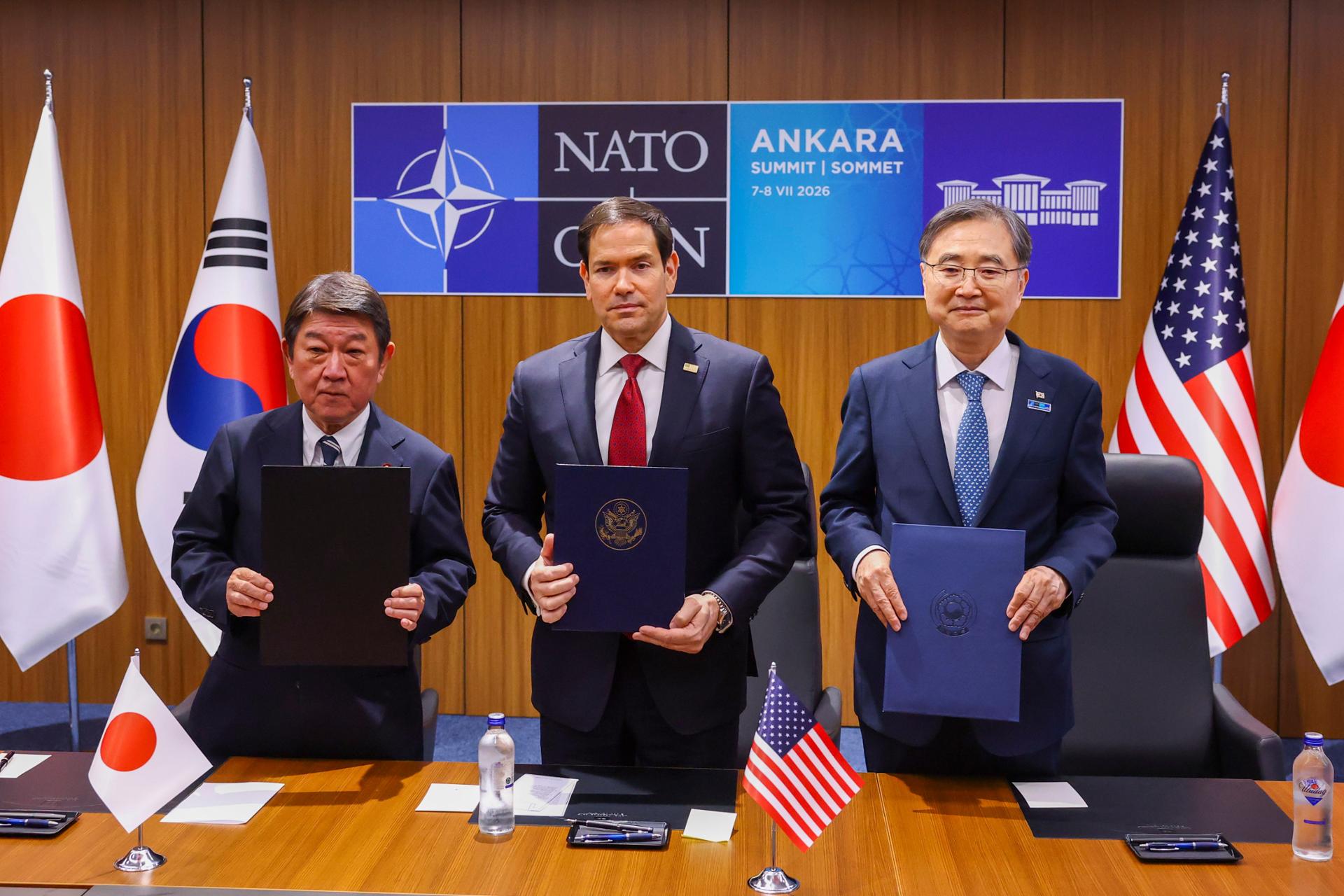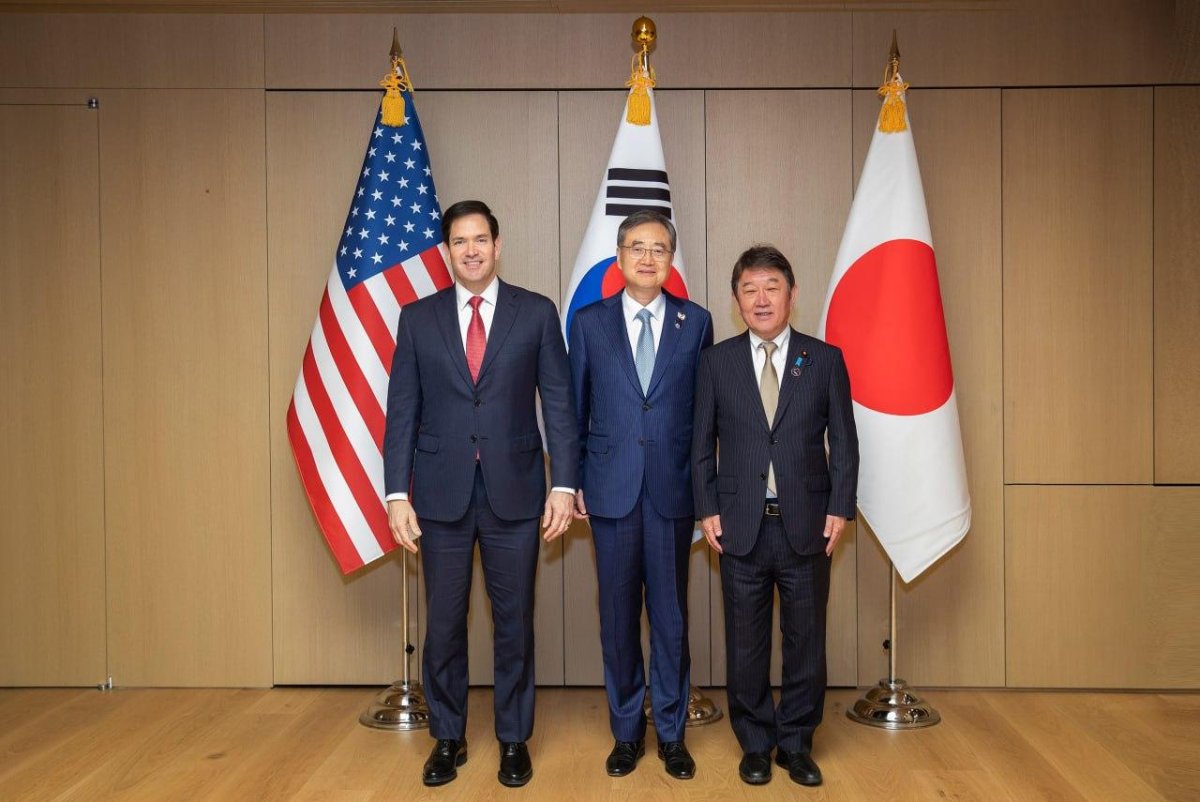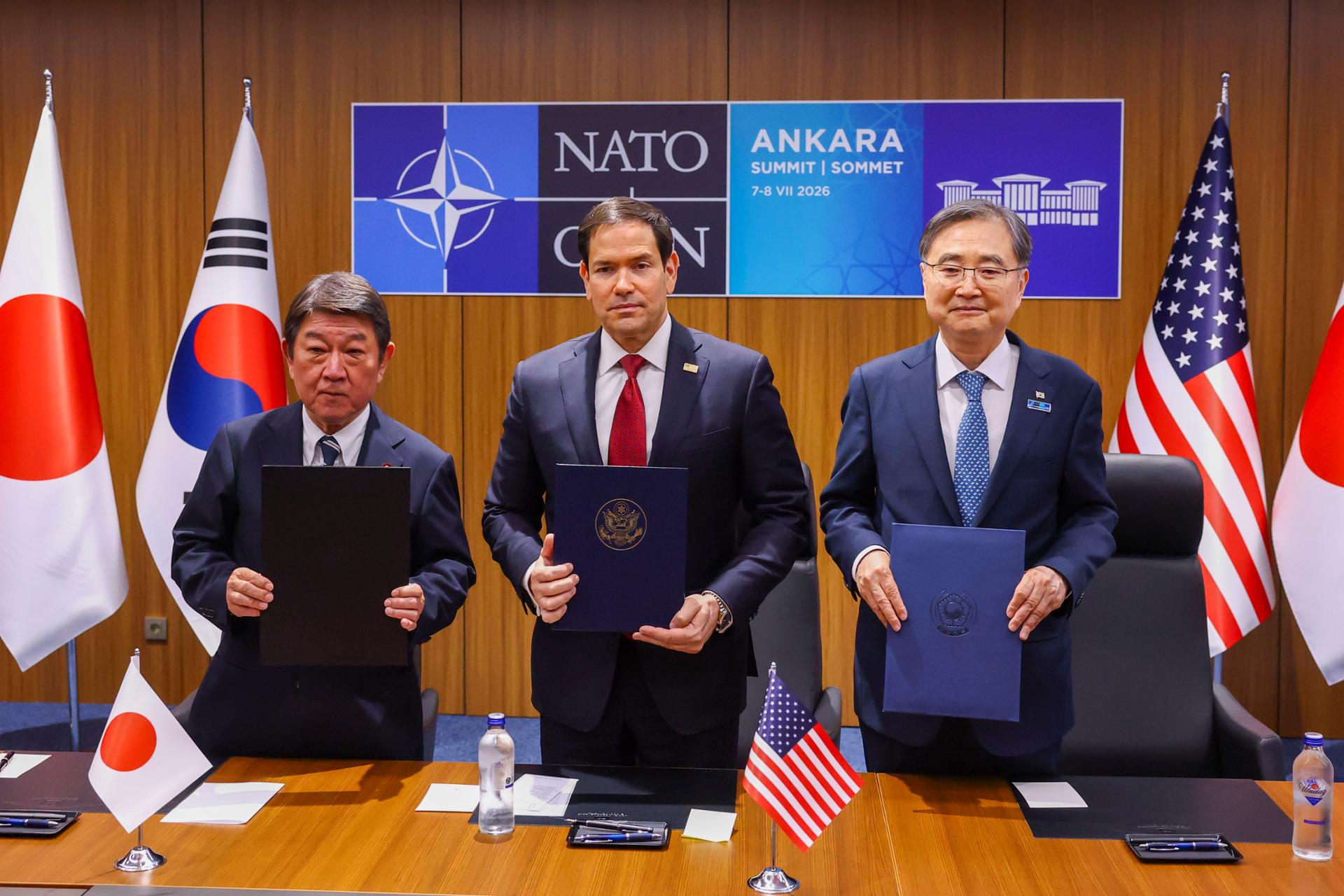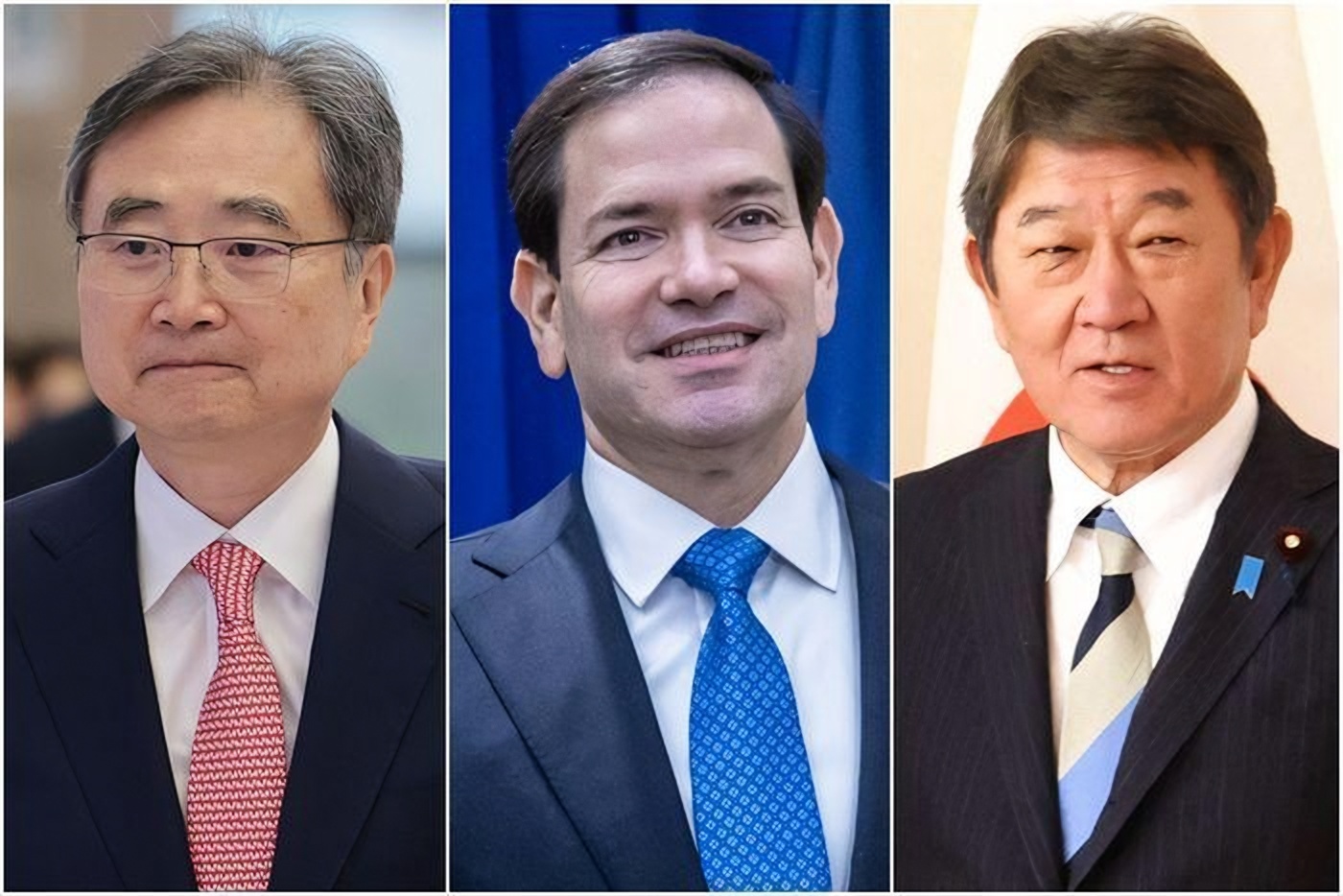
From left: US Secretary of State Marco Rubio, South Korean Foreign Minister Cho Hyun and Japanese Foreign Minister Toshimitsu Motegi hold foreign ministers' talks in Gyeongju on Oct. 29 last year. (Ministry of Foreign Affairs) South Korea, Japan and the US seek to coordinate their responses to North Korea and other regional security challenges while reinforcing economic and defense cooperation, at a trilateral foreign ministers' meeting planned for Tuesday, said Seoul's Foreign Ministry.According to the Foreign Ministry, Foreign Minister Cho Hyun will meet with US Secretary of State Marco Rubio and Japanese Foreign Minister Motegi Toshimitsu on Tuesday evening on the sidelines of the NATO summit in Turkey."At the meeting — the first trilateral foreign ministers' talks among the three countries to be held this year — the ministers are expected to discuss issues related to the Korean Peninsula, regional and global developments, and trilateral security and economic cooperation," the ministry explained in a statement.The meeting comes as President Lee Jae Myung left for Ankara earlier Tuesday to attend the two-day NATO summit, his second multilateral summit since taking office following last month's Group of 7 meeting in Canada.The ministry did not disclose a detailed agenda, but expected talks to focus on coordinating North Korea policies amid concerns over Pyongyang's advancing nuclear and missile programs and its growing military cooperation with Russia. The three ministers would also likely exchange views on efforts to maintain pressure on North Korea while keeping the door open for dialogue.The meeting is also expected to address broader security issues in the Indo-Pacific region, including Russia's war in Ukraine, China's growing military assertiveness and maritime activities, and efforts to strengthen deterrence and regional stability through closer trilateral coordination.The ministers are also expected to discuss ways to expand cooperation beyond security, including supply chain resilience, critical and emerging technologies such as artificial intelligence and semiconductors, economic security, and preparations for upcoming trilateral engagements between the three governments.The NATO gathering also provides another opportunity for high-level diplomacy between Seoul and Washington. US President Donald Trump is expected to attend the summit as the alliance grapples with Russia's continuing war in Ukraine and renewed US pressure on European allies to increase defense spending. The summit also comes amid lingering tensions over the recent US-Iran conflict and broader security concerns facing the alliance.Although no bilateral summit has been officially announced, attention is focused on whether President Lee Jae Myung and Trump will hold talks on the sidelines of the gathering.The ministers are also expected to discuss ways to expand trilateral cooperation in the defense industry, as Seoul seeks to position itself as a more active security partner for the US and Japan and a growing supplier of advanced weapons systems to like-minded countries. The talks could touch on defense supply chains, joint production, technology cooperation and coordination with NATO partners, amid rising demand for munitions and military equipment driven by the war in Ukraine and broader regional security concerns.The NATO meeting follows a setback for South Korea's defense industry after Canada on early Tuesday selected Germany's Thyssenkrupp Marine Systems over a South Korean consortium led by Hanwha Ocean and HD Hyundai Heavy Industries as the preferred bidder for its submarine procurement program worth up to 60 trillion won ($39.1 billion).Responding to the decision, Lee expressed disappointment but said South Korea's inclusion in the final competition demonstrated the country's growing capabilities as a global defense exporter, pledging continued government support for the industry.The outcome is expected to lend additional significance to Lee's participation in the NATO Defense Industry Forum, where South Korea is expected to showcase its expanding defense manufacturing capabilities and seek deeper cooperation with NATO partners.
Seoul, Washington, Tokyo to hold first trilateral foreign ministers' talks of year at NATO summit
South Korea, Japan and the US seek to coordinate their responses to North Korea and other regional security challenges while reinforcing economic and defense co
608 words~3 min read