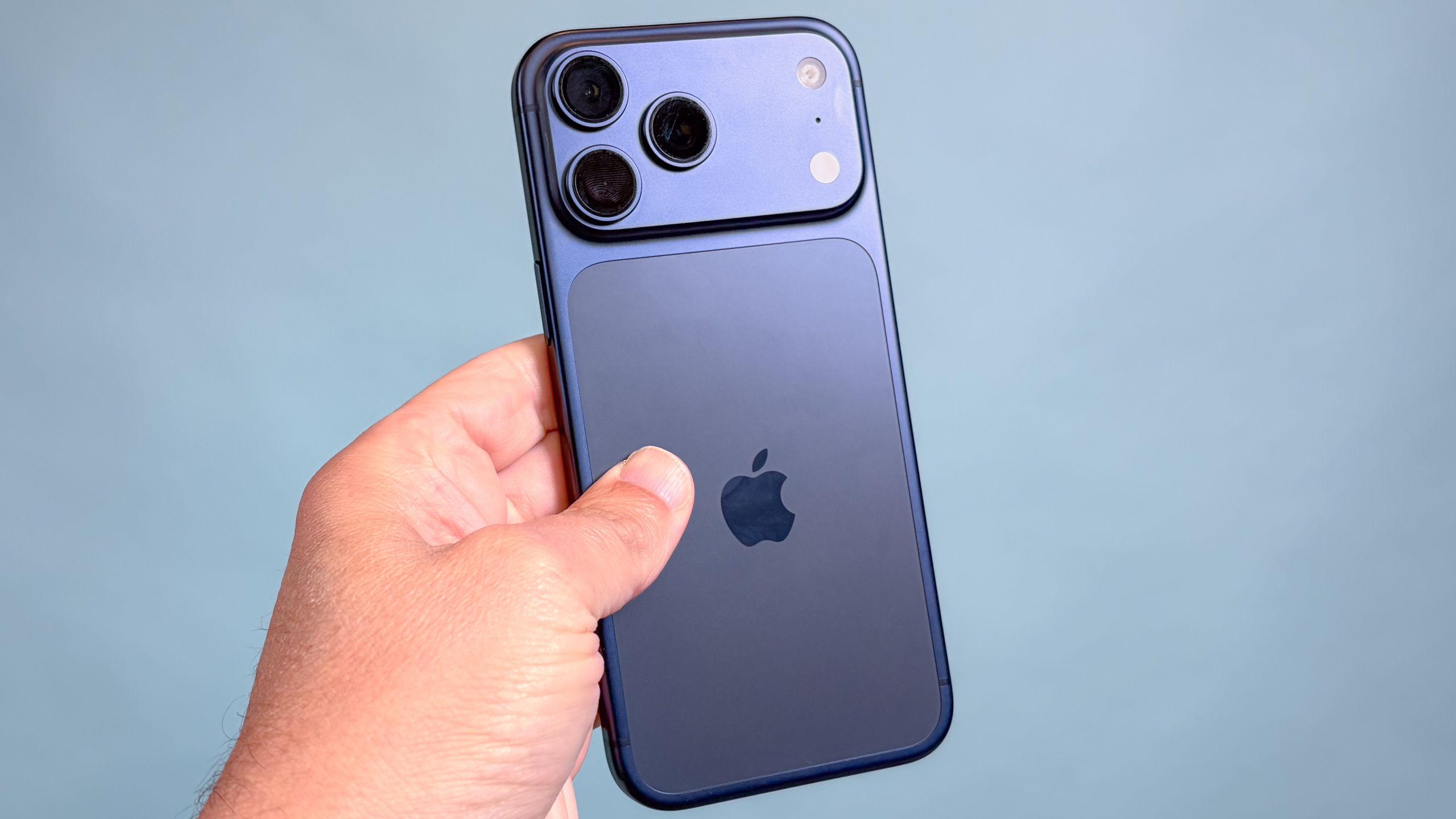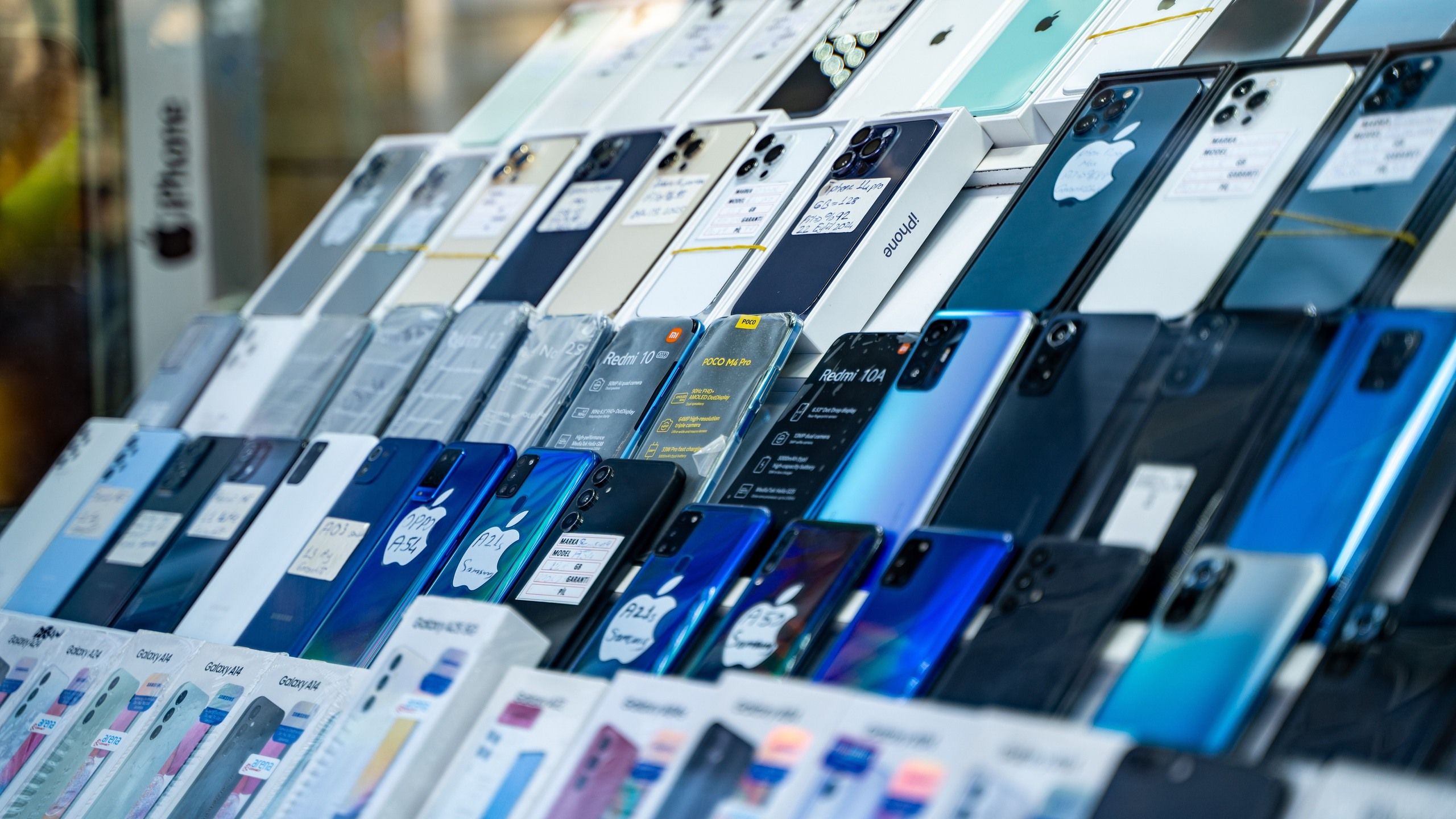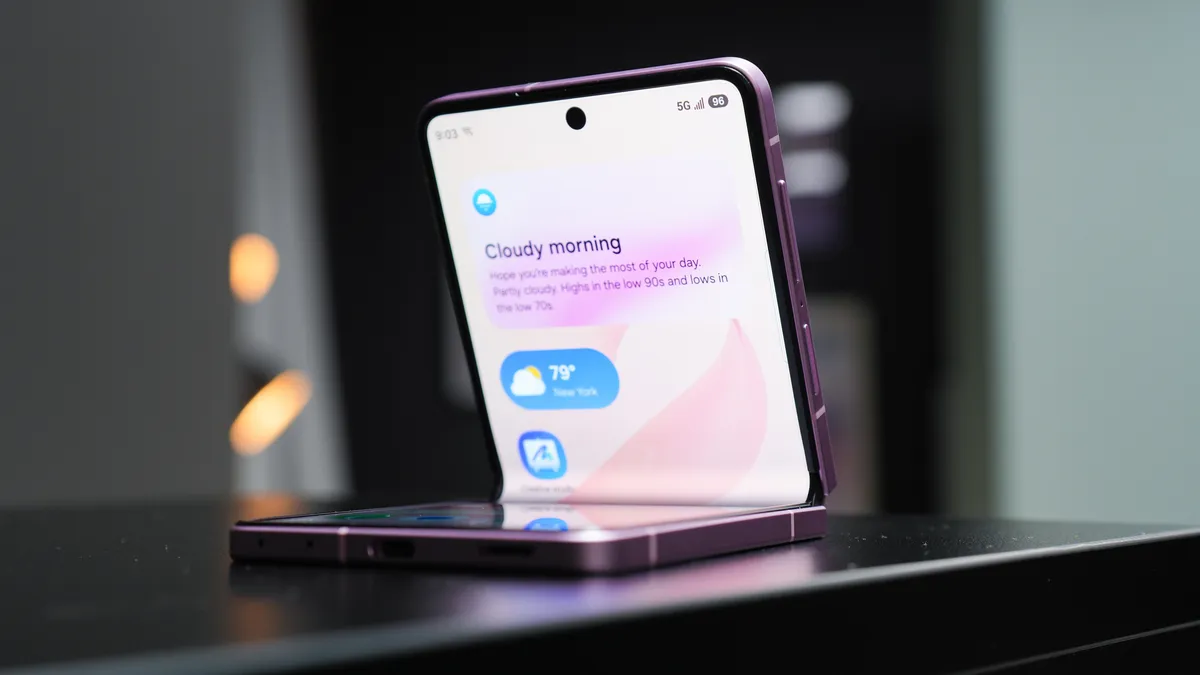
Photo credit: X/@PCMagSmartphones and PCs are heading toward using less memory, and the proof is the 8GB MacBook that the internet spent years mocking. That claim runs against every spec sheet trend of the decade — the industry narrative says on-device AI will push base models to 12GB, then 16GB — but the mechanics of the semiconductor market in 2026 point the other way. Memory prices have gone vertical: DDR5 spot prices have quadrupled since September 2025, DRAM is up 171 per cent year-on-year, and by Apple's own account memory and storage cost roughly four times what they did three quarters ago.Throwing cheap RAM at software bloat has stopped being financially viable, which means the one company that never did — Apple — just became the industry's textbook, and everyone else is about to sit the same exam. This is the story of why the RAM race breaks here: how iOS and Apple Silicon conspire to do more with half the memory, why Android and Windows will be dragged down the same path, and how a cartel's greed is forcing the entire software industry to remember an old discipline.The 8GB machine that was right all alongStart with the spec decision everyone laughed at. Apple shipped base MacBooks with 8GB of RAM deep into the AI era, and iPhones have historically carried half the memory of equivalent Android flagships — the iPhone 17 Pro runs 12GB against Android flagships at 16GB and 24GB. Ben Thompson explained the mechanism on his Sharp Tech podcast: Apple controls the entire silicon and operating system stack, so highly tuned OS primitives interact directly with Apple Silicon, extracting extreme memory efficiency that modular rivals struggle to match. Computerworld now calls this Apple's decisive advantage in the memory crunch: where other smartphones might carry 24GB of RAM, their performance is usually matched by an iPhone with half that — by design, leaving Apple less exposed in the coming memory price war than any competitor.The tandem works at several layers, and the engineering deserves spelling out. Apple Silicon uses unified memory — CPU, GPU and Neural Engine share a single pool, so data moves between them by passing a pointer rather than copying itself into separate banks, eliminating the duplication that discrete architectures pay for. iOS manages application memory through reference counting, which reclaims memory the instant an object dies; Android's runtime relies on garbage collection, which needs spare heap headroom to sweep efficiently — the practical effect is that an Android app breathes comfortably only with extra RAM held in reserve. Above that, iOS freezes background apps into compressed memory and evicts them ruthlessly under pressure, while Android's openness — multiple OEM skins, background services, a runtime hosting apps built for thousands of device configurations — has traditionally been paid for in gigabytes. Windows carries the same tax in a heavier coat: decades of backwards compatibility stacked into a system that treats abundant memory as a birthright. That birthright just got repriced.A cartel repriced the entire stackThe forcing function arrived from three companies. Samsung, SK Hynix and Micron — roughly 90 per cent of global DRAM between them — pivoted their limited cleanroom capacity toward High Bandwidth Memory for AI data centres, where Nvidia pays a premium for customised stacks. IDC's arithmetic is stark: every wafer allocated to an HBM stack for an Nvidia GPU is a wafer denied to the LPDDR5X module of a mid-range smartphone, with one HBM wafer displacing roughly three conventional DRAM wafers of capacity.The result was a record $97.1 billion DRAM quarter in Q1 2026, up 85.3 per cent sequentially per Omdia — earned less by shipping more and mostly by charging more, with SK Hynix's average selling price up around 65 per cent. Device makers absorbed what they could, then stopped absorbing. Apple raised Mac and iPad prices by $100 to $500 in late June, with Tim Cook telling the Wall Street Journal Apple had "no choice but to raise prices"; Microsoft raised Xbox prices a third time in 13 months; Sony is weighing a PlayStation delay to 2028 or beyond. In India, Vivo, Nothing and Realme raised prices by Rs 1,000 to Rs 7,000, with the Vivo X300 FE's hike pushing it past an iPhone 17. And Samsung's own investor call warns the supply-demand gap widens further into 2027 as customers pull demand forward. Faced with that horizon, the industry has exactly one lever left: need less of the stuff.Android goes on the diet it always avoidedThis is where the secular shift begins. Android's generosity with RAM was always an economic choice, made viable by memory that cost less every year — a rising tide of cheap gigabytes covered for the runtime's overhead, the OEM skins, the background sprawl. That subsidy just ended. A manufacturer building a Rs 20,000 phone in 2026 faces LPDDR5X pricing that makes 16GB a margin-killer, and the arithmetic forces optimisation that prosperity never did: leaner OEM software, more aggressive process management, runtime improvements that shrink per-app overhead. The precedent for rapid movement exists — Google already maintains a lightweight Android lineage for low-RAM devices, and the toolchain for trimming has been sitting half-used for years.Windows faces the same reckoning through the laptop bill of materials, where memory has become one of the most expensive line items on the sheet. Expect the diet to be uneven and grudging — spec-sheet marketing loves a big RAM number, and Indian mid-range phones are sold on the memory line item — but the direction is set by arithmetic rather than taste. The parallel shift is happening in AI itself: Thompson described on Sharp Tech how hyperscalers and frontier labs are obsessed with algorithmic efficiency, accomplishing computing goals with less memory. On device, that translates to quantisation and pruning — compressing models to a fraction of their memory footprint at minimal accuracy cost — and agentic designs that load small, specific chunks of context on demand instead of parking a monolithic model in RAM to idle between prompts.Storage starts doing memory's jobThe final piece arrived on 23 June with barely a headline. Samsung announced the industry's first UFS 5.0 storage chip: 10.8 GB/s sequential reads and 9.5 GB/s writes — more than double UFS 4.1 — with 40 per cent better power efficiency, mass production from Q4 2026, and Samsung pitching it explicitly at on-device AI workloads that need fast access to local model data. Reports suggest Qualcomm's next flagship Snapdragon platform has already locked in support. The significance is architectural: flash this fast stops being a static vault and becomes an active tier of the memory hierarchy, streaming model weights and embeddings to the neural processor on demand instead of forcing everything to squat in DRAM.The honest engineering caveat belongs in the same breath: flagship LPDDR5X still moves data several times faster than UFS 5.0, with latency in a different class altogether — figures worth checking against JEDEC specifications, though the gap's order of magnitude is beyond dispute — so fast flash extends working memory rather than replacing it. The hot working set and fast-moving context stay in RAM; the cold bulk of an AI model no longer has to. Even Apple illustrates the tension: its most expressive Siri voices demand 12GB devices because the most powerful on-device model wants headroom today. The resolution is a stall rather than a reversal — the 12-to-16-to-24GB escalation loses its engine, because flagship performance stops requiring flagship RAM.The cartel is financing its own irrelevanceStep back and the strategic irony sharpens. The big three's scarcity play is simultaneously creating its replacement on two fronts. The first is competitive: Thompson's Stratechery warning that the big three may come to regret opening the door to Chinese memory makers is materialising in real time — Apple is lobbying Washington, with Cook personally appealing to Treasury Secretary Scott Bessent, for cover to buy DRAM from CXMT and NAND from YMTC for China-market devices, both companies sitting on the Pentagon's 1260H list. HP placed a large LPDDR5 order with CXMT in January; Qualcomm began a custom DRAM collaboration in April. CXMT's Q1 2026 revenue hit $7.3 billion, up roughly 700 per cent year-on-year at operating margins near 70 per cent, per SemiAnalysis, with capacity headed toward 350,000 wafer starts monthly — close to Micron's scale.Bloomberg's Tim Culpan frames it as history repeating: incumbents handing orders and relationships to Chinese rivals exactly as happened in legacy semiconductors and LCD panels. The second front is the one this piece began with: demand destruction through engineering. Every quarter of cartel pricing makes the software optimisation permanent — quantised models stay quantised, leaner runtimes stay lean, and storage-as-memory architectures ship in silicon. By the time supply normalises, the industry will have rewired itself to want less of the product at any price.What a Rs 20,000 phone looks like after the dietFor India, the world's most price-elastic major smartphone market, the endgame is concrete. The near term stays ugly — the hikes already landed, and the 2027 supply gap promises more — but the medium term inverts the spec sheet. A mid-range phone in 2028 built on an efficient Android, quantised on-device models, and UFS 5.0-class storage delivers today's flagship experience on 8GB where the 2026 version demanded 12GB, and the Rs 4,000 saved on memory goes to the camera, the battery, or the price tag.The buying advice follows: RAM is about to become the least informative number on the box, and the numbers that replace it are storage speed and NPU capability. The deeper lesson is older than silicon. Constraint is the mother of good engineering — Apple learnt memory discipline in the lean PowerPC years and never unlearnt it, which is why it walked into this crisis armoured. Samsung, SK Hynix and Micron will book the most profitable years in their history teaching everyone else the same lesson. The tuition is brutal. The graduates will never overpay for memory again.Frequently asked questionsWhy do iPhones need less RAM than Android phones?Apple controls both the silicon and the OS, so iOS uses unified memory, instant reference-counted memory reclamation, and aggressive background-app compression. Android's runtime uses garbage collection, which needs spare heap headroom, and OEM software layers add overhead — so vendors provision more RAM.Will smartphones really ship with less RAM in future?The realistic outcome is a stall in the RAM race rather than shrinking numbers: efficiency gains, compressed AI models, and fast storage mean mid-range phones can deliver flagship performance at 8GB instead of chasing 16GB.What is UFS 5.0 and why does it matter?Samsung's new storage standard reaches 10.8 GB/s reads — over twice UFS 4.1 — letting phones stream AI model data from storage on demand instead of holding it all in RAM. Mass production begins Q4 2026, with first phones expected in 2027.Why is RAM so expensive right now?Samsung, SK Hynix and Micron shifted production toward High Bandwidth Memory for AI servers; each HBM wafer displaces roughly three conventional DRAM wafers. DDR5 spot prices have quadrupled since September 2025, and the squeeze is projected to widen into 2027.Should I buy a phone with more RAM today?For a 2026 purchase, 8GB remains comfortable for mainstream use and 12GB future-proofs heavy multitasking and on-device AI. Past that, storage speed and the NPU tell you more about longevity than the RAM number.end of article
Why Smartphones Will Need Less RAM: Apple's 8GB Blueprint Goes Industry-Wide
As memory costs climb, device creators must adapt, reducing RAM usage. Apple's innovative designs are now viewed as the gold standard in the tech landscape. Expect Android and Windows to follow suit with optimized software and robust memory handling. Complementing RAM, advanced storage systems will enhance on-device AI functionalities, making premium experiences accessible with less memory than ever before.
1,880 words~9 min read