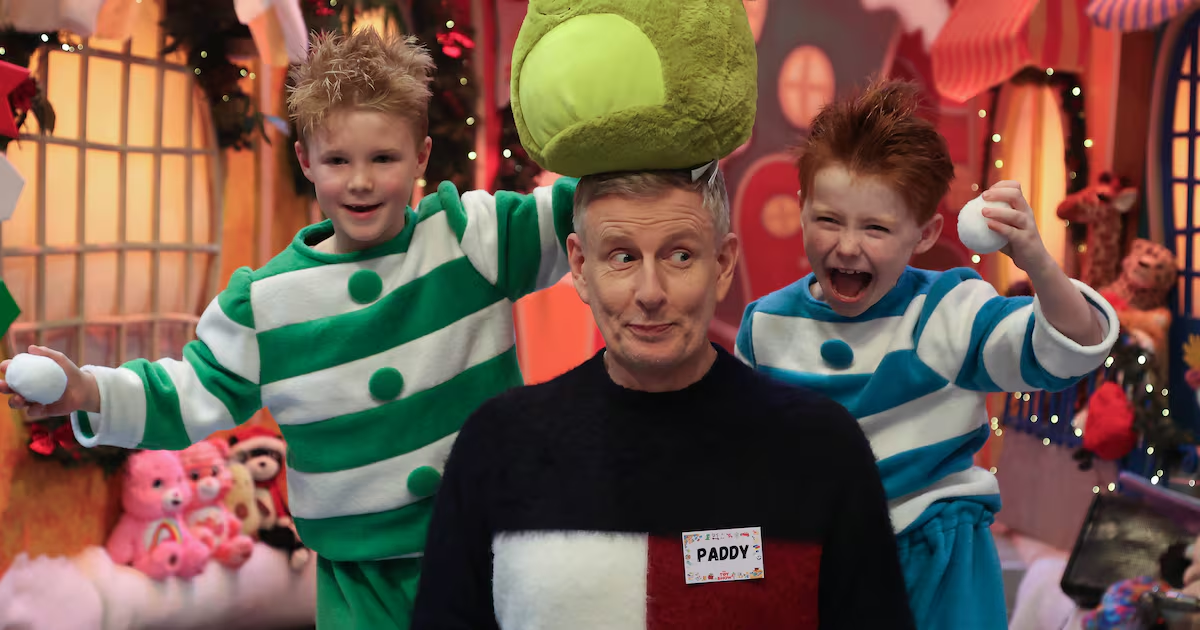
The clock is ticking loudly for RTÉ to sort out who will host The Late Late Show this autumn. Patrick Kielty’s contract expired more than nine weeks ago. The new schedule is traditionally unveiled in August. The show itself returns in September. Still, nothing has been confirmed.It may not be as serious as some suspect. Final details could simply be getting tidied up, with everything clear by the time the autumn schedule launches. But the silence from every party involved suggests otherwise.If there’s a problem, what might it be? RTÉ’s presenter pay is capped by reference to director general Kevin Bakhurst’s own salary; €250,000 but expected to rise to €270,000 once the Minister for Media Patrick O’Donovan signs off. If Kielty’s ceiling rises in step with Bakhurst’s, the sensible move for his advisers is simply to wait. That leaves the intriguing, if speculative, possibility that the future of the State broadcaster’s flagship programme lies in O’Donovan’s hands.Beyond money, the whispers from inside Montrose point to the number of shows in the season. Under his original three-year deal, Kielty fronted 30 editions a year, fewer than Ryan Tubridy managed at his peak. Based in London with young children and other broadcasting commitments, it would hardly be surprising if Kielty wanted to bring that number down. But that has consequences for RTÉ’s planning, its budgets and its ability to build a full season around a host who may only be available part-time.While all this drags on, the tabloid showbiz pages have already moved on, drawing up shortlists of potential successors. Kieran Cuddihy, fresh into Liveline, is the bookmakers’ favourite, with Oliver Callan, Dermot Whelan, Muireann O’Connell, Maura Derrane, The Two Johnnies and Claire Byrne all mentioned at various odds. Former RTÉ commercial director Willie O’Reilly has suggested handing the show to five different presenters for a month each, with whoever performs best getting the job permanently. It’s the sort of Hunger Games approach RTÉ has favoured for filling slots before, though it hardly speaks to confidence in its own editorial judgment.Despite its billing as the second longest-running chat show in international broadcasting history, The Late Late Show has changed more than that billing as an unbroken institution suggests. Gay Byrne ran it for 37 years as both a weekend variety show and a live, unscripted argument with a changing country, in front of a studio audience that talked back. Gay Byrne, Pat Kenny and Ryan Tubridy pictured at The Late Late Show 50th Anniversary in 2012. Photograph: Aidan Crawley Pat Kenny, taking over in 1999, was more restrained and less interested in manufacturing controversy. Tubridy’s arrival in 2009 prompted Americanisation; a couch replacing chairs, a house band, and a lean toward celebrity interviews mixed with lighter material and stories of personal loss or adversity. Kielty inherited that version of the programme rather than Byrne’s, adding his own comedic skills along with an empathetic, personal register, particularly around grief and the Troubles, without disturbing the basic entertainment format underlying the show. That format deserves a harder look. Much of a modern season still runs on the old junket rhythm; a big musical guest, an actor promoting a film, a plug for another programme or a well-meaning charity segment. It is unambitious, middle-of-the-road television, not the appointment viewing it once was, and it rarely surprises anyone. In a saturated media landscape where the same actors and singers can be found doing looser, longer interviews, The Late Late’s version of the celebrity chat show increasingly looks like the least interesting way to encounter these guests.Which raises the question of whether RTÉ genuinely wants Kielty, or anyone else, to take the show in a more Byrne-like direction, as some reports suggest he wishes to do. When the show began, it was the only forum in which certain arguments could be had at all. That monopoly is long gone. RTÉ is also still rebuilding trust with Government and licence payers, hardly the moment to hand a presenter free rein to go looking for on-air controversy.Besides, Kielty is no Gaybo. His interviewing style is never particularly probing and he shows little interest in asking the embarrassing or awkward questions that were Byrne’s trademark.Nearly seven years after his death, Gay Byrne’s shadow still falls across conversations like this one, invoked again recently in Shane Ross’s book on RTÉ. But the last thing RTÉ management wants now (or ever) is another presenter who becomes bigger than the organisation employing him. A cautious, entertainment-led Late Late Show is clearly what they want, whoever holds the chair.All of which invites a less comfortable question than who hosts the show next. Is The Late Late Show really still RTÉ’s “flagship” in any sense beyond habit? [ The World Cup – soccer in general – seems to have escaped its once-stubborn naffnessOpens in new window ]It’s called that reflexively, in almost every piece written about it, including this one. But a flagship implies something that leads, that the rest of the schedule takes its bearings from. That was once true of The Late Late. But today it’s a stolidly predictable, middle-market programme with unimpressive production values that no longer sets the agenda for anything beyond its own two hours. Like the American chat shows it was modelled on, its cultural gravity has been shrinking for years. A more honest description now is not flagship but heirloom.If Kielty doesn’t sign up, the likely outcome is a scramble around a contingency plan probably already drawn up. That’s hardly the best environment for big decisions. But the question RTÉ management should really be asking is whether, after almost 65 years on the road, the time has come to put this venerable old warhorse out to pasture.
At 65 years old, isn’t it time for RTÉ to retire The Late Late Show?
Patrick Kielty’s contract expired about nine weeks ago, leaving questions to be answered for a show due to return in September
949 words~4 min read