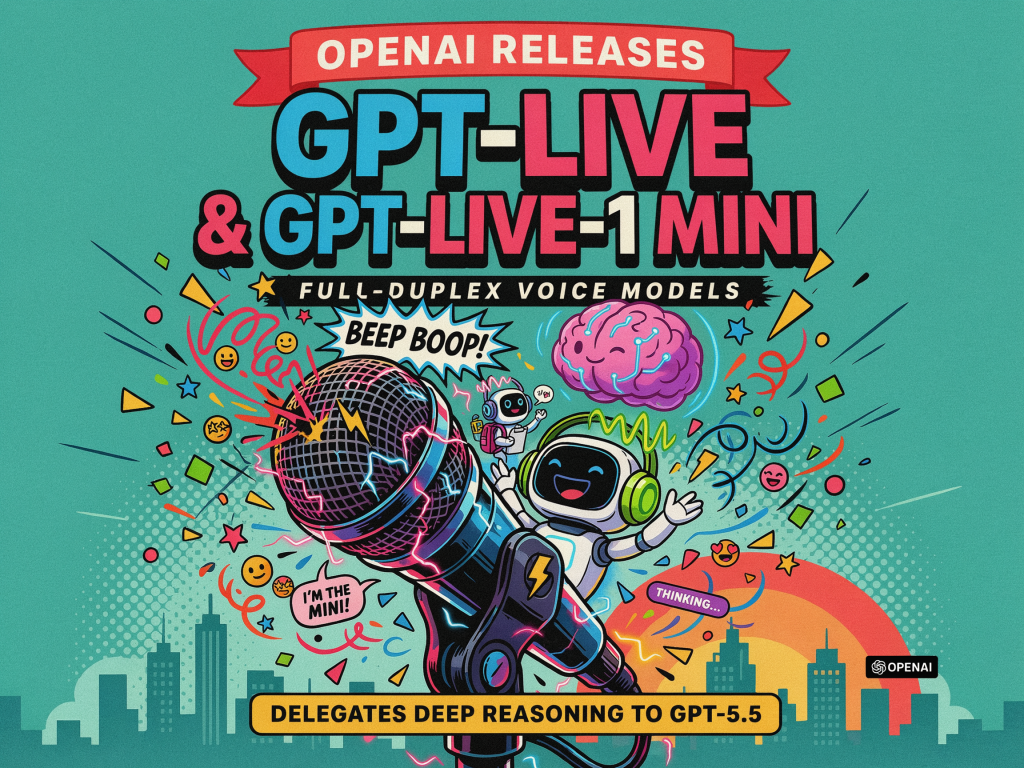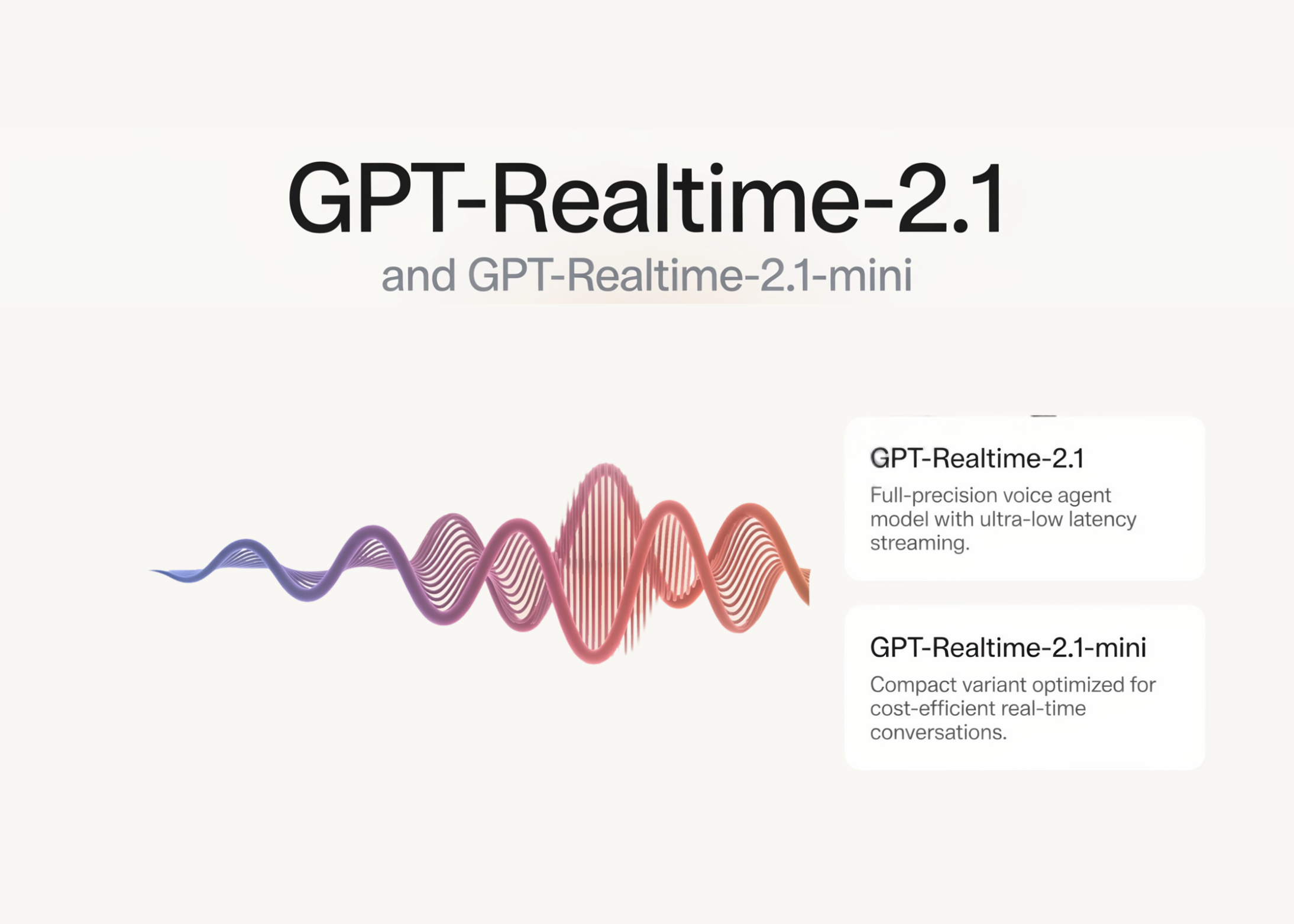
OpenAI has released two new Realtime models in its API. They are named gpt-realtime-2.1 and gpt-realtime-2.1-mini. Both target low-latency voice and multimodal experiences. The mini model is the notable part of this release. It is a mini reasoning model for realtime voice. It ships at the same cost as the earlier gpt-realtime-mini. OpenAI also reduced p95 latency by at least 25% across Realtime voice models. That reduction comes from improved caching.
gpt-realtime-2.1-mini is a mini reasoning model for realtime voice interactions. It responds to audio and text inputs over a live connection. OpenAI positions it as the faster, more cost-efficient option in the lineup.
The Realtime API processes and generates audio through a single model. This avoids chaining separate speech-to-text and text-to-speech systems. That single-model design reduces latency and preserves nuance in speech.
Reasoning is the main capability here. It means the model can think internally before it speaks. The mini tier also supports tool use, or function calling, through the Realtime API. Together these let the mini model plan a step, call your function, then answer.
The larger sibling is gpt-realtime-2.1. It updates GPT-Realtime-2 with improved alphanumeric recognition. It also improves silence and noise handling, and interruption behavior. It supports speech-to-speech with configurable reasoning effort, instruction following, and tool use.