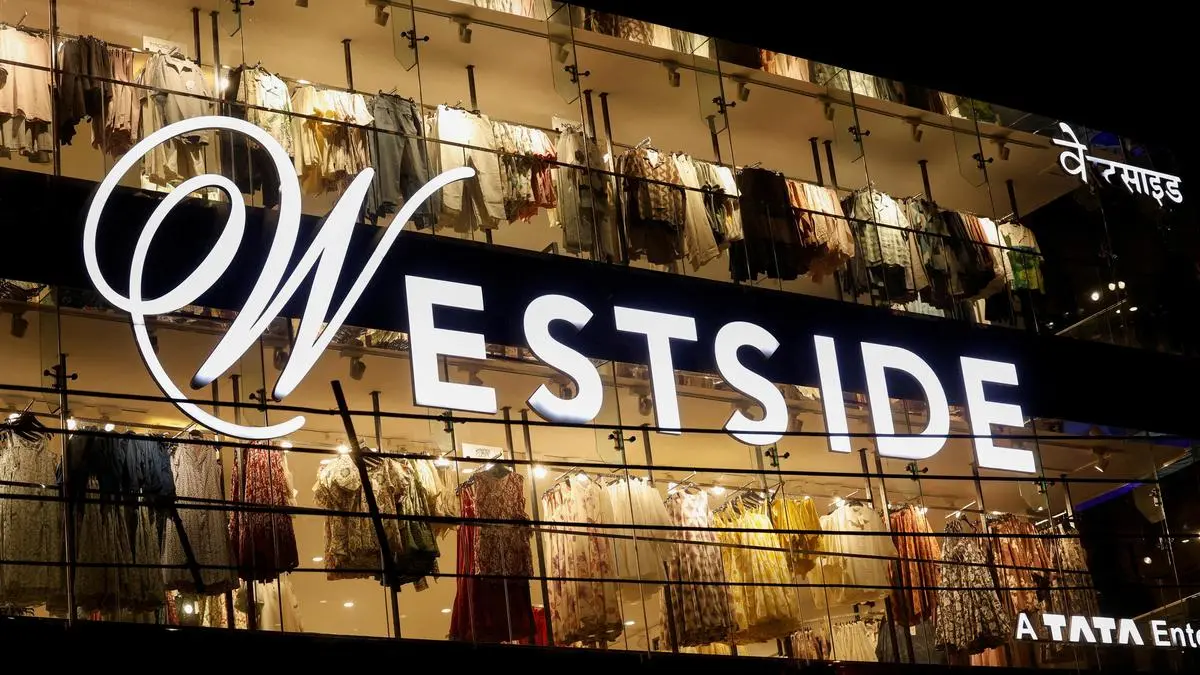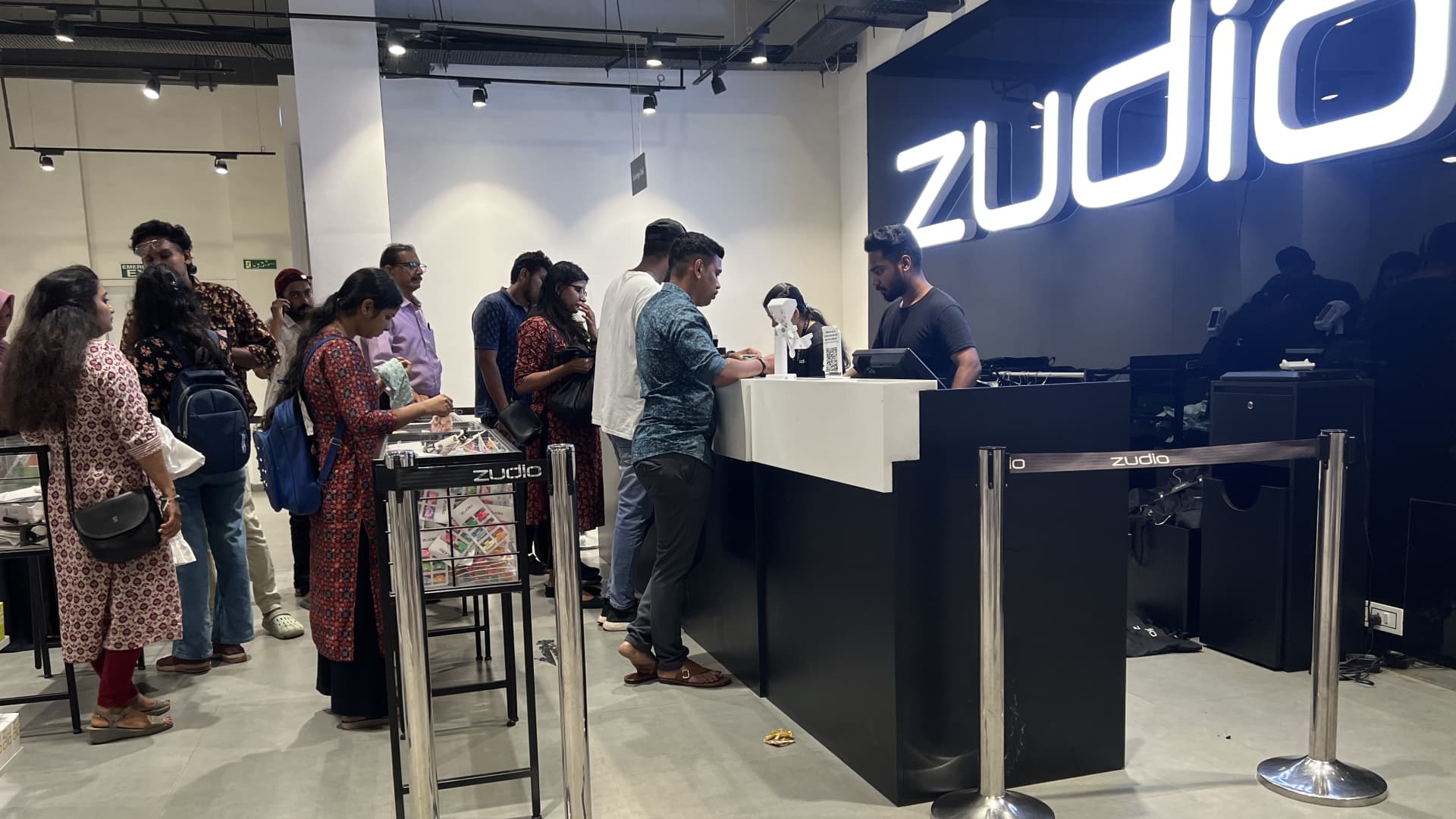
Shares of Tata Group’s fashion retailer Trent, which runs the Westside and Zudio chain of stores, crashed 10% to hit a day's low of Rs 3,010.10 on the BSE, wiping out nearly Rs 17,773 crore in market capitalisation, after the company’s Q1 revenue growth fell short of Street estimates.The stock's sharp slide comes after it rallied 23% in the past month and 50% since its March 2026 lows as investors bet on an acceleration in revenue growth from the 20% YoY pace seen in Q4 of FY26. Instead, the print showed growth decelerating, triggering the sell-off.The numbers behind the Q1 missTrent's 1Q standalone revenue came in at Rs 5,666 crore, up approximately 19% year-on-year, below expectations of roughly 22% YoY growth. Revenue from sale of products, net of GST, also grew around 19% YoY.The growth was driven primarily by a 26% YoY increase in store count, but revenue per store declined approximately 5% YoY, compared to a 4% YoY decline in the fourth quarter of FY26 — a trend that points to either a slower ramp-up of newer stores or a continuation of cannibalization effects at existing outlets.Store expansion also moderated during the quarter. Trent added 26 stores in 1QFY27, taking its total fashion format store count to 1,312, up 26% YoY. Zudio, the value fashion chain, added 19 net stores to reach 982 outlets, up 28% YoY, while Westside added just one net store, taking its count to 301, up 21% YoY. Trent's other fashion formats rose by six stores quarter-on-quarter to 29, flat year-on-year.Also Read | Trent shares crash 10% after Q1 update comes below estimates; revenue rises 19%What brokerages are sayingCiti, which has a Sell rating and a target price of Rs 2,733, one of the most bearish among the brokerages, flagged that reported standalone revenue growth of 19% YoY compared with its own estimate of 23%, and against 20%, 16% and 17% in the preceding three quarters. It noted that average revenue per square foot, assuming similar new-store sizing as the trailing twelve months, declined 12.2% YoY, compared to declines of 11.6% and 16.1% YoY in the fourth and third quarters respectively — a weak trend even as it benefited from a soft base. The brokerage said it would remain cautious given a still-weak revenue per sq ft trend, along with increasing competition, the impact of cannibalization, and new-store expansion in tier 2/3 towns. It did note that the first quarter is seasonally weak for store additions, with Westside and Zudio adding 1 and 19 stores respectively against its estimate of 0 and 6.Macquarie, which maintains an Outperform rating with a target of Rs 3,600, had flagged weaker-than-expected sales growth heading into the print, saying it believed same-store-sales growth momentum moderated from Q4 levels, and that this growth moderation is likely to weigh on near-term performance. It added that it sees value positioning and improving outlook on consumer demand aiding growth recovery.Bernstein, also Outperform with a target price of Rs 3,500, said 1QFY27 YoY revenue growth for the standalone business came in at 19% versus its estimate of 20.5%, adding that growth is lower than expectations. It noted store additions were slow for Westside (+1) while Zudio (+19) were healthy, and that additions were lower than expectations and also lower than what the company did in 1QFY25. However, Bernstein said the first quarter is usually the slowest for additions, so it is not yet concerned about meeting the accelerated store guidance for FY27.Morgan Stanley, which is Overweight with a target price of Rs 3,151, said 1Q standalone revenue excluding GST grew 19% YoY against its estimate of 21%, similar to the 20% growth seen in the fourth quarter. It expects 1Q standalone EBITDA margin to improve 100 basis points YoY to 18.5%, up from 18.6% in the fourth quarter. Store expansion pace moderated in the quarter with net store openings of 19 and 1 in Zudio and Westside respectively, following a very strong fourth quarter. Morgan Stanley noted the stock had rallied 20% in the past month heading into results and could see some weakness in the near term given the slightly weaker print.Should you buy the dip in Trent?The brokerage split offers a clear read on the debate. Three of the four — Morgan Stanley, Bernstein and Macquarie — retain bullish ratings (Overweight/Outperform) with target prices of Rs 3,151, Rs 3,500 and Rs 3,600 respectively, all still implying upside from current levels, viewing the slowdown as largely a seasonal, first-quarter phenomenon and pointing to still-healthy Zudio additions and steady margin trends.Also read: IT stocks are beginning to offer bank FD-like dividend yields. But is that a trap for investors?Citi stands apart with a Sell rating and a target of Rs 2,733, pointing to the structural concerns of a persistently weak revenue-per-square-foot trend, rising competition, and cannibalisation risk that predates this quarter's miss and, in its view, is unlikely to reverse quickly.The common thread across all four is that store expansion, not same-store growth, has been carrying Trent's numbers, and revenue per store/per square foot continues to decline. Whether the dip is a buying opportunity likely hinges on which of these two narratives an investor believes: a seasonal Q1 soft patch (the bull case) or a deeper structural strain on productivity as the company scales into smaller towns (the bear case).(Disclaimer: Recommendations, suggestions, views and opinions given by the experts are their own. These do not represent the views of The Economic Times)
Rs 18,000 crore crash in Trent shares explained, and should you buy the dip
Trent shares fell sharply on Tuesday, erasing nearly Rs 18,000 crore in market value, after its Q1 revenue growth of 19% missed Street estimates. While weak store productivity and slowing expansion raised concerns, most brokerages remain bullish, calling the slowdown seasonal, though Citi warns of structural challenges and intensifying competition.
TL;DRAI
Trent shares crashed 10% on Q1 revenue miss: 19% YoY growth vs. 22% expected, with revenue-per-store declining 5% despite 26 net new stores (Zudio +19). The weakness reveals a structural problem—expansion cannibalizes existing stores rather than driving incremental growth, a risk the 23% rally underpriced.
907 words~4 min read