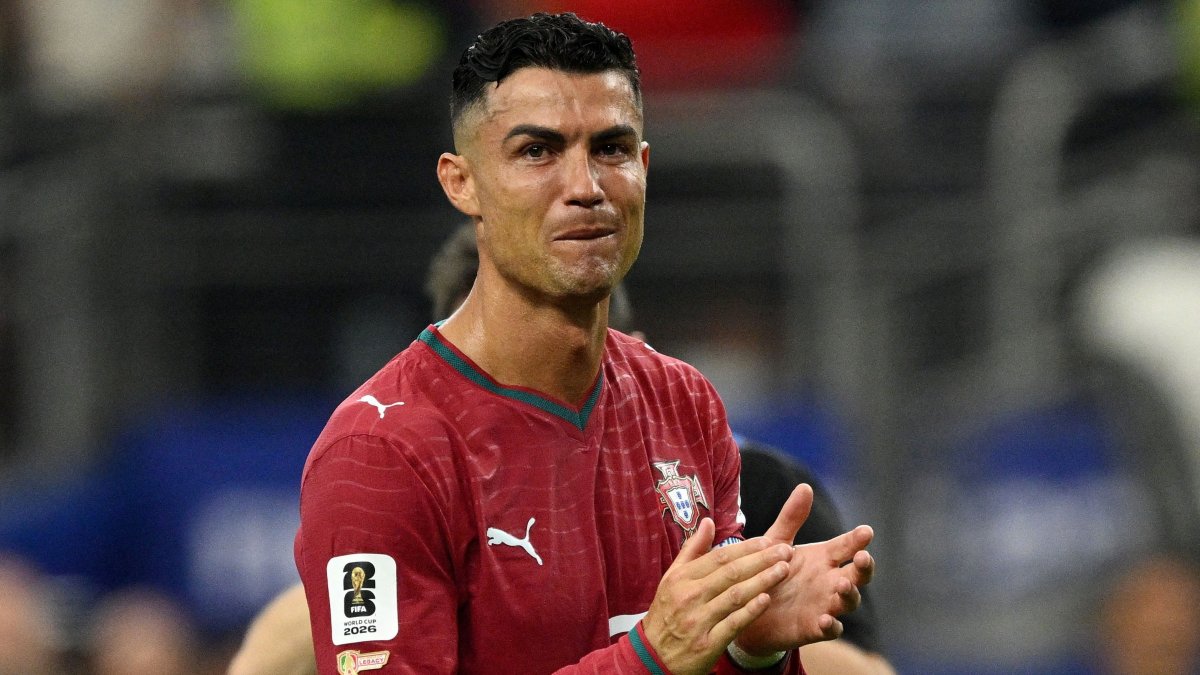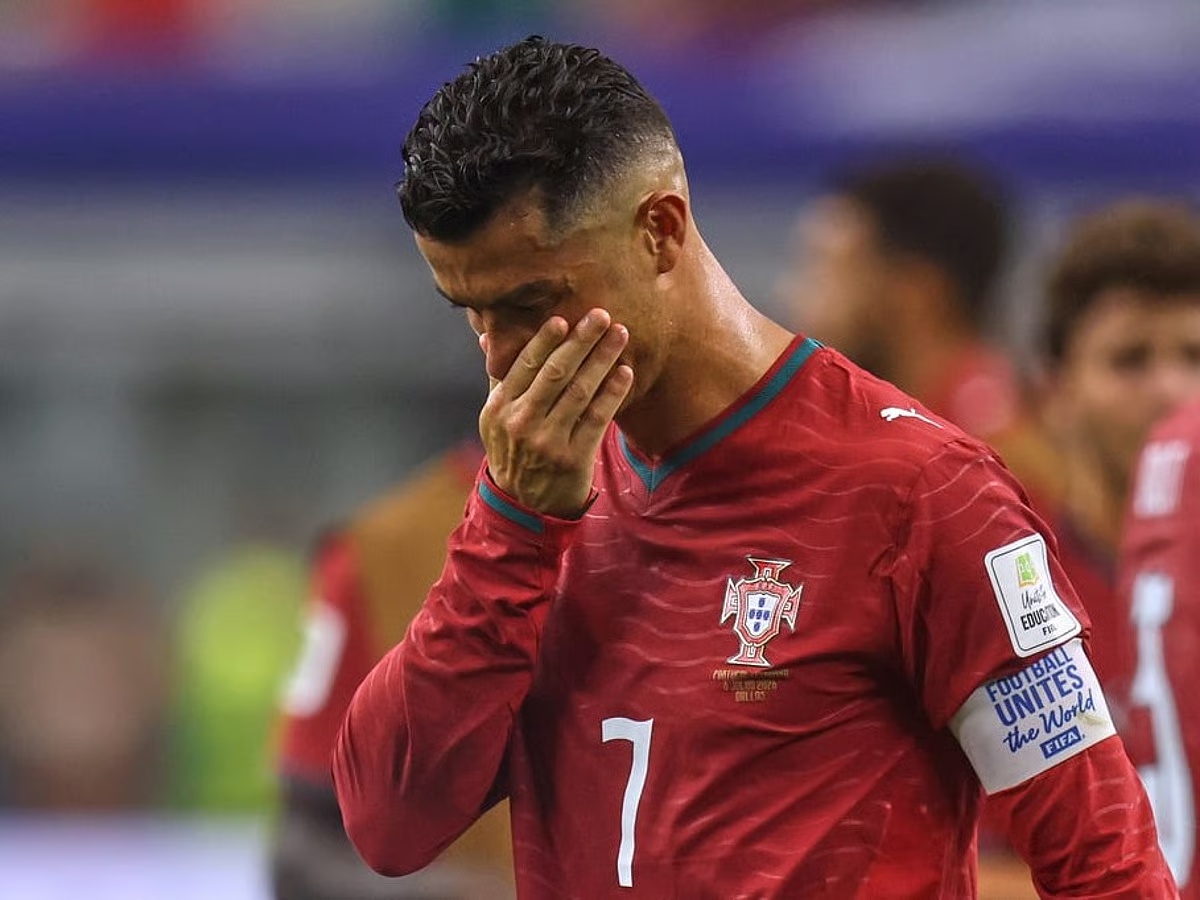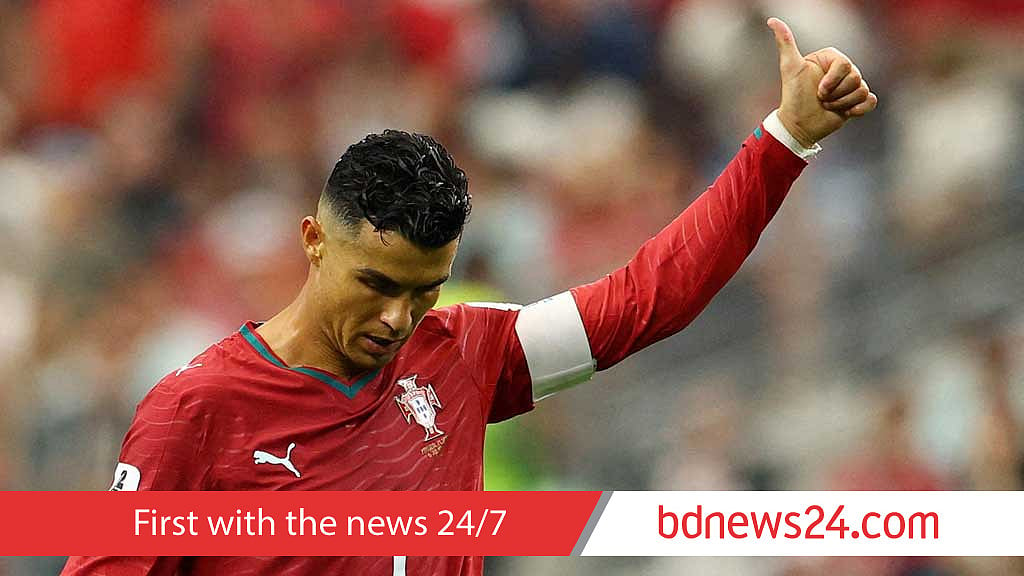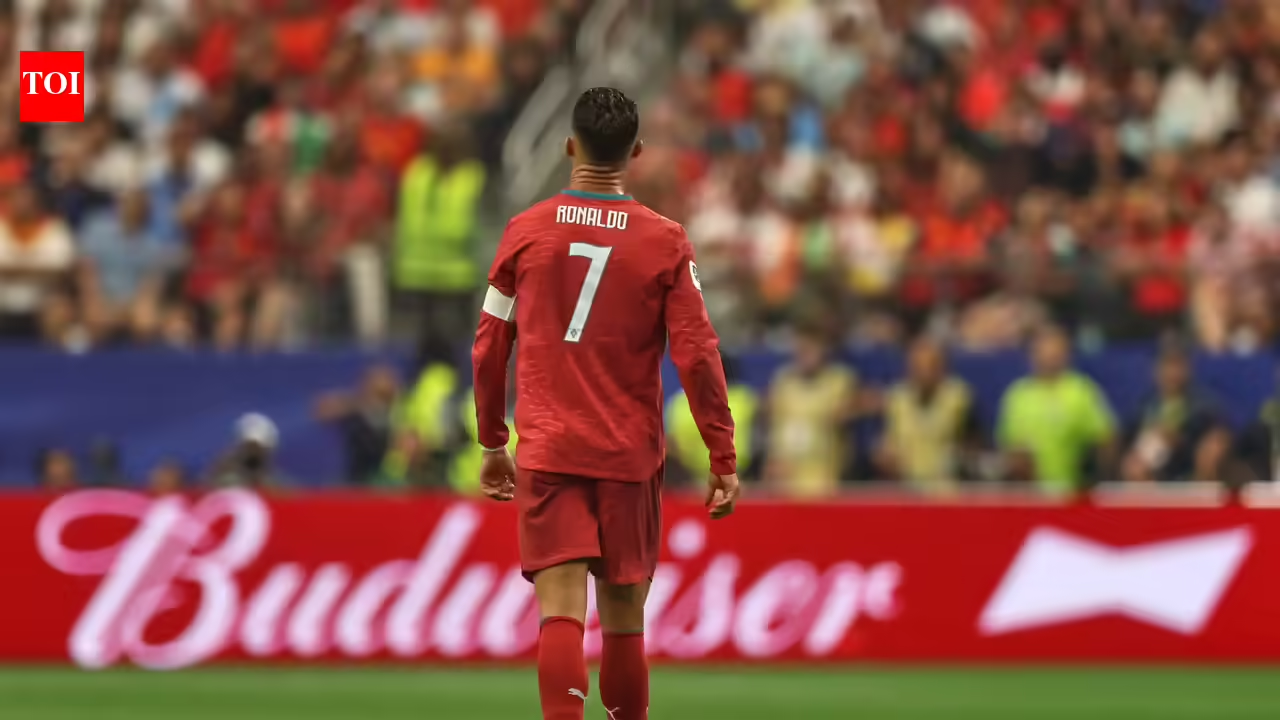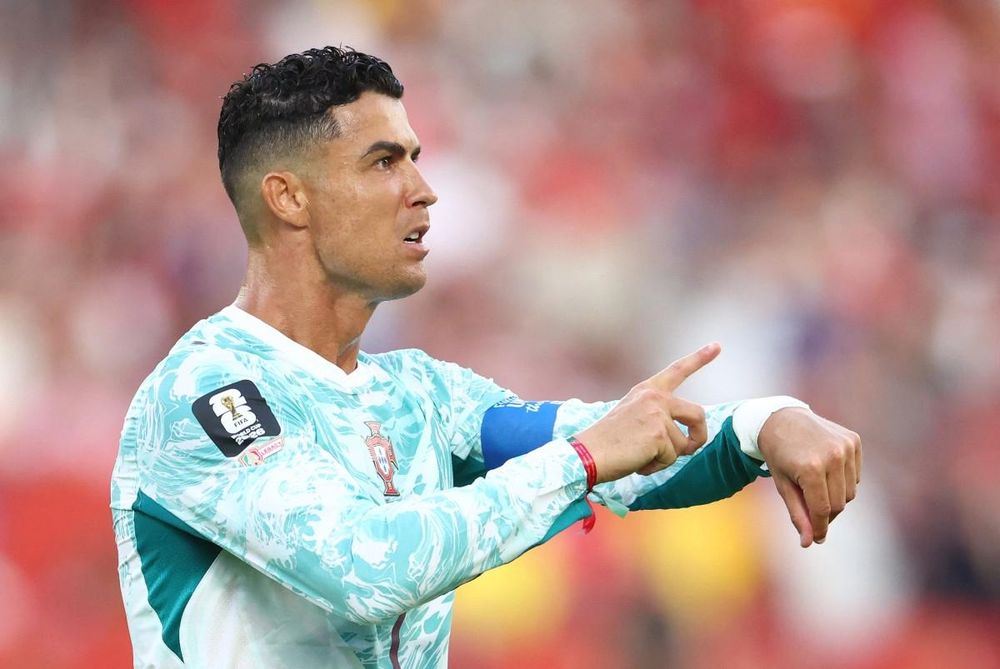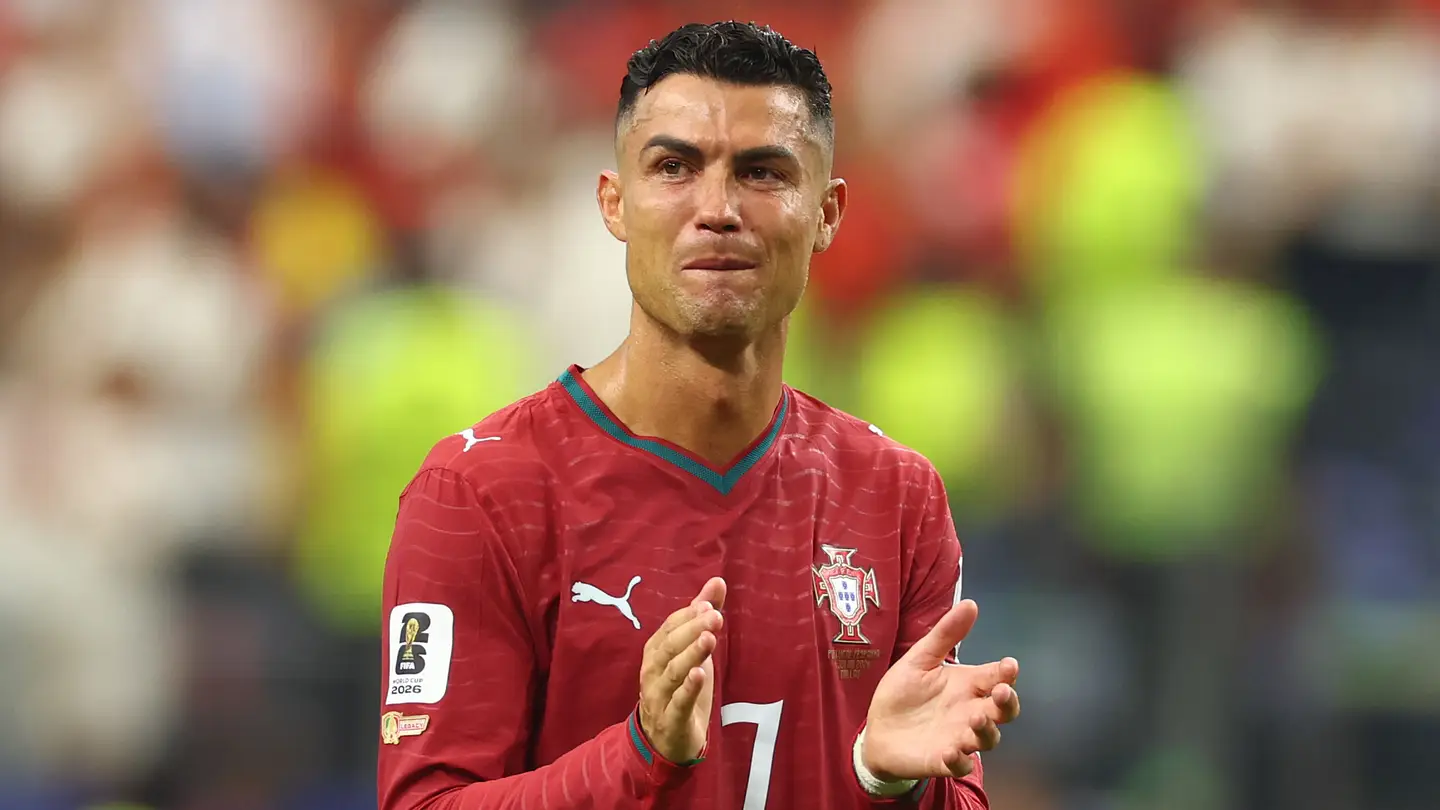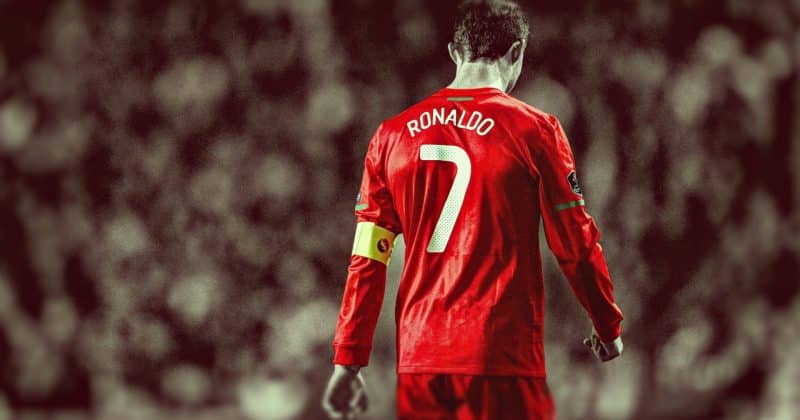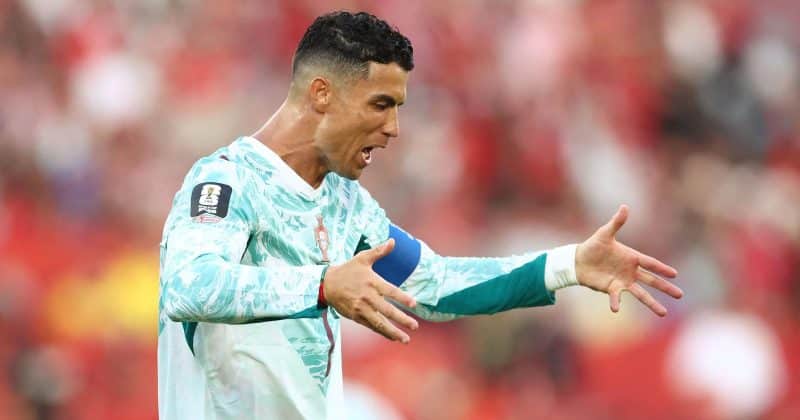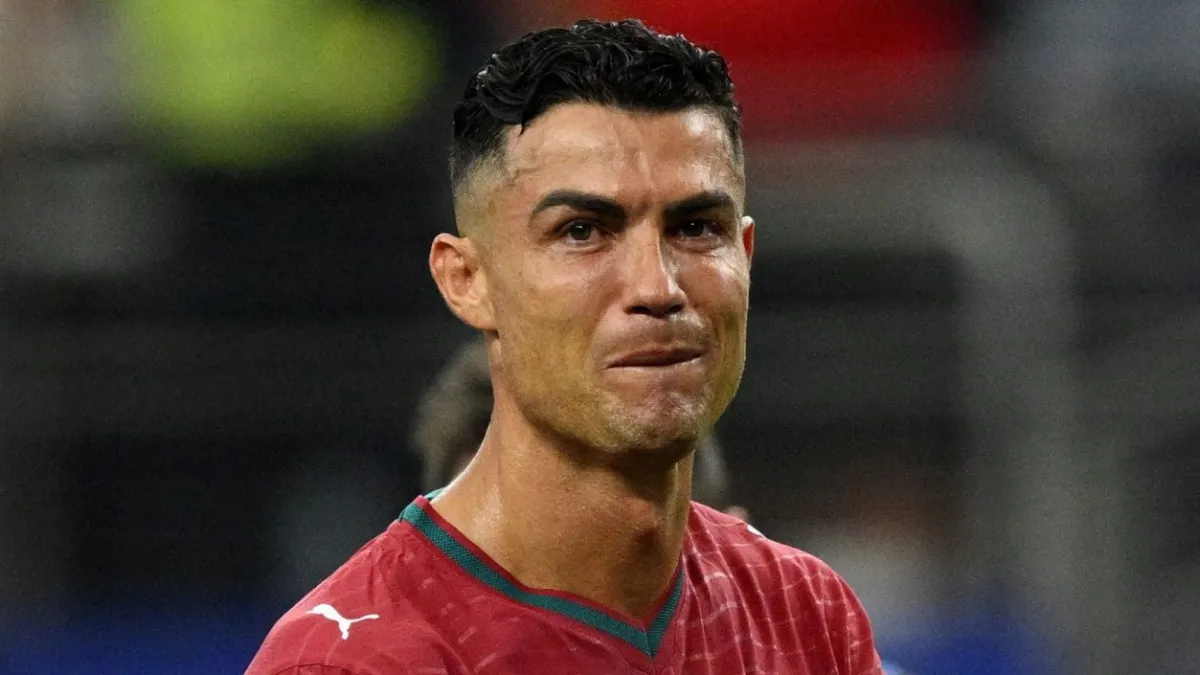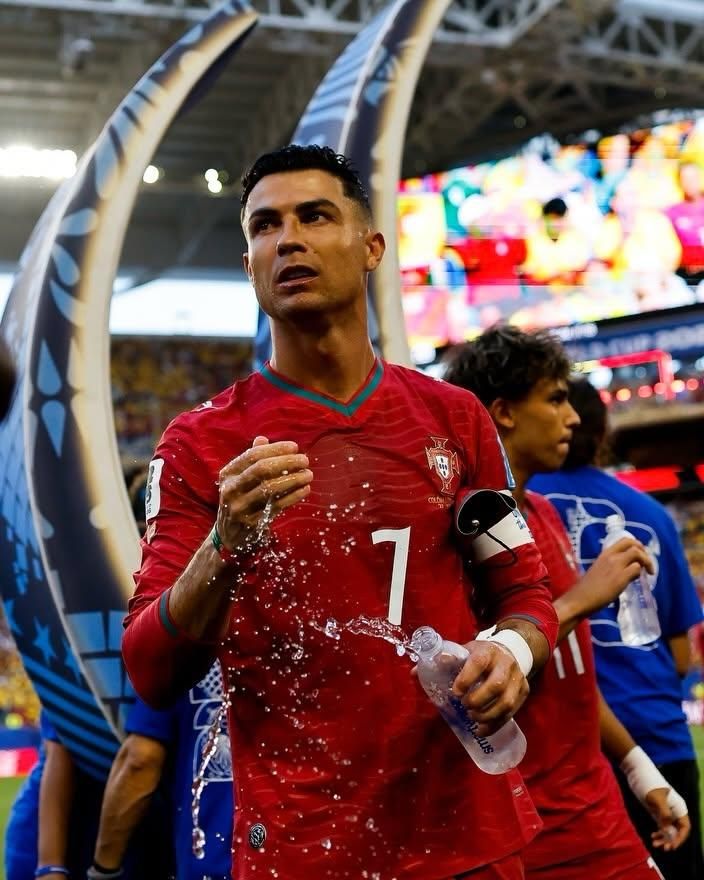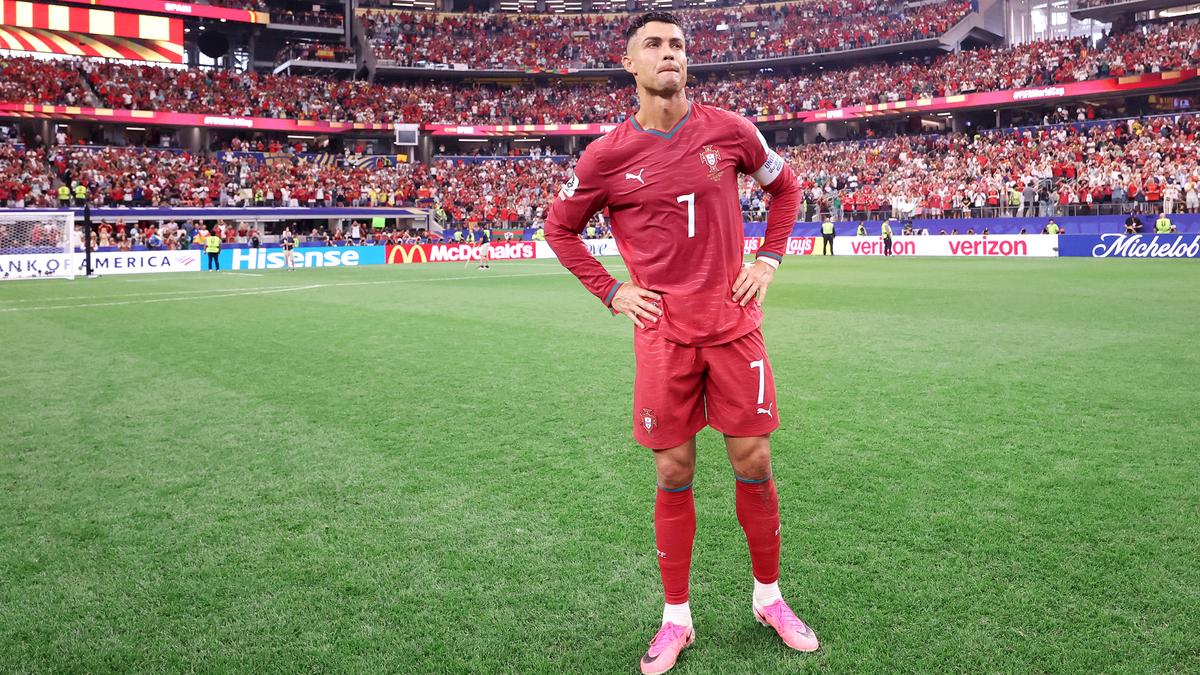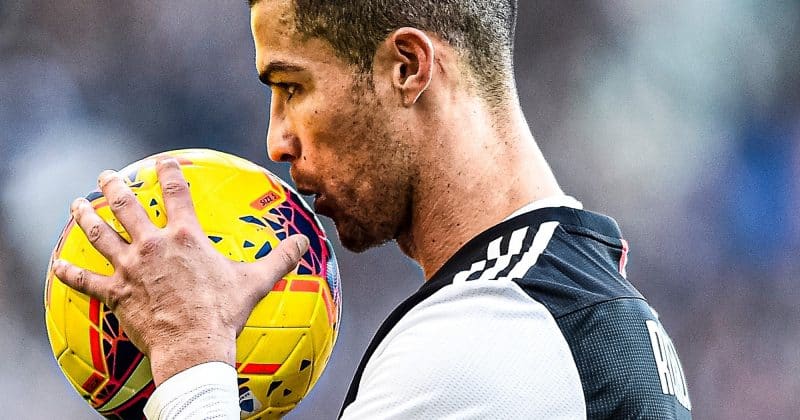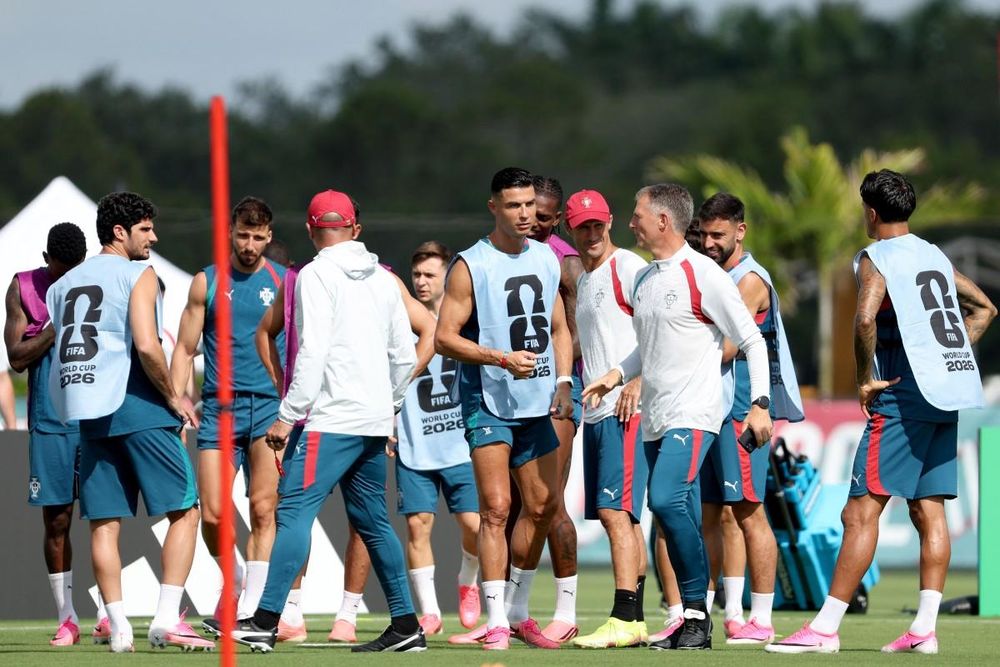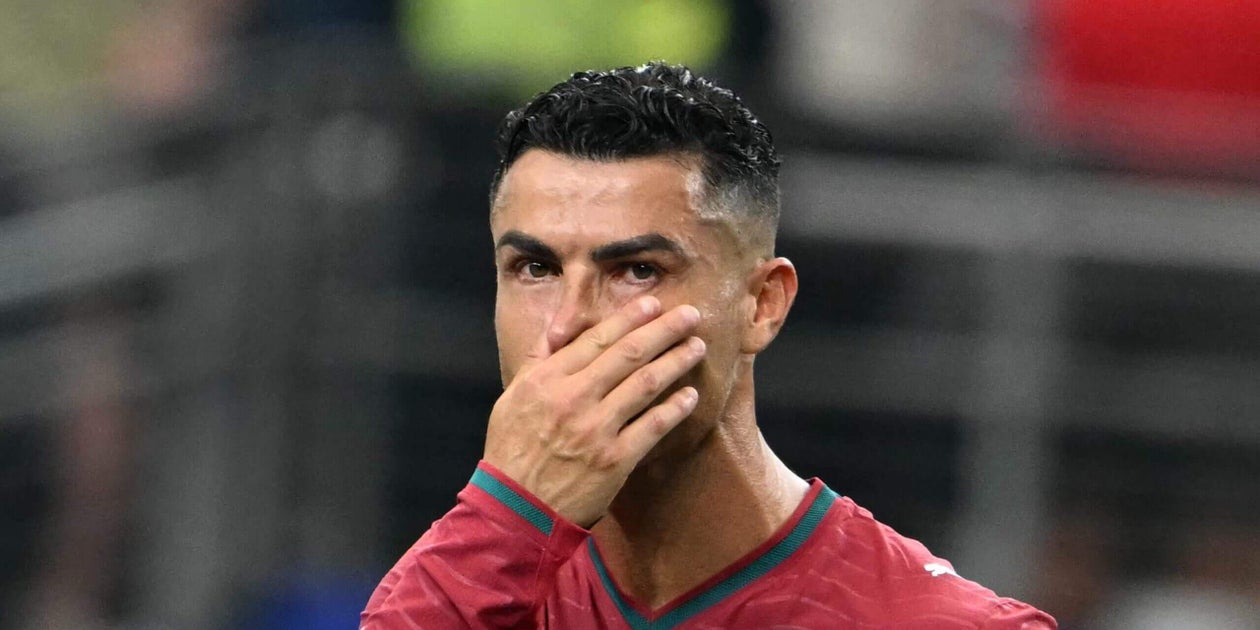
In the lead-up to the 2010 World Cup, Nike assembled a cast of A-list footballers — Wayne Rooney, Didier Drogba, Ronaldinho, Fabio Cannavaro, Franck Ribery and Cristiano Ronaldo — for an advertising campaign it called “Write The Future”.It was a great concept, six of the game’s biggest stars appearing in scenes that suggested their careers and lives would be defined by the upcoming tournament in South Africa.Rooney, for example, was pictured misplacing a pass in a game against France, losing his temper, leading to an England defeat, riots on the streets and a stock market crash while he improbably ended up living in a caravan, eating slop, working as a groundsman, staring ruefully at a billboard of Ribery.Alternatively, he raced back to tackle Ribery and ended up as the nation’s hero — Sir Wayne Rooney — with his image carved into the White Cliffs of Dover.As for Ronaldo, he was pictured standing over a free kick, contemplating the future that might await him if he shot Portugal to glory: cutting the ribbon on the Estadio Cristiano Ronaldo, a cameo in The Simpsons (Homer: “Ronal … D’oh!”), a huge statue commissioned in his honour, adoring fans screaming his name as he arrived at the premiere of Ronaldo: The Movie, with Gael Garcia Bernal in the title role.The action cut just as he struck the ball, so we never saw quite how it played out in the director’s mind. Given that the setting was Ronaldo taking a free kick at a World Cup, the chances are the ball would have flown off target, into the wall or safely into the arms of the opposition goalkeeper.Cristiano Ronaldo and the World Cup: across six tournaments, spanning 20 years, it has not been a happy story. Highlights? The winning strike in a penalty shootout in a quarter-final against England in 2006, a hat-trick against Spain in a group game in 2018 (including a stunning free kick), two goals against Uzbekistan in Houston a fortnight ago, and a long-awaited goal in the knockout stage, a penalty against Croatia, last Thursday. Disappointments? So many, culminating in Portugal’s stoppage-time defeat by Spain in Arlington, Texas on Monday.He told reporters on Sunday that this would be his last World Cup — but not, he hoped, his last game. In the end, it was.At the final whistle he cut a sad figure, hands on hips, walking around and then stopping to stare into the middle distance. As he applauded the crowd, he struggled to hold back the tears. There was the look of a man who, even if he still has an enormous contract in Saudi Arabia to fall back on, sensed his time on football’s biggest stages was finally over at the age of 41.Only eight men in history have scored more than his 11 World Cup goals. But relative to Ronaldo’s brilliance, his longevity and his status in the sport, as the all-time record goalscorer in both club and international football, that is a frustratingly meagre return. For a sporting superhero, the World Cup has resembled kryptonite.But the story isn’t quite as straightforward as that. Six tournaments have brought six different degrees and types of frustration. There have been ups as well as downs.There has also been a more Portugal-specific question of timing. There have been two so-called “golden generations” in Portuguese football — one consisting of players born in the early 1970s (the likes of Luis Figo, Rui Costa, Paulo Sousa and Joao Pinto) and another of players born in the early-to-mid 1990s (Ruben Dias, Bernardo Silva and Bruno Fernandes). Ronaldo, born in 1985, fell between these generations. By the time Portugal had a supporting cast strong enough to enter the World Cup as a leading contender, Ronaldo was in decline.There were times when, as with Lionel Messi for much of his international career, the pressure of “carrying” the national team weighed visibly on Ronaldo. It is not always about the quality of the opposition. In many cases, what really suffocates is the pressure, fuelled in some cases by the belief that only a superstar can lead his nation to glory, as that Nike ad suggests.Ronaldo’s best World Cup, arguably, was his first. At 21 his game was still flecked with inconsistencies at Manchester United, still a junior member of a Portugal team built around Figo, but the 2006 tournament proved a turning point. After converting a penalty against Iran in the group, he left the field in tears after a thigh-high challenge from Netherlands defender Khalid Boulahrouz in the so-called “Battle of Nuremberg” in the round of 16, but was praised for his courage by Portugal coach Luiz Felipe Scolari.In the quarter-final against England, Ronaldo was Portugal’s most dangerous player. After extra time he scored the decisive penalty in the shootout. He also attracted ire from the English players, fans and media for responding theatrically to several challenges and — worse in the eyes of many — for urging the referee to send off his United team-mate Wayne Rooney for stamping on Ricardo Carvalho and then, after the red card was rightly shown, winking conspiratorially to someone on the touchline.Cristiano Ronaldo helped ensure Rooney was sent off in 2006 (Adrian Dennis/AFP via Getty Images)During Portugal’s semi-final defeat by France, Ronaldo was booed by the crowd in Munich. He was nominated for the young player of the tournament award, but after FIFA’s technical study group chose Germany’s Lukas Podolski, its head, Holger Osieck, emphasised that “players should be role models and fair play is a consideration… We want decent behaviour.”That was the start of Ronaldo’s strange relationship with the World Cup. It was also at 21, his last experience of a semi-final.His second tournament, preceded by that “Write The Future” ad, was a crushing disappointment. Ronaldo was heavily criticised in the Portuguese media for a campaign that ended with defeat by Spain in the first knockout round, after which he described himself as “broken” and feeling an “unimaginable sadness”.His only goal was the seventh in a 7-0 win over North Korea. Remarkably, it was his first competitive goal for Portugal in two years and only his 23rd goal in 74 international appearances. Nobody would have imagined then that he would go on to smash the all-time international goalscoring record.His third, in 2014, brought more of the same. After a Champions League-winning season at Real Madrid, he was in discomfort with patellar tendinitis in his left knee. He struggled as Portugal lost 4-0 to Germany, drew with the United States and, despite his late winner against Ghana, they were eliminated in the group stage. He was 29, theoretically at the peak of his powers, and another chance to “write the future” had passed him by.That is the thing about the World Cup. It only comes around every four years. The same applies to the Olympics, of course, but the World Cup feels like the end of a gruelling four-year cycle rather than something that athletes build their entire training programme towards. Star players frequently turn up for the World Cup looking worse for wear. Rooney, for example, played in three. For the first two he rushed back — unsuccessfully — from injury and for the third, in 2014, he looked off the pace in a poor England team that was knocked out in the group stage.By 2018 Ronaldo was 33, about to be sold to Juventus by Madrid and, although he would not have dared entertained the thought at the time, his fifth Ballon d’Or title, which he won six months earlier, was to prove his last. He seemed to approach the World Cup in Russia with the mindset that it was now or never.He looked ready to seize the moment — write the future, as it were. In Portugal’s opening game against Spain, he scored a hat-trick, rounded off with a spectacular free kick, in an enthralling 3-3 draw in Sochi. He followed up five days later with the only goal to beat Morocco and at that point, with Argentina having made a dreadful start to the tournament, the popular narrative was that Ronaldo was showing the mental strength to thrive under the pressure of leading his team while his great rival Messi, far more introverted, was creaking under the strain.Ronaldo scores in his hat-trick display against Spain in 2018 (Jewel Samad/AFP via Getty Images)But Ronaldo’s and Portugal’s World Cup ended abruptly with defeat by Uruguay in the round of 16. He had six shots, but they were taken with a growing sense of desperation as the game drifted away from his team. Questions were asked — as with Messi in that summer of 2018 — about whether his last chance of World Cup glory had gone.Ronaldo returned for more in 2022, but he was coming off the back of an unhappy end to his second spell at United. He scored from the penalty spot in the opening game against Ghana, but was denied a goal against Uruguay when FIFA ruled that, contrary to his claim, he had not touched a Bruno Fernandes cross on its way in.Having made little impression in game three, against South Korea, Ronaldo responded angrily to being substituted, leading coach Fernando Santos to express his displeasure. Amid growing criticism of his body language as well as his performance level, Ronaldo was benched for the game against Switzerland in the round of 16 and his replacement, Goncalo Ramos, scored a hat-trick in a 6-1 win. There were reports, denied by all concerned, that Ronaldo threatened to walk out on the squad. Santos said they had a “frank” conversation.Portugal fell to Morocco in the quarter-finals and Ronaldo, an ineffective second-half substitute, left the field in tears. Even those with the greatest admiration for his longevity must have thought his World Cup experience was over. The fact that Messi went on to lead Argentina to glory a couple of weeks later seemed likely to compound Ronaldo’s misery as he prepared to wind down his career in Saudi Arabia. Ronaldo’s time at the highest level appeared to be over.The easy thing to say, now that Ronaldo has left the stage, is that this World Cup has been a tournament too far for him. But that feels like the wrong conclusion. That phrase felt more apposite during the 2022 World Cup (five games, 11 shots, one goal from the penalty spot, no assists, dropped from the starting line-up after the group stage) than it has done over the past few weeks. It certainly resonated during the Euro 2024 finals (five games, 23 shots, no goals, one assist). If it has been one tournament too far, it has been three.Watching him at the Euros two summers ago, kept on the field for 120 minutes against both Slovenia and France in the knockout stage when he looked exhausted, was painful; at times you were longing for Portugal coach Roberto Martinez to put him out of his misery. Watching him at this World Cup, other than the first game when Portugal laboured to a 1-1 draw with DR Congo, has been nothing like so arduous.Physically, he has looked sharper than he did in 2022. In Qatar he cut a surly figure — detached from his team-mates, not disguising his unhappiness when he was substituted and dropped by Santos — but this summer his body language, as a captain and a team-mate, has appeared better. He has still had that main-character energy, but he remained highly engaged and animated when Ramos scored the winner against Croatia.That evening, Portugal’s fans — and, let’s be honest, Ronaldo’s fans — gathered outside their hotel in downtown Toronto. There is video footage from within the team camp, showing the moment that Ronaldo, his eyes lit up, decided to go out to wave to them from the balcony. Out there he was in his element, his presence and his every gesture greeted rapturously by his adoring his fans down below, giving his public what they wanted.
The World Cup was Cristiano Ronaldo’s kryptonite but it does not define his football legacy
Football's greatest prize eluded him but Ronaldo's impact on the sport cannot be disputed
2,849 words~13 min read