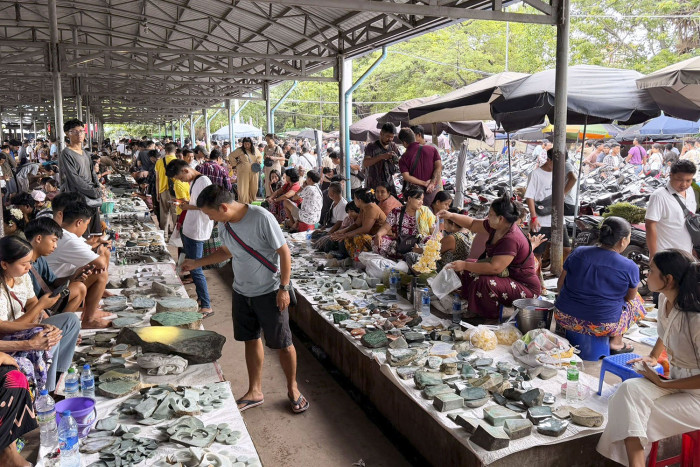
A jade market in Mandalay, Myanmar, on May 16, 2026. (Photo: Kyodo)
Prices for jade are falling in the market in Mandalay, central Myanmar, a trend traders attribute to China's economic slowdown and a decline in purchases by Chinese-linked international criminal organisations following a crackdown on fraud rings."The bubble has burst," one trader said, expressing mixed feelings about the downturn in a market long shaped by strong overseas demand.
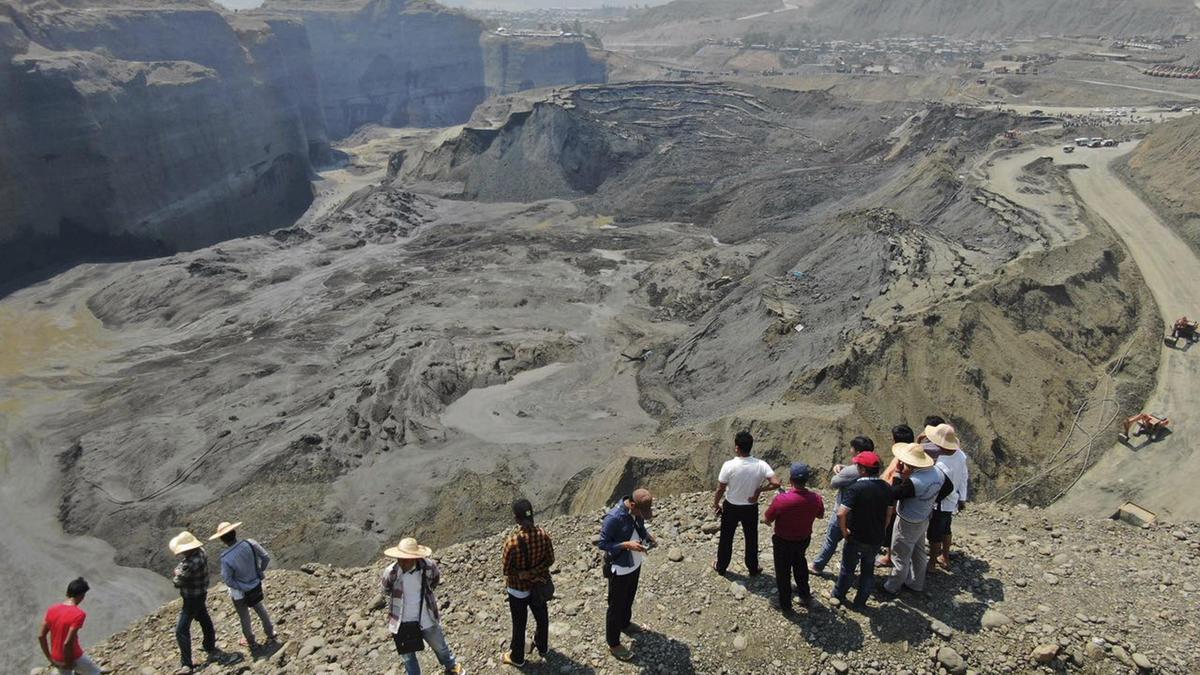
Kachin state in the country's north is home to some of the world's largest and most lucrative jade mines, and Mandalay is a major hub for jade processing and trading.
The market serves as a key centre linking production areas with buyers, particularly from China and Taiwan, as well as overseas Chinese communities around the world, who view jade as both a lucky and precious commodity.
Unlike gold, jade does not have an international benchmark price. Instead, value is determined individually based on the clarity and color of each stone, making trading highly dependent on visual inspection and negotiation between buyers and sellers.