Story audio is generated using AI
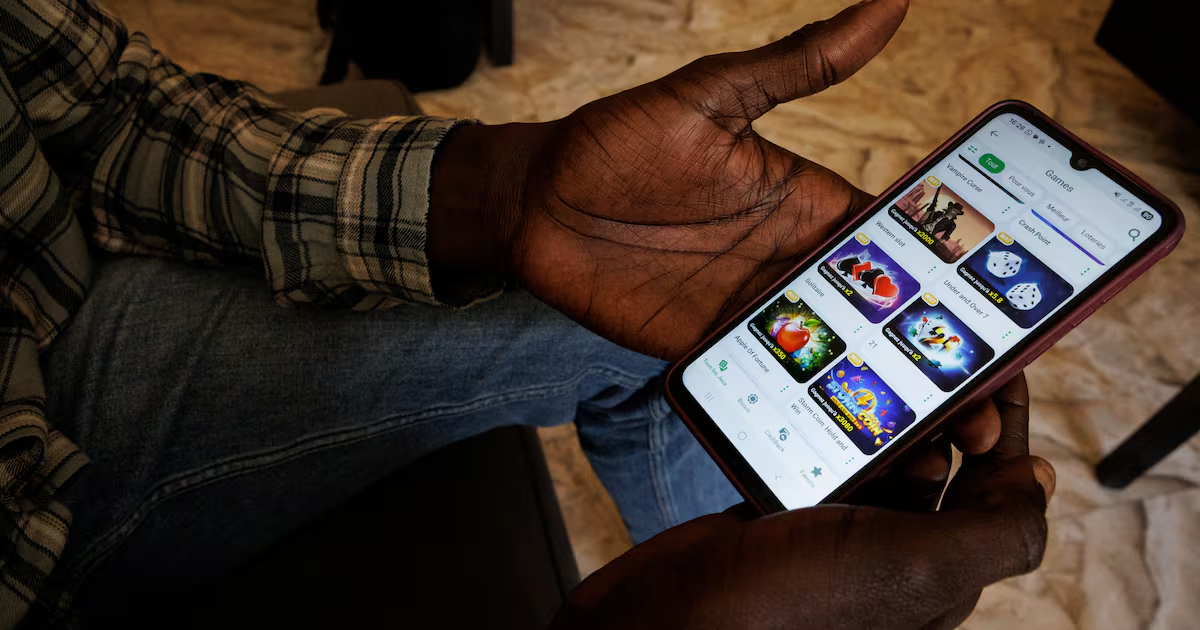
South Africa’s bookmakers are urging the government to speed up its crackdown on the underworld of illegal gambling as the ballooning popularity of online betting gives way to a thriving black market.According to the South African Bookmakers Association (Saba), illegal gambling operators account for nearly two-thirds of all gambling activity in the country, attracting more than R50bn in revenue and 16-million South African customers in the past year.The growing popularity of illegal operators — mostly foreign-based online betting websites that are not licensed locally — has led to calls within the gambling sector for a stricter approach to industry oversight.Amid mounting industry pressure, the National Gambling Board recently issued a request for expression of interest to block illegal gambling websites, seeking service providers who can help with its intervention.However, Saba says this approach in isolation will do little to stem the growth of illegal gambling sites, which do disproportionate harm to minors and problem gamblers given their lack of regulations.Read: SA’s gambling problem: R50bn of illegal online betting, zero local taxSaba said it is in talks with the National Gambling Board over a “broader enforcement ecosystem, rather than any single intervention”, having identified several gaps in South Africa’s policy.The group called for the National Gambling Act to be amended to clearly define illegal operators who are unlawfully targeting South Africans. It said the Electronic Communications Act should also be amended to allow authorised gambling regulators to block illegal gambling websites.To facilitate a stronger crackdown, Saba believes the Financial Intelligence Centre Act and the South African Reserve Bank should be looped into the government’s illegal gambling plans to prevent banks, payment service providers and cryptocurrency exchanges from facilitating transactions with illegal operators.It called for regulators to clamp down on advertising for illegal gambling sites, which often goes unchecked, for example, through social media influencers.Saba CEO Sean Coleman said the regulator “fully supports” the National Gambling Board’s heightened enforcement actions that include a technological component, high court forfeiture operations, and the co-ordinated legislative push to eradicate these illicit networks by declaring war on illegal, unregulated platforms, particularly ahead of or during high-volume sporting periods like the 2026 Fifa World Cup.In doing so, the board is taking an essential step toward safeguarding vulnerable citizens and protecting the integrity of the domestic economy, he said.In its request document last week, Saba warned that the rapid expansion of illegal gambling, fuelled by technological advancement, policy gaps and organised criminal activity, is exposing minors and problem gamblers to significant harm.A growing number of low-income, unemployed youths place bets on digital platforms in search of extra cash, including students who are dependent on National Student Financial Aid Schemes (NSFAS).The situation has become so bad the regulator is also reportedly in talks with the South African Responsible Gambling Foundation to potentially ban students who depend on NSFAS from gambling online.The pressure to clamp down comes as legal operators have also been under pressure from government as more people turn to online betting as a source of extra cash.For the 12 months to end-March 2025, industry data shows the total value of gambling turnover in all gambling modes amounted to R1.5-trillion, including recycled funds (money wagered, won back and wagered again).A harrowing report by Business Day last year paints the picture of an online industry that disproportionately hurts unemployed youth, who spend much-needed cash from relatives or social relief-of-distress grants on betting sites.Estimates suggest that most online bettors fall in the 26-35 age bracket, many earning between R5,000 and R15,000 a month, in a demographic with an unemployment rate exceeding 40%.