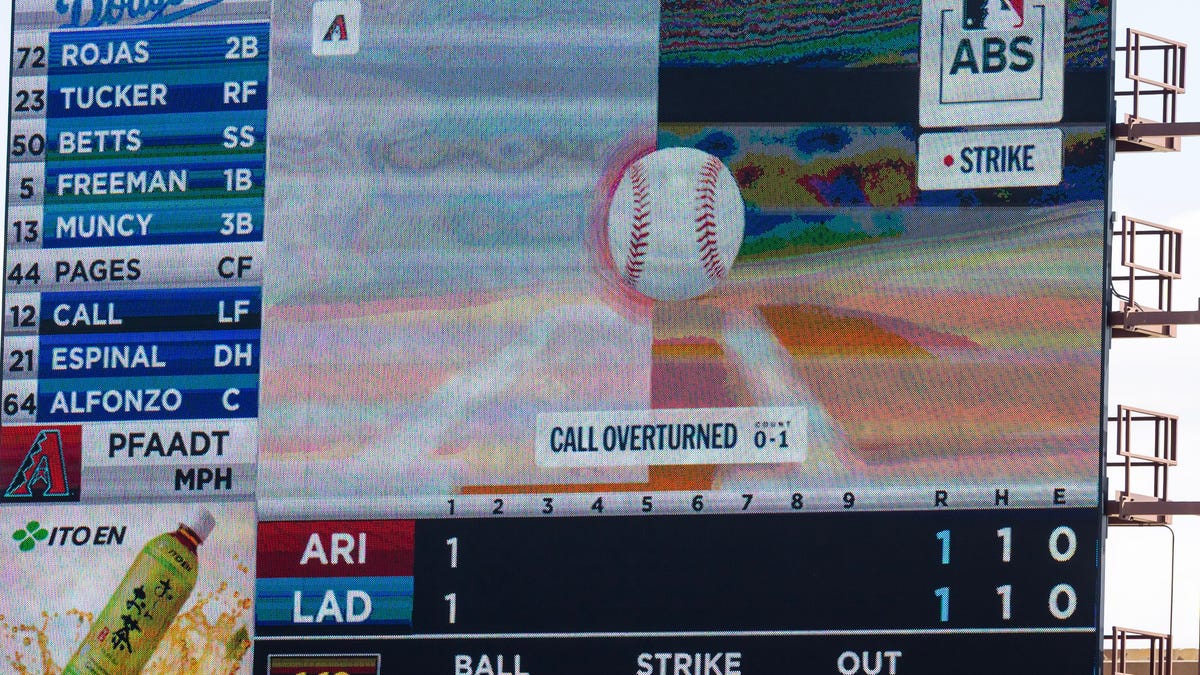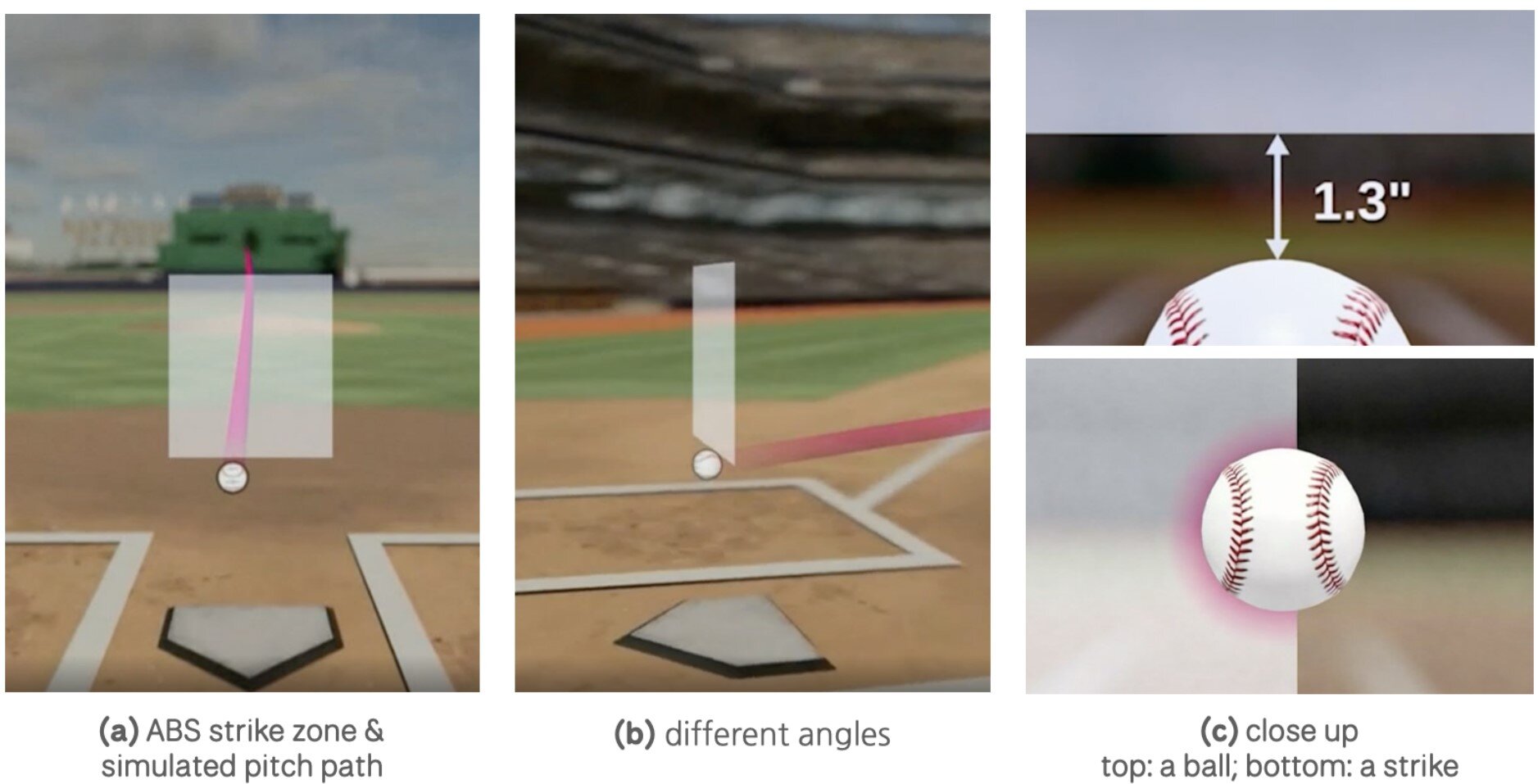
MLB designed a roughly 10-second video to play when players invoke ABS to challenge an umpire’s call. This video started with (a) a simulated pitch trajectory and ABS strike zone from the viewpoint of an umpire, followed by (b) multiple angles to view the simulation, and ends with (c) a close-up of the ball and the boundary of ABS strike zone. For a ‘ball’, the visualization additionally provides a numerical value showing how far outside the simulated baseball is from the ABS strike zone. Images adapted from [19]. Credit: Proceedings of the 2026 ACM Conference on Fairness, Accountability, and Transparency (2026). DOI: 10.1145/3805689
Training artificial intelligence to enforce even seemingly straightforward rules—like balls and strikes in Major League Baseball (MLB)—is a messy, dynamic process that takes time and careful evaluation of the technology in the wild, according to new Cornell research.
Drawing on their previous work with MLB and its newly implemented Automated Ball-Strike (ABS) system, Cornell researchers in AI and ethics argue that multiple stakeholders must evaluate AI-driven rule enforcement technologies not only for technical accuracy but also in real-life contexts within organizations.