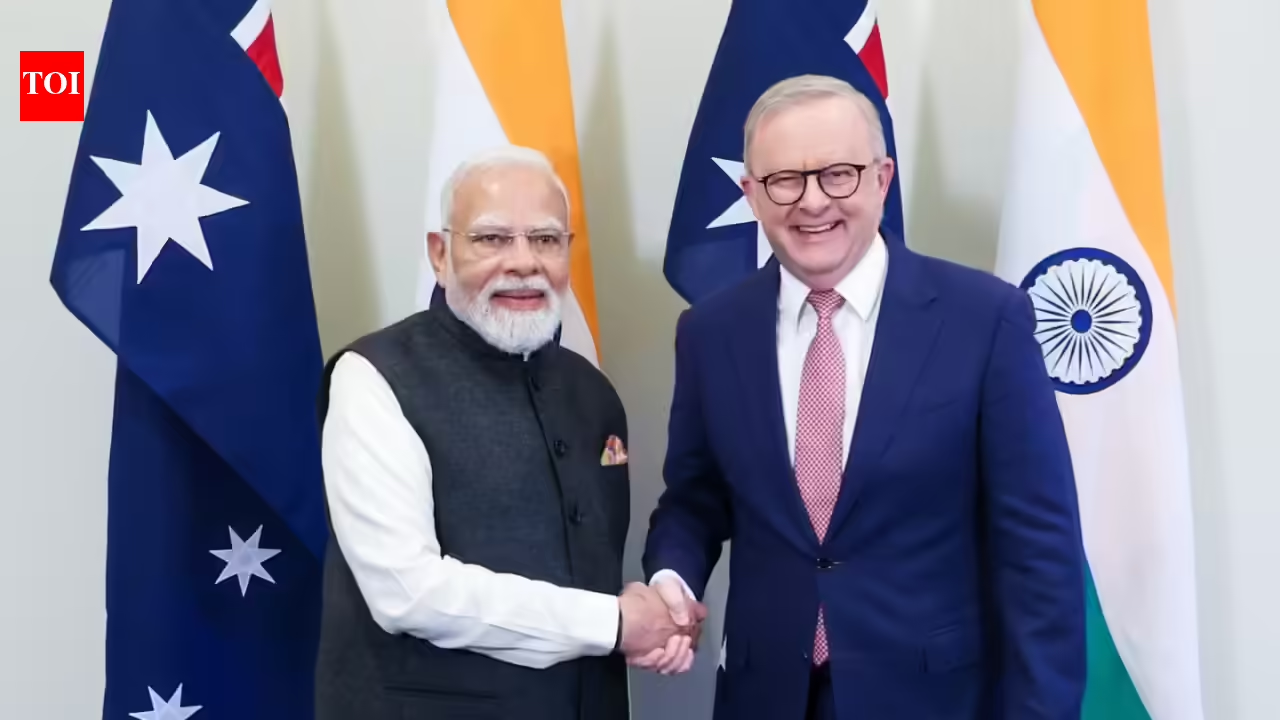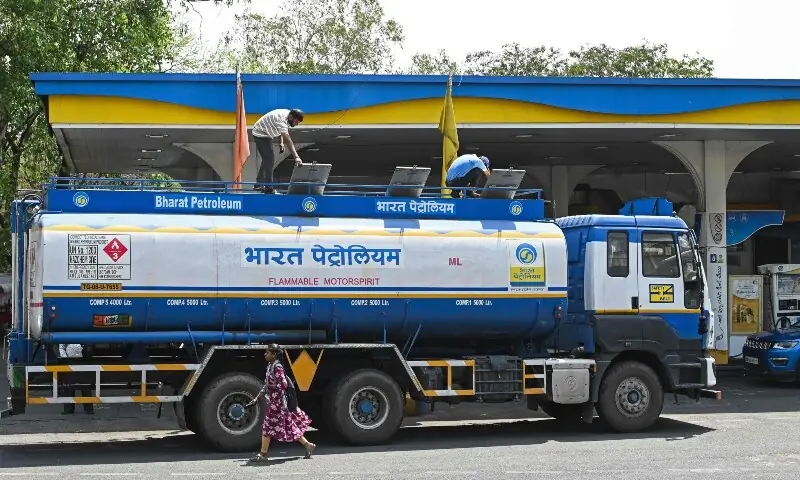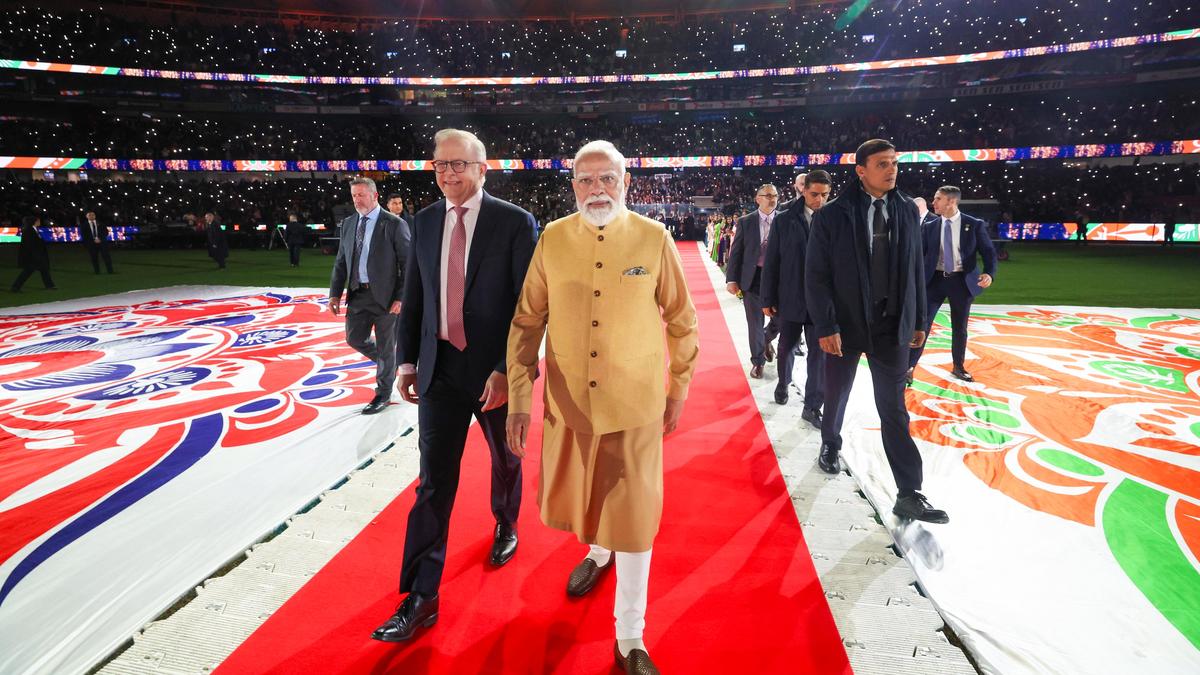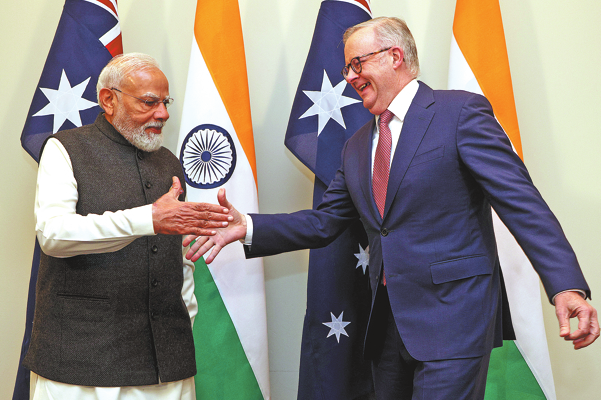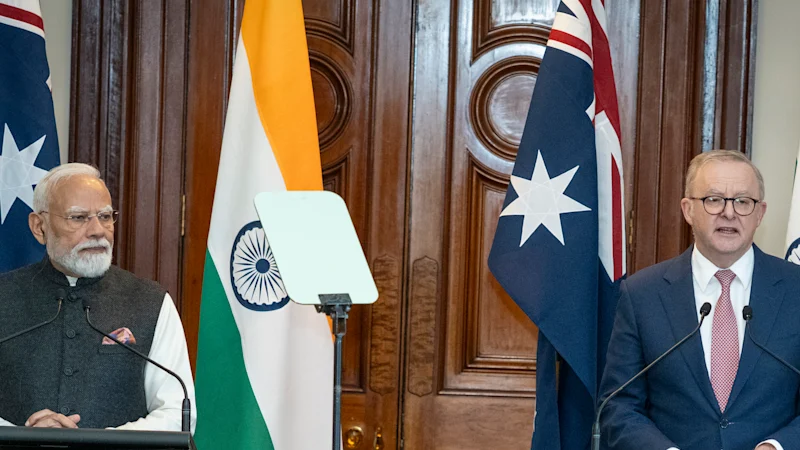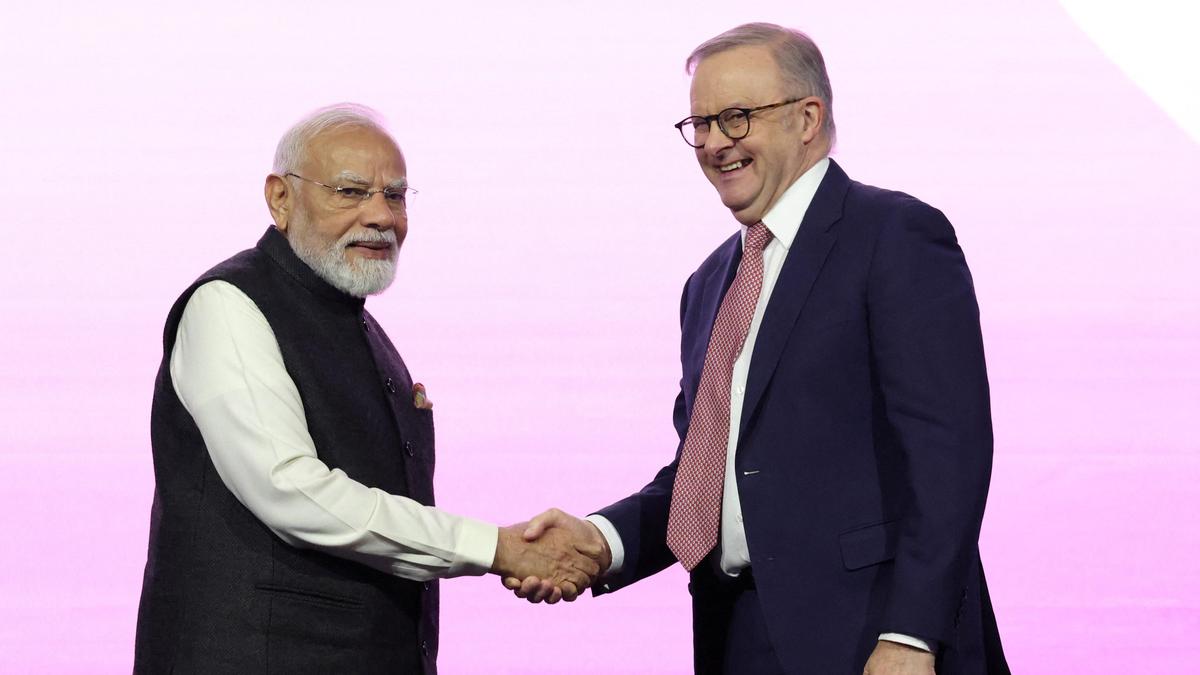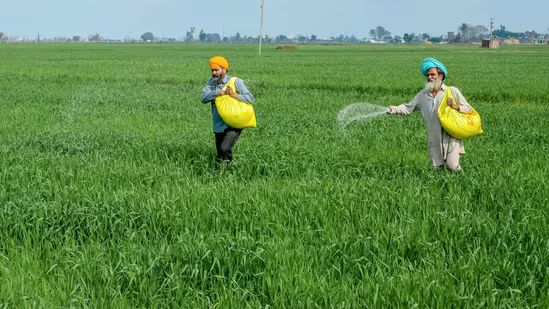
As Prime Minister (PM) Narendra Modi lands in Melbourne this week for bilateral talks with Australian PM Anthony Albanese, the timing speaks volumes. India’s economy faces constraints from what finance minister Nirmala Sitharaman calls the “3Fs” — fuel, fertiliser, and foreign exchange. Gold and crude imports are straining the external balance. Australia can help hedge against all three. The agenda can be summed up in three Es: energy, education, and engagement.File: Farmers sprinkle fertiliser over crops on the outskirts of Amritsar. (AFP)Energy: Many minerals India considers critical are key to future energy security, and Australia has lithium, cobalt, nickel and rare earths for batteries and EVs. These can help meet India’s demand in the battery manufacturing and green hydrogen segments. Australia’s solar and hydrogen potential, combined with India’s 500GW non-fossil target by 2030, could lead to energy partnerships. PM Modi’s visit could catalyse investment- and offtake-deals. This will mean diversified energy sources, shared risk, and fewer chokepoints.Also read: Lost in translation: How India speaks EnglishHowever, tariff relief for critical minerals from the Indian side is still awaited. Australian co-investment in Indian processing and refining capacity is a suggestion worth considering; capital and technology can offset the tariff relief. Partners such as Japan, which already has deep mining and materials expertise, would also be keen to explore co-investment in such opportunities under the Supply Chain Resilience Initiative (SCRI), the trilateral agreement between India, Australia and Japan. This is congruent to the outcomes and stated objectives of the Japanese Prime Minister’s visit to New Delhi, last week.As for fertiliser, the logic is equally compelling. Australia is a major agricultural exporter, but imports about 3.8 million tonnes of urea annually due to limited domestic production. The Perdaman Ceres urea plant in Western Australia has been developed in partnership with India’s ACME Group. If India expands partnerships to scale such projects and adopts Australian innovation, both countries can cut import dependence for fertilisers.Also read: Pakistan's Asim Munir marshals his successes, for nowEducation: Indian students spend an estimated $75 billion annually on overseas tuition, accommodation, and living expenses. Indian students are Australia’s second-largest cohort, while the diaspora Down Under is 1.4 million strong and growing. Australia now has two campuses in India and six more have been approved, and the country is also investing in skilling partnerships. All these institutions are working on employment outcomes pathways with Indian industry partners.Modi’s visit could lock-in more joint research and mutual degree recognition. IIT Hyderabad and Monash University already run an Australia-India Critical Minerals Research Hub. Adding more campuses means building Indian students’ skills in battery chemistry, recycling, and water tech, while turning education from export revenue for Australia into skilled manpower for India’s manufacturing. Equally, this could help ease some of Australia’s labour and talent shortages.Also read: ‘Survival is a daily act…’: Indian women farmers’ long wait for visibilityEngagement: SCRI aims to diversify supply chains and reduce dependence on a single source. New Delhi and Canberra can show how it works when two middle powers align geography with capacity. The PM’s visit should give SCRI substance by mapping critical minerals and urea projects to Indian manufacturing clusters, determining standards on due diligence, and pairing Australian miners and energy firms with Indian manufacturers via the accompanying Indian business delegation.There is also a route for amelioration of India’s foreign exchange pains, via gold imports. Australia is one of the world’s top three gold producers and a meaningful supplier of the metal to India. Under the India-Australia Economic Cooperation and Trade Agreement (ECTA), a dedicated tariff-rate framework already allows targeted gold entries with preferential concessions. Leveraging and expanding this duty framework for industrial gold compounds can help India manage forex outflows far better than volatile spot markets.PM Modi is expected to stop briefly in New Zealand after his Australia visit, which is a perfect follow-up to the recently inked free trade agreement (FTA) between the two countries. The FTA offers India a niche partner for climate tech, sustainable agriculture, and indigenous-people-led business. This is good news for India’s burgeoning demand for sustainable food and clean energy inputs.Significantly, New Zealand has committed $20 billion of foreign direct investment (FDI) in India over 15 years — in manufacturing, infrastructure, clean energy, agritech, and innovation. The focus can now shift from talks to delivery.India would do well to tap the underappreciated potential of the Māori economy. Māori-owned enterprises and Iwi trusts control significant assets in agriculture, aquaculture, forestry and renewable energy. In addition, the long-termism and values that Māori businesses demonstrate are closely aligned with those of Indian companies.Modi’s Melbourne visit is part of the same rebalancing seen across Indo-Pacific partnerships: corridors built around supply chains and resilience. With Deakin University’s GIFT City campus already marking convocations, the University of Western Australia launching Mumbai and Chennai campuses in 2026, and the University of New South Wales setting up campus in Bengaluru, education is no longer just about outbound students but also about building capability at home.If the three Es align — energy that neutralises the fuel and fertiliser risks, education that builds talent, and engagement through SCRI and ECTA that diversifies risk — the India-Australia relationship moves from being one of “natural partners” to becoming a necessary one. The next few months will show if New Delhi and Canberra can collaborate to navigate the 3Fs and fulfil the 3Es agenda.Bharat Joshi is executive director, Trac1 and J Curve Ventures. The views expressed are personal
Australia balm for India’s fuel-fertiliser-forex pains
Australia can help hedge against all three through energy and education partnerships, and deeper engagement across value chains.
901 words~4 min read