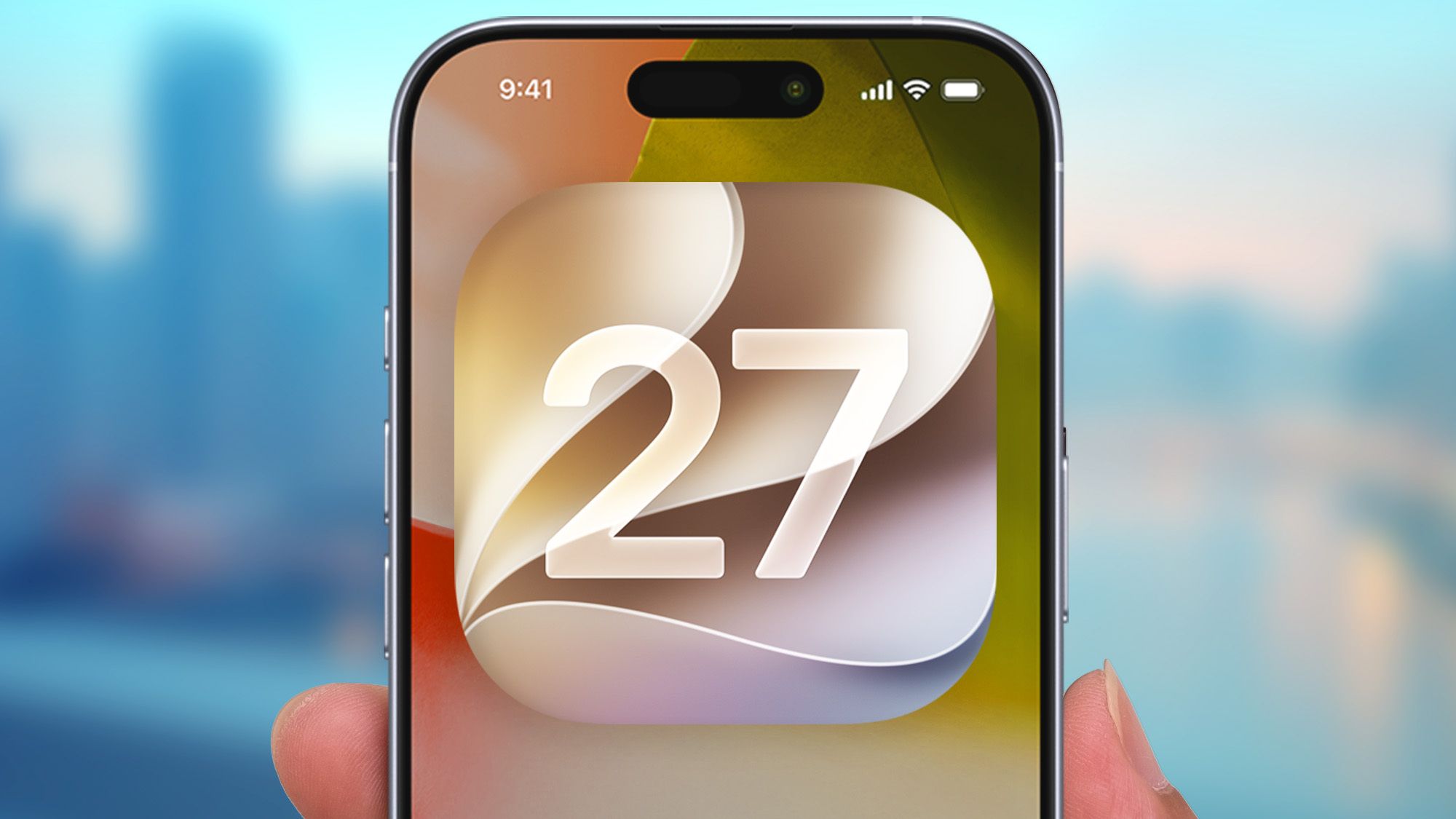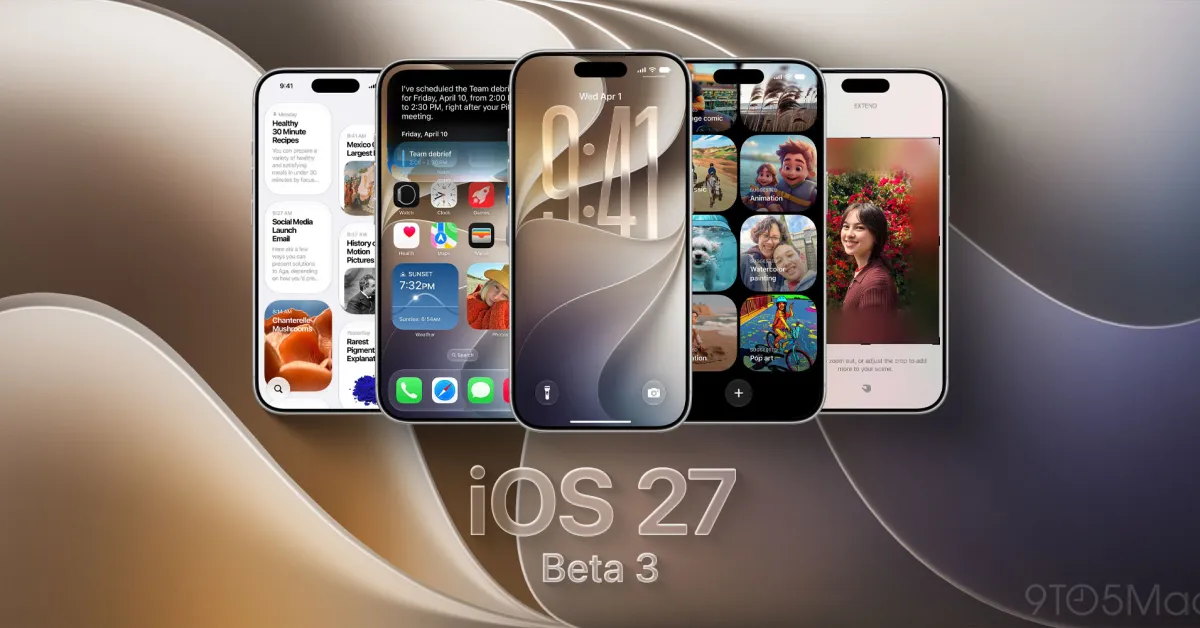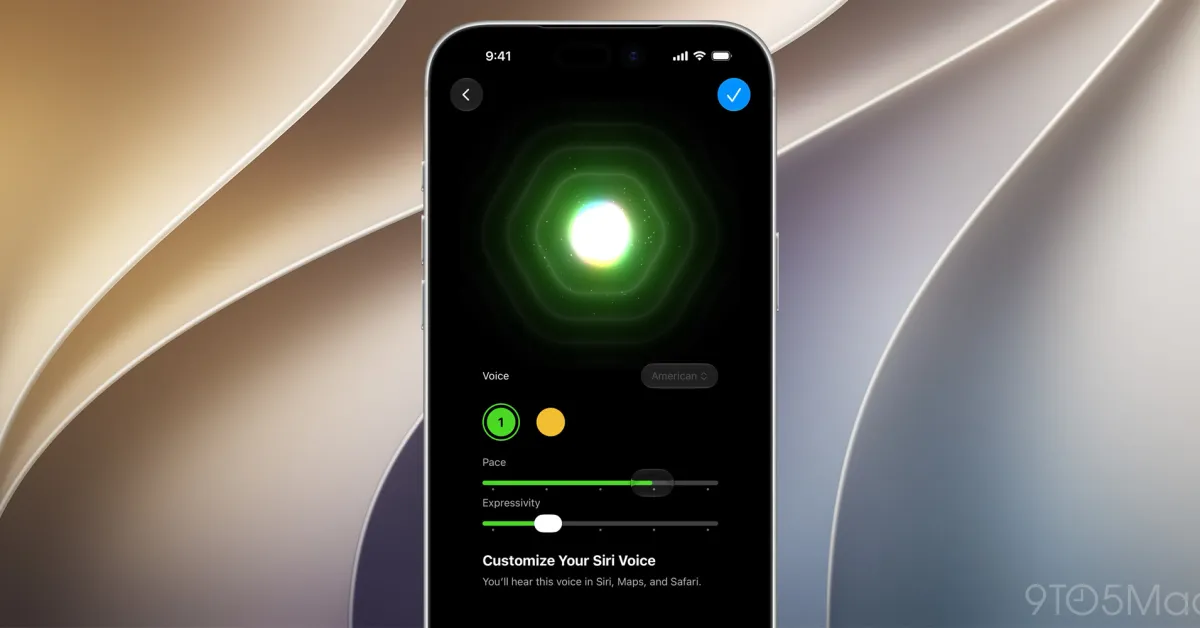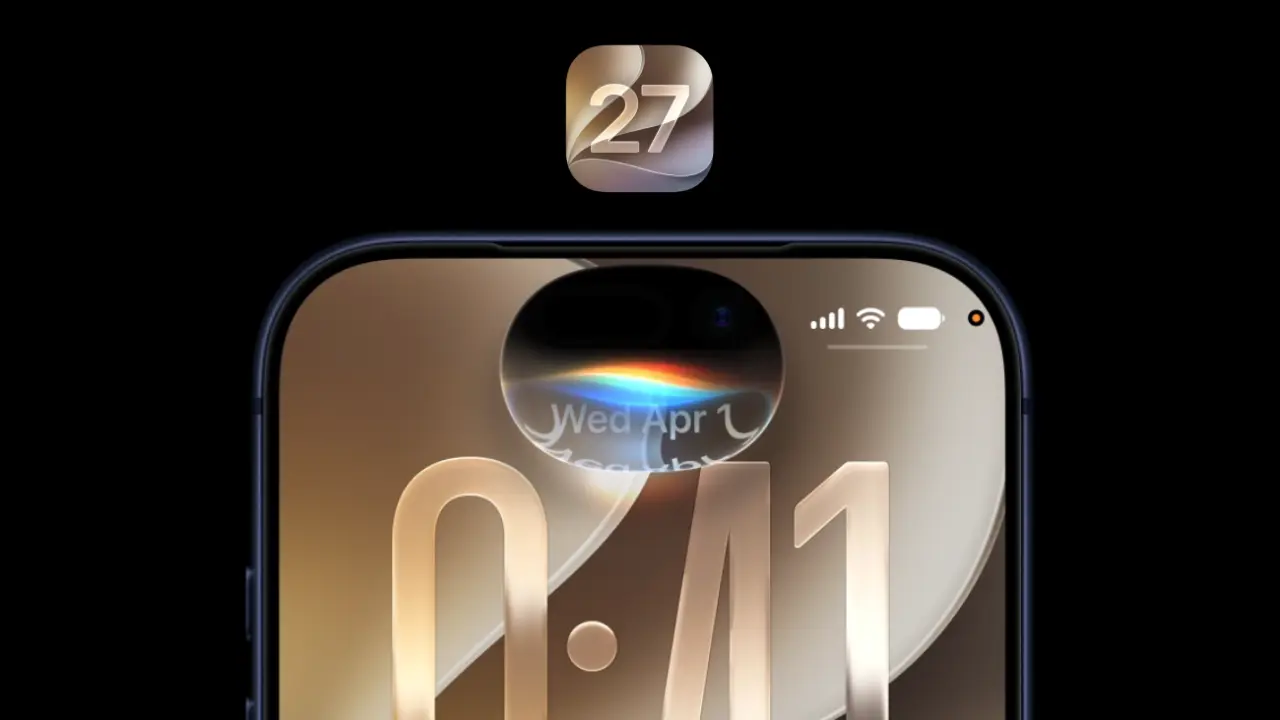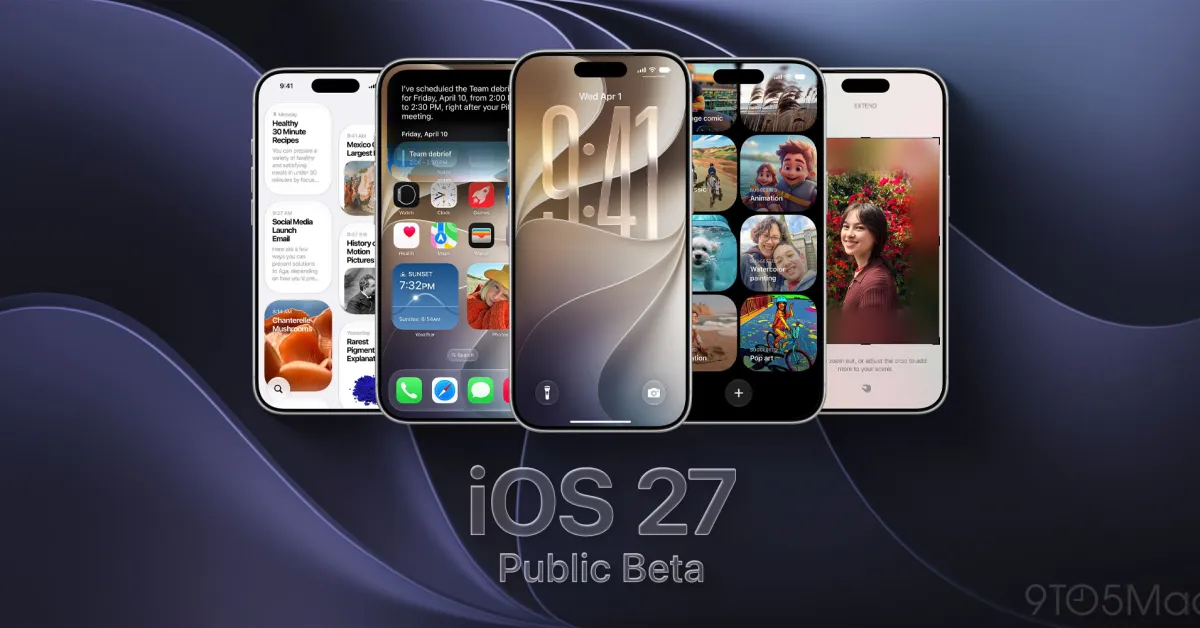
Apple released iOS 27 beta 3 on 6 July 2026 — build 24A5380h — and switched on the voice customisation sliders that let iPhone owners tune how Siri AI sounds, ahead of a public beta due in July and a full release in September alongside the new iPhone lineup. On paper this is a housekeeping build. Beta 3 releases for major iOS updates usually focus on bug fixes and early refinements, with smaller feature changes folded in. Read it closer, though, and this small update exposes the three questions that will define Apple's entire 2026 software cycle: how personal an AI assistant should feel, how much of Apple's intelligence now runs on Google's machines, and how much of the good stuff sits locked behind the most expensive iPhones money can buy. The changelog is short. The subtext is anything but.Inside build 24A5380hThe third developer beta arrived two weeks after Apple released the second betas, alongside fresh builds for iPadOS 27, macOS 27, tvOS 27, visionOS 27, and watchOS 27. The downloads run heavy — early testers report builds of roughly 15GB on an iPhone 17 Pro Max and close to 10GB on a 15 Pro Max. Some of that bulk is AI plumbing: Apple Intelligence assets are being redownloaded for some users between beta 2 and beta 3, resetting access to the new Siri in the meantime, and the indexing text in Settings now reads "Optimizing Search and Siri". Timing follows a familiar rhythm. The public beta traditionally lands after the third developer beta, and testers expect it between now and next Tuesday. Either way, this is the last quiet build before millions of ordinary users pile in.Siri gets its soundcheckThe marquee change is the one you can hear. In iOS 27 betas 1 and 2, the Pace and Expressivity sliders under Settings > Siri > Voice sat greyed out; with beta 3, both controls are active, offering five adjustment levels for each of the two currently available voices. As you drag either slider, Siri plays a continuous audio sample that updates in real time, and the saved settings carry across to Apple Maps and Safari — plus the Announce Notifications with AirPods feature. Think of it as a soundcheck before the tour. Pace is the tempo knob; Expressivity is the gain — roll it back for flat, session-player neutrality, push it forward and the voice starts bending notes. Siri practises common phrases like "You have one new message" while you adjust, so you hear the mix live. Two voices populate the picker in this build, with the roster expected to grow through the summer betas. One wrinkle from launch day: some users on X report losing access to the new Siri after updating, or watching their device reindex from scratch — beta life, and a fair warning against installing on a daily driver.Why Apple wants you tweaking a voice at allThe why runs deeper than novelty. iOS 27's headline act is Siri AI, Apple's rebuilt assistant powered by the next generation of Apple Intelligence and new Apple Foundation Models, bringing richer conversations, personal context, broader world knowledge, on-screen awareness, and deeper app actions — plus a new visual experience tied to the Dynamic Island and a dedicated Siri app for revisiting conversations across devices. A rebuilt brain needs a rebuilt relationship, and voice is where trust forms. At WWDC, Mike Rockwell, Apple's vice president of Siri Engineering, said the new assistant lets users "customize Siri's voice like never before". The competitive pressure is plain: ChatGPT's voice options go further, with warmth and enthusiasm controls rolled out in December 2025 alongside base style and tone settings. Apple is behind on dials and knows it. There is also a quieter strategic read. A voice you tuned yourself is a voice you keep. Personalisation is switching-cost engineering dressed up as delight — the same reason a guitarist who has spent an evening dialling in an amp refuses to touch anyone else's rig. Beta 3 extends the relationship to the wrist, too: watchOS 27 beta 3 introduces Siri AI support and the standalone Siri app, completing the cross-device loop where a request started on one device can be picked up on another.A 12GB wall around the marquee featureHere is the catch you will feel in the wallet. Only owners of an iPhone Air, iPhone 17 Pro, or iPhone 17 Pro Max running iOS 27 beta 3 can customise the pace and expressivity of Siri's new natural voice, because Expressive Siri Voices demands devices with at least 12GB of RAM, capable of running Apple's most powerful on-device model. The how explains the wall: this is generative speech synthesised live on the Neural Engine rather than a pre-recorded voice bank, and the model behind it needs memory headroom that older phones lack. The broader support matrix is tiered like a concert venue. iOS 27 itself supports iPhone 11 and later plus iPhone SE 2 and newer, while Siri AI and other Apple Intelligence features require newer hardware — iPhone 15 Pro and later for the assistant itself. General admission gets the update; the floor gets Siri AI; the front row gets the voice sliders. In India, where the 17 Pro tier starts north of Rs 1.3 lakh, beta 3's most demonstrable feature is confined to the priciest sliver of the installed base — which means the demo videos flooding YouTube this week will reach fifty times more people than the feature itself.Three deals, one trench coatNow the story most outlets fumbled this week. As discovered in the iOS 27 beta and in last week's Apple Creator Studio updates, Apple is using a popup to notify users and request permission when their data is sent to Google Cloud — the prompt appears for shape generation features in iWork on iOS 26 and for similar AI features in Freeform on iOS 27. The mechanics are contained: the popup warns that the prompt goes to a Google Cloud server, Google is barred from training on sent prompts or retaining data, users can accept per-use or always, only the typed prompt or the image being edited is transmitted, and the feature is wholly isolated to Apple Creator Studio — easy to sidestep for anyone who prefers to.The confusion arises because Apple currently has three separate arrangements with Google, and they keep getting compressed into one scare-headline. Picture a Ferrari leasing garage space in the Red Bull motorhome: the mechanics, the telemetry, and the car remain Ferrari's — only the roof belongs to the rival. Deal one is training lineage: Apple used the technologies behind the Gemini AI models to develop the next generation of Apple Foundation Models. Deal two is infrastructure: Private Cloud Compute servers have historically been Apple servers in Apple data centres, but Apple is expanding Private Cloud Compute to run Apple Intelligence workloads on Google Cloud using Nvidia hardware — and those Google servers are fully Apple-operated, just as iCloud runs on AWS. Deal three is the popup: genuine third-party processing, ring-fenced to Creator Studio-class generation. AppleInsider is explicit that the popup sits outside Apple Intelligence and Apple Foundation Models entirely.Two viral numbers come with an asterisk. Reports describe a custom 1.2-trillion-parameter Google model running on Nvidia Blackwell chips, with Apple reportedly paying Google about $1 billion per year for access — yet Apple's own material credits only "Apple Foundation Models … custom-built in collaboration with Google", leaving Gemini unnamed, and the 1.2-trillion figure remains press speculation rather than an Apple number. Both stay estimates until Cupertino says otherwise. Apple's sensitivity on this point is itself news: Craig Federighi told a dedicated press session, "The amount of the Google Assistant we use is none" — a sentence a company utters only when the opposite narrative is winning.Buried in a developer session: the RAW 9 overhaulThe deepest technical change in this cycle hides where casual users will look last. In a 16-minute WWDC developer session, Apple revealed version 9 of Core Image RAW, improving denoising, colour correction and more across iPhone, iPad and Mac. Apple Core Image engineer David Hayward called it the biggest update yet, saying it "dramatically improves the rendering of Raw Files", with the machine-learning model running on-device on the Neural Engine. The how is the interesting part: RAW 9 applies machine learning inside the demosaicing process itself — the foundational step where sensor data becomes a viewable image — rather than bolting denoising on afterwards. PetaPixel judged the quality leap from RAW 8 to RAW 9 substantial, noting Apple's examples even included the non-traditional X-Trans sensor of a Fujifilm X-T5, and reported that DxO's DeepPrime 3 performs a comparable single-step demosaic-and-denoise — Apple is chasing the specialist tools, on a phone.Three caveats apply. Nothing labelled RAW 9 appears in the regular Photos app, and the change is separate from the Apple Intelligence photo features; the gains surface through the CIRAWFilter API used by Photos, Pixelmator Pro and other third-party apps. It is more resource-intensive than prior versions, so older hardware may feel the cost. And the supported-camera count sits between 784 per PetaPixel and 846 per Digital Camera World — a gap that reflects when each outlet took its snapshot of Apple's expanding compatibility list. For India's growing tribe editing Sony and Fujifilm files on an iPad, this is the sleeper feature of the release — and it lands the same week Sony teased its RX10 revival, a tidy coincidence for anyone rebuilding a camera bag around Apple silicon.Everything else in the buildChangeDetailReminders iconHollow, coloured bullet points replace solid onesSafariFour features surfaced on launch: automatic tab organisation, bookmarks by topic, page-change tracking via Notify Me, custom extensionsSiri visualsA glow effect now sits beneath the Siri bubble; Camera app UI notes Siri Mode requires Siri AIIconsSofter specular highlights on clear and tinted iconsControl CenterStatus bar shows cellular signal and network type even on Wi-FiShortcutsOption to launch into the action view for editingmacOS 27Golden Gate Bridge wallpapers and screen saversSmall entries, one theme: the OS 27 cycle has leaned on stability and speed, with betas in some instances running smoother than shipping iOS 26.India sits inside the launch footprint — and outside the RAM budgetThe geography clause is the underrated India story. Siri AI skips the European Union at launch on iPhone and iPad, and skips China entirely. India, by contrast, sits squarely inside the day-one footprint — one of the largest markets on the planet receiving the full Siri AI experience this September, while Brussels and Beijing wait. That is a genuine strategic inversion: Indian users usually queue behind the West for Apple's AI features; this time the EU queues behind India. The counterweight is hardware economics. With the voice-customisation tier gated to 12GB devices and the memory-cost crunch already inflating electronics prices here, the distance between what iOS 27 demos and what a Rs 60,000 iPhone delivers keeps widening. September's iPhone 18 line will reset that maths — and the base-model RAM spec just became one of the most consequential numbers in Apple's India story.What a quiet beta says about a loud SeptemberStrip the changelog away and beta 3 reads like a company rehearsing its arguments. The voice sliders answer "AI feels alien" with a mixing desk. The popup answers "Apple sold Siri to Google" with a permission slip and a Federighi soundbite. RAW 9 answers "iPhone photography has plateaued" from inside a developer session most of the audience will skip. Each is a small move; together they map exactly where Apple believes it is vulnerable this autumn. The tell is the third deal in the trench coat — a company that spent 2024 marketing Private Cloud Compute as the reason to trust Apple-only infrastructure now needs a popup to explain when a prompt leaves for a rival's cloud. The engineering is defensible. The messaging burden it creates is Apple's biggest software-cycle risk since the Siri delay of 2025, and beta 3 is the first build where you can watch the company managing it in public.Frequently asked questionsWhat is new in iOS 27 beta 3?Active Pace and Expressivity sliders for Siri's voice, a revised Reminders icon, Safari feature cards, softer icon highlights, Control Center signal details, and Siri AI plus the standalone Siri app on watchOS 27. Build number: 24A5380h.How do I change how Siri sounds?Go to Settings > Siri > Voice on a supported device, enable the expressive voice preview, then drag the Pace and Expressivity sliders — a live audio sample updates as you adjust, and a checkmark saves the result, which also applies to Maps and Safari.Which iPhones get the Siri voice customisation?The iPhone Air, iPhone 17 Pro, and iPhone 17 Pro Max — the 12GB-RAM devices able to run Apple's most powerful on-device model. Siri AI overall needs an iPhone 15 Pro or later; iOS 27 itself reaches back to the iPhone 11 and SE 2.Is Apple sending my data to Google now?Only in narrow, disclosed cases. Generation features in Apple Creator Studio apps use Google Cloud, with a permission popup first, and Google is barred from training on or retaining the data. Siri and Apple Intelligence run on-device or on Private Cloud Compute — including capacity on Google Cloud that Apple itself operates.When does iOS 27 release in India?The public beta arrives this month, with the final release in September alongside the new iPhones. India sits in the day-one Siri AI footprint, while the EU (on iPhone and iPad) and China wait.end of article
iOS 27 Beta 3: Siri Voice Sliders, Google Cloud Popup, RAW 9 Explained
iOS 27 beta 3 turns on Siri voice sliders, reveals Apple's Google Cloud popup and RAW 9 engine. Full feature list, supported iPhones and India timeline.
2,236 words~10 min read