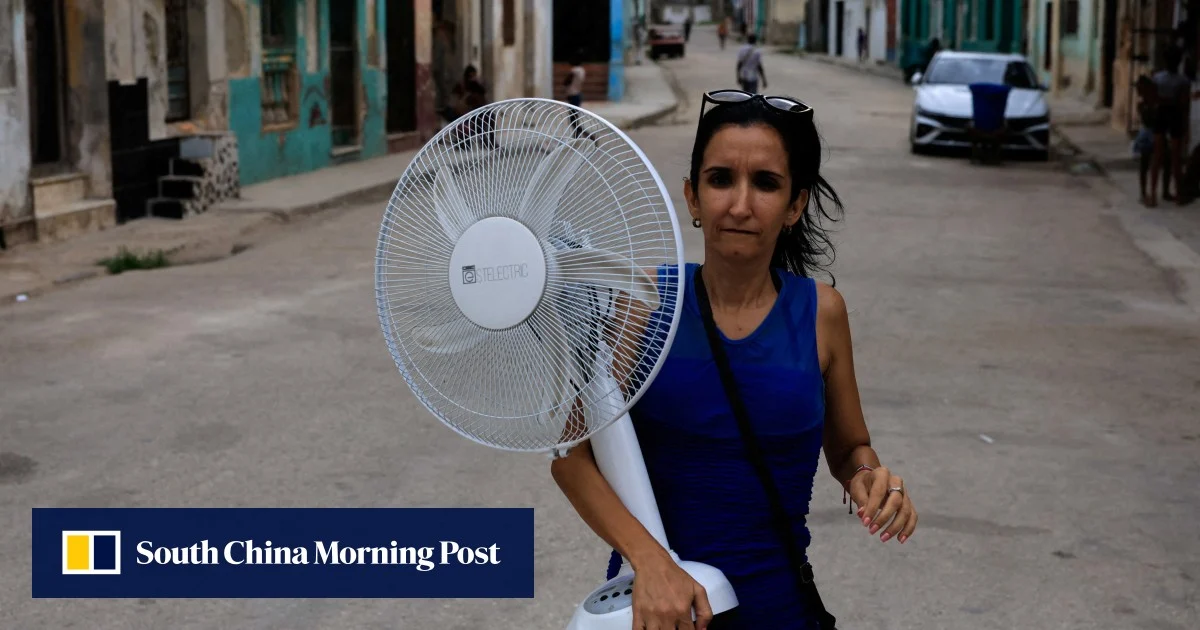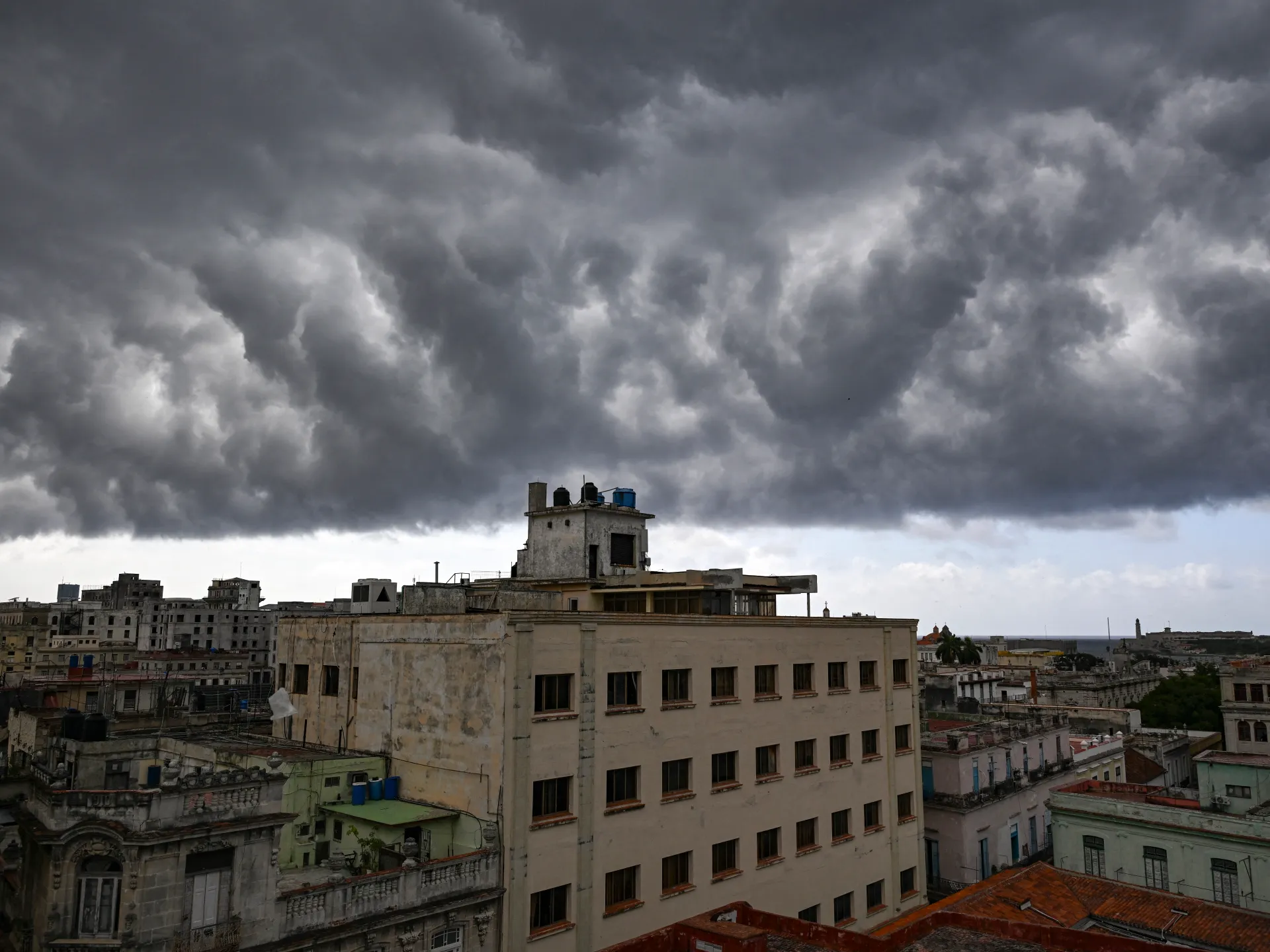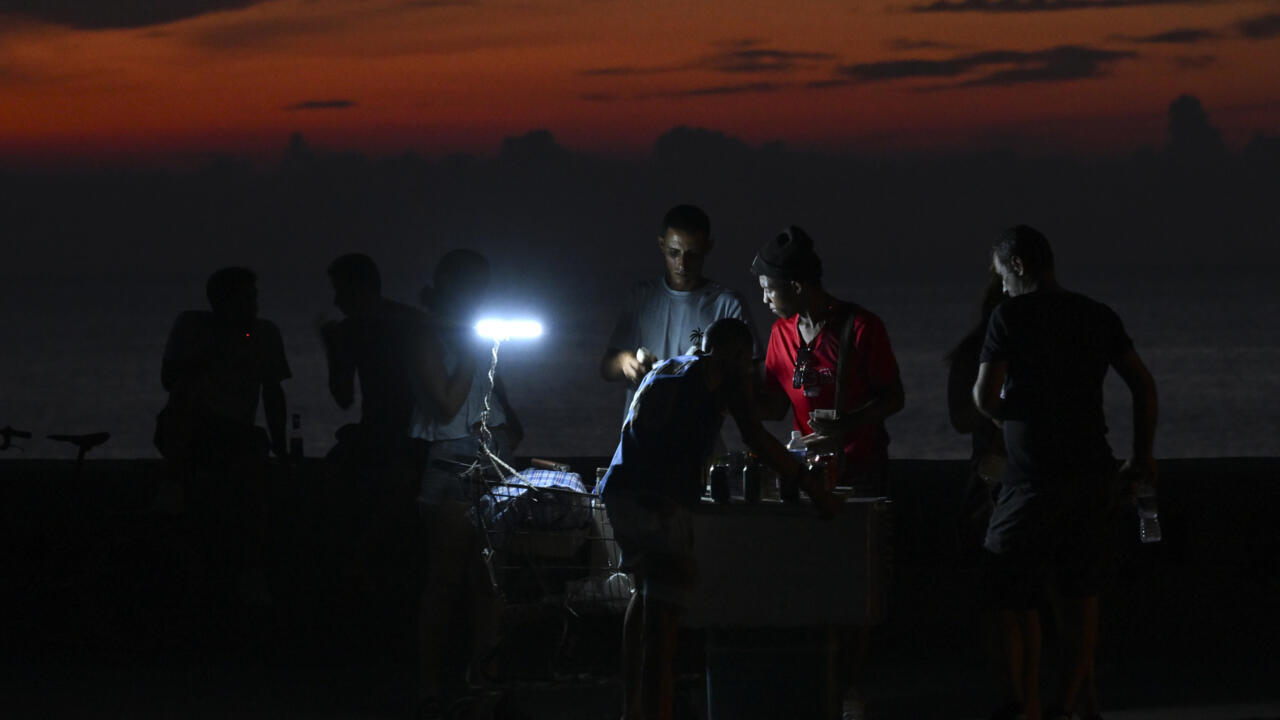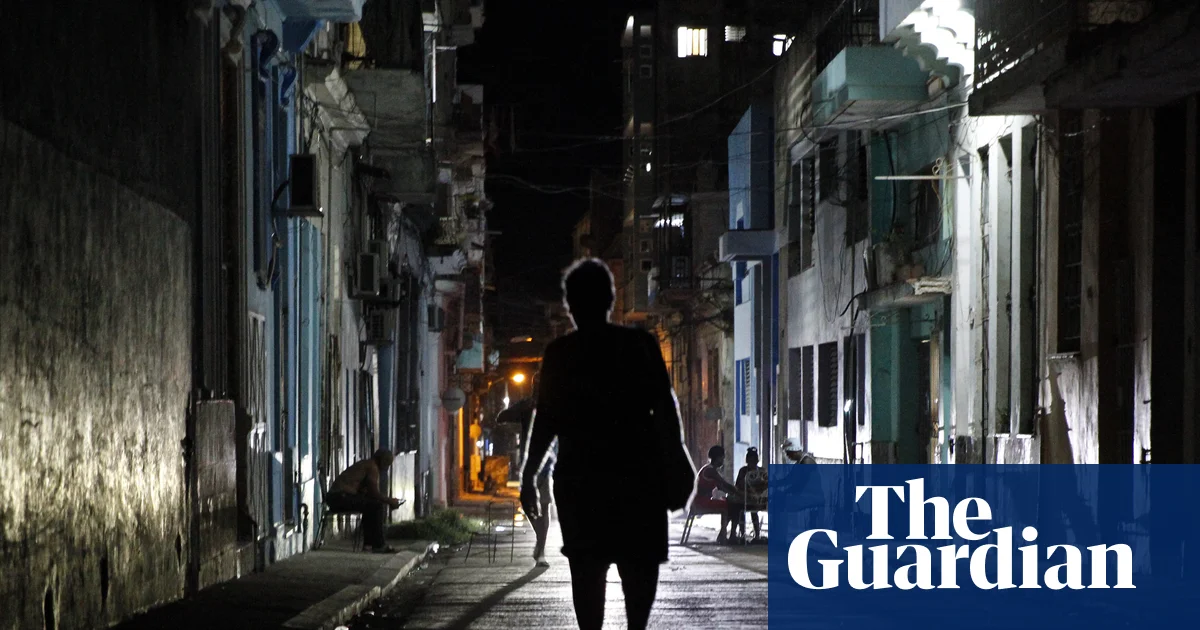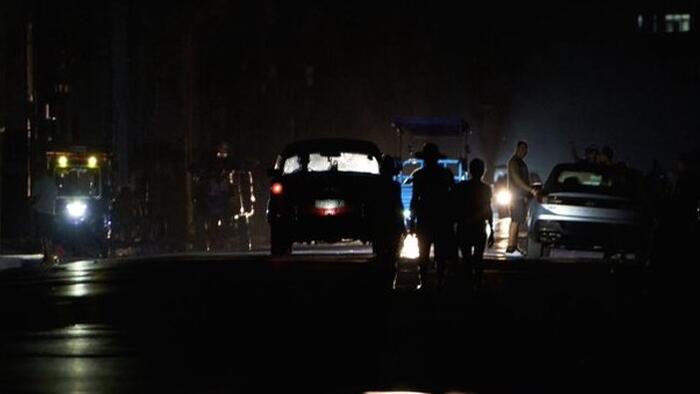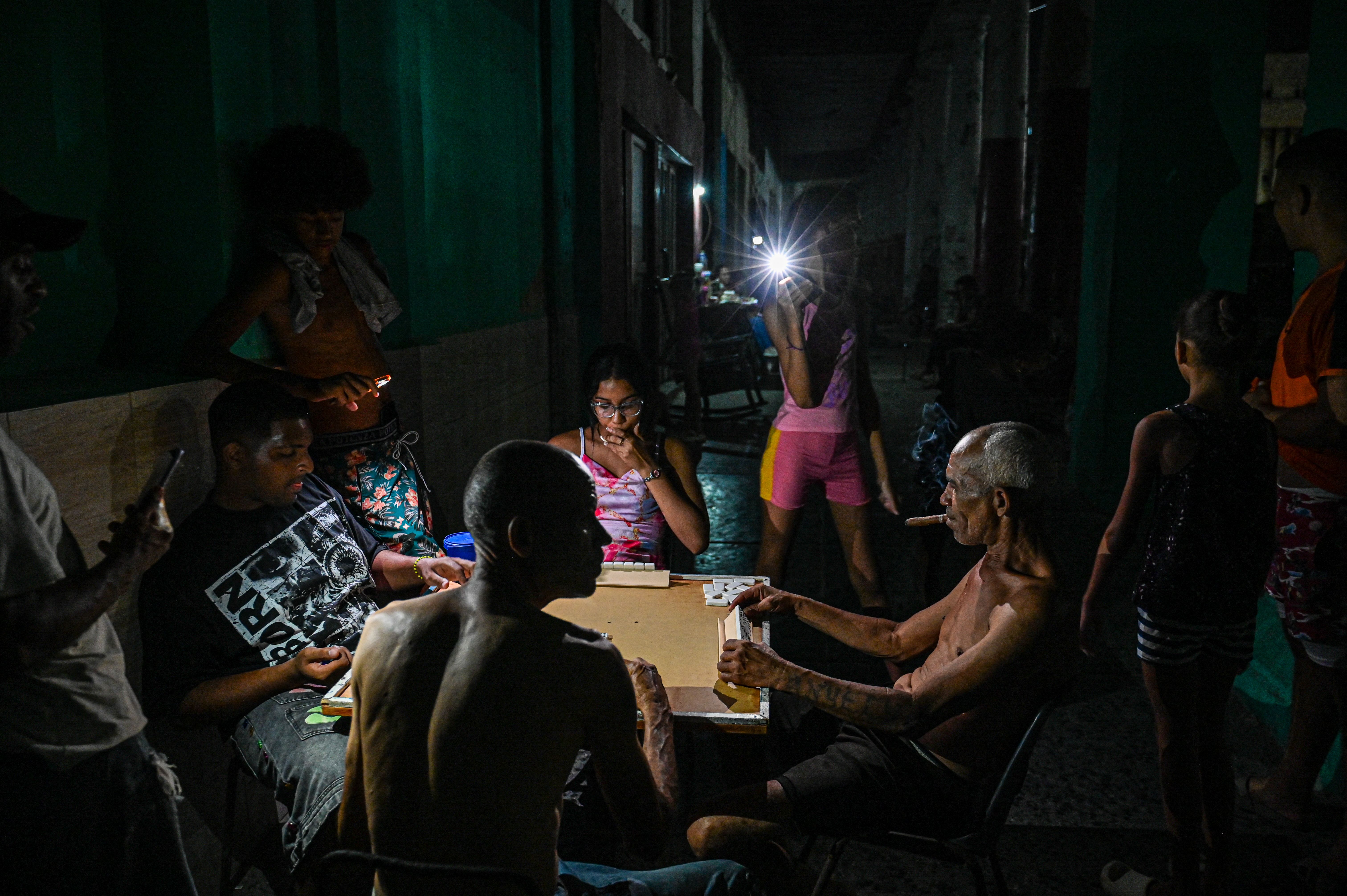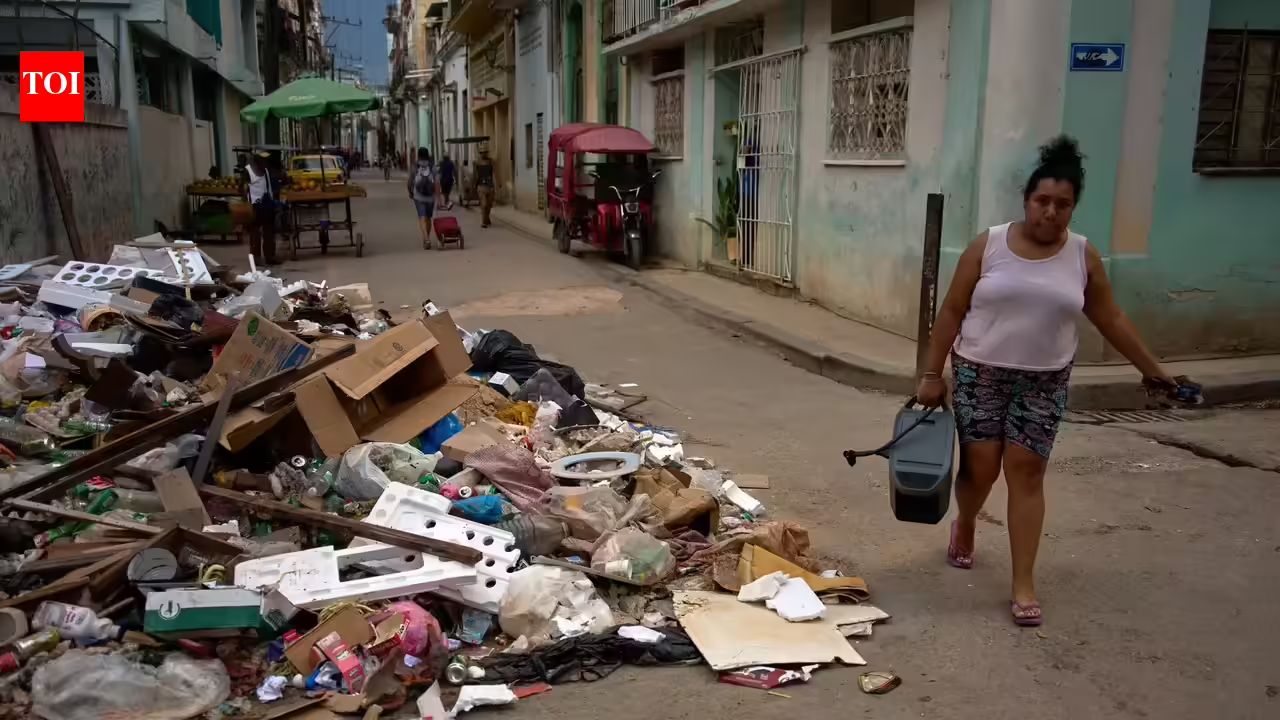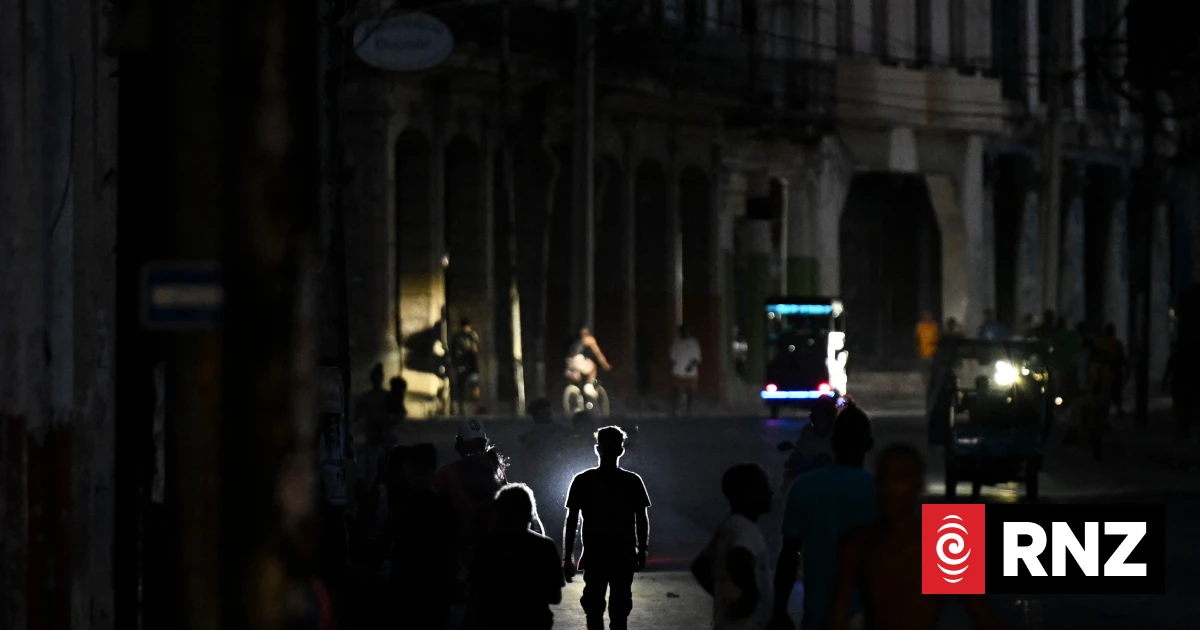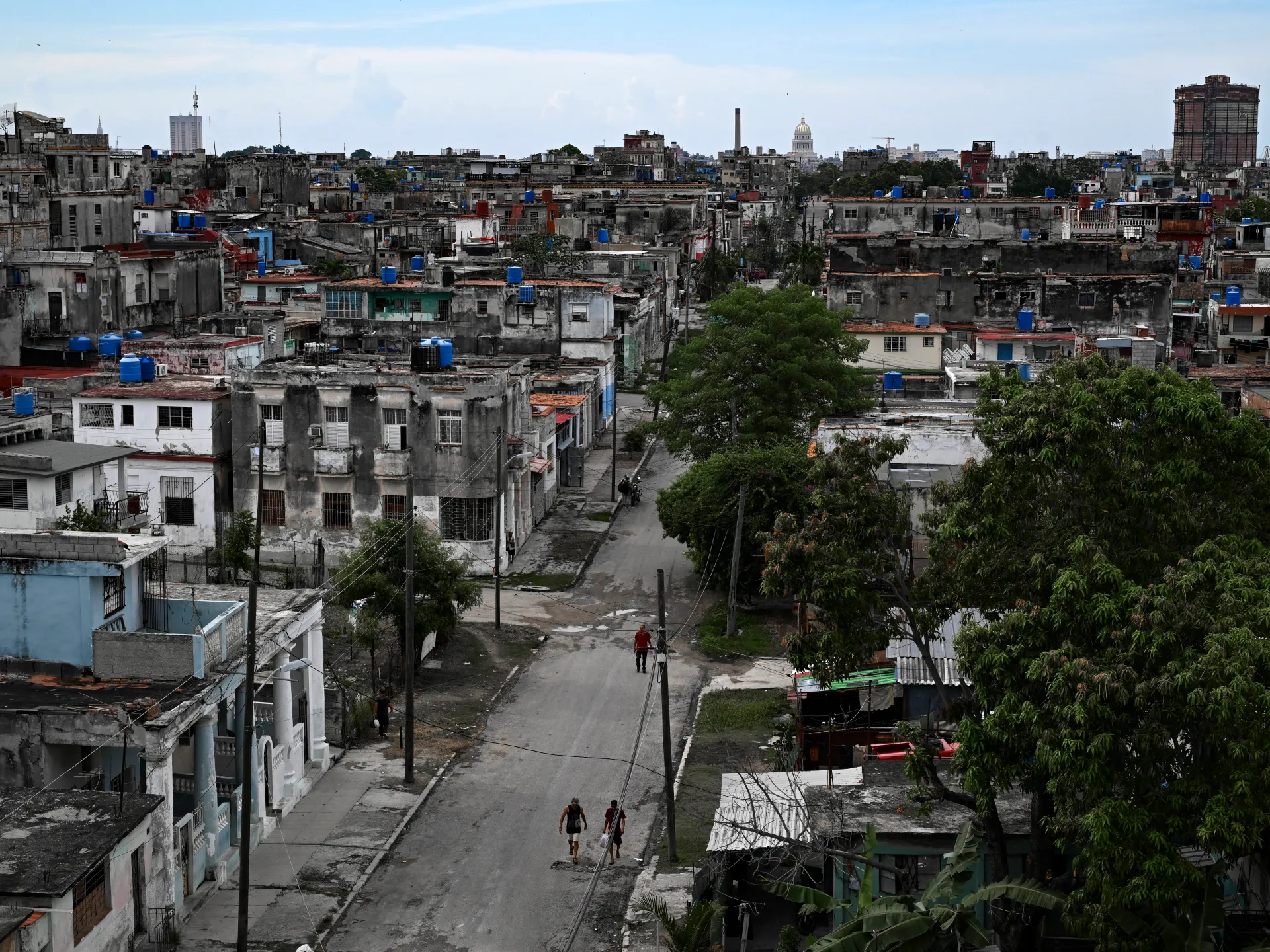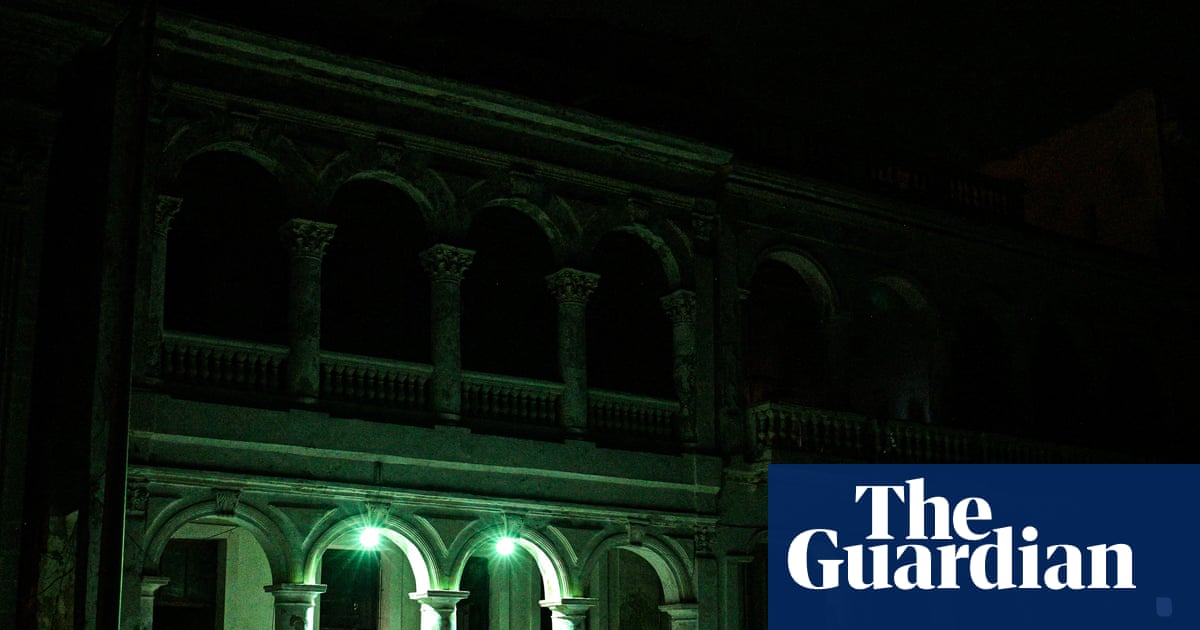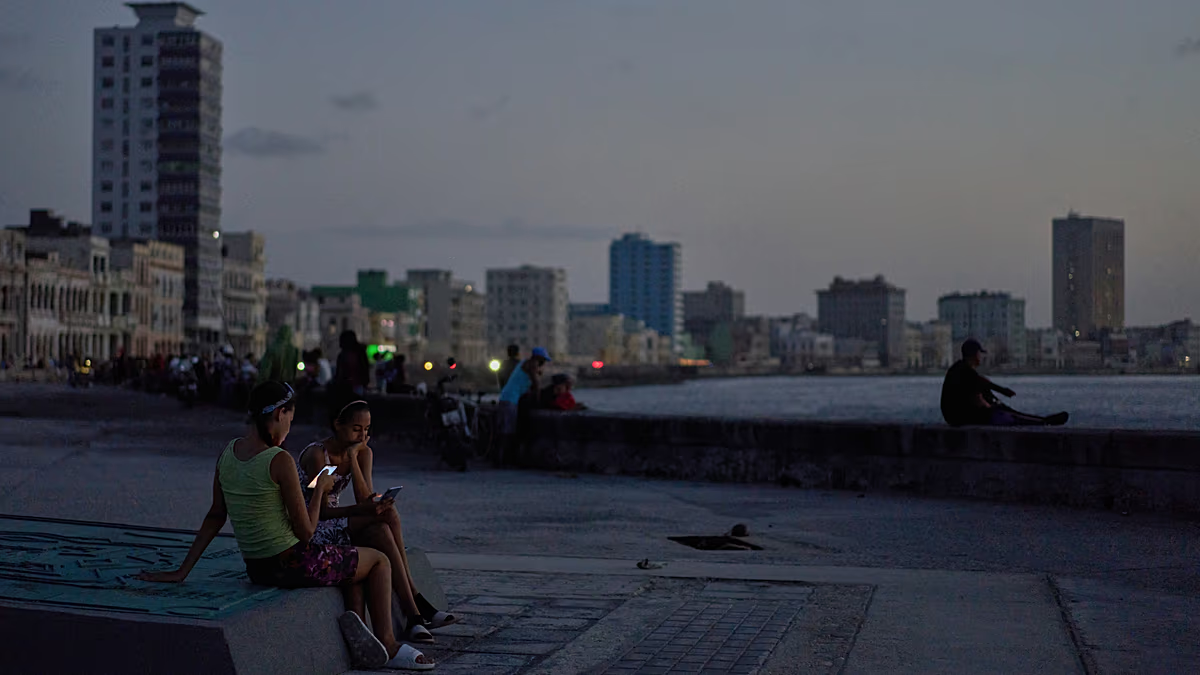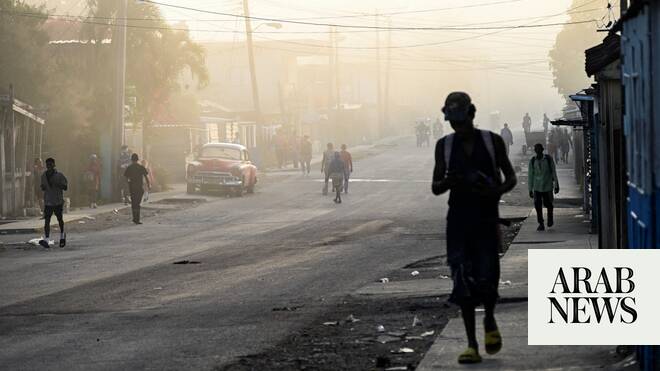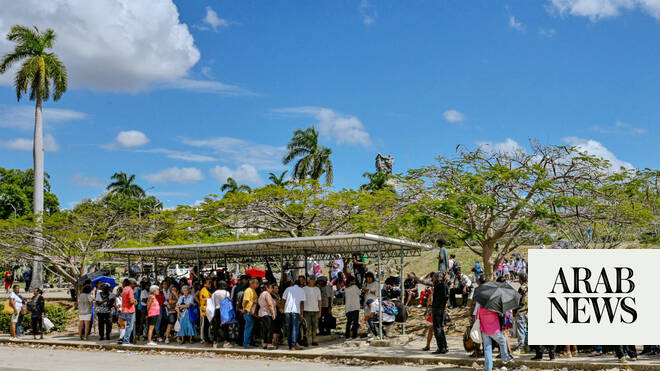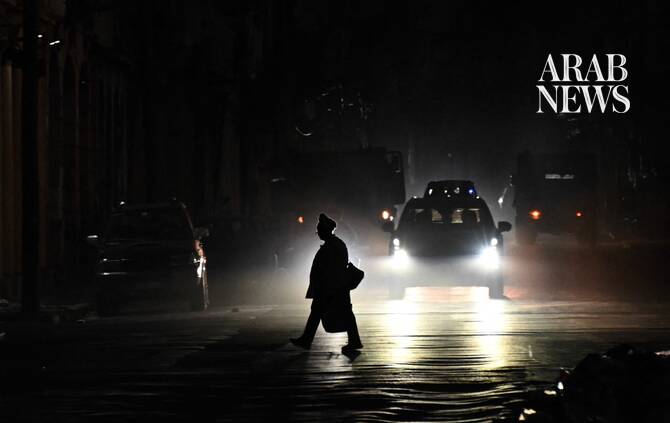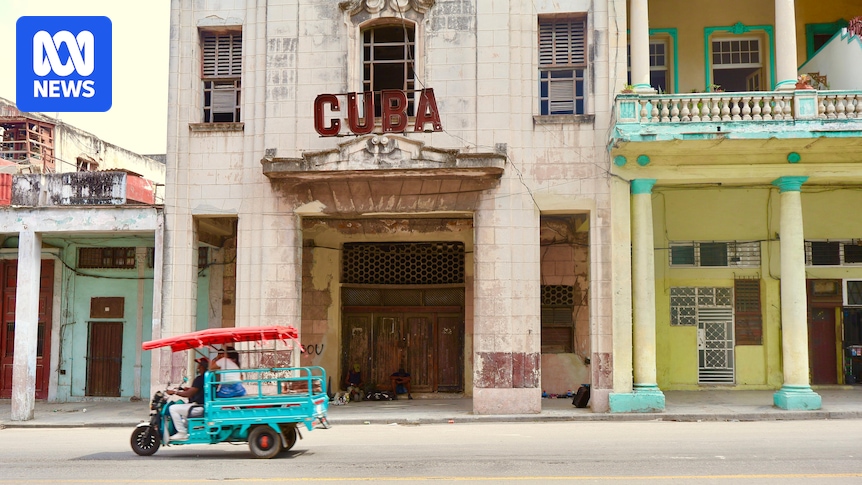
Cuba has been temporarily thrown deeper into darkness during an island-wide power outage sparked by the total collapse of the country's national electricity grid.The collapse marked the latest blow to a nation crumbling under the impacts of severe energy, fuel and medicine shortages, which Cuban authorities mostly blame on the United States.Amid the crisis, Cuban bakers now work 24-hour-straight shifts followed by a single day off, while doctors struggle to travel to overwhelmed hospitals on unreliable public transport services.Meanwhile, families wake as early as 4am to cook food they hope will not spoil in the coming day due to intermittent power, their homes have no running water, and streets are cluttered with rubbish festering with mosquito-borne diseases.This is the reality of Cuban lives that have ground to a halt under the weight of an economic and humanitarian crisis that has developed around them over years.Pharmacy shelves in Havana stand mostly empty. (Supplied: Human Rights Watch)The situation has been further aggravated by US President Donald Trump's series of harsh restrictions, according to global health and human rights researchers assessing their impact.The Cuban government has accused the US, via state-run media outlets, of orchestrating a "genocide", more than 100 days after Mr Trump first said he would set his sights on Havana once the Iran war had ended.This is what Cuban state data and figures from health and humanitarian organisations show has unfolded in the past six months.A nation on the brink of collapseThe White House increased pressure on Cuba's communist regime with an executive order on January 29 that cut off the island's critical energy supplies.It has caused daily mass blackouts, disrupted public transport and the distribution of essential food items, and placed hospitals on the verge of collapse.Since 1960, Cuba has been subject to a broader US trade embargo which restricted US exports to and imports from Cuba, limited American tourism to the island and penalised companies that do business with both nations.This year's measures further "aggravated the premeditated suffocation", the country's state-run CubaDebate outlet said."Its human impact is incalculable," it said."It is genocidal, illegal, extraterritorial, and contrary to international law."US measures have contributed to the deaths of more than 1,000 children within the past decade and an explosion of urgent surgery wait lists, endangered the national immunisation program and frozen the flow of basic rations, the CubaDebate report says.The country's bakers work such long shifts to make as much food as possible because they do not know when trucks will have enough fuel to deliver more batches of flour, according to a Human Rights Watch researcher the ABC has chosen not to name to protect their safety.Government-subsidised food supplies have been interrupted and people are unable to afford items from privately run stores, the researcher said.Mass power outages can range in length from several hours to several days, and rubbish has been piled around homes and children's playgrounds, the researcher told the ABC.Some Cubans have resorted to driving electric vehicles as a result of the country's oil and fuel shortage. (Supplied: Human Rights Watch)The island-wide outage on Monday, local time, was announced by the state-run Electric Union, but the cause remains unknown.It was Cuba's eighth nationwide electrical shortage since October last year and the third to happen so far in 2026.During the power collapse, President Miguel Díaz-Canel accused the US of trying to "incite social unrest by strangling Cuba's fuel supply".After several hours, Cuban authorities said electricity supply for some regions had started to be restored.Baby death rate is worst in 30 yearsBetween 2018 and 2025, approximately 1,800 Cuban babies died, and the infant mortality rate grew by 148 per cent due to US-imposed sanctions, the independent, US-based Center for Economic and Policy Research says.That period spanned Mr Trump's two presidential terms and Joe Biden's tenure in office.United Nations High Commissioner for Human Rights Volker Türk this month cited the same figures as Cuban officials, adding the US blockade caused the mortality rate to double to 9.9 infant deaths per 1,000 live births."Children are dying because doctors lack access to essential medical supplies and medicines. This is unacceptable," he said.The Human Rights Watch researcher said the trend intensified due to a mix of impacts related to US sanctions, "longstanding economic mismanagement" and the COVID-19 pandemic."The blockade has had a tremendous impact, and people are seeing it and experiencing it in their day-to-day lives, but I think it's important to see this as a continuum and not an overnight [change]," they said.Cuba's medical crisisThe blockade set the Cuban healthcare sector into freefall, CubaDebate claimed.The outlet alleged energy and oil shortages in 2026 saw Cubans become unable to distribute essential medical supplies and more than 100,000 people remain on elective and reconstructive surgery wait lists.More than 5,100 oncology patients and 12,000 children are still on those lists, while almost 3,000 kidney dialysis patients had their treatment interrupted, the report said.Since the US's fuel restrictions were imposed this year, the child cancer survival rate dropped by 20 per cent to 65 per cent and the national immunisation program had been placed at "serious risk", CubaDebate claimed.Mr Türk believes the Trump administration's measures caused a 30 per cent reduction of essential medicine supplies that remain in "critical short supply"."Such severe sanctions packages that target entire sectors of an economy and produce broad, indiscriminate, and harsh effects on populations are incompatible with basic principles of international human rights law," he said.John Kirk, a Latin American expert from Canada's Dalhousie University who is in daily contact with people in Cuba, says the country is "in the midst of a full-blown humanitarian crisis"."There are something like 12,000 pregnant women that are waiting for ultrasounds and 120,000 operations, including 10,000 paediatric operations, that have been postponed," he said."That gives you a feel of just how bad the situation is."Trump's economic strangleholdUS sanctions decimated Cuba's economy by choking its ability to coordinate with foreign businesses, government agencies say.Former president John F Kennedy's 1960 trade embargo implemented a fluid patchwork of restrictions on trade, travel and humanitarian aid.World Bank and OECD financial data shows the value of Cuba's economy continued increasing despite the embargo, but there were severe declines in that time.The Trump administration measures took those restrictions further, focusing on Cuban institutions and notable regime figureheads.US Secretary of State Marco Rubio announced sanctions in May on Cuba's largest military-controlled business administration group, known as GAESA, and bans on any US-based person or company transacting with it.The body controls an estimated 40 per cent of Cuba's economy, generates up to $US20 billion ($26 billion) in illegal money and funnels it into offshore bank accounts, Mr Rubio alleged.In the following five weeks, the Trump administration announced sanctions on Cuban President Miguel Díaz-Canel, the Ministry of the Revolutionary Armed Forces, the Cuban intelligence agency and the state-run oil company Union Cuba Petroleo.Several foreign hotel chains announced they would sever ties with GAESA and cease operations in Cuba.Shipping companies CMA CGM and Hapag-Lloyd also suspended bookings to and from Cuba, jeopardising as much as 60 per cent of shipping traffic by volume.On June 4, Cuba's central bank confirmed it would suspend Visa and Mastercard transactions made through GAESA's financial arm in another blow to the tourism and trade sectors.More sanctions on five Cuban entities and an individual linked to the management of Cuba's funds and mining sector were announced on June 23 by Mr Rubio.The combined restrictions meant Cuba's economy came to a standstill, dozens of containers of undistributed, income-generating products were left stranded, and various airlines refused to fly to the country, CubaDebate reported.On June 19, the Cuban regime approved the largest package of reforms since former president Fidel Castro came to power in 1959, granting the possibility of privatisation in several key sectors in a bid to revive the economy.The move followed months of protests held despite the threat of government repression, which Mr Kirk said was a sign of the impact of US action."The US policy is trying to keep the pressure on for people to get so hungry and so thirsty and so sick that they rise up against the regime," he said.A mural in Old Havana that reads "this is the heart of the island". (Supplied: Human Rights Watch)The Human Rights Watch researcher said Cuba's reform package was a sign the regime recognised a need for change "in order for them to be able to provide some access to basic services to their population"."People have reached a level of fatigue and exasperation that a lot of people haven't necessarily felt over the course of their lives," they said."We're at a turning point in Cuba."
After months of Trump threats, Cuba says he's committing 'genocide'
The lives of ordinary Cubans have ground to a halt under an economic and humanitarian crisis that has developed over years and been aggravated by US President Donald Trump's harsh restrictions, experts say.
1,427 words~6 min read