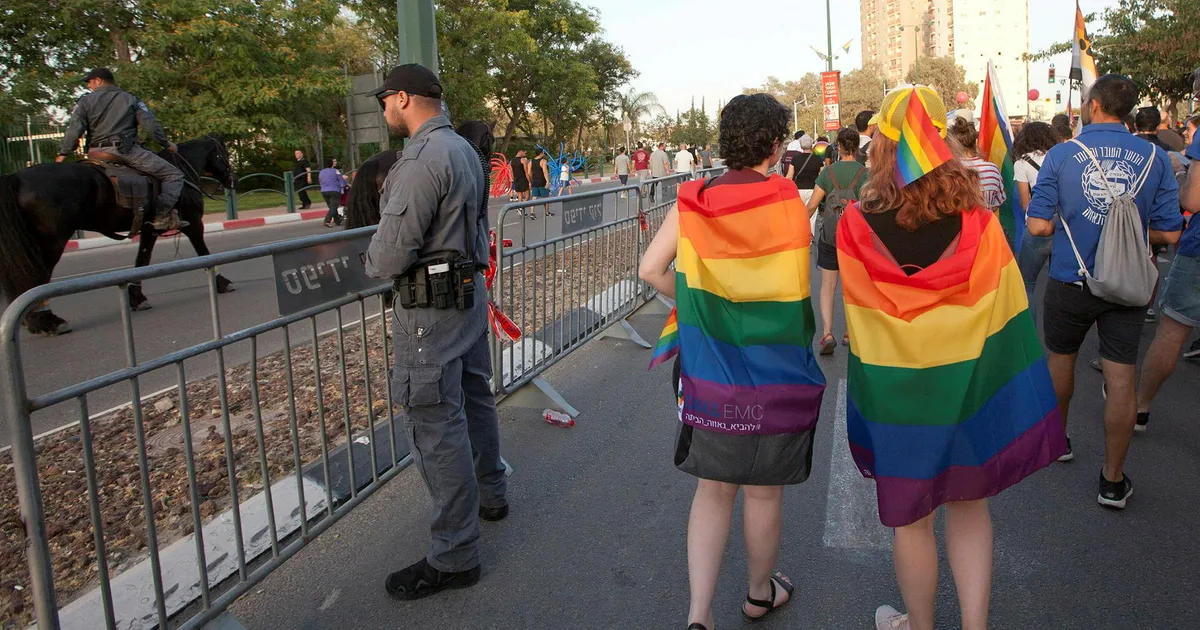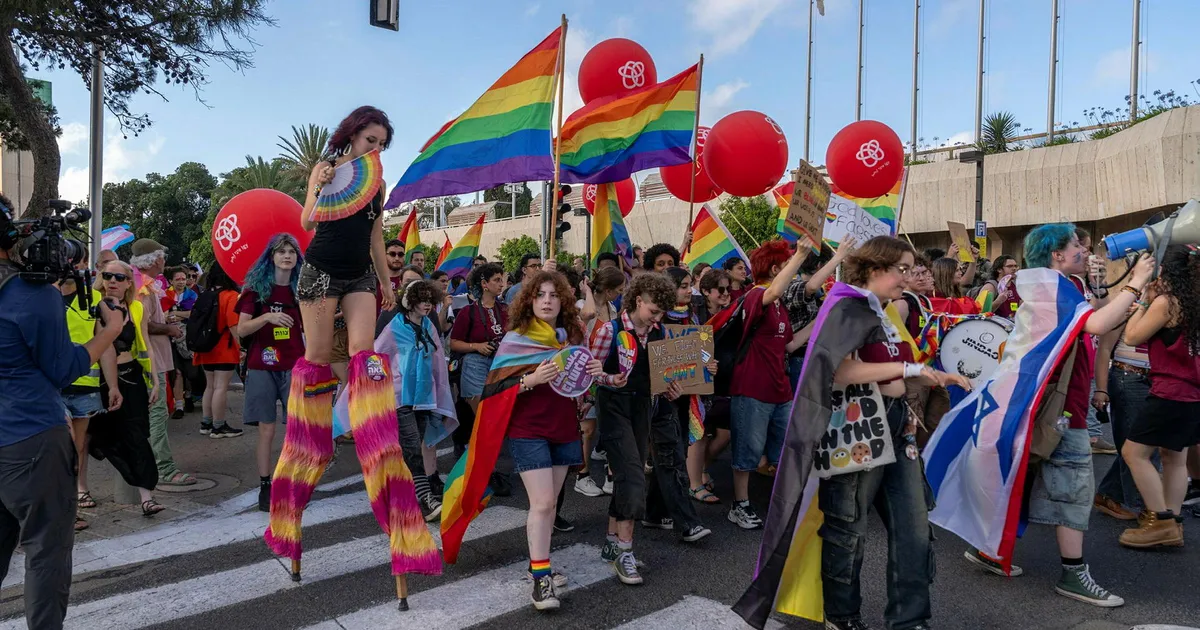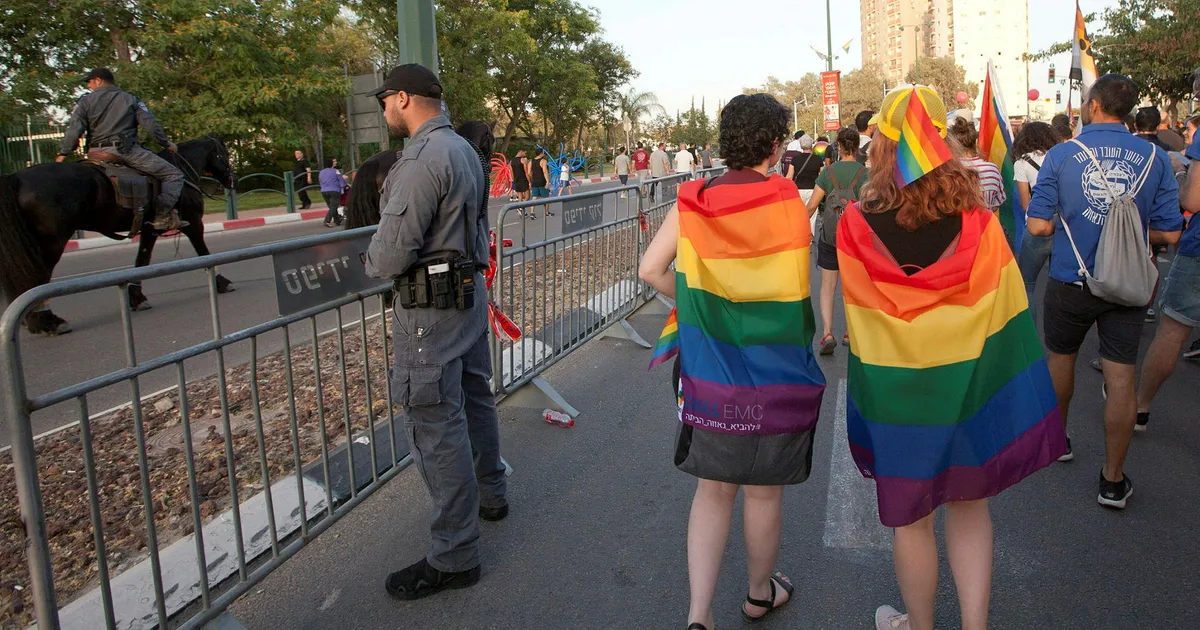
Current sectionScience & HealthA series of University of Haifa studies found that Israeli LGBTQ teens often avoid pursuing mental and medical treatment in fear of non-accepting healthcare providers, as many professionals cite public and political discourse on the community as harming to their sense of self-securityShare to FacebookShare to XArticle printing is available to subscribers onlyPrint in a simple, ad-free formatSubscribeComments: Zen reading is available to subscribers onlyAd-free and in a comfortable reading formatSubscribeThe 2019 Pride Parade in Be'er Sheva, which took place under a heavy security presence. Credit: Eliahu HershkovitzThe 2019 Pride Parade in Be'er Sheva, which took place under a heavy security presence. Credit: Eliahu Hershkovitz11:36 PM • July 06 2026 IDTIsraeli sexual and gender minority youth often refrain from seeking mental and medical treatment due to their fear of being shunned by healthcare providers, a series of recently published studies reveal. According to the University of Haifa studies, this concern stems, among other factors, from a lack of dedicated training among medical and mental health professionals. The series of studies, led by Prof. Ateret Gewirtz-Meydan and Dr. Ruth Berkowitz and managed by social worker Shir Maoz, aimed to examine teenagers' attitudes toward the Israeli healthcare system with an emphasis on mental health, while also examining the gaps within the system itself regarding knowledge and training in treating LGBTQ adolescents.General barriers that often block teenagers from seeking mental health help include a fear of being outed, stigmas surrounding mental health treatment and hopes that distress will pass on its own. To examine these attitudes, the researchers developed a new questionnaire to measure the barriers standing between the teens and their willingness to pursue mental health treatment. Haaretz Elections Podcast'Israel’s opposition must join with Arab parties to beat Netanyahu. It's the right thing to do'Haaretz Elections Podcast'Israel’s opposition must join with Arab parties to beat Netanyahu. It's the right thing to do'total-- : --time0:00The study, funded by the National Institute for Health Policy and Health Services Research, included 946 Israeli teenagers aged 16-18 (average age 17.4 years), about 75 percent of whom were girls. About 70 percent of the participants in the study identified as heterosexual and approximately 30 percent as LGBTQ. The most prominent obstacle found in the questionnaire among all participants was their hope that their mental health difficulties would resolve on their own, without pursuing treatment. This was found by a difficulty affording treatment, a fear of discussing personal problems with a stranger, and the fear of being perceived as weak. However, among LGBTQ adolescents, different barriers stood out. They were significantly more likely to report concerns that a mental health professional would not understand their sexual orientation or gender identity, would not understand their world or their unique lived experiences, and would not take their emotional distress seriously. The researchers found that the more barriers the teens reported, the less willing they were to seek mental health treatment.To better understand the origins of those fears, the researchers conducted an additional qualitative study – interviewing 20 professionals, including psychologists, psychiatrists, social workers, family physicians, nurses and other therapists who work with LGBTQ teenagers. Dr. Ruth Berkowitz. Credit: University of HaifaDr. Ruth Berkowitz.Credit: University of HaifaAccording to the interviewees who participated in the study, teenagers encounter barriers even before meeting with a therapist. They pointed to insufficient training for education and medical staff, a shortage of content related to sexual and gender identity in the general education system, and standard procedures that have never been adapted to meet the needs of LGBTQ teenagers. Some said that many young people fear that instead of receiving treatment, they will have to "explain themselves" to the therapist."'Straight' boys or girls grow up with examples from their parents, through lessons in school about heteronormative sexuality and with friends they can talk to. They don't need to 'come out of the closet,'" said a social worker who was interviewed for the study. She added, "LGBTQ teenagers are constantly forced to ask who they are, to search for a community and to deal with heteronormative assumptions. In every interaction, they have to decide whether to reveal themselves or not. And the moment they do, their identity becomes a label that invites questions and intrusion into their personal lives."The interviewed professionals also believed that the public and political discourse surrounding the LGBTQ community affects teenagers' sense of security. A person with a rainbow kippah participates at the Mitzpe Ramon pride parade in southern Israel, in 2021. Credit: Ilan AssayagA person with a rainbow kippah participates at the Mitzpe Ramon pride parade in southern Israel, in 2021. Credit: Ilan AssayagAccording to them, young people from the religious, ultra-Orthodox and Arab communities are often found in a particularly vulnerable situation, as they fear losing the support of their family or community if they reveal their identity."Religious, ultra-Orthodox and Arab LGBTQ young people are in a much more difficult situation. They lose their support system... What frightens me most is when they end up on the street – where they become easy prey. This happens a lot," said a psychotherapist who participated in the study. Another participant recounted, "In the Arab community in Israel, teens often cannot receive treatment in the town where they live, for fear that it will become publicly known – which could endanger their lives." Another interviewee said, "The moment you leave Tel Aviv, Haifa or other large cities, you encounter extreme conservatism that leaves no room for people in the LGBTQ community."In the third study, the researchers sought to examine whether these gaps could be reduced through professional training. The study included 318 male and female professionals from the fields of medicine and mental health, including doctors, psychologists, social workers and nurses. About half of them had undergone dedicated training for working with LGBTQ teenagers. The findings revealed significant differences between the two groups: professionals who had LGBTQ-specific training demonstrated broader knowledge regarding the therapeutic needs of the treated teenagers, were more confident providing care and more likely to use inclusive and beneficial therapeutic practices. The study found that on a professional level, positive attitudes toward the community in general are not enough and must be "translated" into tailored treatment practices that require professional knowledge and specialized training. Prof. Ateret Gewirtz-Meydan, lead researcher. Credit: Osher Idan pashinskyProf. Ateret Gewirtz-Meydan, lead researcher.Credit: Osher Idan pashinskyAccording to the researchers, all three studies point to a similar conclusion, describing the same dynamic from different angles: all LGBTQ teenagers fear being misunderstood. They conclude the teens' fear is justified, at least partly, and the gaps indeed limit healthcare providers from providing adequate care. Accordingly, the researchers conclude, dedicated training for therapists could be a key step to improving LGBTQ teenagers' access to mental health services.No official data on the number of LGBTQ teenagers living in Israel is available, as the government does not collect such demographic data among minors, and since the inherent challenge found in conducting such a survey among teens who have not yet come out or are still forming their sexual and gender identity. However, based on statistics and studies by LGBTQ organizations and international bodies, including the Organization for Economic Cooperation and Development, it can be estimated that about 10-15 percent of Israel's population identify as part of the LGBTQ community. If this figure is applied to approximately one million individuals aged 12-18, the conservative estimate is that there are an estimated 100,000 LGBTQ teenagers in Israel."The ability to measure knowledge is critical," says Prof. Gewirtz-Meydan. "If we want to improve professional training programs, we first need to understand where the knowledge gaps lie and which areas require strengthening."According to the researchers, the findings have direct implications for the training of psychologists, social workers, school counselors, physicians, and other professionals who work with adolescents."We must not stop at the good-intentions stage," says Dr. Berkowitz. "The study's main takeaway is that effective treatment also requires knowledge. For LGBTQ youth to receive the treatment they deserve, we must invest in knowledge-based, up-to-date and in-depth professional training."In the NewsHaaretz CartoonGaza's Board of Peace Has Three Paths to Reconstruction. Israel Is Blocking ThemKnesset Advances Gov't-controlled October 7 Probe as Opposition Boycotts VoteDozens Rally in Tel Aviv Calling for Release of Gaza Doctor Held Without TrialFormer Gaza Hostages Sasha Trufanov and Sapir Cohen Wed in Emotional CeremonyRemembering and rebuilding two years laterICYMIIsrael Has Long Ignored Warnings of a 'Diplomatic Tsunami.' Now It Has ArrivedAn Israeli Principal Desegregated a Tel Aviv School. Here's What HappenedDumber Than a 10-year-old: Are Israeli Students Really That Stupid?103 Nails on the Map: How Israel's Government Is Burying the Two-state SolutionRep. Dan Goldman Says Support for Israel Cost Him New York Democratic PrimaryIn His Own Words: Naftali Bennett Is Committed to Annexing the West Bank
Israeli LGBTQ teens fear seeking mental and medical treatment, study shows
A series of University of Haifa studies found that Israeli LGBTQ teens often avoid pursuing mental and medical treatment in fear of non-accepting healthcare providers, as many professionals cite public and political discourse on the community as harming to their sense of self-security
1,452 words~7 min read