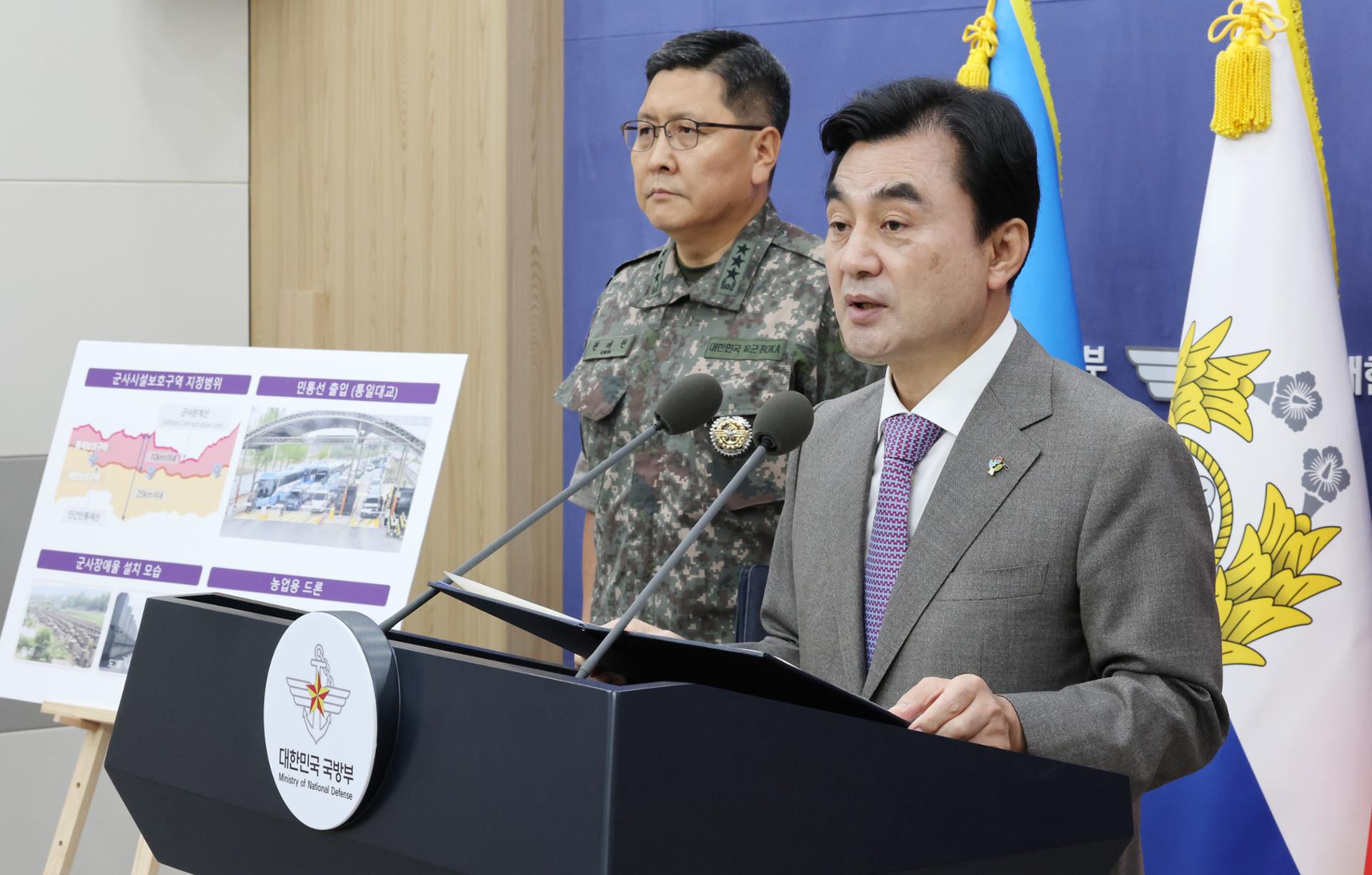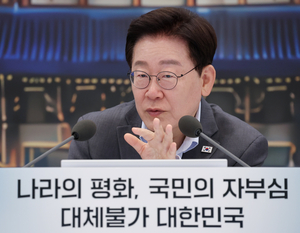
KIM Man-ki The Ministry of National Defense is advancing three consequential changes: seeking an earlier transfer of wartime operational control; considering the consolidation of the Army, Navy and Air Force academies; and proposing that private security personnel assume guard duties at military installations.Each affects the foundation of national readiness: wartime command, officer education or force protection.One question must be answered first: Has the government conducted a feasibility study and risk assessment covering all three changes within an integrated national strategy? Without that work, these are national security experiments whose costs may become apparent only after the damage is done.The first gamble is an earlier transfer of wartime operational control, or OPCON, over the combined US-South Korea forces. Korea should eventually assume greater command responsibility. But the required conditions must be met, and deterrence strengthened rather than weakened.The US Senate Armed Services Committee’s proposed fiscal 2027 National Defense Authorization Act would require the US defense secretary to report to Congress every 90 days from March 2027 through 2030 on progress under the conditions-based OPCON roadmap, together with independent risk assessments by senior US commanders. Washington is not opposing the eventual transfer; it is demanding continued verification.Korea should apply the same discipline: close coordination with the United States, realistic combined exercises, integrated intelligence and tested command capabilities. Exercises should not be reduced to create a favorable political atmosphere for an earlier transition.The government should also assess the economic and security consequences. Foreign investors and credit markets do not separate military risk from economic risk. Weaker deterrence could affect capital flows and Korea’s sovereign credit standing.The second gamble is academy consolidation.A ministerial advisory subcommittee reportedly worked for only three months before recommending the establishment of an Armed Forces Academy. Its proposed “2+2” model would place cadets in a common program for two years and then return them to the Army, Navy and Air Force academies for their final two years.Institutions that have educated officers for decades should not be redesigned without compelling evidence, broad consultation and a detailed implementation plan. If unity is the objective, Korea can establish mandatory joint courses, cross-service exchanges, integrated exercises and AI-enabled war-gaming platforms connecting all three academies.Creating a new institution while retaining the academies could add cost and disrupt educational continuity. Cadets would move midway through their institutions, with different traditions and service identities.The ministry should publish the alternatives being considered, the expected costs, the educational benefits and the implementation risks. Unity should be built through the curriculum, doctrine and training — not through an improvised structure whose rationale remains unclear.The third gamble — transferring military guard duties to private security personnel — is the most dangerous.In today’s AI-enabled warfare, from Ukraine to the Middle East, the distinction between a forward operating base and a rear operating base is rapidly disappearing. Long-range missiles, drones, cyberattacks and special operations forces allow an adversary to strike facilities anywhere.That is especially true for a geographically compact country such as South Korea. Air bases, ammunition depots, command centers and mobilization sites cannot be assumed to be safely behind the lines. Ukraine has shown that drones can strike targets more than 1,000 kilometers inside enemy territory, while Middle Eastern conflicts have shown that missiles and unmanned systems can reach strategic facilities far from conventional battle lines.The argument that private guards would free soldiers for combat rests on a false distinction. Guarding an operational military installation is itself part of combat capability. The soldier at the gate is the first line of detection, deterrence and armed response.There is also a contradiction. The government argues that Korea has sufficient military capability to justify an earlier OPCON transfer and proposes shifting responsibility for selected installations to private personnel.If Korea is ready to assume greater wartime command responsibility, it should maintain military control over its bases, weapons and command facilities. It cannot claim greater wartime autonomy while privatizing a basic security function.The inconsistency is sharper because President Lee has declared that Korea should become a leading artificial intelligence power. The Defense Ministry is already investing in drones, surveillance systems and advanced capabilities. Its reliance on private guards is difficult to comprehend unless it explains which duties require civilians and why military technology cannot meet those needs.Korea should combine military guards with AI-enabled intrusion detection, autonomous surveillance, drones and rapid-response forces. Private personnel could supplement limited administrative functions but should not replace soldiers in the armed protection of operational installations.The alternatives are clear: readiness before the OPCON transfer, AI-enabled joint education rather than forced consolidation, and intelligent military security rather than privatization.Debate over OPCON transfer, military academy reform and base security should not be reduced to partisan politics. National defense belongs equally to all citizens.A nation is like a bird whose left and right wings must remain in balance. If either wing dominates, the bird cannot fly straight. Both wings exist to preserve the nation, not to defeat each other. If the bird falls, there is no left and no right.Korea has already endured colonial rule and the devastation of war. Defending the nation is a responsibility tied to survival. We must protect the country entrusted to us and pass it safely to future generations.National security first. Readiness before politics.The Korean War ended in an armistice, not a peace treaty. There should be no illusion about Korea’s security environment — and no reckless gamble with the defense of the Republic of Korea.- - -Man-Ki KimMan-Ki Kim is a professor at the KAIST Graduate School of Future Strategy, specializing in global public procurement, defense acquisition innovation and global strategic trends. He also serves as a senior adviser at Yulchon. The views expressed here are the writer’s own. -- Ed.
[Man-Ki Kim] Three gambles with Korea’s defense
The Ministry of National Defense is advancing three consequential changes: seeking an earlier transfer of wartime operational control; considering the consolida
942 words~4 min read