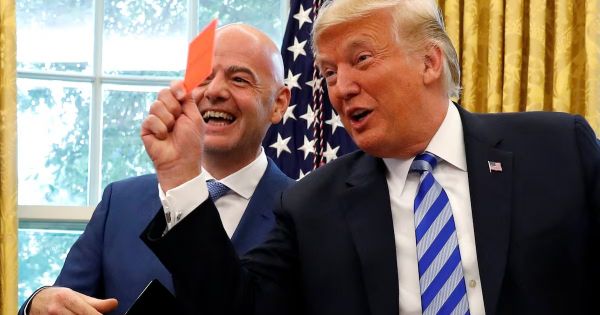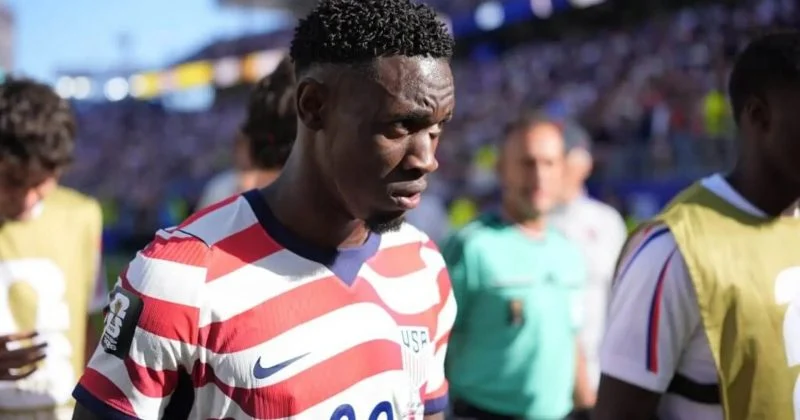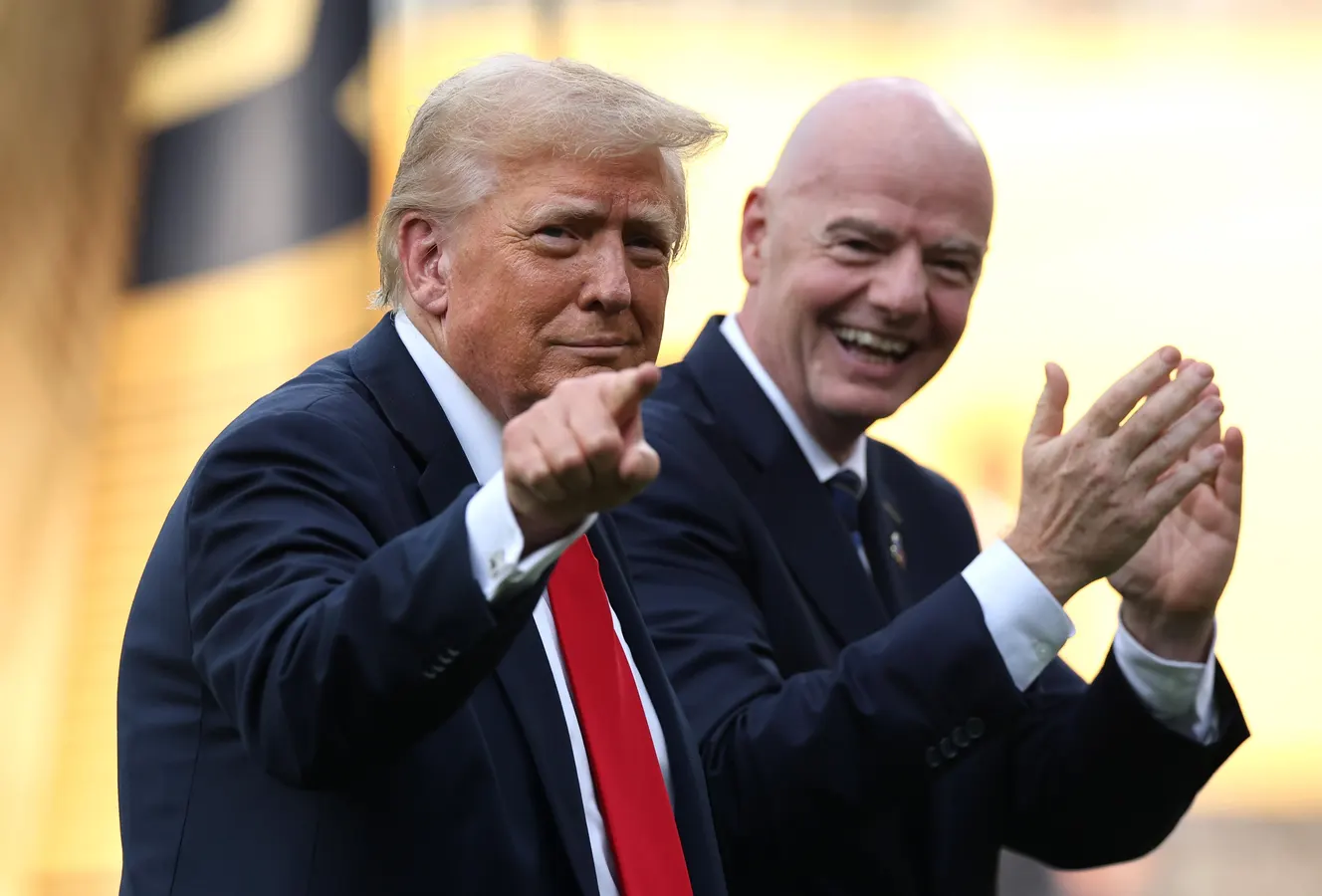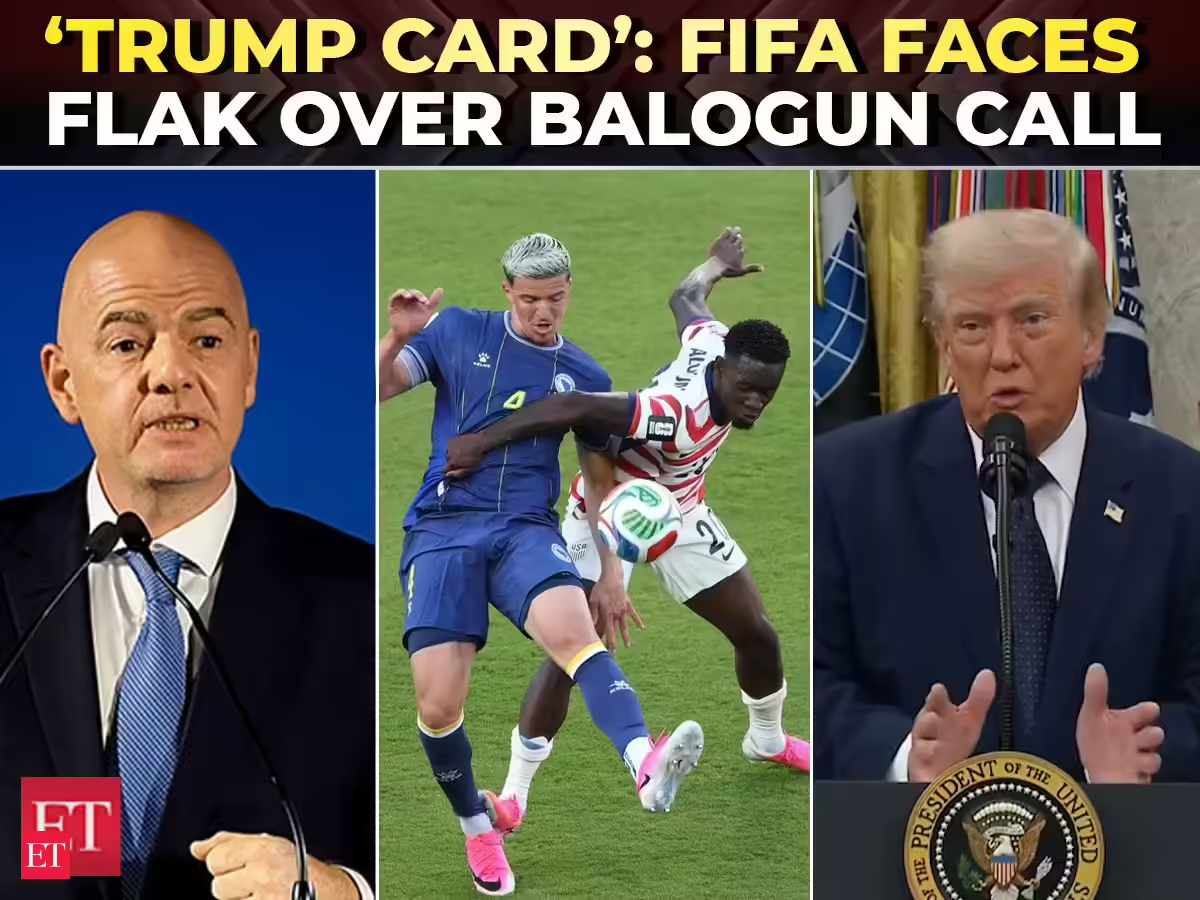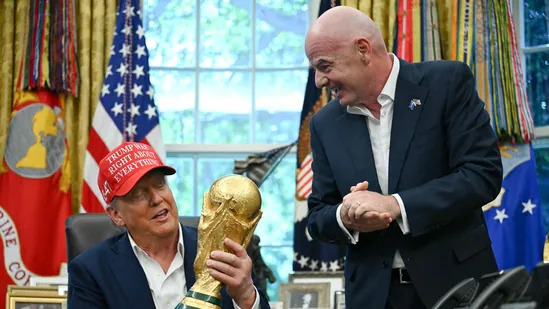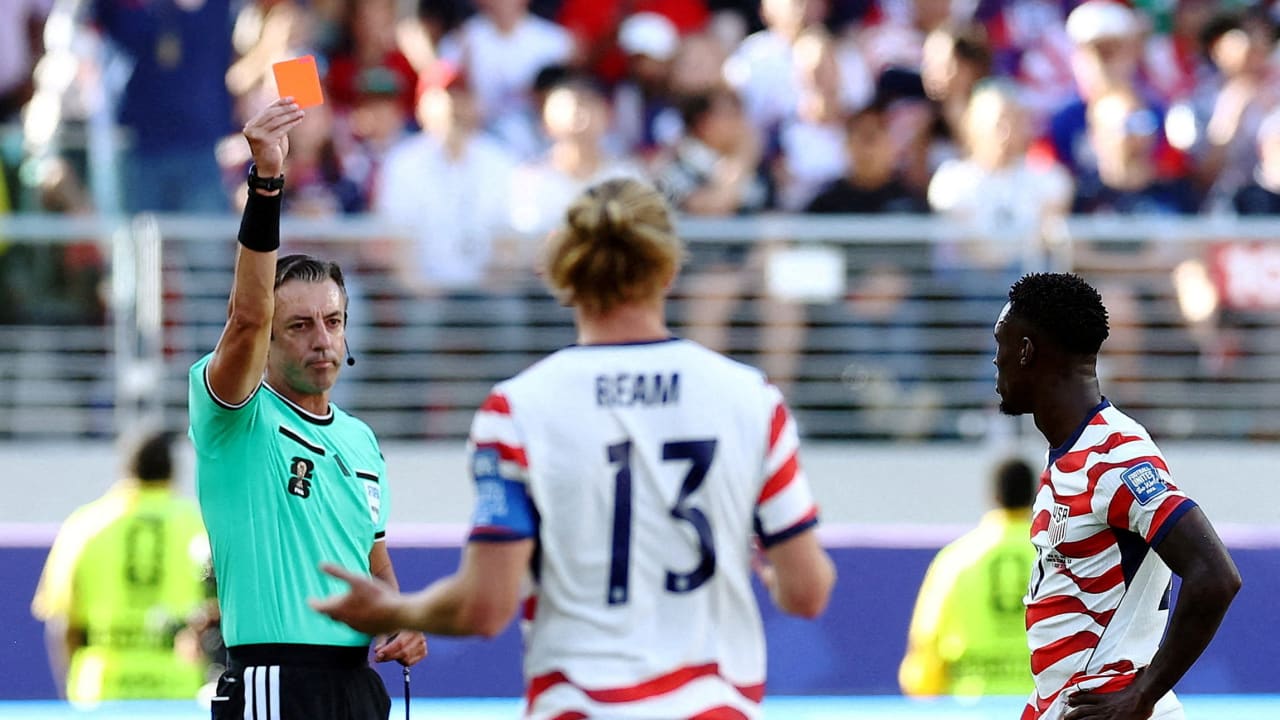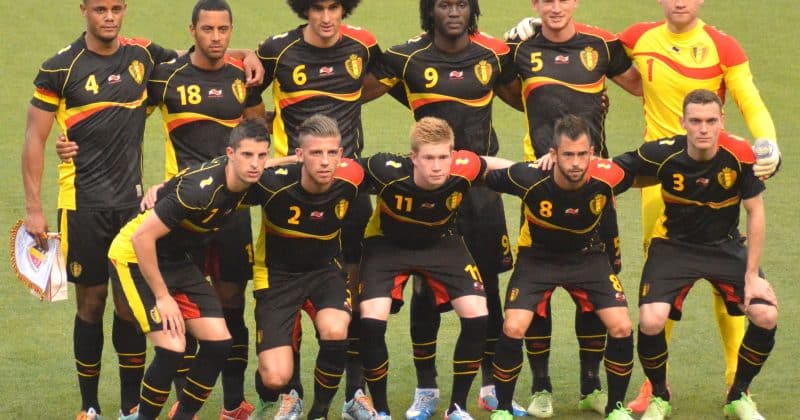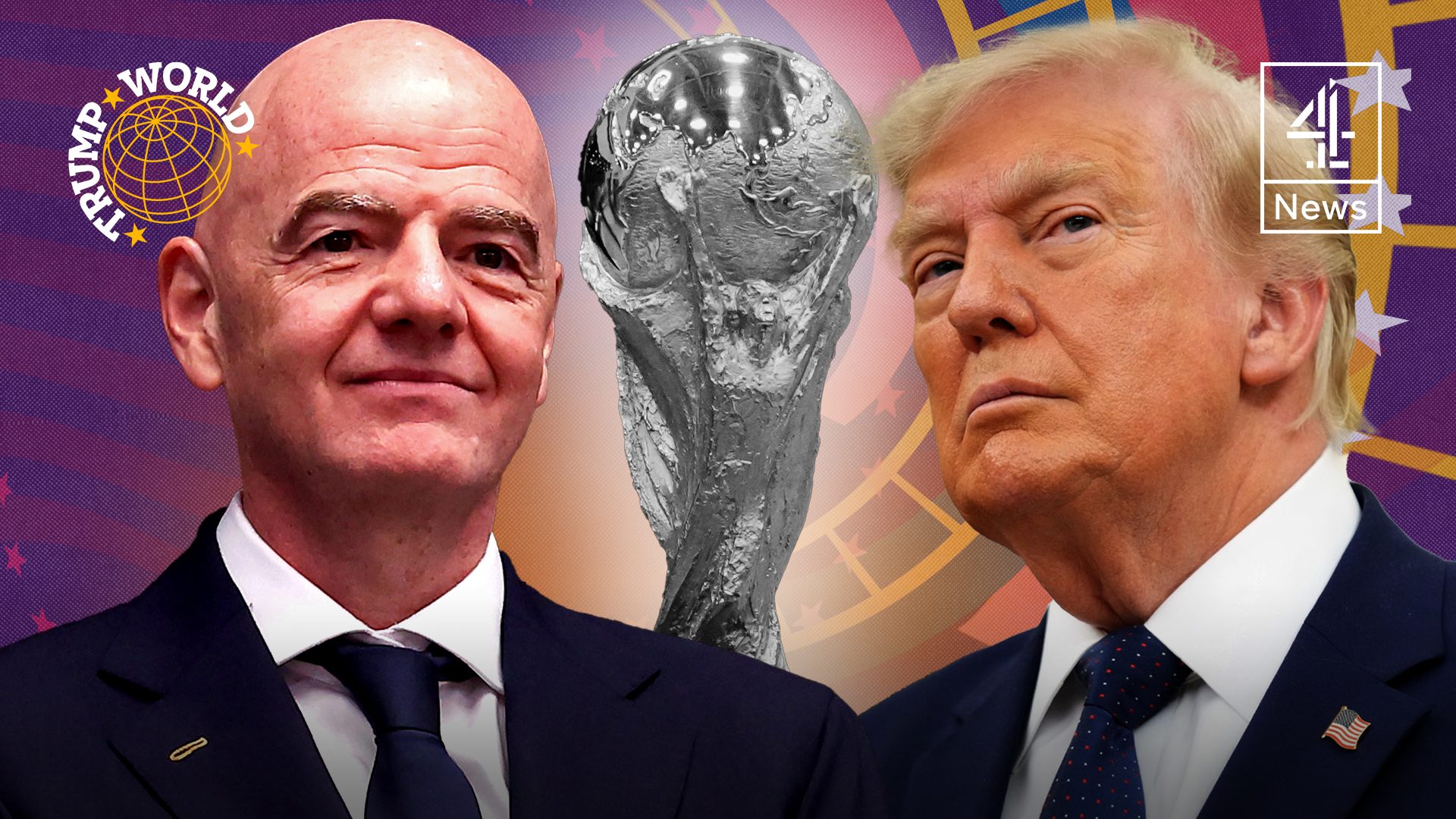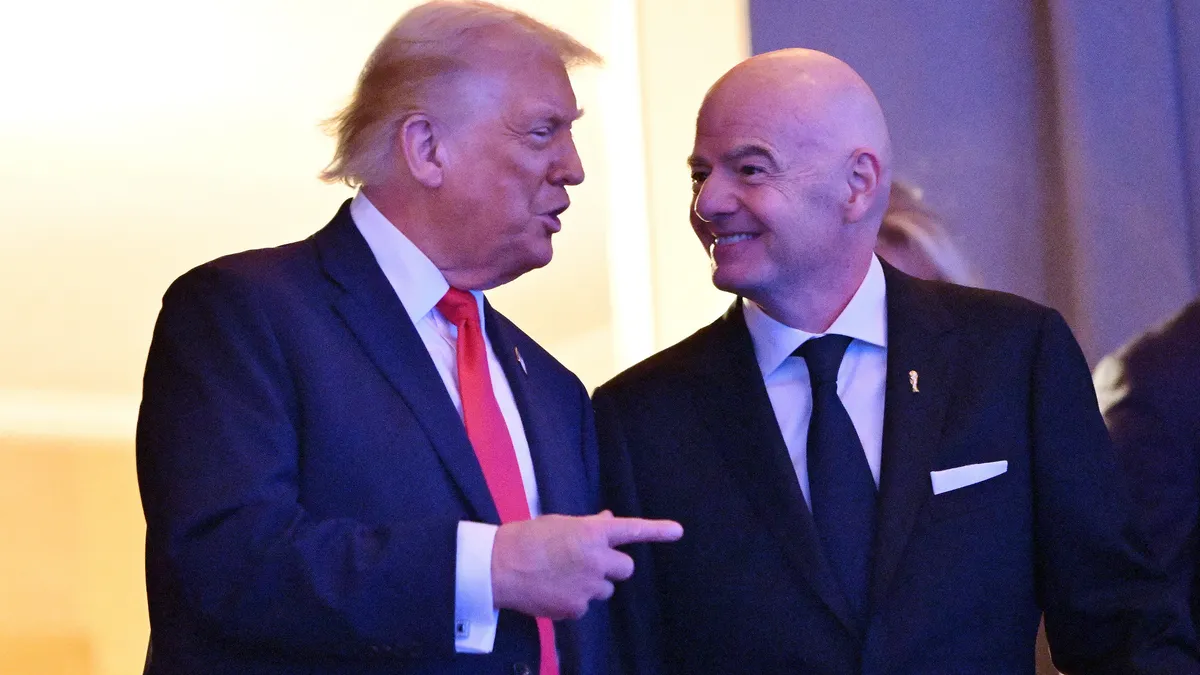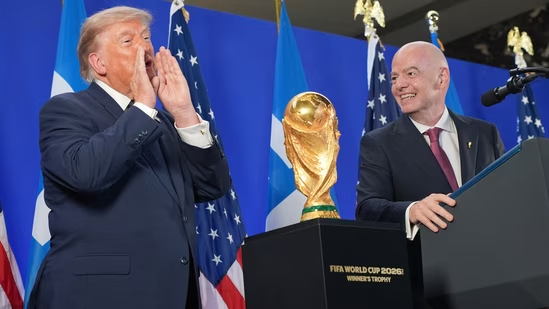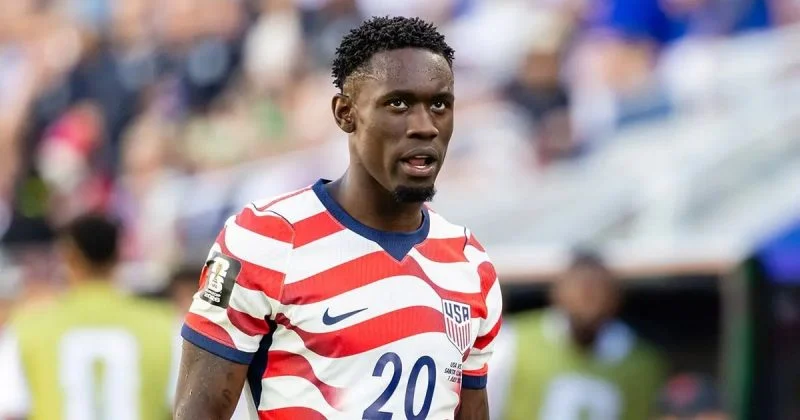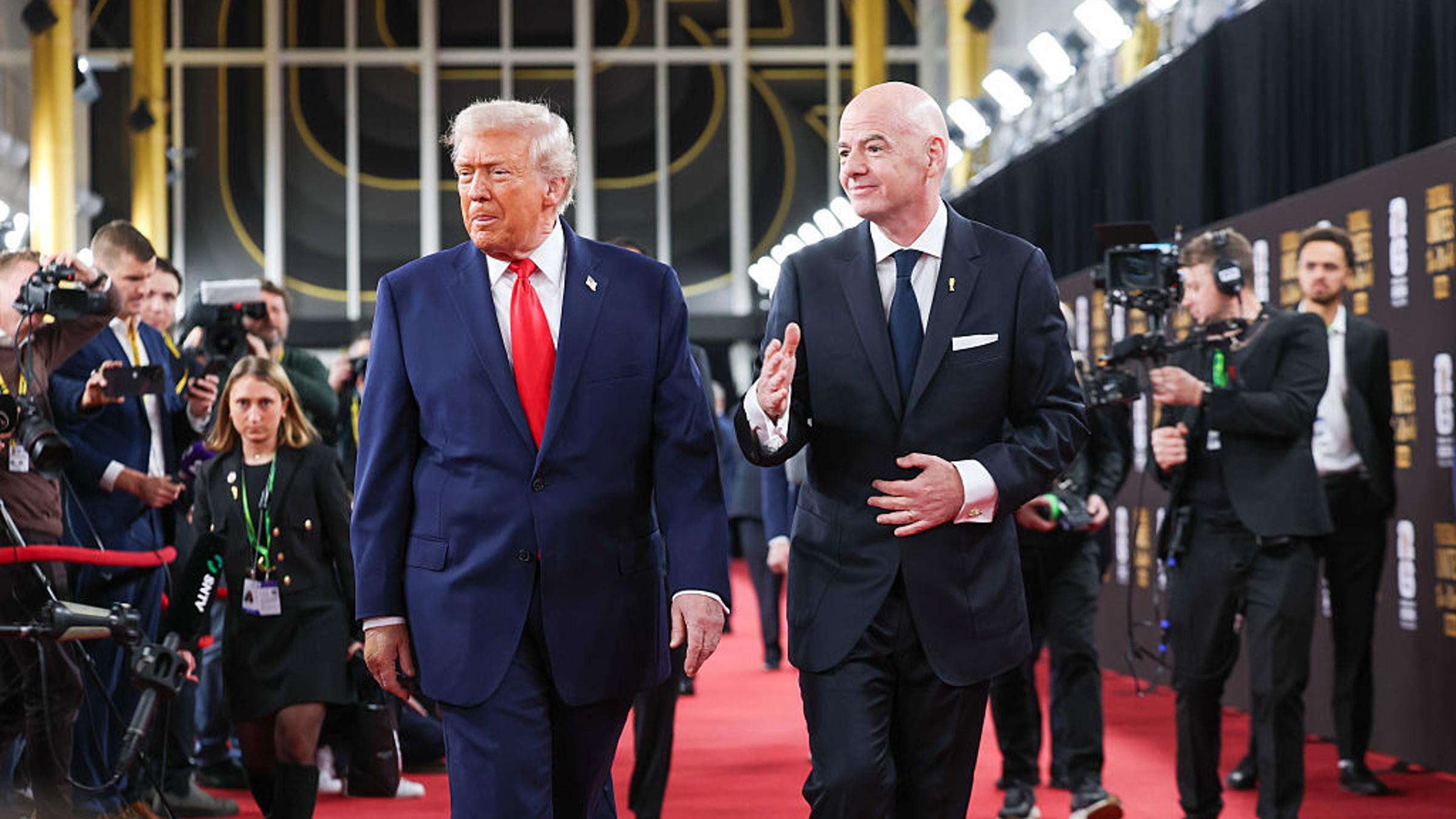
Several organizations, world leaders, soccer players, and coaches have expressed their disapproval after Trump called on FIFA President Gianni Infantino—who awarded him the inaugural FIFA Peace Prize in 2025—to review striker Folarin Balogun’s red card ban. It was ultimately suspended following Trump’s request. Balogun was given a red card after a video review determined that he stepped on an opponent’s ankle while chasing a ball against Bosnia and Herzegovina. The red card would have automatically put Balogun, the lead goal scorer for USMNT, out for an additional match, leaving the team absent a key player as they face off against Belgium on Monday night in the Round of 16. The stakes are especially high: The U.S. team hasn’t advanced past this round since defeating Mexico in 2002. "Yes, I asked for a review by FIFA,” Trump told reporters in the Oval Office on Monday. "It's one thing to penalize somebody for the game, but how do you penalize them for a game that hasn't been played yet? It's very unfair, you can't do that.” Trump went on to say that he didn’t think the original red card constituted a foul and called the referee who made the call “a little bit suspect.” After FIFA reversed the ban on Sunday, Trump praised the organization. “Thank you to FIFA for doing what was right, and reversing a great injustice!” Trump wrote in a Truth Social post. FIFA invoked a part of its disciplinary code that states its “judicial body may decide to fully or partially suspend the implementation of a disciplinary measure.” Suspending a disciplinary measure is extremely rare for FIFA. In another controversial case from 2025, Portuguese soccer-star Cristiano Ronaldo received a three-game ban after receiving a red card, but the organization suspended the two added games of the ban, allowing him to compete earlier. Widespread condemnationThe Union of European Football Associations, the governing body of soccer in Europe, said that FIFA’s decision “crossed a red line,” and expressed its “disbelief at such an unprecedented, incomprehensible and unjustifiable decision.”“When the certainty of rules is no longer guaranteed by its guardians, the integrity of the game is at stake and the credibility of a competition is undermined,” the organization wrote in a statement Monday. The Royal Belgian Football Association (RBFA) also released a statement saying it was “astonished” by the decision and was “investigating all potential options.” The RBFA then issued a second response, explaining that FIFA “refused to respond to the RBFA’s legitimate requests” to review the decision. “Regardless of the sporting outcome of this match, the RBFA is deeply concerned by the course of events and will continue to fight in the coming hours, days and months in defence of the fundamental principles of ethics, fair competition, and the interests of football as a whole,” the organization wrote. Belgium’s coach, Rudi Garcia, compared the FIFA decision to an April Fool’s Day joke, and pointed to his federation’s statement.Belgium’s Foreign Minister Maxime Prévot also reacted to FIFA’s decision. “As a former football referee, I have always been committed to upholding the rules and ensuring decisions are fair. This decision clearly raises many questions,” Prévot told POLITICO in a statement.The European Commissioner for Sport Glenn Micallef criticized both the suspension and the political interference, calling it “the wrong decision.”“Decisions on sporting rules and sporting matters belong to sporting bodies, not politicians,” Micallef wrote in a post on X. “Influencing sporting decisions would undermine the autonomy of sport.”Even United Kingdom Prime Minister Keir Starmer commented on the controversial suspension.Starmer’s official spokesperson, when asked about FIFA’s decision, said: “Those decisions are a matter for the football World Cup governing body and should stay that way, and we are clear in that position.”“The Prime Minister supports the integrity of competition in all sports,” he added.The U.S. team celebrated FIFA’s choice to allow Balogun to play in Monday’s match against Belgium, but opposed political influence in sports.“Everyone that really loves the sport and trusts ethics and integrity, I think we celebrate all that decision,” head coach Mauricio Pochettino said, adding that his team was “punished” after Balogun was ejected from the game and the team played with a man down in the round of 32. He said that “99.9% of people agree there was an unfair red card.”Those in agreement include Secretary of State Marco Rubio, who said last week that the U.S. “got screwed over with that red card” and called for an “appeal process” to the decision. According to FIFA’s disciplinary code, “Decisions taken by the referee on the field of play are final and may not be reviewed by the FIFA judicial bodies.” The consequences of those decisions, however, including suspensions, may be modified under Article 27, which FIFA cited in reversing Balogun's ban. While national federations typically handle disciplinary matters with FIFA, there is no public evidence that a formal request to suspend Balogun's automatic one-match ban was submitted before Trump's intervention.When asked about Trump’s impact on the outcome, Pochettino said: “No, we cannot mix that. We cannot mix that.” Trump similarly downplayed his influence on Monday while addressing reporters in the Oval Office, saying of Infantino, “I didn’t tell him what to do. I can’t tell him what to do.”Infantino issued a statement Monday saying that he informed Trump on their call that FIFA disciplinary bodies were responsible for any decision. “FIFA’s judicial bodies are independent,” Infantino said, noting that he “always” respects their authority. “They operate autonomously, apply the FIFA Disciplinary Code, and decide cases based on the applicable regulations and the specific facts before them.”The U.S. Soccer Federation approved of the decision, issuing a statement in which it said, “We accept the decision of the Disciplinary Committee and are pleased that Folarin Balogun is eligible to compete tomorrow.”
Trump's FIFA Intervention Draws Global Backlash
President Donald Trump's call to FIFA President Gianni Infantino preceded FIFA's decision to reverse a red card ban for USMNT striker Folarin Balogun, allowing him to play against Belgium. The move has drawn widespread criticism.
959 words~4 min read