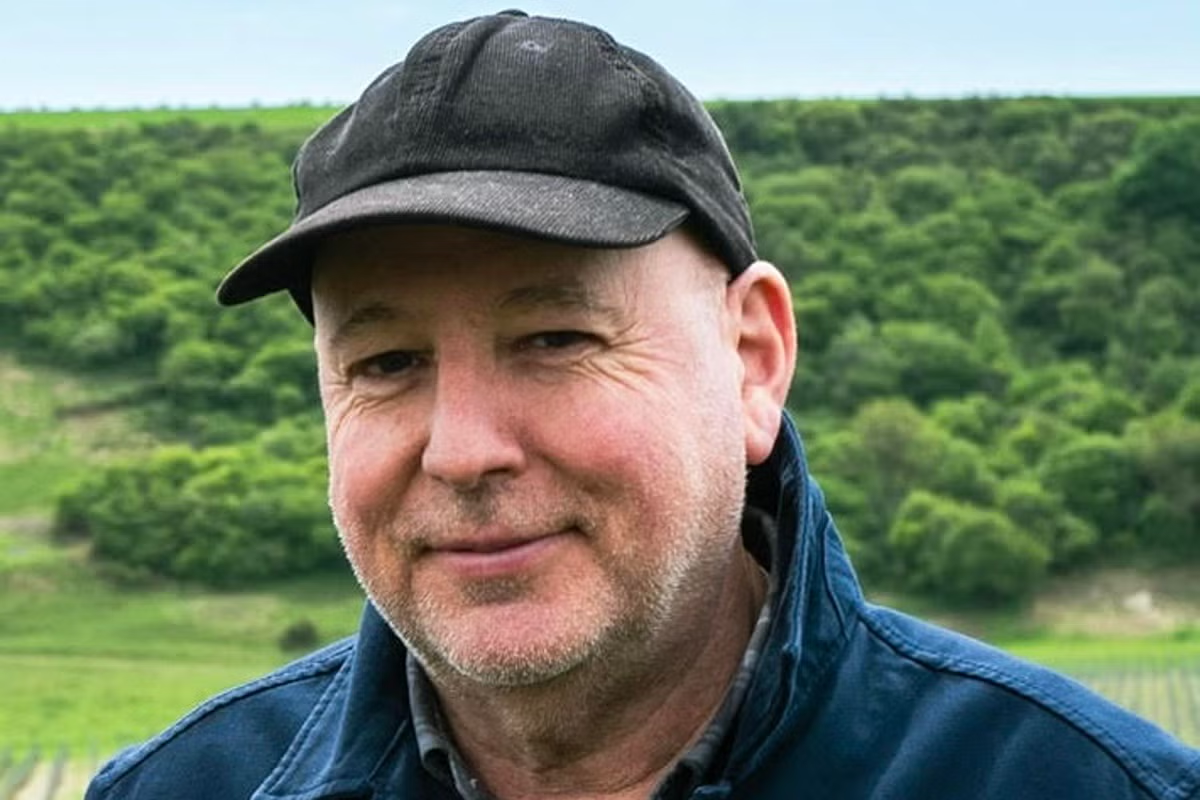
Adrian Black remembers when he got the news from the neurologist: “We definitely think there's something wrong with your brain,” the specialist said. It was 2022, and Black, who worked as a mediator in Brighton in the U.K., had been to doctors for unusual fatigue, brain fog, and a peculiar stutter that had crept into his speech. In the end, he was diagnosed with Long Covid, the umbrella diagnosis for symptoms that arise or persist long after an initial Covid infection and that has affected hundreds of millions worldwide.
There is no lab test for Long Covid yet, nor are there widely accepted treatments. A small clinical trial published July 1 in JAMA Network Open explores whether cognitive rehabilitation, a technique used to help people recover from strokes and other neurological injuries, can help Long Covid patients—like Black, who was a participant in the trial—with some of their symptoms. Although the treatment didn’t affect people’s scores on cognitive tests, the team found that it positively affected their ability to achieve their goals.
What is cognitive rehabilitation?
Cognitive rehabilitation therapy involves learning new strategies for achieving tasks, says Martina Vanova, a researcher at Kingston University London and lead author of the new paper. For people with Long Covid symptoms that include having difficulty completing tasks—like cooking dinner, for instance—that can mean dividing them up into small chunks, taking frequent short breaks, and narrating each step to themselves as they go, a technique called “self instruction” that can help minimize distraction.