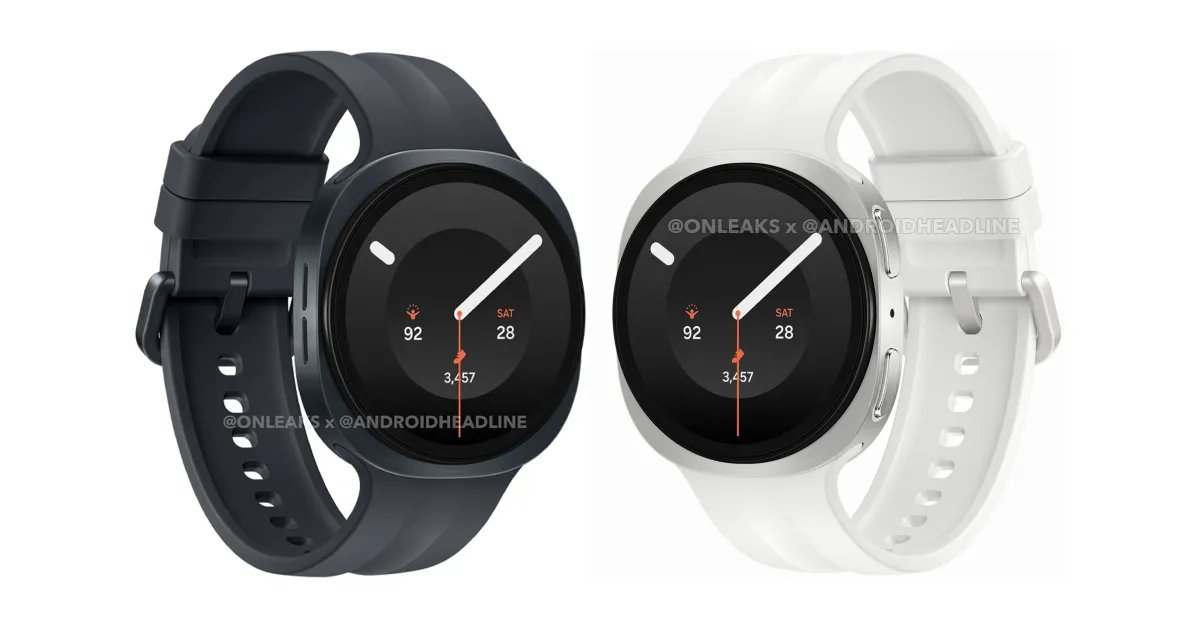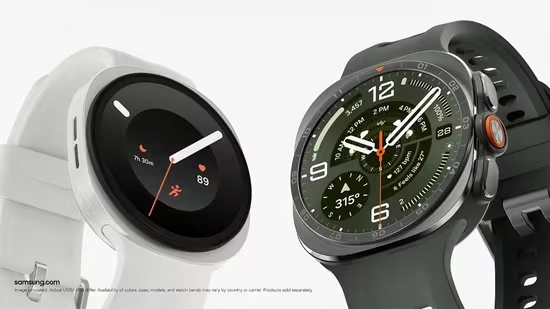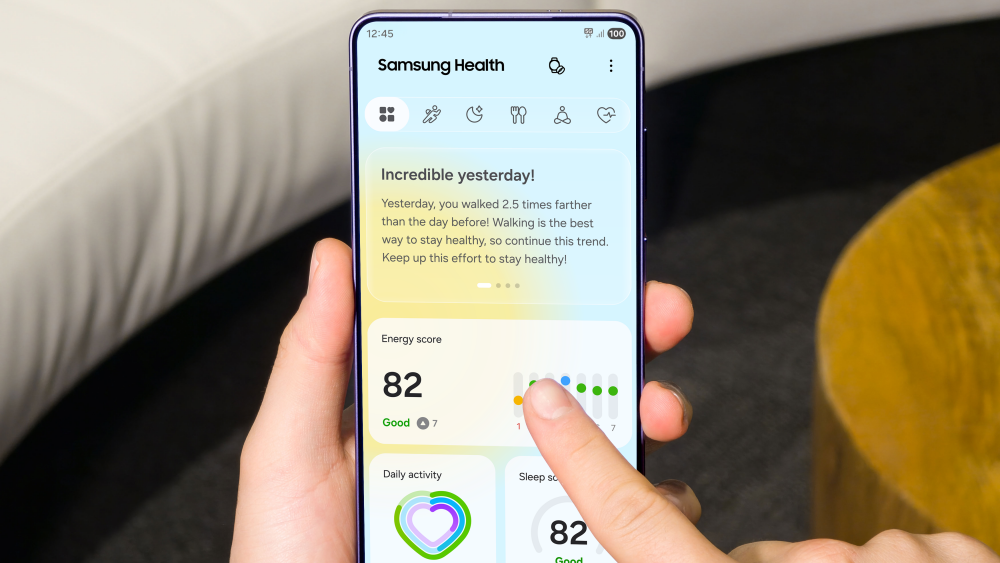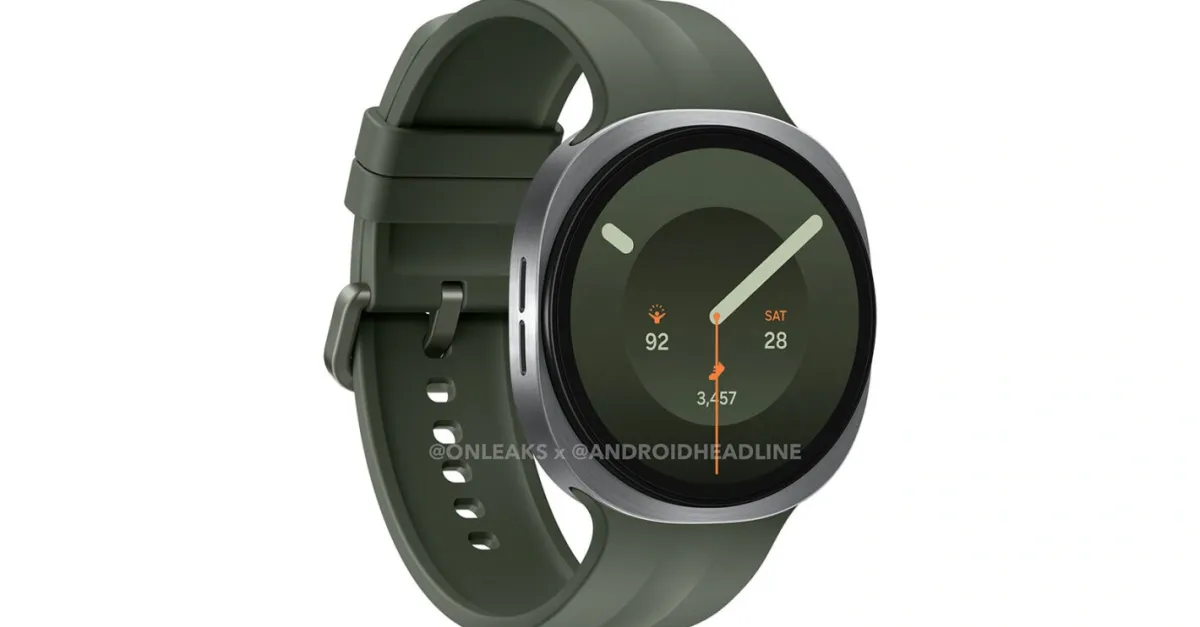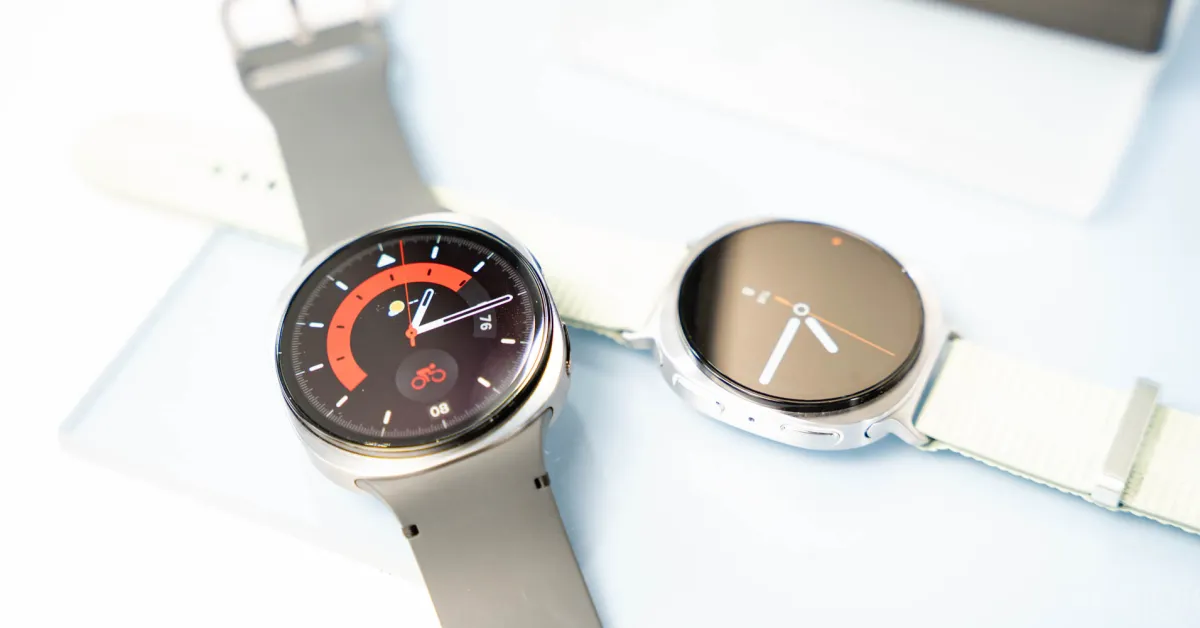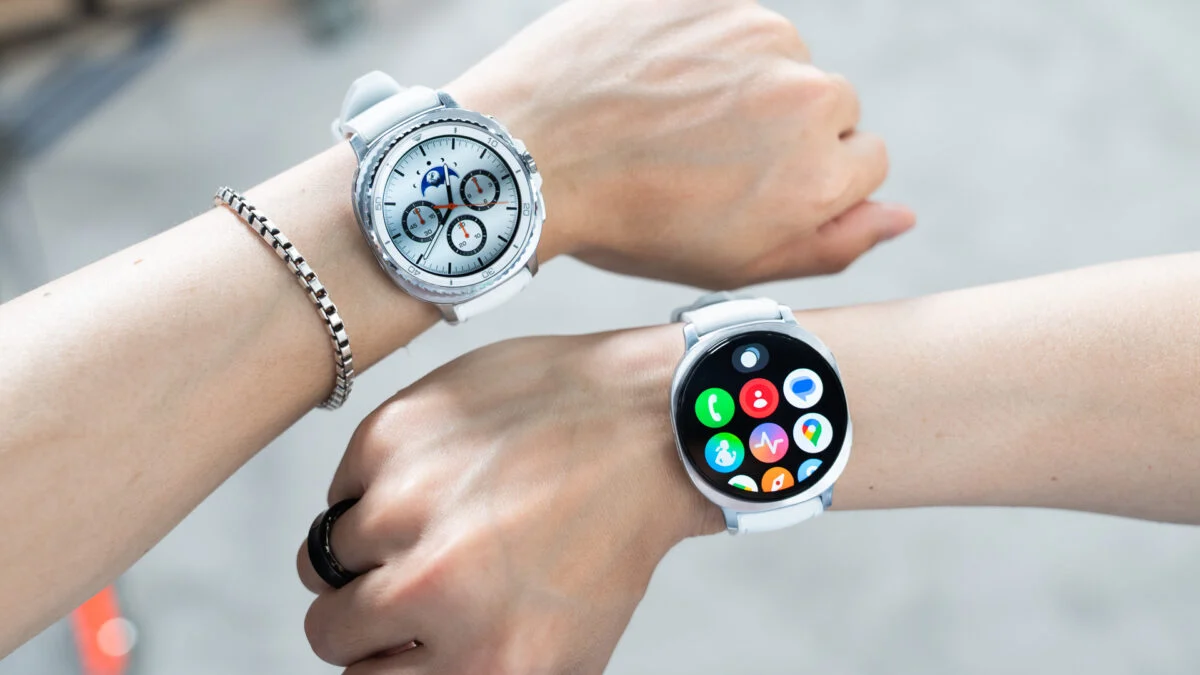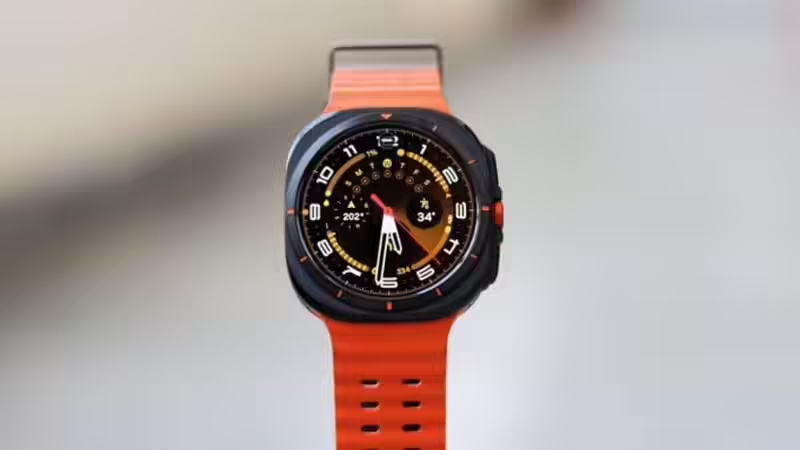
Photo credit: X/@SamMobilesSamsung’s next Galaxy Watch is expected to arrive with the company’s next foldables later this month, but the strongest evidence so far points to a health and software update rather than a dramatic redesign. Samsung has already confirmed that its next Galaxy Watch will introduce new AI-based health insights, including overnight “Vitals”, a Heart Health Score, Daily Cardio Load, Fitness Index and Hearing Health. Leaks identify that watch as the Galaxy Watch 9 and suggest a familiar body, modest visual refinements and new One UI 9 Watch faces. The important correction is the processor: Qualcomm has confirmed that a next-generation Galaxy Watch will use Snapdragon Wear Elite, but model-specific leaks suggest the chip may be reserved for the Galaxy Watch Ultra 2, while the standard Watch 9 could retain Samsung’s Exynos W1000.That makes the Galaxy Watch 9 a more interesting watch than the early leak chatter implied. The hardware may barely move. The job of the watch could change. Samsung is trying to take a wrist full of raw readings and turn it into a daily account of sleep, training load, recovery, activity and possible deviation from the wearer’s normal baseline. That is useful when the advice is clear, limited and grounded in a person’s own patterns. It becomes less useful when a wellness score is mistaken for a diagnosis.Samsung has been explicit on the boundary: its new health features are for wellness, not diagnosis or treatment, and some require enough data over time before personalised results appear. That caveat should sit near every Watch 9 health claim, not disappear beneath the phrase “AI-powered”.Key takeawaysSamsung has confirmed new health features for its upcoming Galaxy Watch, though it has not formally named the Galaxy Watch 9 in that announcement.The central upgrade is expected to be a move from passive measurement to health guidance: Vitals, Heart Health Score, Daily Cardio Load, Fitness Index and Hearing Health.Snapdragon Wear Elite is not confirmed for the standard Galaxy Watch 9. Qualcomm says a next-generation Galaxy Watch will use it; current model-specific leaks point instead to the Galaxy Watch Ultra 2, with the Watch 9 potentially retaining Exynos W1000.The correct likely software name is One UI 9 Watch, following the Galaxy Watch8’s One UI 8 Watch naming.Leaked images suggest a near-identical design, with a new case finish, revised band and subtler brushed-metal treatment rather than a new shape.Samsung has confirmed the health direction, not the Galaxy Watch 9 specification sheetThe most useful evidence comes from Samsung itself. In June, Samsung announced a major Samsung Health update and said the new features would first appear on its upcoming Galaxy Watch. The company’s stated aim is to move users from passive tracking to practical guidance. That is a meaningful shift in emphasis. Step counts, heart-rate charts and sleep duration are useful data points, but they still leave users to decide what the numbers mean. Samsung is trying to provide a summary before the wearer opens several separate menus and starts making guesses.The update includes Vitals, which analyses five overnight readings against an individual’s resting baseline: heart rate, heart-rate variability, respiratory rate, skin temperature and blood oxygen. Samsung says the feature will flag meaningful deviations, with the aim of avoiding repeated low-value alerts. That is closer to a recovery and illness-awareness tool than a new medical sensor.The company is also introducing a Heart Health Score, which combines elements previously presented through Vascular Load with sleep, stress, activity and body-composition data. Daily Cardio Load is designed to estimate accumulated cardiovascular strain from aerobic exercise and suggest training and rest targets. Fitness Index will use heart rate, VO₂ max and daily steps to compare a wearer’s results with peers and identify areas for improvement. These are not minor watch-face additions. They are Samsung’s attempt to build a health product around interpretation.What AI changes, and what it does notThe draft’s claim that the Galaxy Watch 9 will “use AI” needs tightening.Samsung has confirmed that Samsung Health will connect Galaxy Watch data with AI-based insights. It has not explained the exact models involved, where each calculation runs, how much processing happens on the watch versus the connected phone or cloud, or whether every health feature will be available in every country.The practical implication is simpler than the marketing language.AI may help the watch recognise that a slightly elevated overnight heart rate is normal after a late workout but worth noticing when it appears alongside disrupted sleep, respiratory changes and a change in skin temperature. It may identify a pattern of training strain before a runner turns one hard session into a poor week. It may make the Health app less like a database and more like a daily check-in.That is useful only if the recommendation is specific enough to act on.“Your recovery looks poor today” is a vague notification. “Your overnight readings have moved away from your recent baseline after three high-load training days, so take an easier session” is more useful. Samsung’s announcement points towards the second type of experience, though real-world quality will depend on how the feature behaves outside a product demonstration.It is also worth being blunt about the limits. A smartwatch cannot diagnose heart disease, sleep disorders, infection or overtraining. Samsung describes the new tools as wellness features and tells users concerned about their health to consult a medical professional. A better score is not medical clearance. A poor score is not a diagnosis.Snapdragon Wear Elite: the claim needs a correctionThe draft’s strongest factual risk was the statement that the Galaxy Watch 9 would use Qualcomm’s Snapdragon Wear Elite chipset.Qualcomm has publicly announced Snapdragon Wear Elite, a 3nm wearable platform with a dedicated Hexagon NPU, a lower-power AI engine and support for features including on-device AI workloads, voice functions, location services and newer connectivity options. Samsung executive InKang Song said the platform would be integrated into a “next-generation Galaxy Watch”.That does not confirm the chip for the standard Galaxy Watch 9. Current model-specific reports point to a split: the Galaxy Watch Ultra 2 may receive Snapdragon Wear Elite, while the Galaxy Watch 9 may continue with Samsung’s Exynos W1000. Those reports are still leaks, but they are more precise than a generic claim that every next-generation Galaxy Watch will move to Qualcomm silicon.That would be a logical product division. The Galaxy Watch8 already uses Exynos W1000, Samsung’s 3nm wearable processor with one Cortex-A78 performance core and four Cortex-A55 efficiency cores. Samsung says it enables faster app launches, smoother switching between apps and better power efficiency through its small package and LPDDR5 memory. It is not an outdated chip in need of emergency replacement.A standard Galaxy Watch 9 with the same processor would therefore not be a failure. It would be an admission that Samsung’s real upgrade sits in software, sensing and health interpretation rather than benchmark speed.The Snapdragon Wear Elite story may instead belong to the Ultra 2, where Samsung needs a clearer reason to charge more. That possibility should remain attributed until Samsung confirms the line-up.One UI 9 Watch could be the software storySamsung’s current Galaxy Watch8 runs One UI 8 Watch on Wear OS 6. The next version is expected to be called One UI 9 Watch, not “One UI Watch 9”.Leaked Galaxy Wearable app material points to refreshed watch faces, health panels, more personalised Tiles and a possible wrist-raise gesture for Gemini. The same leak mentions Trail Run, Trackback, Waypoints and Dive Mode, although some of those features may be aimed at the Galaxy Watch Ultra 2 rather than the standard Watch 9. None has been confirmed by Samsung as a Watch 9 feature.The watch-face story is more relevant than it sounds. A watch face decides what a person sees ten, twenty or fifty times a day. Samsung’s health push needs a better glanceable interface than a collection of colourful rings and tiny icons. The user should be able to see a trend, understand whether it is unusual and decide whether to do anything about it without digging through menus.That is where software polish earns its place.The current Watch8 already has a full-colour always-on AMOLED display, One UI 8 Watch and a strong sensor list including Samsung’s BioActive Sensor, temperature sensor, accelerometer, barometer, gyroscope, geomagnetic sensor and light sensor. The Watch 9 does not need to add every possible sensor. It needs to make the existing data more coherent.The design may barely change, and that is not automatically a problemLeaks suggest the Galaxy Watch 9 will retain the “circle on a square” design introduced with the Galaxy Watch8. The visible changes appear limited: a new case colour, revised default band and a softer brushed-metal appearance.That is an incremental update. Samsung is not hiding it.The Watch8 was already Samsung’s thin, modern take on a round smartwatch. Its 40mm and 44mm models used sapphire crystal, aluminium cases and 1.34-inch or 1.47-inch Super AMOLED displays. The design gave Samsung a clear visual identity without forcing buyers into the heavier Ultra format or the Classic’s rotating bezel.There is a sensible argument for keeping that shape. Wearables live on the body. A familiar case that sits comfortably through sleep, work and exercise matters more than a more theatrical redesign that makes the watch thicker or less stable during running. The better question is whether Samsung improves charging, battery endurance, strap comfort and sensor contact. Those details decide whether a person actually wears the watch overnight, which in turn decides whether the new health features have enough data to work well.There is no firm public Watch 9 battery specification yet. Claims of a major endurance breakthrough should be avoided until Samsung releases a product sheet.Why sleep and cardiovascular tracking are the centre of the upgradeSamsung’s new health features are built around an obvious problem. Most people do not have the time or expertise to read a week of heart-rate variability, sleep stages, step counts, activity minutes and training load, then decide whether their routine is helping or hurting.The Vitals feature begins with overnight signals because sleep is the closest thing a smartwatch has to a repeatable testing window. The body is relatively still. The device can compare a person’s heart rate, respiratory rate, oxygen level and temperature trends against their own baseline. Samsung says the watch will notify users when it sees meaningful deviation, rather than surfacing every small change.Heart Health Score takes a broader view. It is meant to bring sleep, stress, activity and body-composition information into one daily measure. The risk is that a single score can feel authoritative even when the underlying data is noisy. Samsung will need to show users which inputs affected the result and what they can realistically change. A score without explanation turns health into a leaderboard.Daily Cardio Load may be more practical for runners, cyclists and gym users. It measures accumulated strain and uses that to suggest a training target or recovery period. This is the kind of feature that can be genuinely useful when it stops a user from converting enthusiasm into fatigue. It is less useful when it gives vague encouragement after the fact. The implication is clear: Samsung wants the Galaxy Watch 9 to compete less on counting and more on coaching.The India question will be feature availability, not only priceSamsung has not announced the Galaxy Watch 9 in India, its price, its sizes or its health-feature availability. That is especially important because Samsung says feature availability, supported devices and rollout timing may vary by market and model.Indian buyers should also distinguish between features that work across compatible Android phones and features that are restricted to Samsung phones or markets. Samsung’s support material says general Samsung Health functions such as sleep, activity, heart rate, blood oxygen, stress tracking and Energy Score work with compatible Android devices, but ECG, irregular-heart-rhythm notifications and sleep-apnoea functions are restricted to Samsung phones.That does not make the Watch 9 a Samsung-phone-only product. It does mean the best health experience can be more limited on another Android brand.The purchase decision will come down to three questions:Does Samsung make the new health guidance available in India at launch?Does it work fully with the buyer’s existing Android phone?Is the watch comfortable enough to wear overnight, consistently, for several weeks?The third question sounds mundane. It is the one that makes the first two possible.Should Galaxy Watch8 owners upgrade?The early answer is: wait for Samsung’s final specification sheet.The case for upgrading from a Galaxy Watch6 or older model could be strong if the Watch9 keeps the Watch8’s lighter design while adding the new health guidance, better sensor interpretation and One UI 9 Watch improvements. The change may feel more meaningful than a small processor jump.The case for upgrading from a Galaxy Watch8 is less obvious.If the Watch9 retains the Exynos W1000, keeps the same broad design and delivers most of its value through software, Samsung must explain which new health features are exclusive to the Watch9 and which will reach older hardware through One UI 9 Watch or Samsung Health updates. Until it does, Watch8 owners should not assume that a new model number equals a new daily experience.Bottom lineSamsung’s next watch may look familiar because the company is spending its effort elsewhere.The Galaxy Watch 9 is shaping up as a health-interpreting smartwatch rather than a hardware spectacle. Samsung has already confirmed Vitals, Heart Health Score, Daily Cardio Load, Fitness Index and Hearing Health for its upcoming Galaxy Watch. Those features are more concrete than the leak-based claims around watch faces, Gemini gestures or a July launch date.The processor story remains split. Qualcomm’s Snapdragon Wear Elite is definitely heading to a next-generation Galaxy Watch, but the most detailed leaks place it in the Ultra 2, not necessarily the Watch9. The standard model may retain Exynos W1000 and rely on software to justify the upgrade.That is not a weak strategy. It is a gamble on judgment rather than novelty.Samsung is betting that a watch which tells users when to rest, train, sleep or pay attention can matter more than a watch that merely records what happened.FAQWhen will the Samsung Galaxy Watch 9 launch?Industry reporting points to a July 2026 launch alongside Samsung’s next foldables, with 22 July widely reported as the expected Unpacked date. Samsung has not yet issued a full official Watch9 launch announcement.What are the biggest expected Galaxy Watch 9 upgrades?Samsung has confirmed new health features for its upcoming Galaxy Watch, including Vitals, Heart Health Score, Daily Cardio Load, Fitness Index and Hearing Health. Leaks also point to One UI 9 Watch, new watch faces and minor design changes.Will the Galaxy Watch 9 use Snapdragon Wear Elite?Qualcomm has confirmed that a next-generation Galaxy Watch will use Snapdragon Wear Elite. Current model-specific leaks suggest the Galaxy Watch Ultra 2 may receive the chip, while the standard Galaxy Watch 9 could retain Samsung’s Exynos W1000. Samsung has not confirmed the processor split.Will the Galaxy Watch 9 have Galaxy AI health features?Samsung says its new Samsung Health update uses AI-based insights to interpret Galaxy Watch data and that the features will first arrive on an upcoming Galaxy Watch. The company has not publicly detailed every model’s AI processing method or feature availability.Can the Galaxy Watch 9 diagnose a medical condition?No. Samsung says the new health features are intended for wellness only, not diagnosis or treatment. Users concerned about a health issue should speak with a medical professional.Will the Galaxy Watch 9 work with non-Samsung Android phones?Many Samsung Health features work with compatible Android phones, but Samsung says ECG, irregular-heart-rhythm notifications and sleep-apnoea features are limited to Samsung phones. Availability also varies by market and device.end of article
Samsung Galaxy Watch 9 leak: new health tools may matter more than the design
Samsung is preparing to unveil the Galaxy Watch 9, featuring enhanced AI-driven health insights and software updates designed to offer users actionable guidance from their health data. While the standard model may preserve its existing processor, the Ultra 2 version will boast a new chip. Expect only slight design tweaks, alongside fresh watch faces, as Samsung highlights that these innovations prioritize wellness rather than medical diagnostics.
2,586 words~12 min read