Compared to previous years, the increase has been subdued
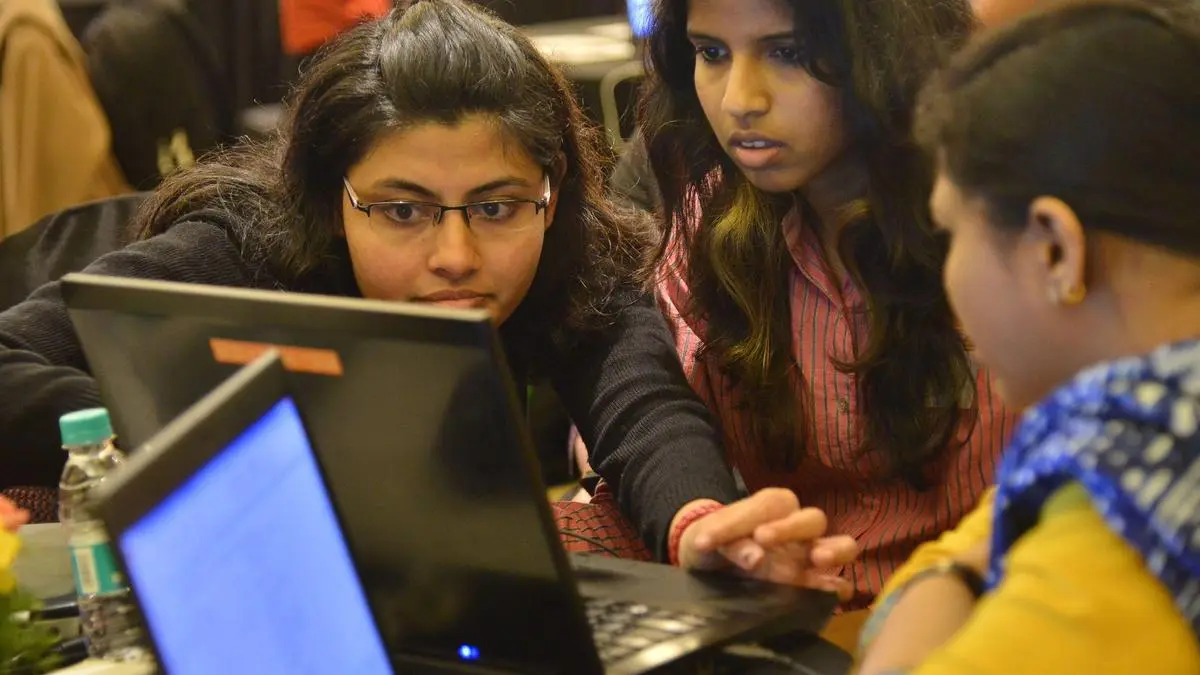
Despite AI-led workforce disruptions, Indian IT’s diversity progress seems to be on track. Major Indian IT service firms reported a growth in the share of female employees as a per cent of total workforce, as indicated by data from company annual reports.Speaking to businessline, experts suggest that the increase has come from the bottom of the IT talent pyramid driven by improved availability of women talent at the fresher level. However, compared to previous years, the increase has been subdued given the fact that much of the mandate is now around dealing with the AI-related disruptions, with DEI goals taking a backseat, they add.At Infosys, women associates accounted for 38.1 per cent of the workforce in FY26, as against 37.7 per cent in FY25. Similarly LTM reported a 40 basis point increase in FY26 at 30.5 per cent female employees. Wipro showed even better growth with the share of women associates going up from 36.6 per cent to 37.3 per cent - an uptick of 70 basis points. For TCS, the share remained flat at 35.3 per cent.Natural progressionGaurav Vasu, Founder and CEO, UnearthInsight attributes the uptick to a natural progression of diversity-focused hiring especially at the fresher level. “IT services remains a very bottom heavy industry. Though fresher hiring has been lower than previous years, even a small 3-4 percentage point increase in the share of women among these new hires can have a much larger impact on the overall gender mix,” he said. He added that the impact of the large-scale restructuring at the middle management level has been limited, noting that change at these levels will not significantly alter the larger gender ratio.The AI-driven increase in demand for some roles like data and operations and cloud migration could be playing a role as these two businesses might employ relatively more women, helping lift diversity ratios, Vasu added. Sanketh Chengappa, Director and Head of Business, Professional Staffing, Adecco India, says that the rise of women IT professionals continues to be slower at senior leadership levels.“Women often make up a large share of entry-level hires (around 35-45 per cent), but their representation gradually declines at middle-management and senior leadership levels. Since these positions are typically filled by employees with 10-15 years of experience, the changes in entry-level hiring will take time to be reflected at the top,” he said. Looking ahead, in the short-term, Vasu predicts that the focus for major IT firms will revolve around navigating the disruptive impact of AI, and the aggressive push for diversity hiring is expected to slow.Biswajeet Mahapatra, Principal Analyst, Forrester suggests that achieving gender parity depends not only on recruitment but also on career progression, retention, leadership development, workplace flexibility, and the ability to keep women in the workforce through mid-career transitions.Published on July 6, 2026