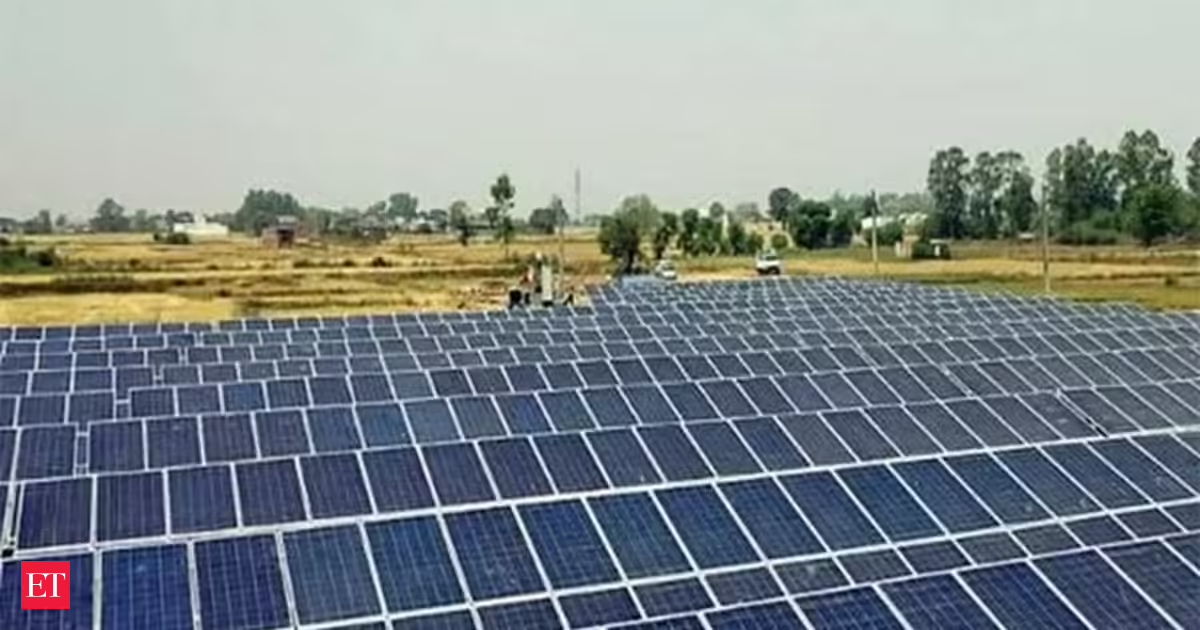
Power demand in India is expected to rise by about 6% every year over the next four-five years, with growth supported by renewable energy capacity additions, brokerage Centrum Institutional Research said in a report on the Indian power sector.“Power demand is expected to grow at 6% pa as we expect renewable capacity additions to continue in the range 45-50 GW per year over next 4-5 years,” Indian media quoted the report as saying.During April and May, the first two months of the 2026/2027 fiscal year, India installed 6.8 gigawatts (GW) of solar capacity and another 712 megawatts (MW) of wind power capacity, according to the report.These capacity additions should keep India on track to install as much as 45-50 GW of renewable energy capacity in the full 2026/2027 fiscal year through March 2027.“Industry growth remains underpinned by India's target of achieving approx. 500 GW of non-fossil fuel capacity by 2030, rising power demand, favourable regulatory support, and increasing adoption of BESS solutions,” Centrum Institutional Research said.India’s solar capacity is set to surge by 22% each year by 2035 as the data center boom will drive increased power consumption, a report by Nuvama showed last month.India expects to nearly quadruple its solar power capacity and triple wind power-generating assets within ten years, according to the new Generation Adequacy Plan published by the country’s Central Electricity Authority earlier this year.In 2025, India boasted that it was five years ahead of schedule when it achieved its target of having 50% of its installed electricity capacity coming from non-fossil fuel sources.However, India’s electricity grid is expanding at a slower pace than the boom in renewable energy installations, leading to an increased share of clean energy curtailments and threatening to slow the solar and wind boom in the world’s most populous country.By Charles Kennedy for Oilprice.comMore Top Reads From Oilprice.comJapan's Top Oil Refiner Eyes a Post-Hormuz FutureOPEC Oil Production Jumps, But Gulf Supply Is Still Far From NormalHormuz Tanker Traffic Slowly Recovers Despite Persistent Risks
India's Power Demand Set to Grow 6% a Year Through 2030 | OilPrice.com
India's power demand is set to grow 6% a year through 2030, driven by strong renewable capacity additions, a new brokerage report says.
330 words~2 min read