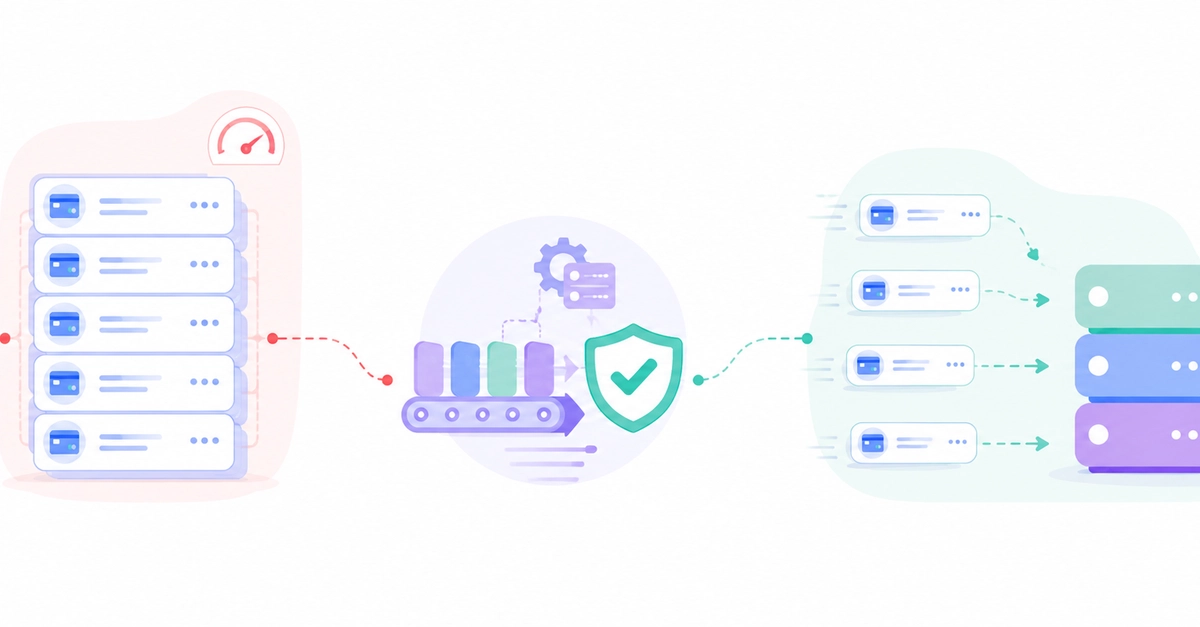
An ecommerce platform lives or dies by what happens during its busiest moments. A flash sale, a holiday rush, a viral product moment, these are exactly when traffic spikes hardest and exactly when a poorly structured backend tends to fall apart. Checkout pages slow down, stock counts get confused, orders fail silently. NestJS has become a common choice for ecommerce platforms precisely because its architecture gives teams the tools to handle this kind of pressure deliberately, rather than hoping the system holds up.
Why ecommerce traffic is uniquely difficult
Most applications have fairly steady, predictable traffic. Ecommerce does not. A single marketing email or a product going viral can send traffic up tenfold within minutes. The backend needs to handle that surge without slowing down for everyone, without letting two customers buy the same last item, and without losing track of any order in the process. This is a very different problem from simply having a fast server, it is about how the system behaves under sudden, uneven pressure.
Breaking the system into microservices
Rather than one large application handling everything, catalog browsing, checkout, payment, notifications, all in a single process, NestJS supports splitting these into separate microservices, each responsible for one part of the system. NestJS has built in support for this, with different transport layers depending on what a system needs.