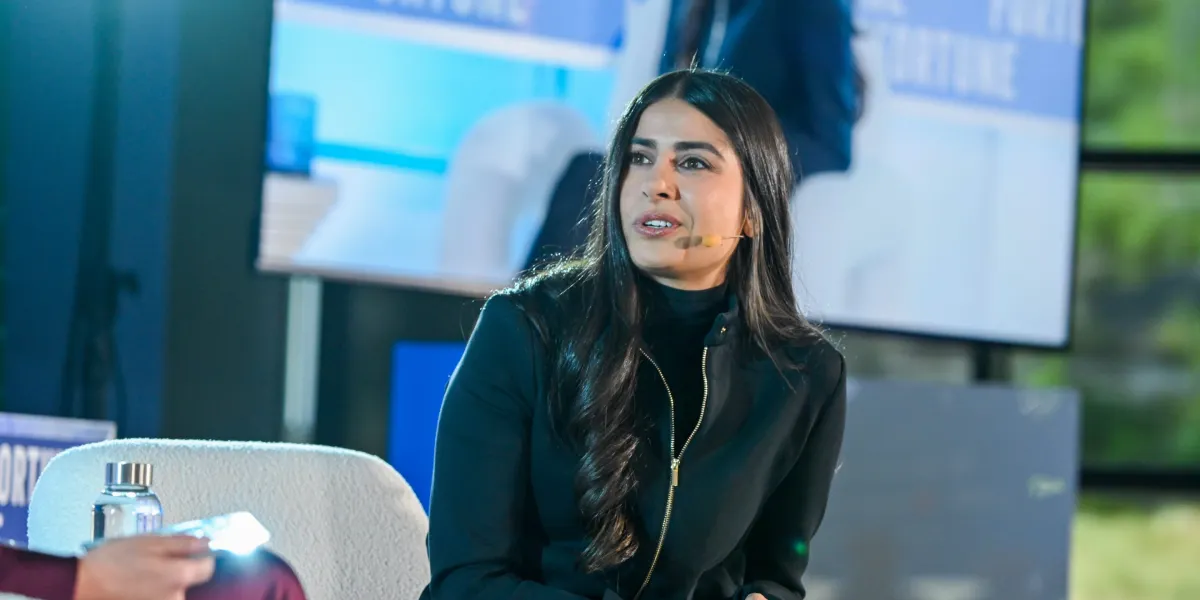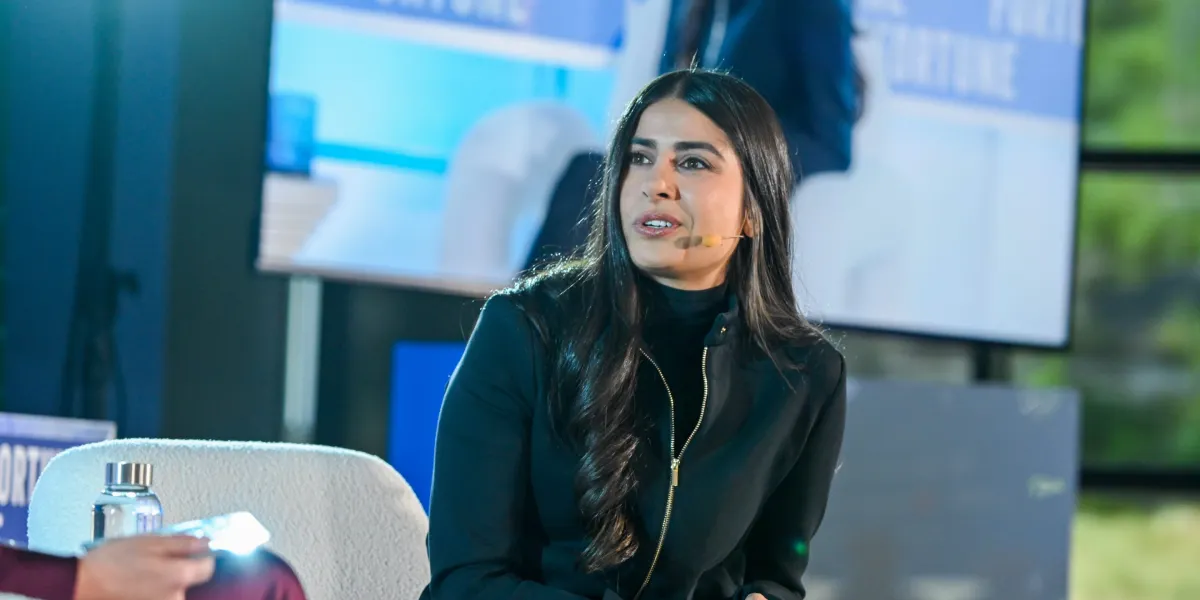
Microsoft confirmed on 6 July 2026 that its Xbox division will cut approximately 3,200 jobs, around 20 per cent of its gaming workforce, across the current fiscal year, and divest five game studios, in what new Xbox CEO Asha Sharma called the most significant restructure in Xbox history. About 1,600 of those roles went on the day of the announcement, per Sharma's memo, which she posted publicly on X. The studios leaving are Compulsion Games, Double Fine, Ninja Theory, Undead Labs and, pending a separate review, Arkane. This is the third major wave of gaming cuts since the Activision Blizzard deal closed, and by the company's own account, the most decisive.Strip away the corporate language and the story is brutally simple. Microsoft spent $68.7 billion to become the biggest force in gaming, then discovered the machine it had bought lost money faster than it made it, and is now dismantling large parts of it to force the numbers to work. The cuts are the visible wreckage. The economics underneath are the actual news, and the question they raise — whether you can shrink your way back to a business built on creative risk — is one no spreadsheet answers.A note on sourcing, because this broke within hours of writing. The central facts here come from Sharma's own public memo. This is a fast-moving story on its first day; buyer identities, the fate of Arkane and the final headcount remain unsettled, and any specific should be re-checked before it hardens into fact.Key TakeawaysXbox will cut approximately 3,200 jobs across fiscal 2027, around 20 per cent of the division, with about 1,600 going immediately, per CEO Asha Sharma's public memo (6 July 2026).Five studios are leaving: Compulsion Games and Double Fine return to independence with their IP; Ninja Theory and Undead Labs are sold to undisclosed buyers; Arkane faces a separate review under French labour law.Sharma stated the division has been operating at margins 3-10x lower than comparable businesses, with studios losing 64 cents for every dollar invested, per the memo as reported by GeekWire.Reporting places Xbox's profitability margin near 3 per cent for the year, against a roughly 30 per cent bar Microsoft sets for major divisions, per Tech Times and others — verify against Microsoft's own filings.The cuts sit inside a wider Microsoft layoff of about 4,800 roles, and a company-wide pivot of capital toward AI, per GeekWire and CNBC.Sharma confirmed no already-announced first-party games are cancelled as part of the reductions.What exactly did Microsoft announce?Begin with the hard figures, because the scale is the point. In a memo to staff that she then posted on X, Sharma announced a reduction of approximately 3,200 roles throughout the fiscal year running to 30 June 2027, with about 1,600 of those eliminated on the day of the announcement, per multiple outlets including Variety and Windows Central. That figure represents roughly 20 per cent of the Xbox workforce, per a source cited by CNBC. It arrives inside a broader Microsoft cut of around 4,800 jobs, just over 2 per cent of the company's global headcount, per GeekWire, with the remainder falling across sales and consulting.The studio divestitures are the second, and arguably more consequential, half of the announcement, because they reshape what Microsoft owns rather than merely how many people it employs. Per Sharma's memo as reported by Variety, VGC and Kotaku: Compulsion Games, the maker of South of Midnight, and Double Fine, Tim Schafer's Psychonauts studio, will return to independence and keep their intellectual property, with Microsoft providing runway funding to help them find their footing. Ninja Theory, the Hellblade studio, and Undead Labs, behind State of Decay, have entered terms to be sold to as-yet-undisclosed buyers, with funding reported to be in place to complete Senua and State of Decay 3. And Arkane, the French studio behind Dishonored and the in-development Blade, is a separate and more delicate case: because of French labour law, its management is beginning a required consultation with its Works Council to review options, per VGC, with Windows Central reporting Microsoft is engaging the French government to try to keep the studio and Blade alive.Two clarifications matter for accuracy, and both come from Sharma directly. None of the five studios is being outright shut down in the announcement, per the memo; they are being sold or spun out, which is a materially different outcome from the closures that marked earlier rounds. And Sharma stated that none of the already-announced first-party games are being cancelled as part of these reductions, per VGC. The layoffs themselves, however, reach across the empire — Activision, Bethesda/ZeniMax, Blizzard, King, Mojang and Xbox Game Studios all absorb cuts of varying size, per the memo.Why is Microsoft doing this now?Because the internal maths, in Sharma's own telling, had become impossible to defend, and honesty requires quoting her framing rather than softening it.The memo's most striking claim is about profitability. Sharma wrote that the division has been operating at margins that are 3-10x lower than comparable platform and publishing businesses, and that its studios have been losing 64 cents for every dollar invested, per GeekWire's reporting of the memo. Set alongside that, several outlets including Tech Times place Xbox's profitability margin near 3 per cent for the fiscal year, against the roughly 30 per cent Microsoft is said to require of its major divisions — figures worth verifying against Microsoft's own financial filings, since margin definitions vary and the company reports gaming inside a larger segment. Sharma described the platform team as 40 per cent larger than at the start of this console generation even as the player base and playtime declined, per Game File. However the numbers are cut, the shape is consistent: a business spending like a giant while earning like a minnow.The pressure has three sources, each verifiable and each compounding. The first is the acquisition itself. Excluding the $68.7 billion Activision price, the division spent more than $20 billion over five years on content, platform and hardware, while annual revenue shrank, per Tech Times, with gaming revenue reported down 7 per cent in the most recent quarter to $5.3 billion. The second is hardware, in structural decline: Xbox console revenue has fallen for three straight financial years, per reporting summarising Microsoft's filings, and one quarter analysed by Midia Research showed hardware sales down 33 per cent year on year. The third is a cost shock from an unexpected direction. Component prices, especially storage and memory, have surged as the AI infrastructure boom devours supply, and Microsoft raised console prices by $100 to $150 worldwide in response — the same inflation now visible across the phone and laptop market.Layer over all of it the parent company's own priorities. Microsoft has been the worst performer among megacap tech stocks in 2026, reported down around 19 per cent for the year at one point and by as much as 30 per cent in other summaries, as investors worry that generative AI could erode its enterprise-software moat, per CNBC and GeekWire. A company pouring record capital into AI has little patience for a division losing money on creative bets, and gaming has not escaped the reallocation. The reset, in that light, is less a gaming decision than a Microsoft one.How does this fit Xbox's longer pattern of cuts?As the latest and largest verse of a song the division has been singing for two years, and the repetition is itself part of the story.Since the Activision Blizzard deal closed in October 2023, Microsoft Gaming has moved through successive waves of layoffs and closures, each described as an efficiency measure protecting strategic growth areas, per Tech Insider's timeline. Earlier rounds cut thousands and shuttered or cancelled projects, with games including Perfect Dark and Everwild reported among the casualties of prior culls. The through-line is a division repeatedly restructured, each cut framed as the one that would finally align spending with return. The 2026 reset is that logic taken to its most decisive form, under new leadership installed to carry it out.The leadership turnover is the clue that this round is different in kind rather than degree. Longtime Xbox chief Phil Spencer retired, and Sarah Bond departed, per Engadget, with Sharma taking over as Microsoft Gaming CEO in February 2026 and Xbox Game Studios head Craig Duncan also leaving on the day of the cuts. A new chief executive breaking publicly from a predecessor's strategy — divesting the smaller studios that the previous regime spent years acquiring — is a company admitting the earlier approach failed on its own terms. Sharma's framing that Xbox had grown into a fragmented organisation with too many independent teams is, read plainly, a critique of the empire-building that the Activision deal represented.What is Microsoft's actual strategy now?A smaller, more centralised, more profitable Xbox built around fewer, bigger bets — and a platform that increasingly treats the console itself as optional.The direction has two prongs, both traceable to Microsoft's own actions. The first is concentration. Sharma has signalled a focus on the division's largest franchises, with Minecraft and the Elder Scrolls series named as priorities, and Mojang and King now reporting directly to her, per Variety. One source told Variety that Xbox had been using Minecraft as a funding source for other studios while Mojang itself went under-resourced, a striking admission if accurate. The reset reallocates toward the franchises that reliably earn — Halo, Fallout, Forza, Call of Duty — and away from the smaller, critically admired studios whose games win awards rather than margins. That is a defensible business logic and a real creative loss at once, and the piece will not pretend otherwise.The second prong is the multiplatform, ecosystem-first pivot that predates this reset and now accelerates through it. Across 2026, Microsoft leaned into a platform-agnostic model — Game Pass, cloud streaming, and deep Windows integration, with a Play Anywhere catalogue reported to span more than 1,500 games and an Xbox mode for Windows 11 rolling out from April, per Windows News and other summaries. The logic, spelled out by Microsoft's own executives, is that the acquisition's financing pressure pushed games onto rival platforms to expand reach, turning former exclusives into revenue wherever players are. Reporting on a future console codenamed in coverage as Project Helix even describes a next Xbox designed to run games bought on Steam and GOG, built on AMD semi-custom silicon and targeted well after 2026 — details attributed to leaks and unconfirmed by Microsoft or AMD, so treat them as rumour rather than roadmap.The tension inside this strategy is real and named by the people best placed to see it. Laura Fryer, a founding member of the original Xbox team, has warned publicly that Microsoft's push toward Windows and services will collide with the costly economics of next-generation console hardware, questioning whether a subsidised box can survive alongside a PC-first strategy. That is the strategic knot at the centre of the reset: if the console no longer wins on volume, the case for platform exclusivity weakens, and the case for the console itself weakens with it.What should Microsoft do next?Here the piece turns from reporting to analysis, and honesty demands that the options be laid out as competing arguments rather than a single confident prescription, because informed observers genuinely disagree.The discipline case, which the market tends to reward. On this reading, the reset is overdue and correct. A division earning a 3 per cent margin inside a company that expects 30 per cent cannot continue as it was, and concentrating investment on franchises that earn while releasing smaller studios to independence — with their IP and some funding — is a cleaner outcome than the closures of prior rounds. Investors typically reward cost discipline in mature divisions, particularly when paired with an AI growth story, per Tech Insider's analysis. If Microsoft executes, it emerges with a leaner, multiplatform publishing business whose biggest franchises reach every screen, and whose profitability finally matches its scale. This is the strategy Microsoft has chosen, and it is not obviously wrong.The creative-erosion case, which the reset cannot easily answer. The counter-argument is that a brand built on enthusiasm for games cannot cut indefinitely without hollowing out the very creativity that makes the platform worth choosing, per the same analysis. The studios being released — Double Fine, Ninja Theory, Compulsion, Arkane — are precisely the teams that made the distinctive, critically acclaimed games that gave Xbox cultural credibility, even when they did not top margin charts. Strip those out and Xbox risks becoming an efficient publisher of a few huge franchises and little else, a portfolio optimised for this quarter and thinned of the surprises that build the next decade. The 64-cents-on-the-dollar figure describes creative investment, and creative investment in this industry has always looked wasteful right up until a hit redeems years of misses.The honest synthesis. The two cases are not fully reconcilable, and pretending otherwise would be the easy lie. What can be said is that the reset's success depends less on the cuts themselves than on what Microsoft does with the concentration they buy. If the freed capital and focus produce genuinely excellent flagship games — a Halo that lands, an Elder Scrolls that arrives, a Fable that delivers — the discipline case wins and the lost studios become a painful footnote. If the concentration merely funds safe sequels while the distinctive voices scatter to independence and thrive elsewhere, Microsoft will have proved that it paid $68.7 billion to learn it is better at buying studios than at keeping them worth buying. The reset is a bet that focus beats breadth. That bet is unproven, and the people who will settle it are the developers now leaving.What does this mean for players and for India?For players, the effects are genuinely mixed, and both halves deserve stating. The multiplatform shift means PlayStation and PC owners keep gaining access to games that were once Xbox-only, widening the audience, and the divested studios keep their identities and their games rather than vanishing. Against that, fewer studios inside Microsoft means less diversity of teams making games over time, and Game Pass subscribers have already absorbed a steep price increase — a roughly 50 per cent hike on the Ultimate tier, partially walked back in 2026, per Tech Insider — that signals the subscription generosity of the early Game Pass era is over.For India specifically, the direct stakes are modest but real, and I will not inflate them. India's console market has always been small relative to its enormous mobile-gaming base, so the hardware decline matters less here than the shift toward Game Pass, cloud streaming and PC, which align neatly with how India actually plays — on Windows machines and, increasingly, via cloud on modest hardware. A multiplatform, subscription-and-cloud Xbox is arguably better suited to the Indian market than the console-exclusive model ever was, provided pricing stays sane after the recent hikes. The larger resonance is about the industry India is trying to build: a reminder that even a $68.7 billion war chest does not guarantee that acquiring studios produces sustainable creative businesses, a lesson worth absorbing as India's own game-development ambitions grow.The clean conclusion is that Microsoft has chosen certainty of cost over certainty of creativity, and only its next few flagship games will reveal whether that was wisdom or a slow surrender of the thing that made Xbox matter. The reset fixes the spreadsheet today. Whether it fixes the business depends on work that has not shipped yet, by teams that just got smaller.Frequently Asked QuestionsHow many jobs is Xbox cutting in 2026?Approximately 3,200 roles across the fiscal year running to 30 June 2027, around 20 per cent of the Xbox workforce, with about 1,600 cut on the day of the 6 July 2026 announcement, per CEO Asha Sharma's public memo. This sits within a wider Microsoft reduction of about 4,800 jobs.Which Xbox studios are being sold or spun off?Five. Compulsion Games and Double Fine return to independence keeping their IP; Ninja Theory and Undead Labs are being sold to undisclosed buyers; and Arkane is under a separate review governed by French labour law. Per Sharma's memo, none is being outright closed in the announcement.Why is Microsoft cutting Xbox jobs after buying Activision Blizzard?Because the division's economics deteriorated. Sharma stated Xbox has run at margins far below comparable businesses, with studios losing 64 cents per dollar invested, amid declining hardware sales, a 7 per cent revenue drop last quarter, surging component costs and a company-wide pivot of capital toward AI.Are any Xbox games being cancelled?Per Sharma's memo, none of the already-announced first-party games are being cancelled as part of these reductions. The divested studios' games, including Senua and State of Decay 3, are reported to have funding to continue under new ownership.Is Xbox abandoning consoles?Microsoft has not said so, and has signalled future hardware. But the strategy increasingly centres on Game Pass, cloud streaming and Windows, treating games as available everywhere rather than locked to a console — a shift some former Xbox figures warn sits in tension with the economics of next-generation hardware.What does this mean for Game Pass subscribers?More former exclusives reaching more platforms, but a leaner slate of internal studios over time and higher prices after a roughly 50 per cent Ultimate-tier increase that was partially reversed in 2026. Verify current Game Pass pricing directly, as it has changed repeatedly.end of article
Why Xbox Is Cutting 20% Of Its Staff Two Years After The Activision Deal
Two years after paying $68.7 billion for Activision Blizzard, Microsoft is tearing down the empire it built. The numbers behind the reset explain why — and expose a question the cuts cannot answer. New Xbox CEO Asha Sharma has confirmed the largest restructuring in the division's history: roughly 3,200 jobs gone across the fiscal year, four studios spun out and a fifth under review, and a business she calls "not healthy." Here is what happened, the economics that forced it, and the harder debate...
2,894 words~13 min read