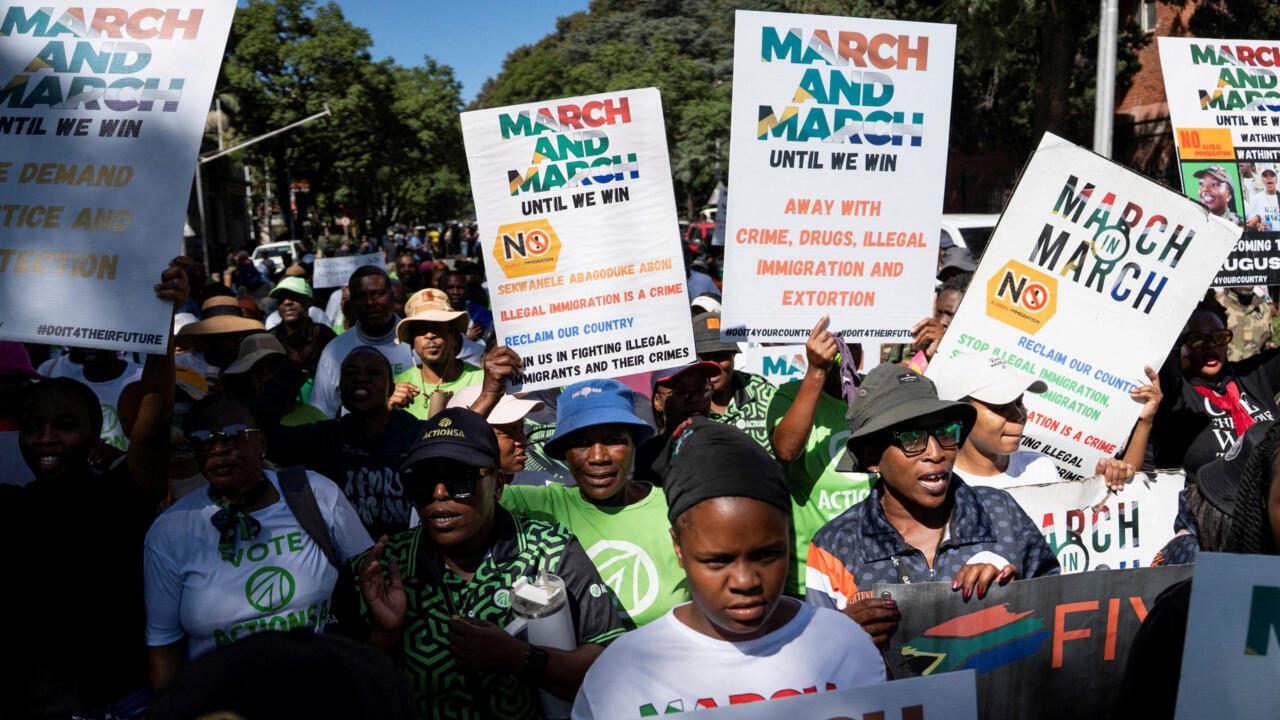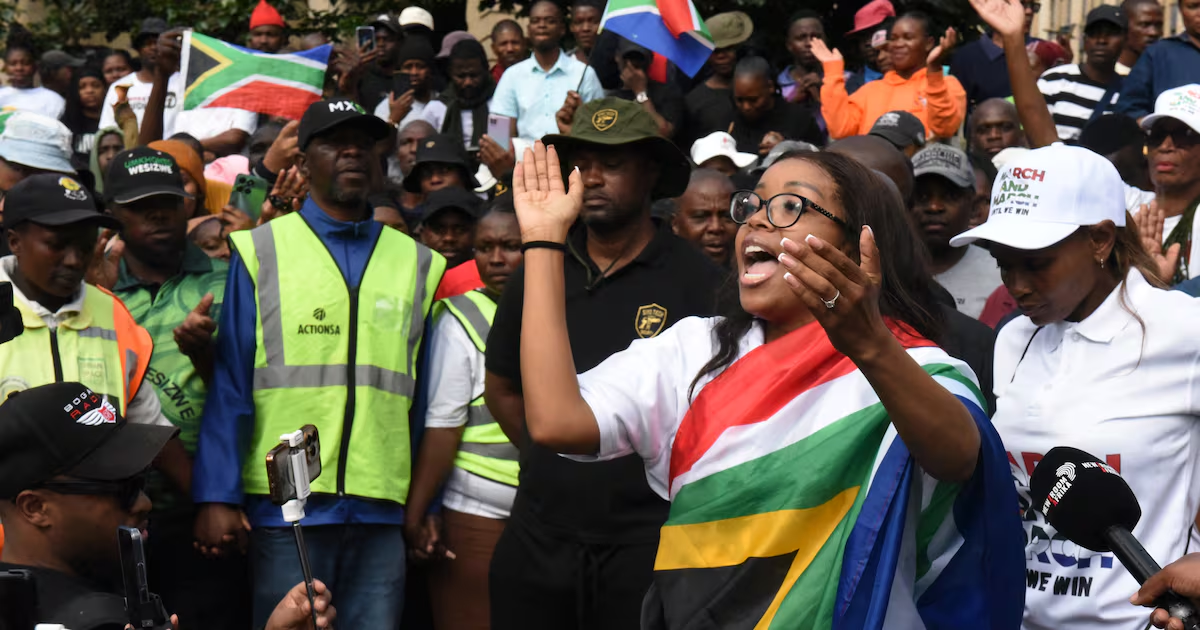
Marie Huchzermeyer writes the execution of March and March's anti-immigrant protest action needs to be subjected to legal scrutiny.
On June 25, in the lead-up to what March and March announced as its end-June national shutdown, a protest against illegal migrants proceeded through my neighbourhood, Brixton. The march was accompanied by the South African Police Service, with security company backup in streets that paralleled the protest route. Police and private security warned pedestrians and traders in advance to pack up, close shop and make themselves unseen.
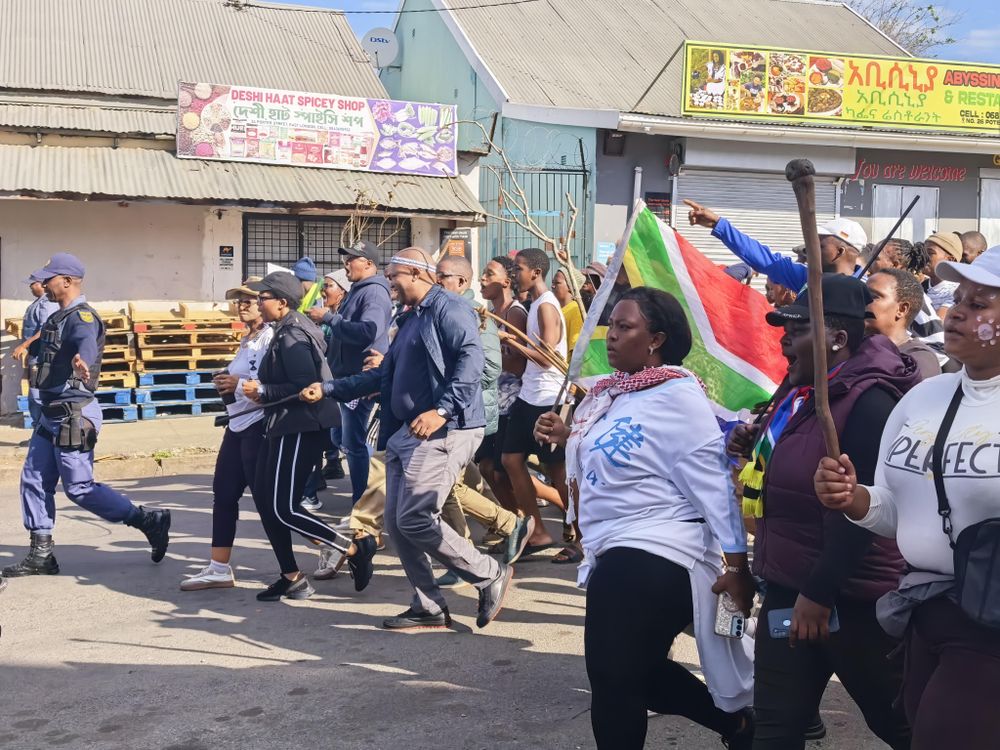
An officer leaning out of a private security vehicle warned me not to proceed down a side street towards the marchers, but I did. I captured pictures of the march a block away from Breezeblock Café as it passed through Caroline Street. On my photographs, the small crowd is preceded by a DST tactical response vehicle, sided by policemen and backed by two police vans. It is led by a man waving a sjambok. Others carry long wooden sticks and metal bars with bent ends.
With protesters carrying threatening instruments and chanting anti-foreigner statements it is hard to understand the political and media description of these marches as peaceful. Post June 30, there is documented evidence that in many places March and March protests emboldened people to loot and to harass, chase, threaten, attack, and evict, if not kill, individuals they have othered. This is well documented and occurred during marches and in the days and nights that followed.