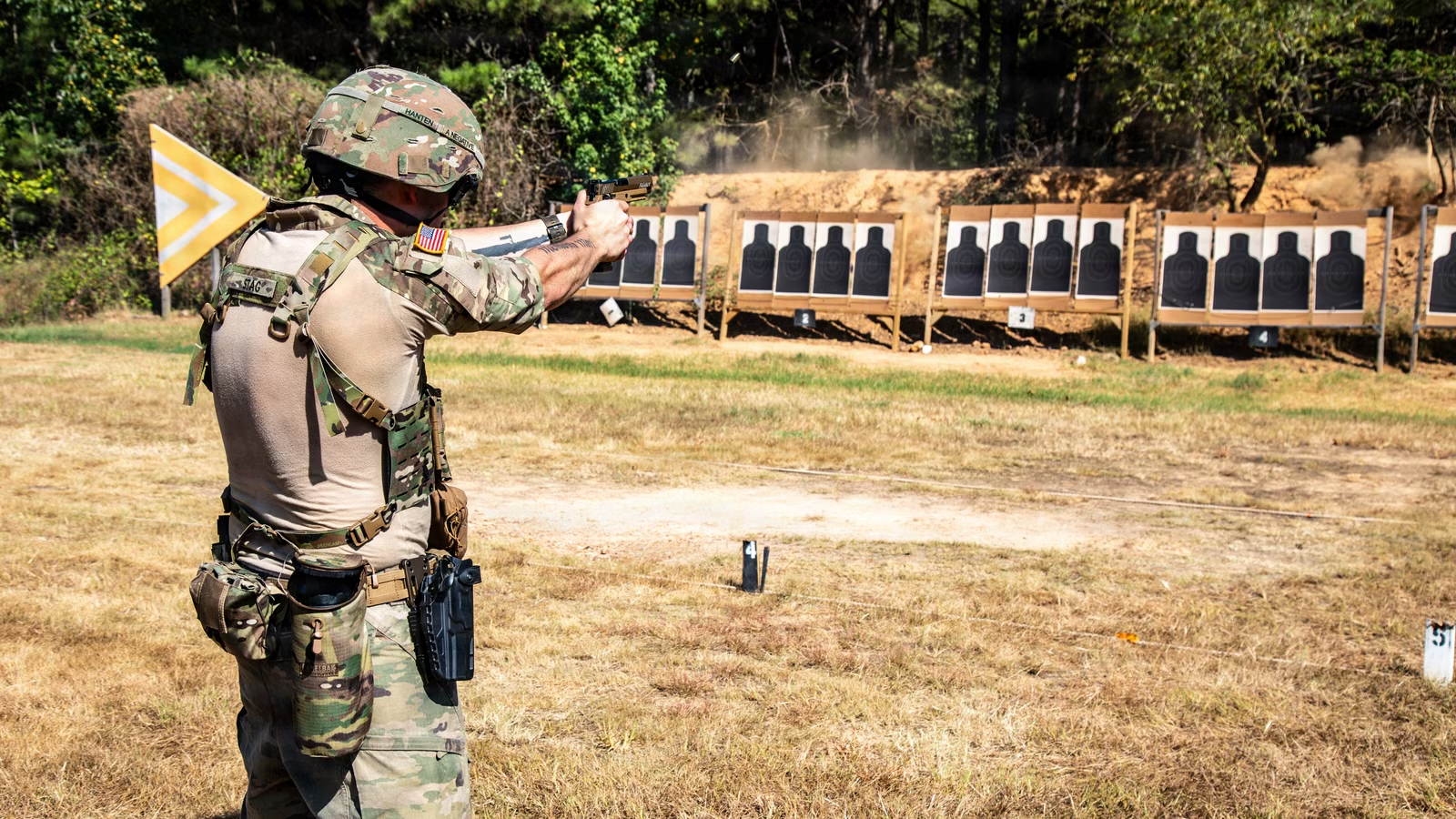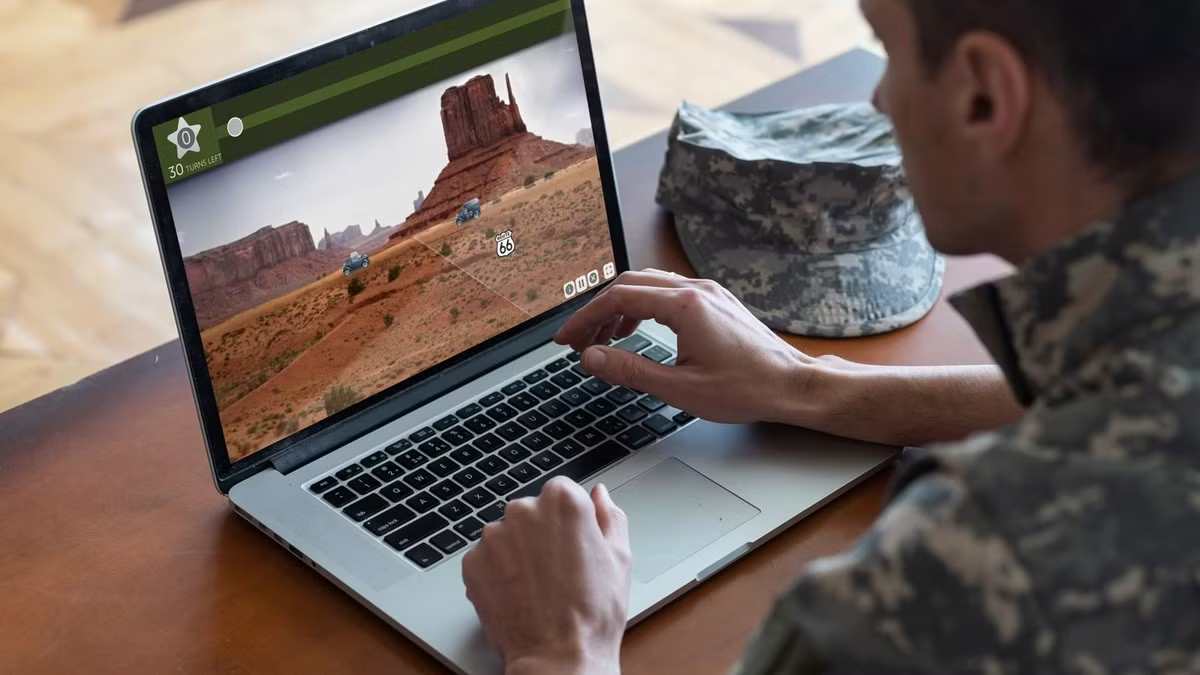
A new U.S. government-funded study involving a new type of highly-scalable, computerized cognitive testing found that a 20-minute self-administered computerized brain health assessment can strongly predict performance on the Armed Forces Qualification Test (AFQT). The study, "Construct Validation of a Remote Brain Health Assessment Battery to Evaluate Vocational Aptitude and Factors Associated With Cognitive Resilience in the Military: Observational Trial," was conducted by researchers at the University of Minnesota and funded through a $1 million grant by the Office of Naval Research and the National Institutes of Health. It effectively measures military vocational aptitude and cognitive resilience with more flexibility and precision—at a fraction of the time and expense—compared with more traditional military screening. The AFQT is derived from the in-person Armed Services Vocational Aptitude Battery (ASVAB), which can take 1.5 to 3 hours to complete and is the primary measure used by the U.S. Department of Defense to evaluate enlistment eligibility and career aptitude across all services. The $1 million is also being used towards additional studies and research papers. The assessment tool was created by Posit Science Corporation, which makes the popular BrainHQ brain training app in addition to specialized assessments of brain performance and health based on advances in neurobiology and neuroplasticity. The study, published in the journal JMIR Formative Research, involved 267 soldiers and was supported by resources from the Minneapolis Veteran Affairs Health Care System and Minnesota Army National Guard. "We hypothesized that this fundamental aspect of how the brain processes information would have a relationship to something meaningful in the real world, in this case the kind of performance on the AFQT. But the fact that it had that it actually showed up, and it showed up in a way that was so meaningful [stood out]," Sophia Vinogradov, chair in psychiatry and department chair of psychiatry and behavioral sciences at the University of Minnesota, told Military.com. Vinogradov, one of the study's authors, said the AFTQ is a test that people sit down for and typically takes several hours, involving right or wrong answers. It's quite dependent on the kind of educational exposure one has had, she said, correlating certain relationships with socioeconomic status. "The fact that we were seeing these relationships between these two very different ways of assessing somebody, it's got associations with how people are going to perform in their military jobs," she said. "So, we were sort of surprised that we saw that significant association."
Exclusive: Navy's $1M 'Brain Game' Study Shows Faster, Better Military Screening of Service Members' Cognitive Skills
The study tested 267 soldiers, finding that 20 minutes of activity strongly predicts performance on the Armed Forces Qualification Test.
2,243 words~10 min read