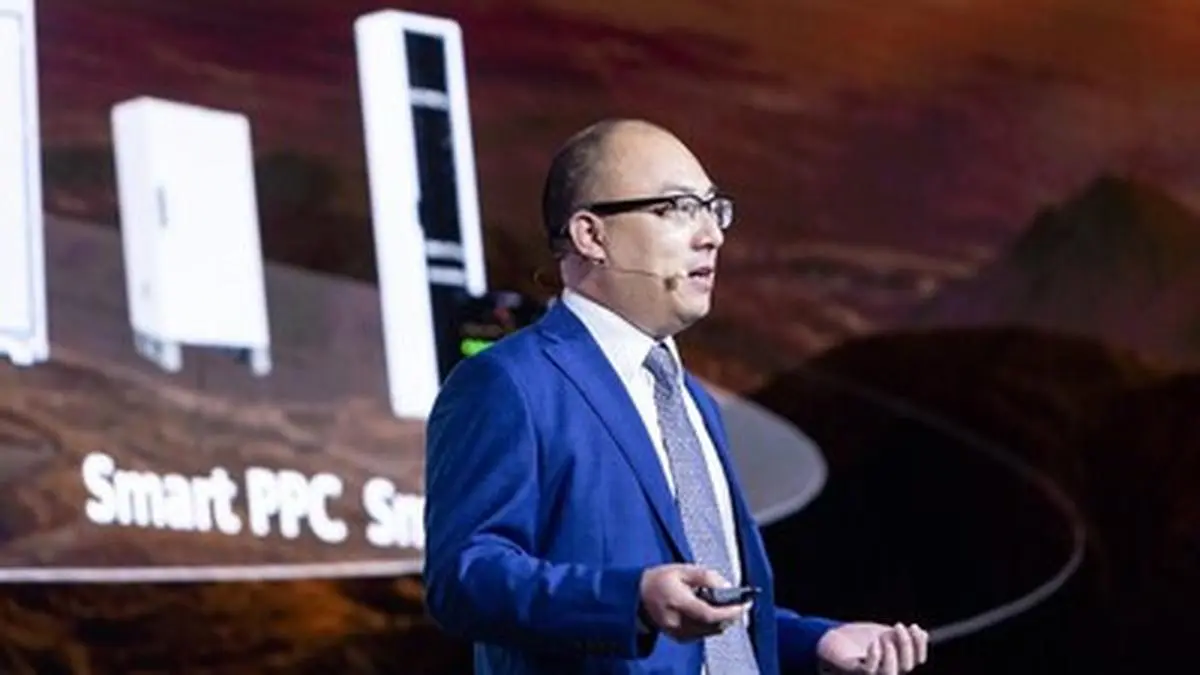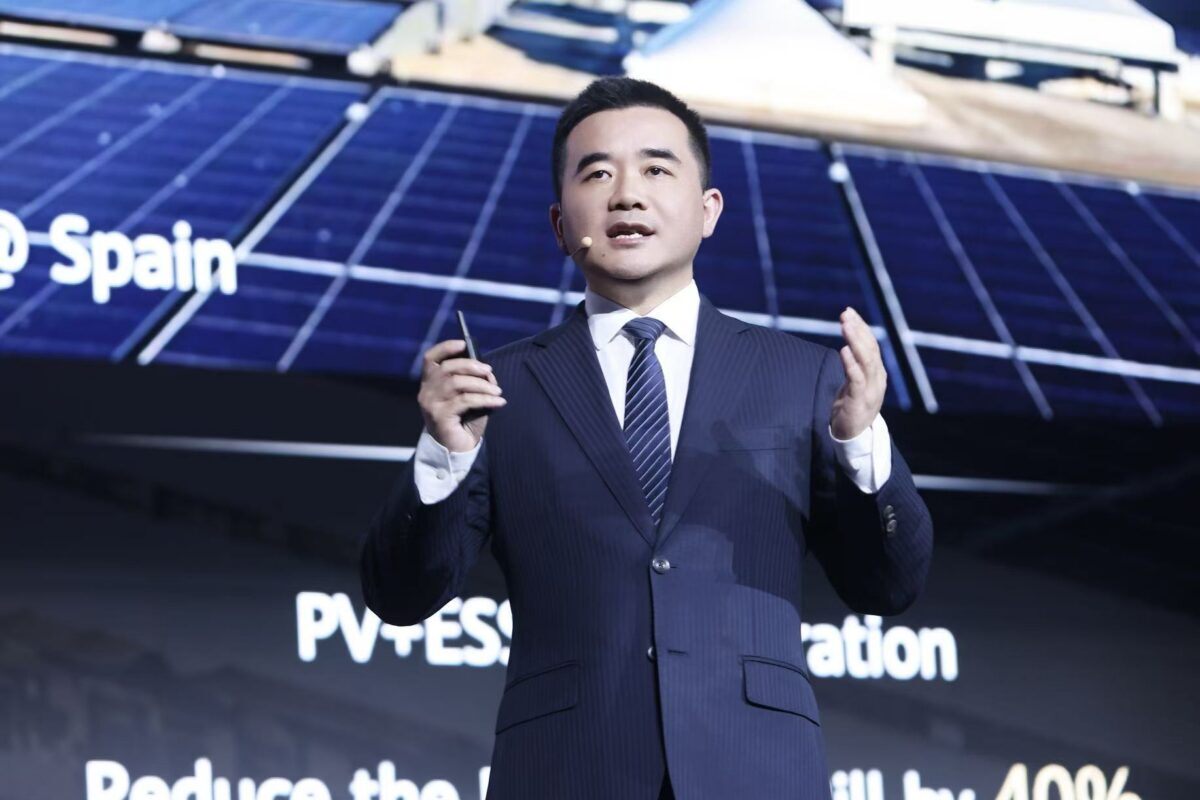
In his speech at the industry convention in Munich, Huawei Digital Power’s President of Smart PV & ESS Product Line, Steven Zhou, said the company’s strategic focus on grid-forming, integrated solutions that reinforce grid stability to support high renewable penetration in Europe.
In Europe, the penetration of wind and solar is expected to reach 64% by 2030. At the same time, the power system is facing challenges – such as reduced grid resilience and weakened system strength – due to high dispatching complexity and the declining share of traditional synchronous generators.
In response, European markets are increasing grid investment, scaling up grid-forming BESS deployment, developing new grid codes that include grid-forming requirements, and accelerating the shifting of the power market from simple energy arbitrage to diversified grid ancillary services. In his speech at The Smarter E 2026, Huawei Digital Power’s President of Smart PV & ESS Product Line, Steven Zhou, said these actions send a clear signal that “future PV and BESS products must evolve to become the primary power source.”
As new energy technologies have developed into a primary power source, the industry has entered a period of active innovation, transitioning from single-point innovation to integrated innovation. Thanks to their grid-forming capability, hybrid PV-BESS solutions are accelerating the replacement of traditional thermal power plants. Key grid-forming functions – such as black start, inertia support, and short-circuit current support – have been fully validated under all operating conditions and timeframes in the power system, with the technical system becoming increasingly refined.