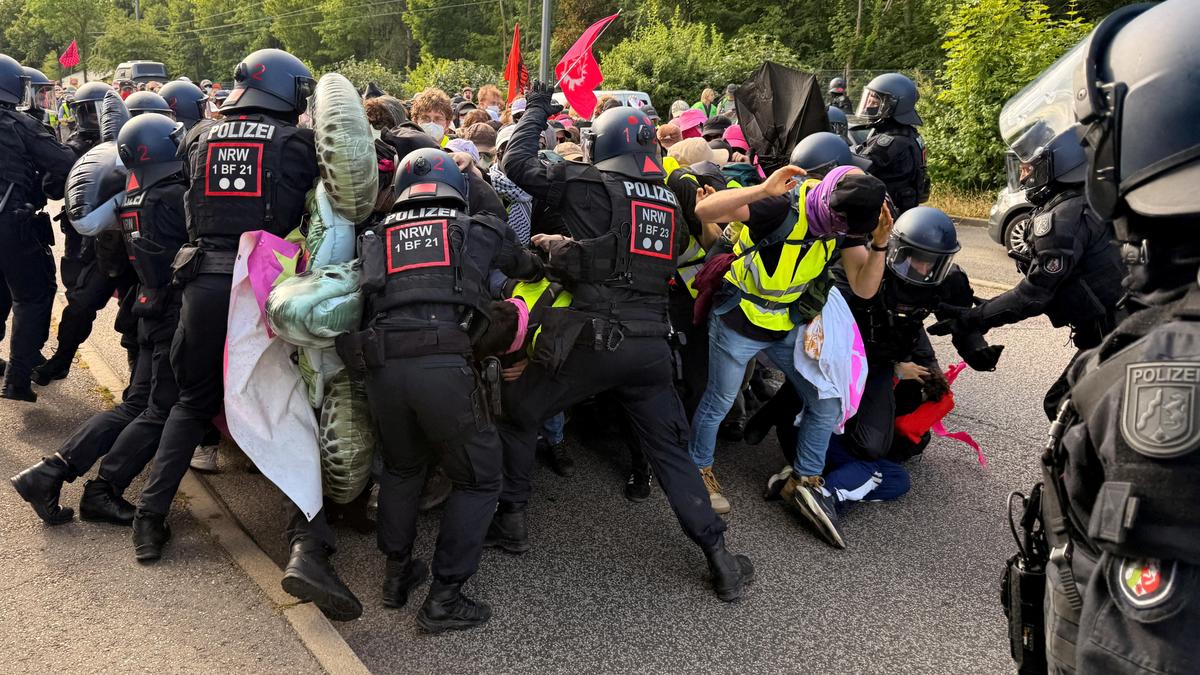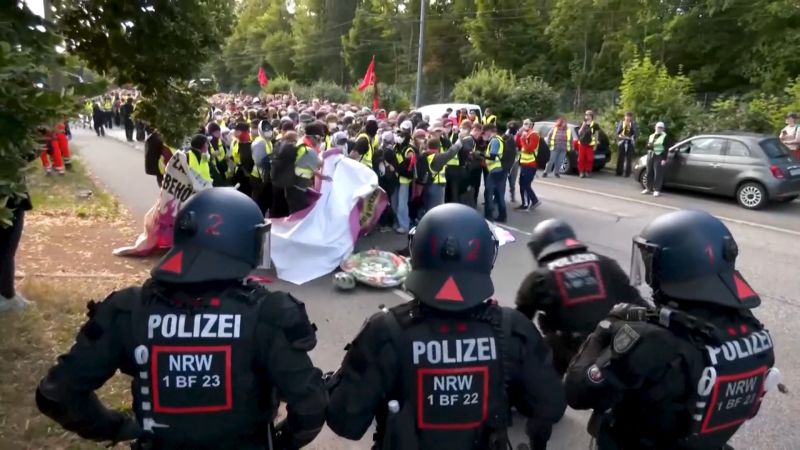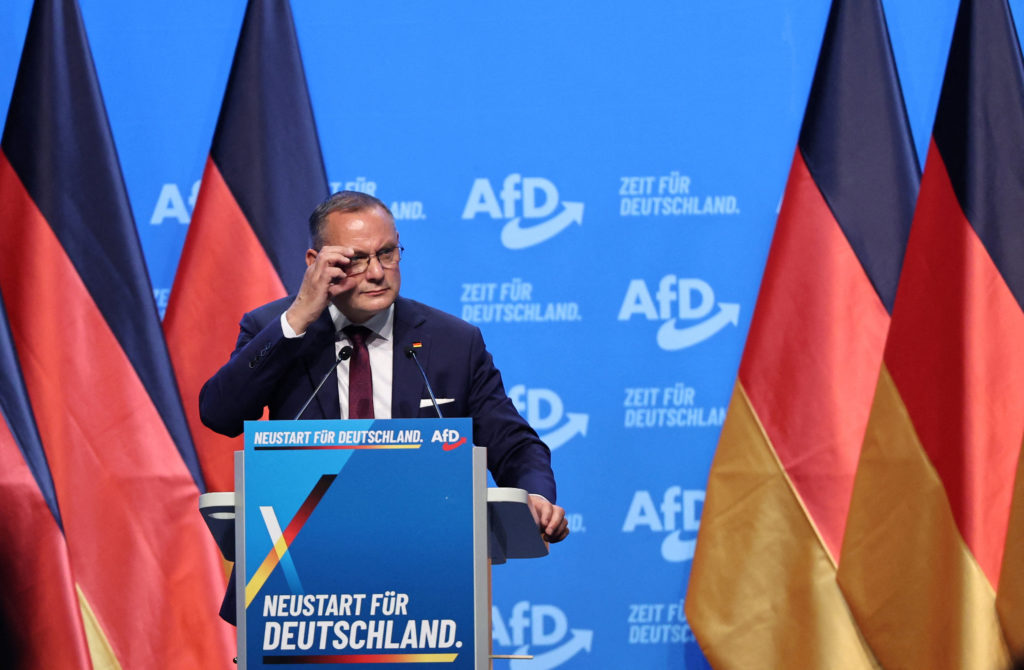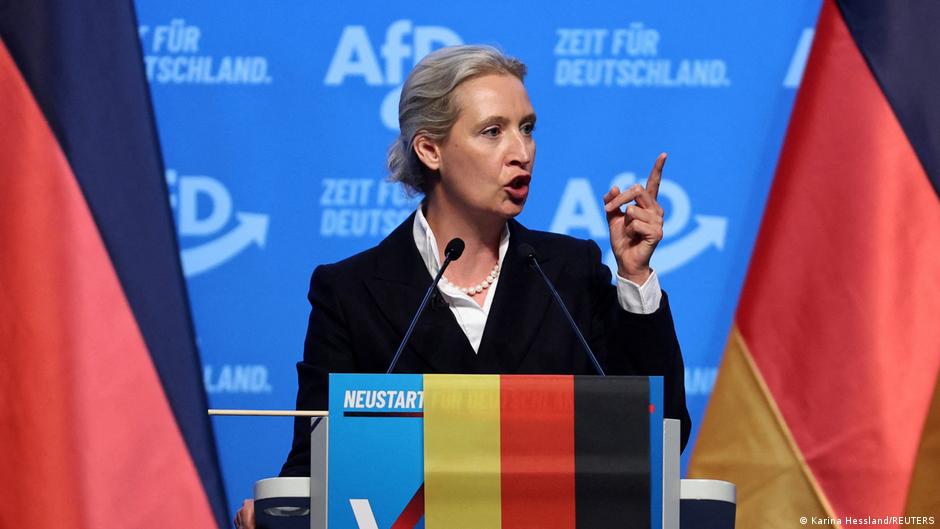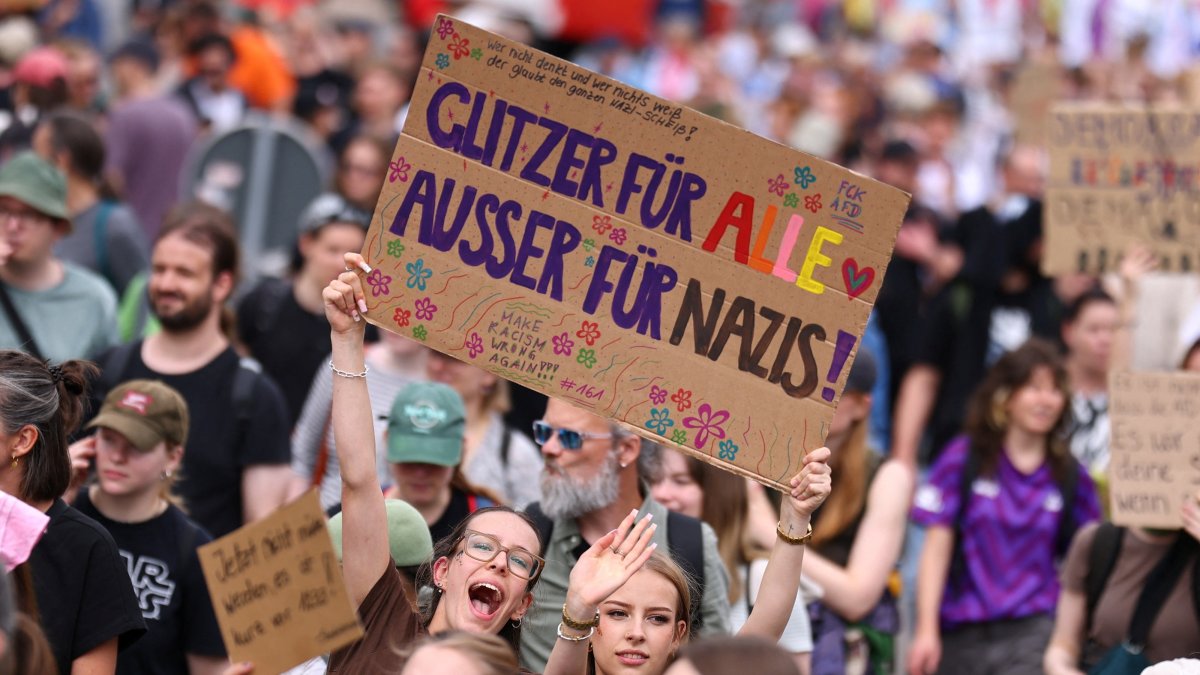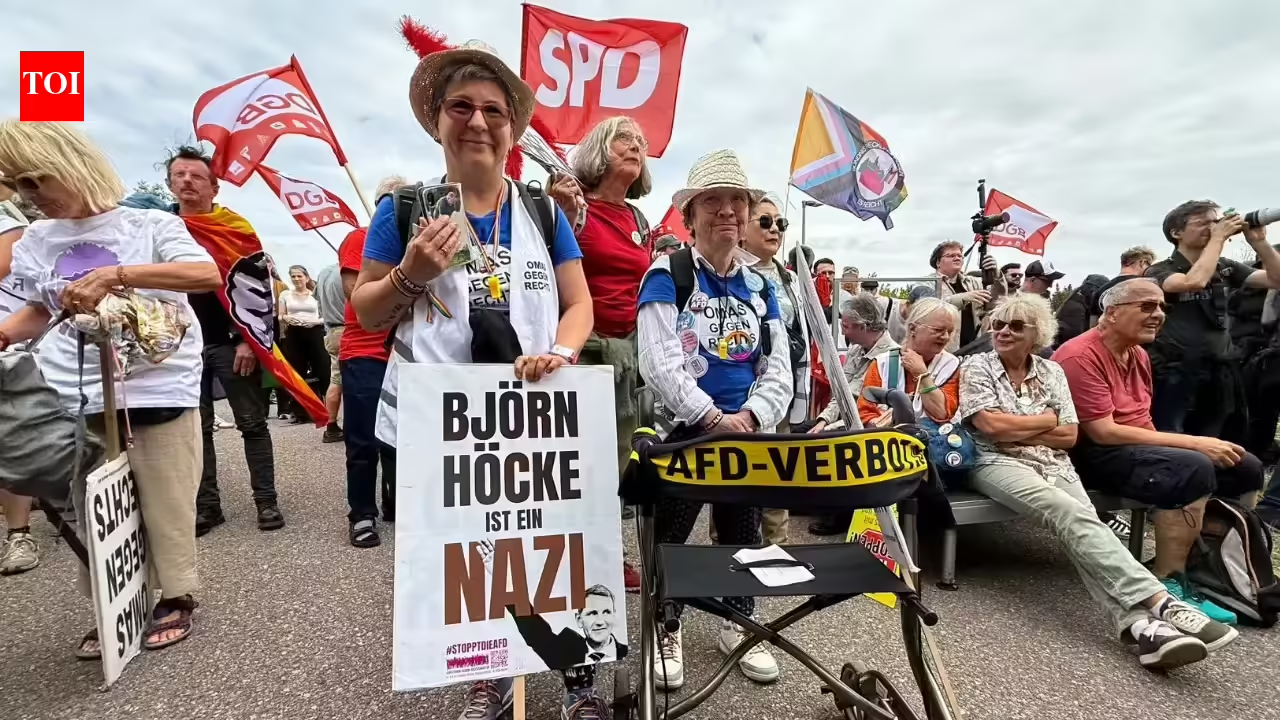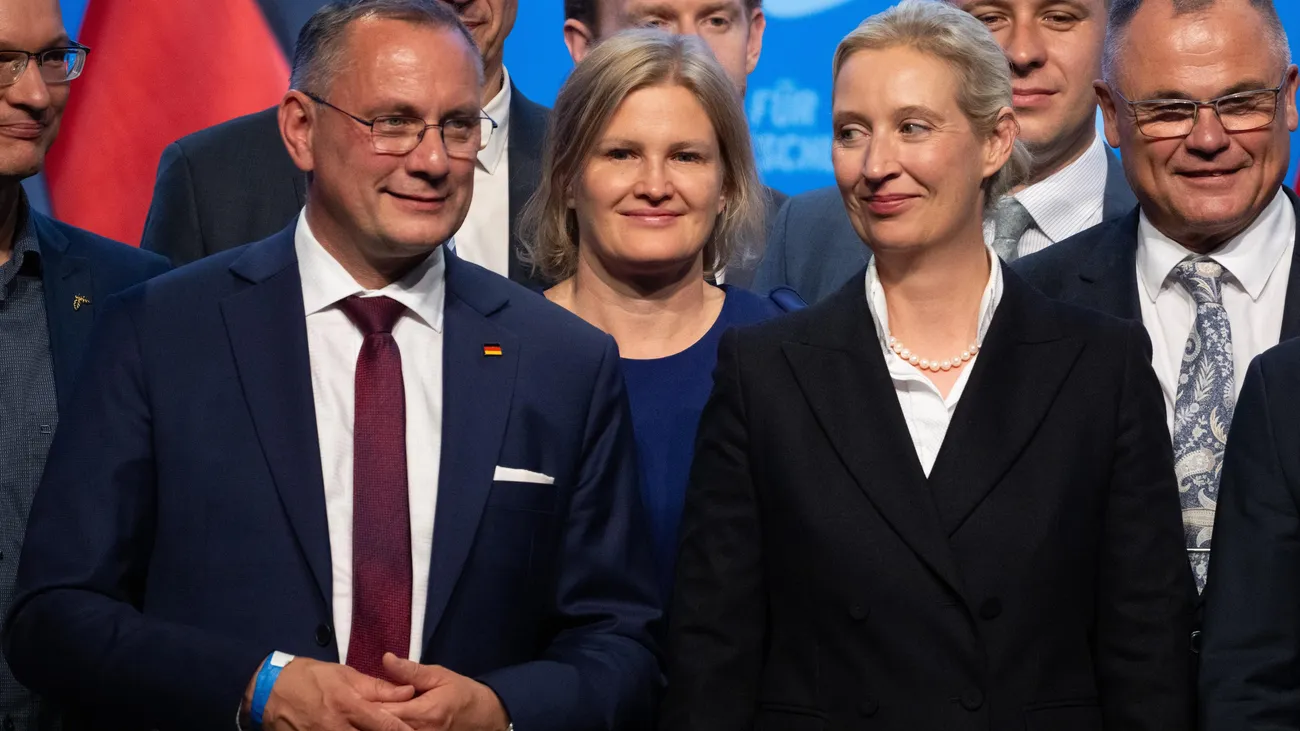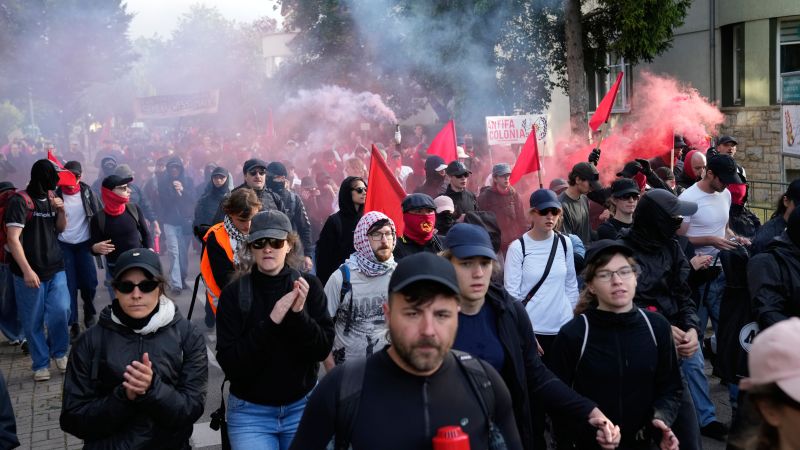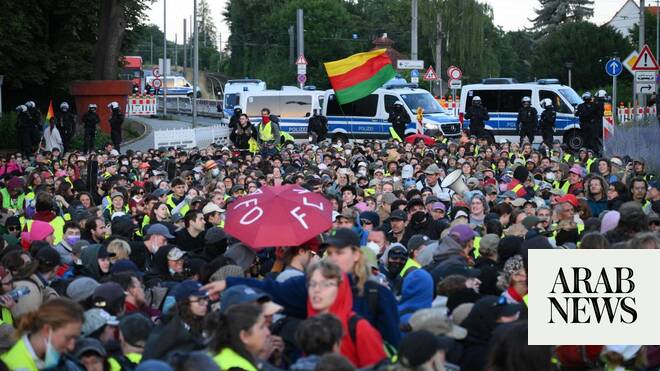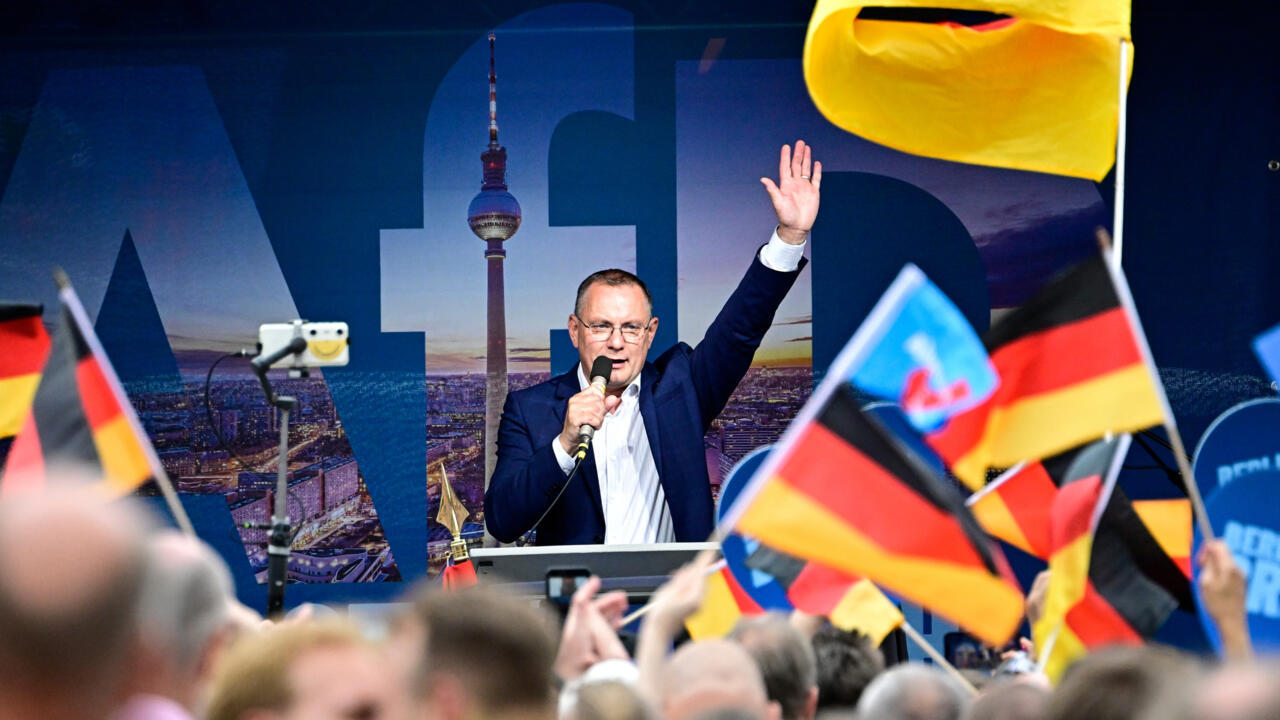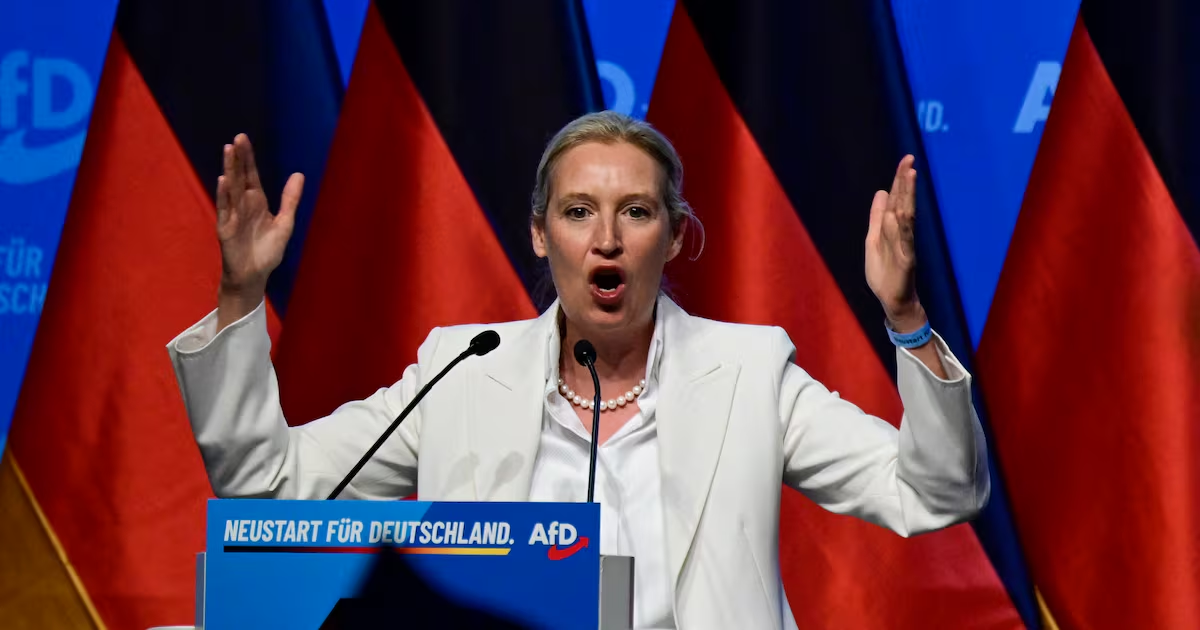
Leaders of the far-right Alternative for Germany (AfD) have promised to push for power after the next federal elections, scheduled for 2029.At a party conference marked by police clashes outside the venue with protesters, AfD delegates re-elected its two federal leaders, Tilo Chruppala and Alice Weidel, with 70 and 81 per cent support respectively.Weidel, seen as straddling the party’s more moderate and extreme camps, delivered her conference speech on a stage bedecked with German national flags.She described her party’s goals as “black, red, gold” and to “put our fatherland ... back on its feet”.“We stake our claim on power,” she said to loud cheers of delegates in the eastern city of Erfurt. “We will govern because we want to take over responsibility for our country that we love so much. This country deserves to be governed well.”Alternative for Germany co-leader Alice Weidel speaks to delegates at the party congress of the far-right party on July 4th, 2026, in Erfurt, Germany. Photograph: Jens Schlueter/Getty Images National opinion polls place the AfD in first place on 27 per cent support, five points ahead of the ruling centre-right Christian Democratic Union (CDU). Regional polls indicate AfD support ranges from 35 to 41 per cent in two eastern states that choose new state parliaments in September.The prospect of the party taking power at state level attracted about 30,000 anti-AfD campaigners to Erfurt for largely peaceful events.Police said fears of larger clashes were avoided, in part because many AfD delegates arrived at the conference venue at dawn, hours before sit-down blockades were organised.AfD co-leader Chrupalla, an eastern German politician more aligned with pro-Russian and ethno-nationalist camps, described the protesters as “thugs” and the “last resort of our political rivals”.“The AfD is here to win and we will win and we will govern,” he said.Polls place the AfD close to an absolutely majority in the eastern state of Saxony-Anhalt, ahead of September’s election there. Without obvious political allies elsewhere, Germany’s defence minister Boris Pistorius conceded on Sunday the federal government is “preoccupied” with the prospect of having to share intelligence information with AfD state officials, given alleged close ties to Russia.Demonstrators protest against far-right Alternative for Germany (AfD) political party in Erfurt, Germany. Photograph: Jens Schlueter/Getty Images “You only have to look at the public remarks of many, many AfD representatives, the proximity to Putin is impossible to overlook,” said Pistorius.A weekend poll showed Germans remained divided over how to approach the AfD. Some 40 per cent favour a ban on a party, viewed by some state intelligence bodies as having extreme right-wing elements. Some 45 per cent of those polled oppose such a ban, while 15 per cent are undecided. Similar ambivalence prevails over other parties’ bans on political co-operation with the AfD.Some 42 per cent consider the “firewall” a good idea, according to the Bild am Sonntag poll, while 39 per cent are opposed and 19 per cent undecided.Since the end of the second World War, there has been a consensus among the country’s main political parties that the far right must never be permitted in government again. This so-called firewall has also extended to open collaboration with far-right parties in any capacity.
‘Time to put our fatherland back on its feet’: Germany’s far-right AfD sets sight on power
Party conference is marked by police clashes with protesters outside the venue
529 words~2 min read