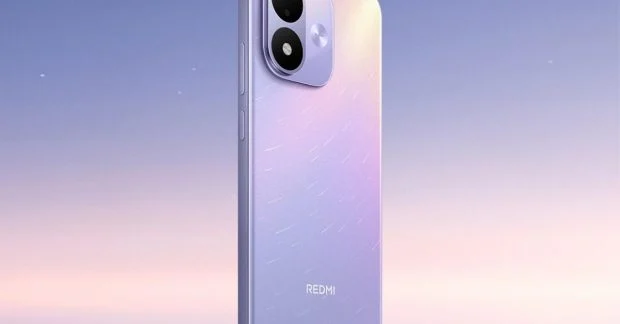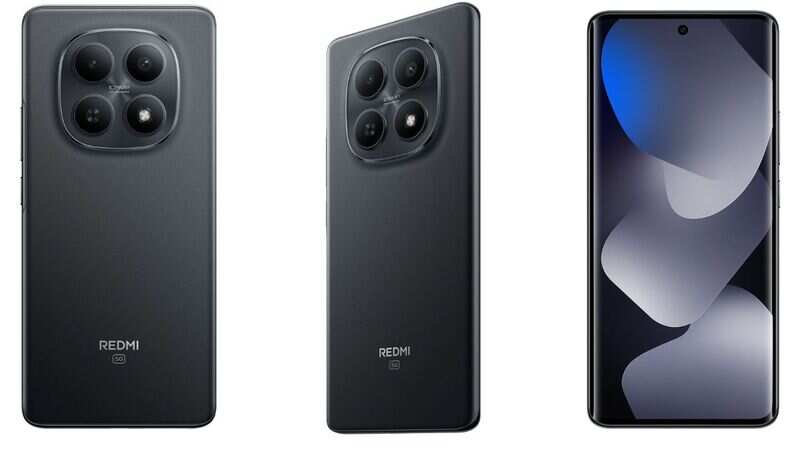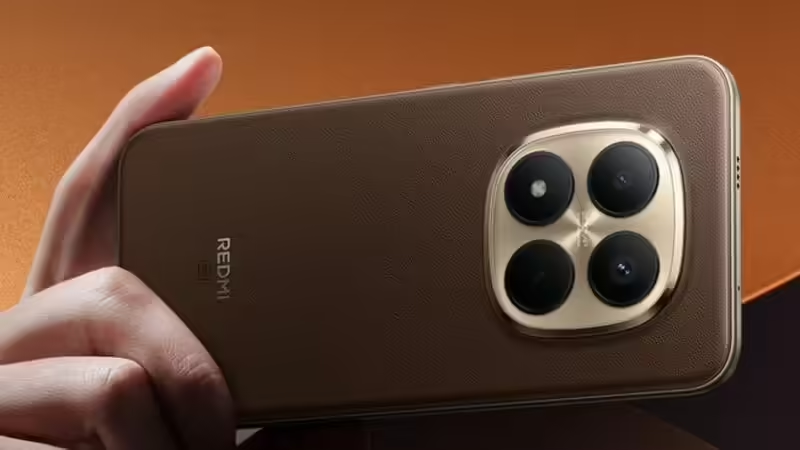
The Redmi Note 17 series is confirmed to launch in China this month, but Xiaomi has not confirmed a single model name, price or specification. Leaks point to a three-phone range comprising the Redmi Note 17, Redmi Note 17 Pro and Redmi Note 17 Pro Max. The apparent strategy is unusual for the mid-range market: put battery capacity at the centre. The base phone is reportedly being tested with a 9,000mAh battery, a 1. 5K flat OLED display and a Snapdragon 6-series chip. The alleged Pro Max could go further with a 10,100mAh battery, a 200MP camera and MediaTek’s Dimensity 7500. The figures are striking. The evidence behind each one is uneven.The useful way to read the Redmi Note 17 leaks is not as a finished specification sheet. It is a story about Xiaomi’s priorities. Redmi appears to be moving from the familiar mid-range formula of faster charging, a higher megapixel count and a slightly newer chip towards a more practical proposition: a phone that might survive the kind of day that usually ends with a power bank, a charger borrowed from a colleague or battery anxiety at 7 pm.That could be a smart response to how people actually use phones in India. It could also create a new set of compromises around weight, thickness, charging time and price. Xiaomi’s launch will answer those questions. The leaks, for now, only tell us where the company may be heading.Key takeawaysXiaomi has confirmed a Redmi Note 17 series launch in China in July 2026, but has not confirmed the number of models, their names, prices or final hardware.The strongest hard evidence is a Chinese 3C certification for a Xiaomi phone believed to be the Redmi Note 17 Pro, with model number 2607DRA18C and support for a 67W charger. Certification does not confirm the phone’s battery, camera, processor or retail name.The base Redmi Note 17 is reportedly being tested with a Snapdragon 6 Gen 5-class processor, a flat 1. 5K OLED display, a 50MP main camera and a 9,000mAh battery. These claims come from tipster reporting, not Xiaomi.The expected Redmi Note 17 Pro Max is the leak cycle’s most ambitious device: a 10,100mAh battery, Dimensity 7500 processor, 200MP main camera and flat 1. 5K screen. Xiaomi has not confirmed the “Pro Max” name.The leaked images should be treated carefully. Some widely shared visuals are clearly labelled concept renders by the sites carrying them, rather than Xiaomi marketing images or proven production hardware.There is no India launch date, price, chipset confirmation or evidence that Chinese Redmi Note 17 models will arrive here unchanged.Xiaomi has confirmed the series, not the phones inside itRedmi’s official teaser confirms the next Note generation will launch in China this month. Xiaomi has said the series will bring changes to display quality, battery life, durability and overall user experience. The company has not named the phones, published product images, announced pricing or stated whether the range will include a vanilla model, a Pro model, a Pro Max, a Pro+, or some other configuration.That distinction becomes more important with every new leak.There are now enough reports to suggest Xiaomi is preparing more than one Redmi Note 17 phone. There is not enough official evidence to say the range will definitely launch as Redmi Note 17, Redmi Note 17 Pro and Redmi Note 17 Pro Max on the same day. Some reports suggest the standard model could arrive first, with higher-tier phones following later in July or August. That is plausible. It is still unconfirmed.For buyers, the timing matters less than the eventual split between the models. Redmi has traditionally used the Note line to cover a broad price range. A vanilla Note phone may focus on value and battery life. A Pro model may add durability, a better display or a faster charging system. A Pro Max, if Xiaomi uses that name, would need a more visible reason to exist than a slightly bigger number in the title.The leaks suggest Xiaomi thinks the answer is capacity.The Redmi Note 17 range, as the leaks currently describe itThe table below separates the recurring claims from the evidence behind them. It is not a final specification chart.ModelRepeatedly reported specificationsWhat supports the claimWhat remains uncertainRedmi Note 17Flat 1. 5K OLED display, Snapdragon 6 Gen 5-class chip, 50MP main camera, 9,000mAh battery, water resistanceMultiple tipster-based reports repeat this broad hardware directionExact chipset name, charging speed, refresh rate, fingerprint type, camera sensor and IP ratingRedmi Note 17 ProFlat 1. 5K OLED display, Snapdragon 6 Gen 5, 50MP main camera, 9,000mAh battery, 67W or 100W chargingA 3C-listed Xiaomi device believed to be the Pro is tied to a 67W charger; other specifications remain leak-basedWhether the 3C device is definitely the Pro; battery capacity; final charging speed; camera systemRedmi Note 17 Pro MaxFlat 1. 5K OLED display, Dimensity 7500, 200MP main camera, 8MP ultra-wide, 32MP selfie camera, 10,100mAh battery, 100W chargingHyperOS-code reporting and repeated leak coverageFinal name, launch timing, screen size, OIS, IP rating, charging speed, build materials and India variantThe table exposes the main weakness in the present leak cycle: information is crossing between models.One report describes the base Note 17 as the 9,000mAh phone with a Snapdragon 6 Gen 5 and 50MP camera. Another suggests that set of specifications could belong to a Pro-tier device. The alleged Redmi Note 17 Pro’s 3C listing gives more confidence around 67W charging, but not around the battery figure or processor assignment.The Pro Max has a more consistent identity. Across reports, it is the phone linked to Dimensity 7500, 200MP imaging and a battery just beyond 10,000mAh. Its title remains less certain than its intended role.That may sound like a small caveat. It is not. A ₹20,000 Redmi Note with a 9,000mAh battery is a different market event from a ₹35,000 Redmi Note Pro Max with one. Buyers should not decide what Xiaomi is offering until the range has prices attached.The one leak that carries more weight: 67W chargingThe clearest material trail so far is the 3C certification.China’s 3C database has listed an unannounced Xiaomi device bearing model number 2607DRA18C. Reports identify it as a possible Redmi Note 17 Pro and say the listing points to use with a 67W charger. That is not a launch confirmation. It does not tell us the phone’s name, display, RAM options, battery size, camera hardware or retail packaging. It does make a 67W charging ceiling more credible than most of the specification claims currently circulating.The charging detail matters because it sets a limit on the more dramatic battery claims.A 9,000mAh battery paired with 67W charging could still be practical. It would be a much easier proposition than a 9,000mAh battery charged at the 33W or 45W speeds common in older mid-range phones. But charging speed is not a magic percentage written on the box. A larger cell must absorb more energy. The final time depends on battery chemistry, charging curve, temperature control, charger compatibility and how aggressively Xiaomi reduces power near full charge to protect long-term battery health.The Redmi Note 15 Pro 5G provides the relevant baseline. Xiaomi’s current model uses a 6,580mAh silicon-carbon battery and 45W charging. A reported 9,000mAh cell would be around 37 per cent larger by capacity. A 10,100mAh cell would be roughly 54 per cent larger. That is a meaningful shift, not a routine annual bump.It also explains why 67W or 100W charging has become part of the leak story. Redmi cannot sell a 10,000mAh phone as a stress-free endurance device if it then needs most of a morning to recharge.Why 9,000mAh and 10,100mAh batteries would change the Note seriesBattery capacity is one of the few smartphone specifications that almost every buyer understands instinctively. A bigger number suggests longer life. That basic assumption is generally fair, but it needs context.Milliamp-hours measure electrical charge, not the exact amount of time a phone will run. Display brightness, network quality, 5G use, game load, camera use, thermal conditions, background apps and software tuning can change endurance dramatically. A phone with a 10,100mAh battery may outlast a 6,500mAh rival by a large margin. It will not automatically produce three days of use for everyone.The more realistic promise is freedom from daily charging for many ordinary users.A person who spends several hours on mobile data, watches video during commutes, runs Google Maps, records short videos, uses Bluetooth earbuds and plays games in the evening could still drain a 10,000mAh phone quickly. The difference is that the phone may end the day with 35 per cent left rather than 5 per cent.For a lighter user, the gains could be more dramatic. A phone used mainly for calls, WhatsApp, social feeds, music, photographs and occasional streaming may stretch into a second day comfortably. That is the appeal Xiaomi appears to be chasing.The Note series has already been moving in this direction. Redmi Note 15 Pro 5G carries a 6,580mAh battery, while Xiaomi says the device uses silicon-carbon battery technology to increase energy density without turning the phone into an obviously oversized slab.That last point is where the Redmi Note 17 story gets interesting.A 10,100mAh phone cannot simply be a normal handset with a larger battery glued inside. It needs a battery design that packs more energy into roughly the same physical envelope, or it needs Xiaomi to accept more thickness and weight. There is no official Note 17 weight figure. There is no trustworthy basis for claims that it will remain “slim and light”.The large battery could be the device’s strongest feature. It could also be the thing buyers feel every time they use it one-handed.The likely trade-off: endurance over raw speedThe leaked processors do not indicate that Xiaomi is turning the Redmi Note line into a gaming flagship.The vanilla and Pro models have been linked to Qualcomm’s Snapdragon 6 Gen 5 family. The Pro Max has been linked to MediaTek’s Dimensity 7500. Those names suggest Xiaomi is trying to balance power use, cost and everyday performance rather than chase the top-end Snapdragon 8 or Dimensity 9000 tiers.That is not necessarily a problem.Most buyers do not need a flagship chip to use WhatsApp, Instagram, YouTube, Google Maps, UPI apps, bank apps, browser tabs, basic photo editing or popular games at sensible settings. A less power-hungry upper-mid-range processor may make more sense inside a phone that is being sold on endurance.The danger is price.A device with a huge battery, a high-resolution display and a 200MP camera can sound premium in a launch presentation while still falling short in sustained gaming, low-light video, image processing and long-term software support. If Xiaomi pushes the Pro Max too high in price, buyers will compare it with phones using stronger chipsets, even if those rivals carry smaller batteries.The Redmi Note 17 series could therefore become a test of what consumers value more in 2026: benchmark performance or the ability to leave home without a charger.That is a real choice. It is not a rhetorical one.The display story may be more important than it looksA flat 1. 5K OLED display appears in almost every major Redmi Note 17 leak. That does not tell us the exact screen size, refresh rate, brightness, panel supplier or protective glass. It does suggest Xiaomi is not abandoning the design direction already visible in the current Note 15 Pro range.The Redmi Note 15 Pro 5G uses a 6.83-inch 1. 5K AMOLED display with up to 120Hz refresh rate, Dolby Vision support, HDR10+ and a high touch-sampling specification for gaming. That is already a strong screen package for the mid-range. The Note 17 needs more than the same resolution to feel meaningfully newer.A 120Hz or 144Hz refresh rate could improve scrolling and supported games. Higher peak brightness could help outdoors. Better eye-comfort tuning could matter to people who read on a phone late at night. Improved touch response could matter to gamers.None of those details is confirmed.The more immediate concern is power draw. A larger, brighter, faster-refreshing OLED panel can consume a significant part of a phone’s battery budget. That is another reason the giant-cell leaks make commercial sense. Xiaomi may be trying to buy display freedom with battery capacity.A 200MP camera is not automatically a camera upgradeThe Redmi Note 17 Pro Max leak carries a 200MP main-camera claim, an 8MP ultra-wide camera and a 32MP selfie camera. Reports based on HyperOS code have linked the phone to Samsung’s ISOCELL HP5 main sensor, OmniVision’s OV08F10 ultra-wide sensor and Samsung’s S5KKDS front camera.Those sensor references create a more complicated story than the “200MP upgrade” headline suggests.Xiaomi’s current Redmi Note 15 Pro+ already uses a 200MP HP5 sensor with OIS, an 8MP ultra-wide camera and a 32MP front camera in several markets. Xiaomi describes the setup as a 200MP main camera with optical image stabilisation, a 1/1.4-inch sensor format and a 32MP selfie camera.That means the alleged Pro Max camera system may be continuity rather than reinvention.There is nothing inherently wrong with keeping a good main sensor. The Note 15 Pro+ camera system may already be capable of detailed daylight photography, usable crop zoom and strong portraits when Xiaomi’s processing works well. The issue is what Xiaomi does around it.Will the Pro Max retain OIS? Will the ultra-wide remain an 8MP unit? Will video quality improve? Will the company upgrade its image processing, portrait edge detection, shutter speed or low-light stabilisation? Will it add a telephoto lens, or rely on high-resolution cropping again?Leaks do not answer these questions.A 200MP main camera is a component. The final camera result depends on lens quality, stabilisation, processing, shutter behaviour, colour tuning and the phone’s ability to manage heat during video. A 200MP number alone cannot settle whether the Redmi Note 17 Pro Max will be a better camera phone than its predecessor.The leaked images need a harder editorial filterThe Redmi Note 17 image cycle is becoming noisier than the specification cycle.Several images circulating online show a white or blue Redmi-branded phone with a large circular or rounded-square camera island, flat sides and an unusually large front display. The visual language is plausible. It is also not proof.Some of the pages carrying those visuals label them as “concept renders”. That should end any attempt to present them as leaked Xiaomi product images. A concept render may be based on a tip, a fan interpretation, a generic design template or an earlier report. It can be useful as a visual explainer. It cannot establish the final design.The 3C listing is more valuable than a glossy render because certification records are harder to fabricate and easier to interpret cautiously. The trade-off is that certification tells readers almost nothing about how the phone looks. That is fine. A good leak story should not use a pretty image to fill an evidence gap.Why Redmi may be skipping the Note 16 nameThe apparent move from Redmi Note 15 to Redmi Note 17 has drawn attention because it gives the upcoming range a sense of a larger jump. Xiaomi has not publicly explained the naming decision in the material available so far. Reports have linked it to the company’s wider shift towards “17” branding in its flagship line, but that remains interpretation rather than an official Redmi explanation.The branding may matter commercially even if it changes nothing technically.A Redmi Note 17 sounds like a more decisive upgrade over the Note 15 than a Redmi Note 16 would. It creates room for a Pro Max title too. But numbers do not improve phones. Buyers should look past the skipped generation and ask whether the phone offers better battery life, better cameras, stronger durability, better software support or more convincing performance.At the moment, the answer appears to be battery life.Everything else is less certain.The India question: do not assume China’s Redmi Note 17 is India’s Redmi Note 17Xiaomi has confirmed only a China launch. There is no official India launch date, no India price, no Flipkart or Amazon listing, and no India-specific specification sheet.This is not a minor disclaimer. Xiaomi regularly changes hardware, naming, battery capacity, charging support and camera configuration between Chinese and international models. A Chinese Redmi Note can also become a Poco model elsewhere, or appear with a different processor and memory configuration.The current Redmi Note 15 Pro range shows how regional differences can matter. Xiaomi’s India-facing Redmi Note 15 Pro 5G page lists a 6,580mAh battery, 45W charging, a Dimensity 7400-Ultra processor and an IP66/IP68/IP69/IP69K durability package. Other global pages list related but not identical market configurations.That is why it is too early to convert a 10,100mAh China leak into an India buying recommendation.For Indian buyers, the relevant questions are not yet answered:Will Xiaomi bring the 9,000mAh or 10,100mAh battery here?Will the charger be included in the box?Will the Indian model use the same processor?Will the 200MP camera retain OIS?Will the phone support all Indian 5G bands required by major networks?What Android-version and security-update policy will Xiaomi offer?Where will the price sit against Vivo, Realme, Oppo, Motorola, Nothing and Samsung?Until Xiaomi India answers those questions, the Redmi Note 17 is an interesting China launch, not a phone to wait for blindly.Who should care about the Redmi Note 17 leaks?The likely audience is broader than the conventional “specification enthusiast”.A large-battery Redmi Note could appeal to:students using phones for classes, video, commuting and gaming;delivery workers, sales teams and field staff who spend long days away from sockets;travellers who use navigation, camera, mobile data and payments continuously;people who do not want to buy a power bank;families buying a phone for parents who value endurance above benchmark scores;buyers coming from an older Redmi Note with a 5,000mAh battery.The Pro Max, if it arrives with the reported battery and camera hardware, would be aimed at a different buyer. It would need to make sense for someone willing to accept extra size and likely extra weight in exchange for endurance and a high-resolution main camera.The buyer who should be most cautious is the existing Redmi Note 15 Pro or Pro+ owner.A reported 10,100mAh battery would be a genuine step up from the Note 15 Pro+’s 6,500mAh class battery. But the same may not be true of the camera hardware. If Xiaomi reuses the 200MP HP5, 8MP ultra-wide and 32MP front-camera arrangement, the year-on-year upgrade may depend on battery, software, display tuning and durability rather than a dramatic photography change.That may be enough for a user with poor battery health. It is unlikely to be enough for everyone.What Xiaomi needs to reveal at launchA good launch event can settle the facts. It cannot hide the trade-offs for long.For the Redmi Note 17 series to make sense, Xiaomi needs to disclose:The exact battery capacity for each model.There is a major practical difference between 7,000mAh, 9,000mAh and 10,100mAh.The actual charging time, not only wattage.A 100W charger sounds impressive. Buyers need to know the time to 50 per cent and to full charge.Weight and thickness.These are the figures that determine whether a giant battery is a benefit or a burden.The display details.Resolution alone is not enough. Refresh rate, brightness, touch response and protective glass matter.The camera sensors and stabilisation.A 200MP label tells only part of the story.The software commitment.A phone expected to last two days between charges should also receive enough updates to last several years.The price.This will decide whether Redmi’s battery-first strategy looks bold or merely expensive.That final point cannot be avoided. A huge battery does not create value in a vacuum. It has to coexist with a sensible price, usable performance, decent cameras and a body that does not feel like a compact power bank with a display attached.Bottom lineThe Redmi Note 17 series is real. Xiaomi has confirmed a China launch this month and has promised upgrades in display, battery, durability and user experience.The rest of the story is still moving.The vanilla Redmi Note 17 is reportedly an endurance-focused phone with a 9,000mAh battery, Snapdragon 6 Gen 5-class processor, 1. 5K display and 50MP camera. The alleged Redmi Note 17 Pro is linked to a 67W certification record, though its wider hardware package remains less certain. The expected Pro Max is where Xiaomi may try to make noise: 10,100mAh, 200MP imaging and a Dimensity 7500 chip in a device that could push the Note series into a new size and weight category.The most important insight is also the least glamorous. Xiaomi does not appear to be chasing the fastest chip in the segment. It is reportedly trying to solve battery anxiety at a scale most mid-range phone makers have avoided.That could make the Redmi Note 17 series one of the more useful phone launches of the year.It could also make it one of the heaviest.FAQ: Redmi Note 17 series leaks explainedWhen will the Redmi Note 17 series launch?Xiaomi has confirmed that the Redmi Note 17 series will launch in China in July 2026. It has not announced the exact date or confirmed the individual models.Will there be a Redmi Note 17 Pro Max?Leaks and HyperOS-code reporting suggest Xiaomi may launch a Redmi Note 17 Pro Max with a Dimensity 7500 processor, 200MP main camera and 10,100mAh battery. Xiaomi has not confirmed the name.What battery will the Redmi Note 17 have?The base Redmi Note 17 has been linked to a 9,000mAh battery in tipster reports. The alleged Pro Max has been linked to a 10,100mAh battery. Neither capacity is officially confirmed.Does the Redmi Note 17 Pro support 67W charging?A Xiaomi device believed to be the Redmi Note 17 Pro has appeared in China’s 3C certification records with a 67W charger. Xiaomi has not confirmed the model name or final retail charging specification.Will the Redmi Note 17 Pro Max have a 200MP camera?The Pro Max is reportedly linked to a 200MP Samsung HP5 main camera, 8MP ultra-wide camera and 32MP selfie camera. The reported sensor combination closely resembles the Redmi Note 15 Pro+ camera package, so buyers should wait for Xiaomi to confirm any imaging improvements beyond the megapixel count.Are the leaked Redmi Note 17 images real?They are not confirmed by Xiaomi. Some widely shared Redmi Note 17 Pro Max images are labelled concept renders by the sites publishing them. Use them as illustrations of the rumour cycle, not proof of final hardware.When will the Redmi Note 17 launch in India?Xiaomi has not announced an India launch date, Indian pricing or Indian specifications for the Redmi Note 17 series. Chinese variants should not be assumed to match eventual Indian models.end of article
Redmi Note 17 series leaks: why Xiaomi may be betting on 9,000mAh and 10,100mAh batteries instead of a raw-performance leap
Xiaomi has confirmed a Redmi Note 17 series launch in China. Here is what leaks say about the vanilla, Pro and Pro Max models, including batteries, chips, cameras and India availability.
3,715 words~17 min read