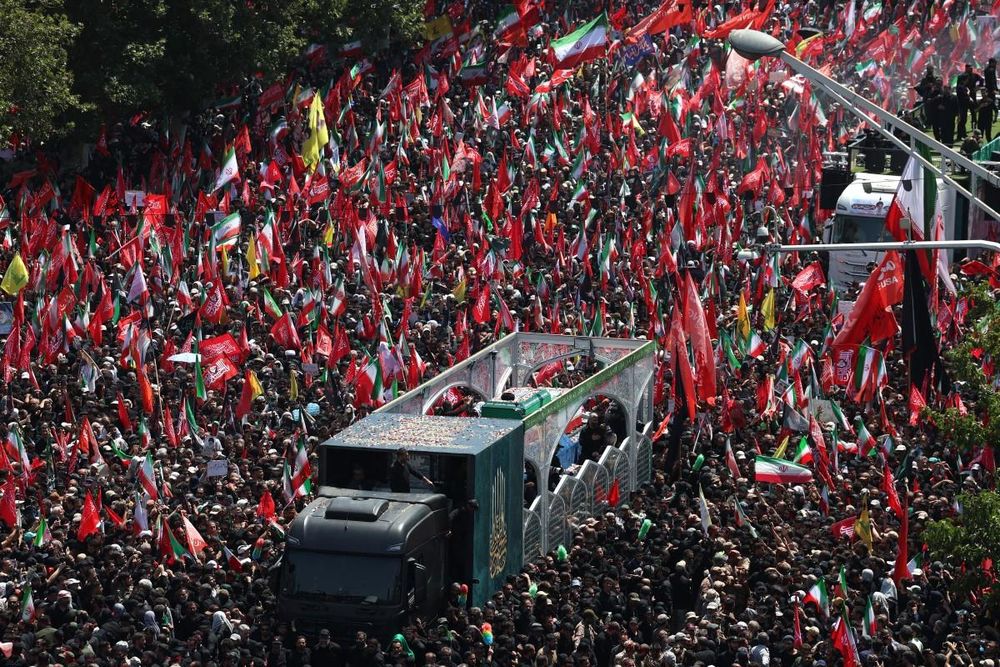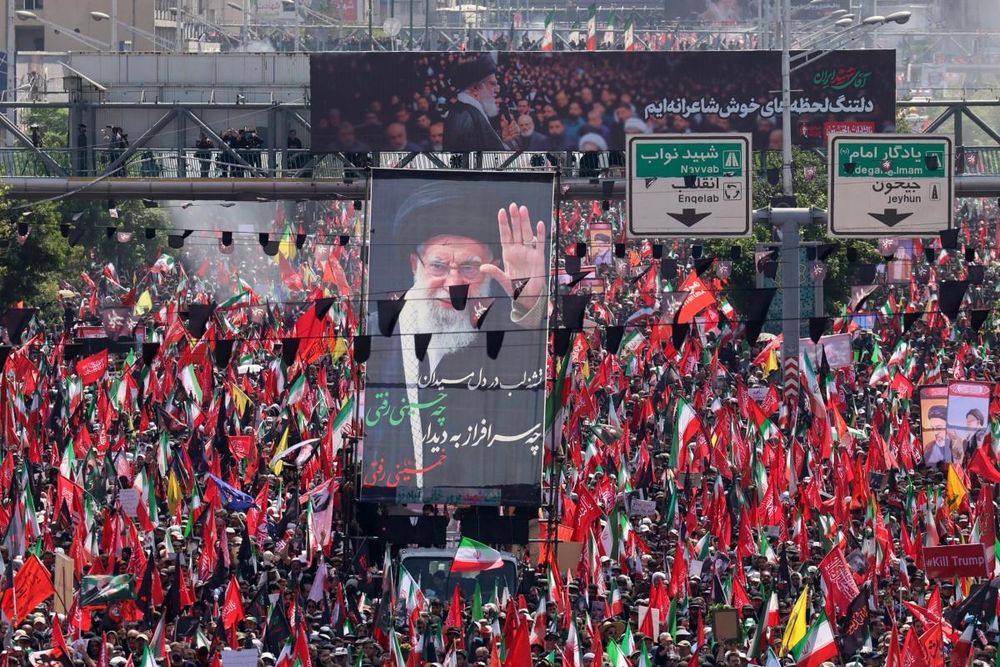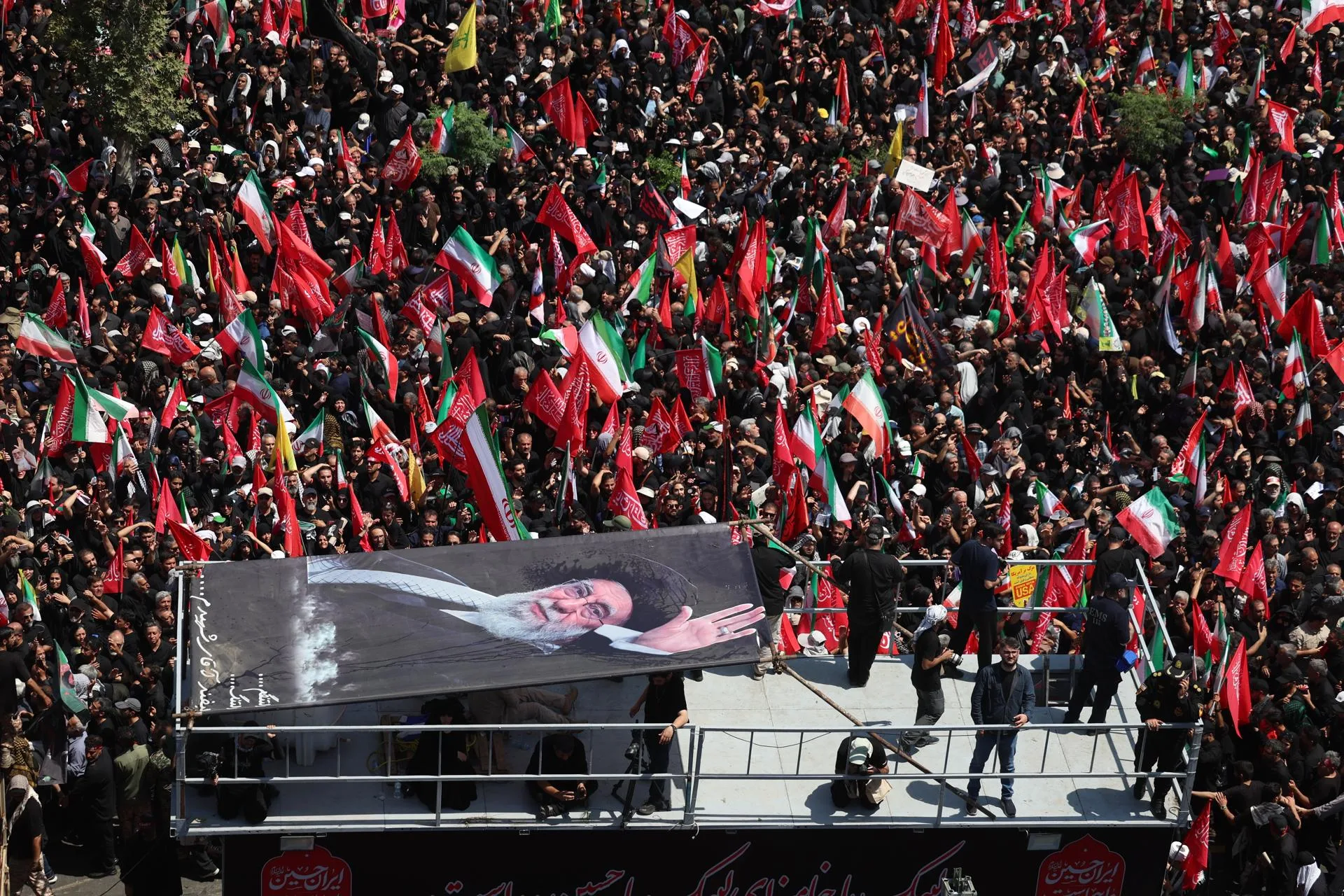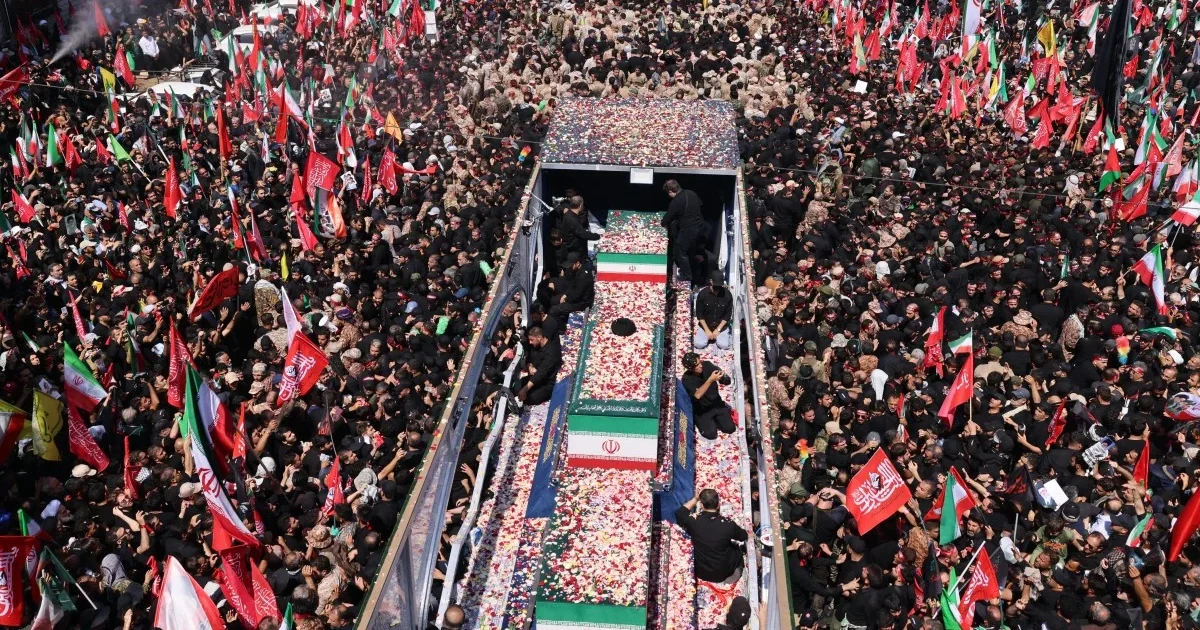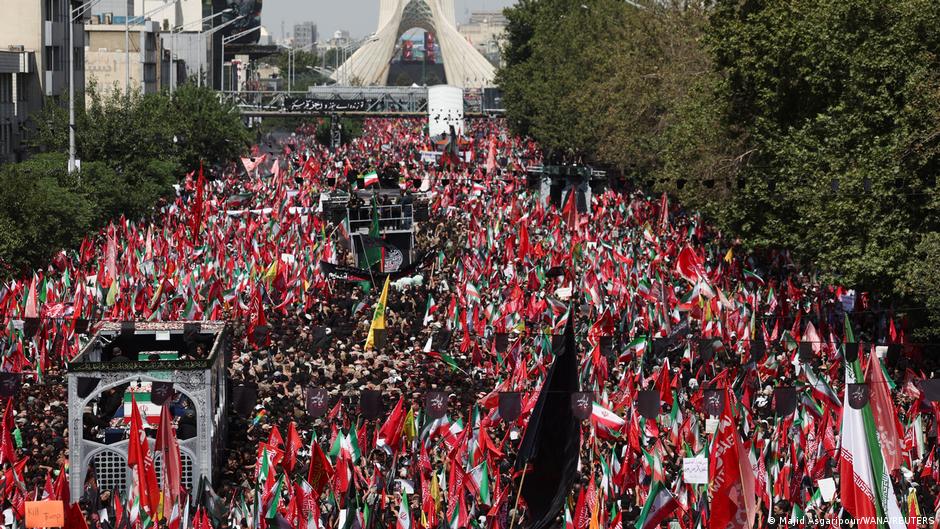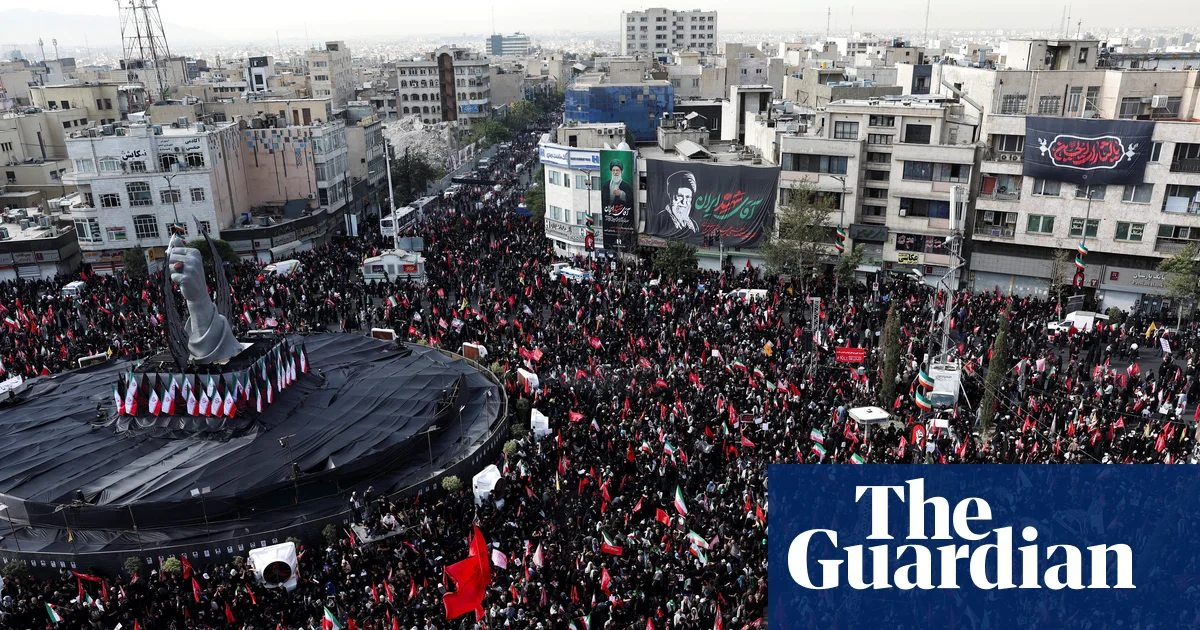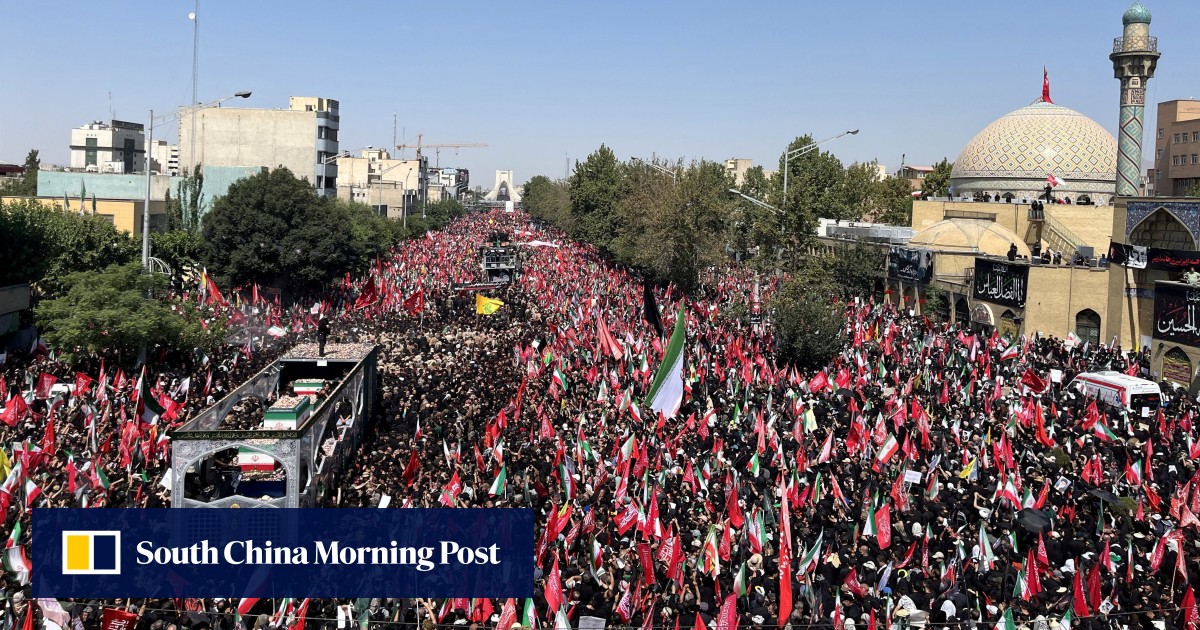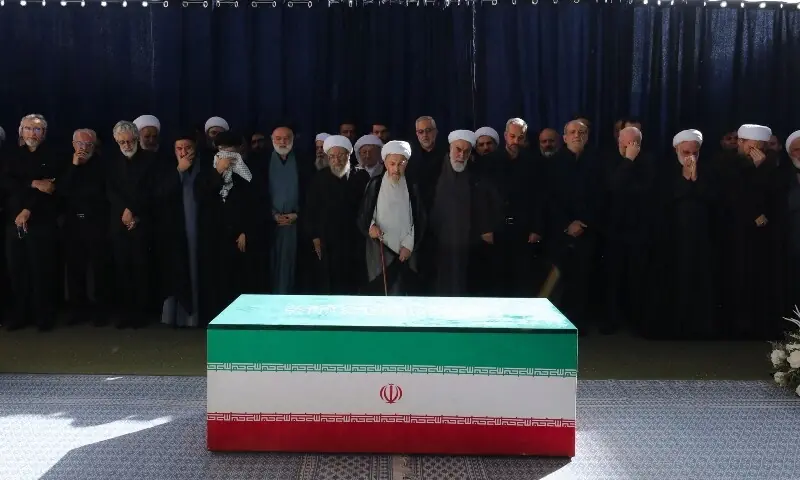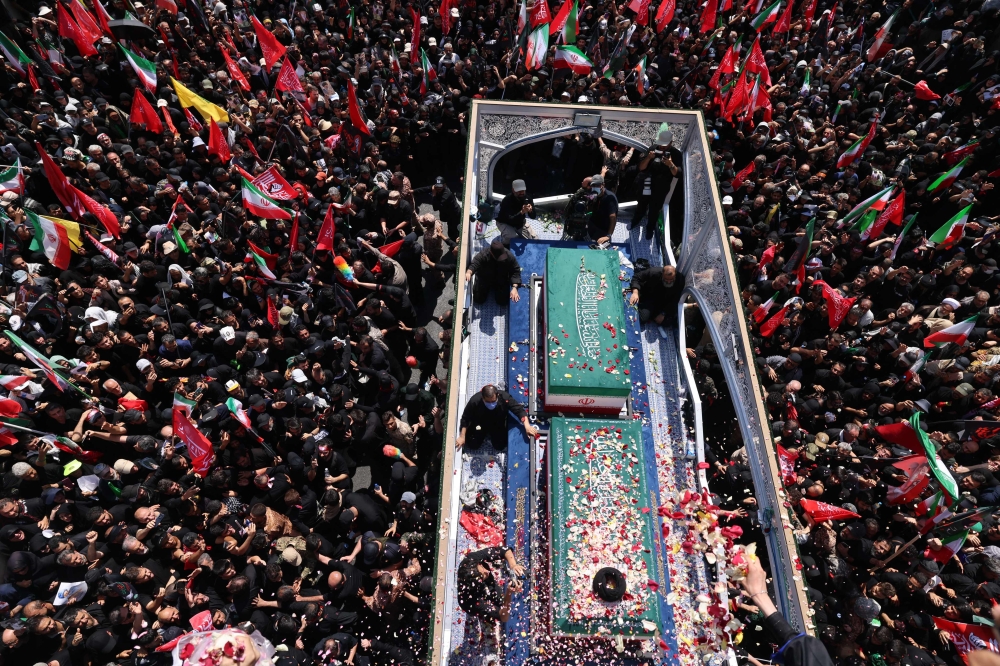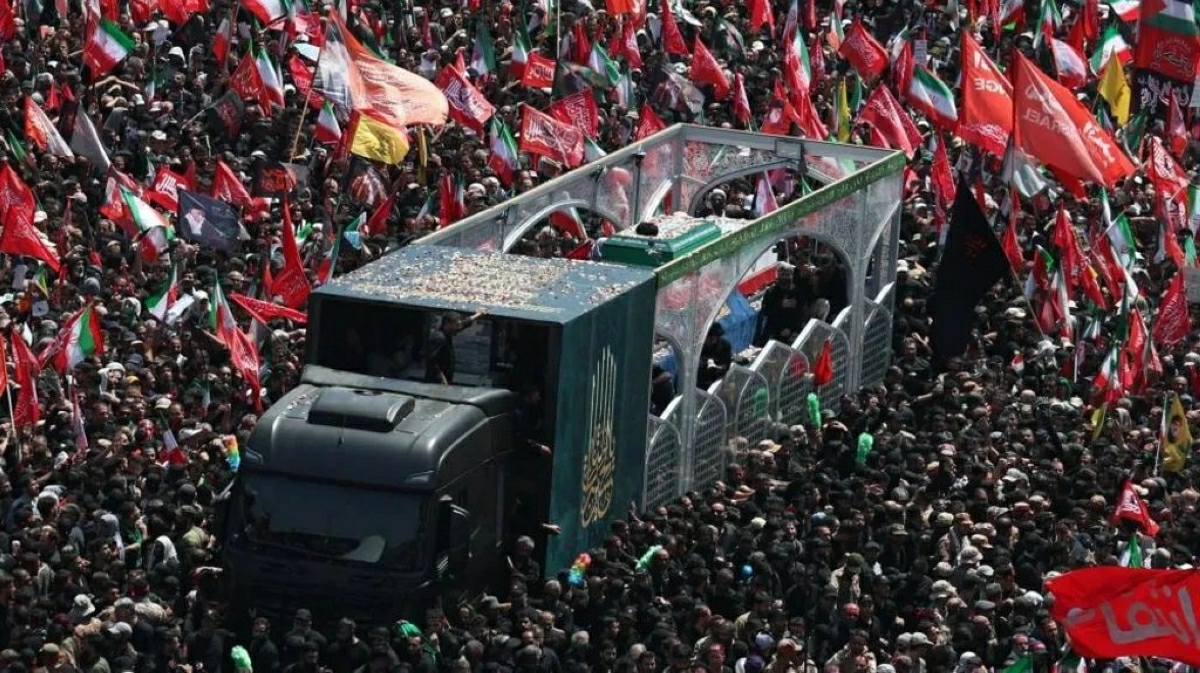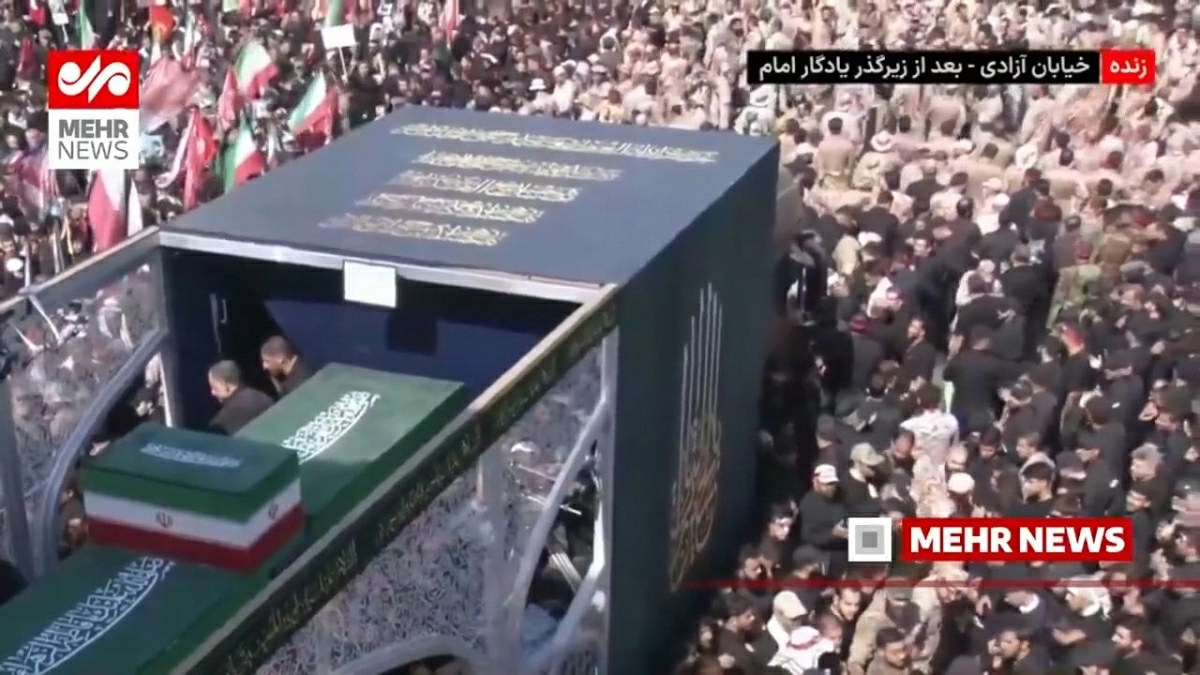
TEHRAN — Millions of Iranians assembled in Tehran on Monday for the funeral procession of the country's assassinated Supreme Leader Ali Khamenei.The throng moved from east to west, through Tehran from Revolution Square to Azadi Square, after the two-day funeral of the supreme leader and members of his family in the Grand Mosalla mosque in Tehran. The mourners wore black clothing and carried flags that bore the slogan “We will rise”; others held aloft the flag of Iran and pictures of Khamenei.The scale and depth of the march represents an extraordinary turnaround for a country that only seven months ago was gripped by street protests at which thousands of people were killed by government security forces. Many will say the gathering was a monument to a misconceived war launched on Iran by US President Donald Trump in February.Khamenei’s flag-draped coffin, and those of his family killed Feb. 28 in an airstrike at the start of the war launched by Israel and the United States, will be taken through the streets of Tehran on their way to Mehrabad International Airport.Thousands had filled the Grand Mosalla on Sunday, where they paid their respects to Khamenei and four family members.On Sunday, the entire Iranian leadership, depleted by successive Israeli assassinations, turned out for the morning prayer with the one exception of the new supreme leader, Mojtaba Khamenei, the son of the late supreme leader and now his appointed successor.Iranian officials said Khamenei’s absence was not due to wounds sustained in Israel’s attack on the presidential building but to concerns for his safety. However, his three grieving brothers attended.The funeral procession was expected to last between 10 and 12 hours, depending on the numbers participating. It was always likely to draw the largest crowds because only limited numbers could enter the Mosalla mosque at any one time.Massive concrete walls separated the public from the coffin to prevent stampedes.The 1989 funeral of his predecessor, Ayatollah Ruhollah Khomeini, drew some 10 million people, according to state news agency IRNA, and crowd surges killed more than 10 people and injured over 10,000.As well as laying to rest the man who ruled the Islamic republic for more than three-and-a-half decades, the funerals are a chance for Iran’s authorities to burnish their resilience after five weeks at war with Israel and the United States.Iran’s speaker of parliament and chief negotiator with the US, Mohammad Bagher Ghalibaf — one of the most prominent faces of the post-Ali Khamenei era — hailed on X how the “proud and invincible nation of Islamic Iran unanimously” paid tribute to its “martyr.”The Iranian president praised the crowds’ orderly behavior and expressed hope that the images emerging from Iran would force the west to reflect on its determination to change Iran. Masoud Pezeshkian said: “If I want to say something, only a few Persian speakers will understand it, but the behaviour and presence of the people are understood by the whole world.”Rejecting Trump’s claim that the grief seen at the funeral had been “fake tears”, Pezeshkian said: “This greatness, these tears that flow from the eyes of girls, men, and children, is not something that can be created by order. Tears arise from the pain and sorrow that surges within a person, and the world sees this truth.”More than 300 foreign journalists, in addition to foreign reporters based in Iran, had been granted visas to report on the funeral and the display of national cohesion.Pezeshkian, a reformist elected two years ago who has put emphasis on building consensus within Iran’s political elite, said: “I do not accept the interpretation of farewell. It is a covenant for continuing on the path. This is not actually a farewell but rather a pact to continue on the path.“By entering this war, the enemy disrupted the geography of the region, but in fact it strengthened the unity and cohesion among Muslims and even made the people of the world aware of its human rights claims.”The president accused Israel of perpetrating “all the crimes that are taking place in the region … with the support of the United States and European countries”.Monday’s procession will be followed by similar events in the clerical hub of Qom on Tuesday and in Iraq’s holy cities of Najaf and Karbala on Wednesday, culminating in Khamenei’s burial in his hometown of Mashhad in northeastern Iran on Thursday.The new commander of the powerful Revolutionary Guards, Ahmad Vahidi, whose predecessor was killed on February 28, appeared at the funerals for a second time on Sunday, this time in the open air, after he went unseen throughout the war.Esmail Qaani, the shadowy head of the Guards’ Quds Force — responsible for its foreign operations — also made a rare appearance.While Iranian authorities have been keen to present a united front, none of President Masoud Pezeshkian’s surviving predecessors, have so far been seen at the ceremonies.The government is also eager to tout the mass mobilization in support of the authorities after mass protests in January that rights groups say were quelled by a crackdown that killed thousands of people.The Middle East war is on hold following a ceasefire and an initial accord struck with the US. Both Washington and Tehran have warned they are ready to resume military action, and vengeance has been a major theme at the funerals.Khamenei long pursued a course of confrontation with the West, and Tehran for years has provided support to anti-US and anti-Israel armed groups around the Middle East, including Palestinian Hamas and Lebanon’s Hezbollah, who both sent delegations to the ceremonies.
Millions line Tehran streets for procession in Ali Khamenei's multi-day funeral
Millions of Iranians assembled in Tehran on Monday for the funeral procession of the country's assassinated Supreme Leader Ali Khamenei.
919 words~4 min read