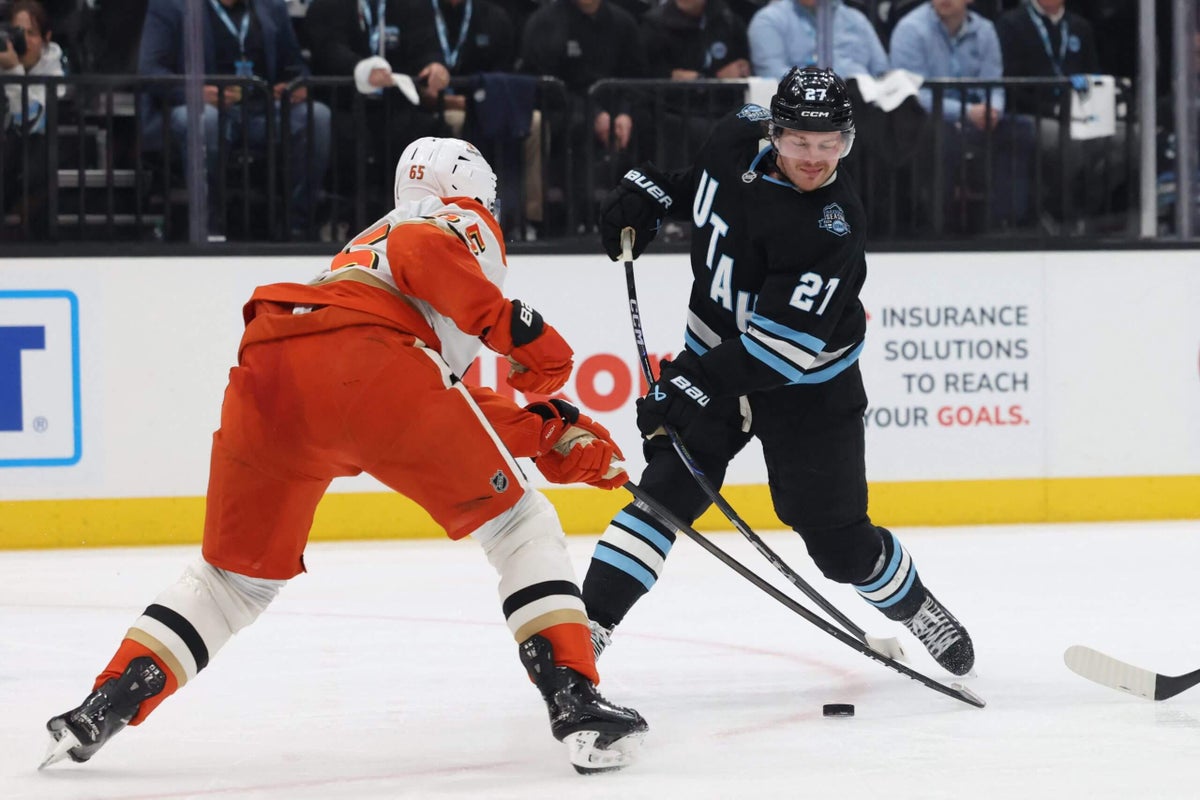
Just how wild is this offseason? Offer sheets are being tendered. Not hypothetical or idealistic proposals, but actual offer sheets — and it’s changing the landscape of the NHL.Usually, offer sheets feel like an unrealistic mechanism for acquiring talent. Even when teams use them successfully, like the St. Louis Blues did in the summer of 2024 to pry both Dylan Holloway and Philip Broberg out of Edmonton, it’s viewed as more of a one-off than the start of a trend.Not this summer, though. Offer sheets and the threat of them have shaken up this offseason.Why?In the simplest of terms, the salary cap is rising, and there are few available needle-movers to invest in. While the best path to finding difference-making talent is through the draft, it involves a developmental process with its own curves, hurdles and (sometimes) a lengthy timeline. Free agency is no longer a reliable source of high-end talent, either. Few stars make it to July 1, which has led to major overpayments of the middle class in recent years.The trade route is the next-best bet for adding top-caliber players. But even that has its own challenges, like astronomical asks and returns. Offer sheets can help change that for up-and-coming talent, even if it’s just the threat of one.Let’s unpeel all of the layers of this summer’s chaos swirling around offer sheets and what could come next.How offer sheets fueled some trade movementHeading into this summer, there were a handful of realistic offer sheet targets around the league. Pavel Dorofeyev, Mavrik Bouque, Jack Drury and Mackie Samoskevich all headlined that list, thanks to their teams’ respective cap pictures. The Vegas Golden Knights, Dallas Stars, Colorado Avalanche and Florida Panthers likely would have either needed to sign these players to team-friendly deals or moved salary out to make everything click. Matching offer sheets could have totally blown up any of those teams’ salary outlooks. An $11 million extension never would have worked for Dorofeyev in Vegas; $5.5 million for Bourque would have been extremely tough to sign in Dallas before the Jason Robertson situation had been settled.Brandt Clarke joined the group based on his limited usage over the years and management’s tendencies in Los Angeles. Olen Zellweger made sense with the Anaheim Ducks’ offseason and overall RFA picture in mind.While Clarke’s staying in L.A. on a five-year contract worth $7.40 million a season, the other five RFAs were all moved before an offer sheet could be cooked up. It’s not the first time teams took a proactive approach to avoid that; just last summer, the threat of an offer sheet for K’Andre Miller helped shape his trade to the Hurricanes.The trade route makes sense for both sides of these trade scenarios. Take the Samoskevich trade; had Seattle offered a contract above the $4.8 million mark, the compensation would have been a first-rounder and a third-rounder. The risk for Seattle is the uncertainty of the value of that 2027 pick: if the Kraken are a lottery team again, that pick would be unprotected and sent right to the Panthers. By trading No. 25 this year plus a conditional second, Seattle maintained a little more control.The Dorofeyev trade was similar. The compensation for his $11 million cap hit would have been two firsts in the next three drafts, a second and a third. The Rangers’ actual return had a little more certainty. New York flipped pick No. 26 during the draft (after getting an idea of who would be available with that particular pick), No. 92 and a top-10 protected 2028 first.The Predators only had to move a second and third to land Bourque, and that return ultimately is below the compensation threshold his $5.5 million AAV would have cost. With Drury, Nashville was able to move players instead of draft capital. The Hayton offer sheetTwo things are true: Barrett Hayton hasn’t lived up to the draft pedigree of a No. 5 draft pick, but he’s also worth a one-year deal worth $4.775 million. So on paper, this is an easy match for the Utah Mammoth.Except it’s not that simple.The cap hit comes in right below the $4,775,667 compensation tier of 2027 first- and third-rounders, and would instead only cost the New Jersey Devils a 2027 second-round pick. Considering the market for centers in this league, that’s a steal for the 26-year-old.Hayton suppresses chances well on one end of the ice and generates high-danger looks on the other. His finishing needs more consistency. Last year, he scored 10 in 67 games when his xG was closer to 17. The year before, he was on the other side of the ledger, with five goals above expected. So getting his shooting back on track would be a priority, but that gap in finishing also wouldn’t be glaring in a 3C role.Last year, Hayton spent about 60 percent of his five-on-five minutes with either Dylan Guenther or Clayton Keller. That usage exposed what he lacks to be a true top-sixer. His comps after last season are in the realm of middle-six talent, like Brandon Dubinsky, Boone Jenner, Nicolas Roy and Josh Anderson.
Why offer sheets are sending shockwaves through the NHL: Hayton, Carlsson and beyond
Long considered an unrealistic option, offer sheets have returned with a vengeance. Let's break down the layers of how the NHL got here.
2,318 words~11 min read