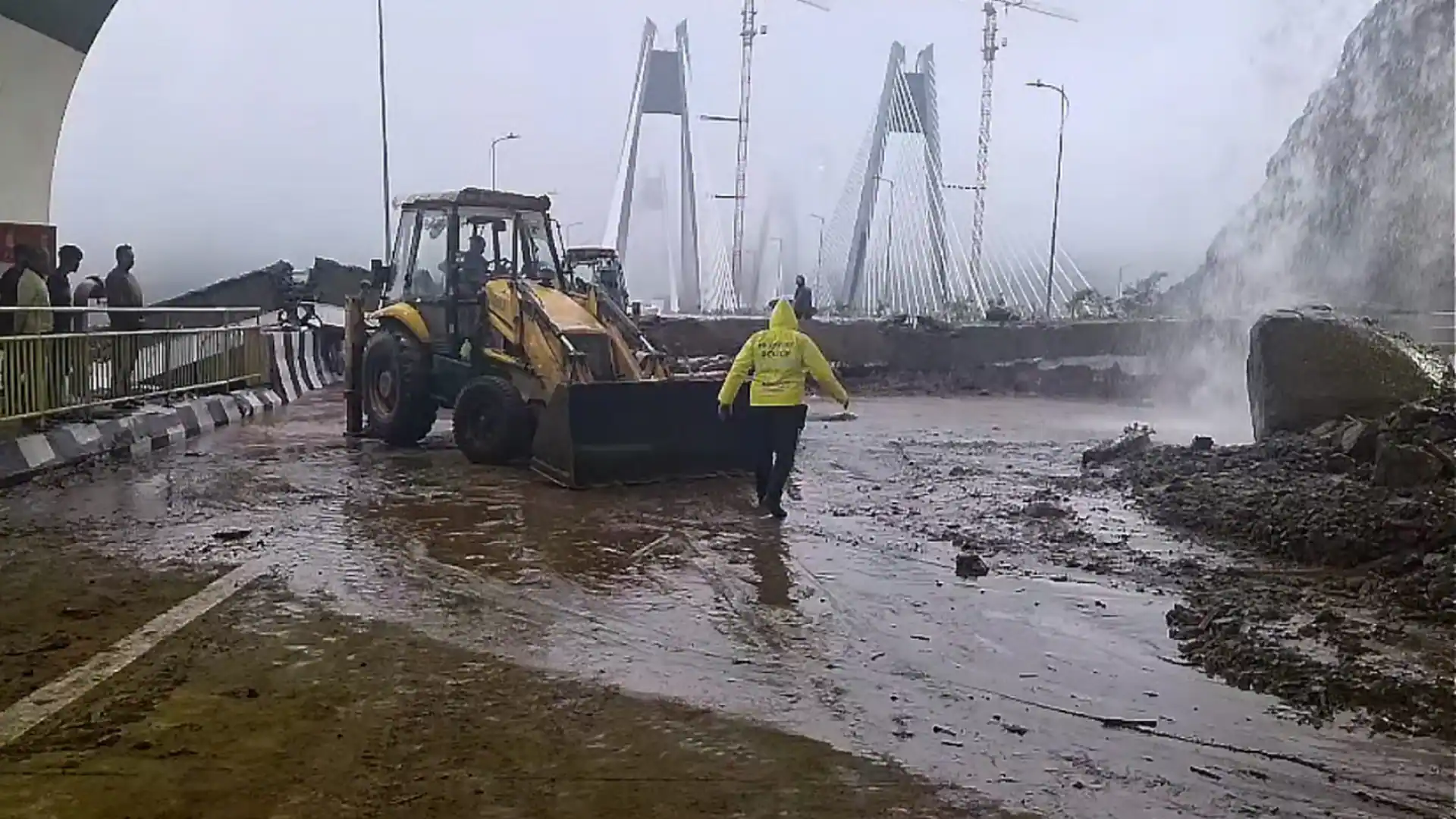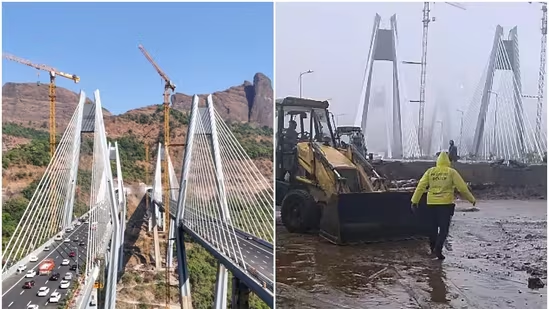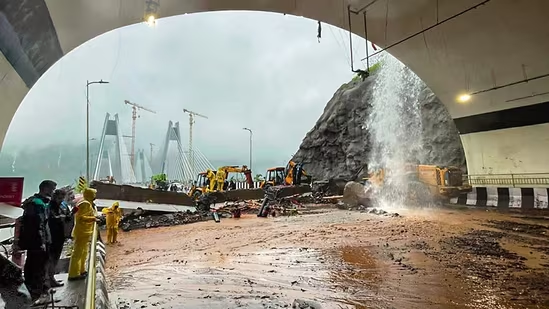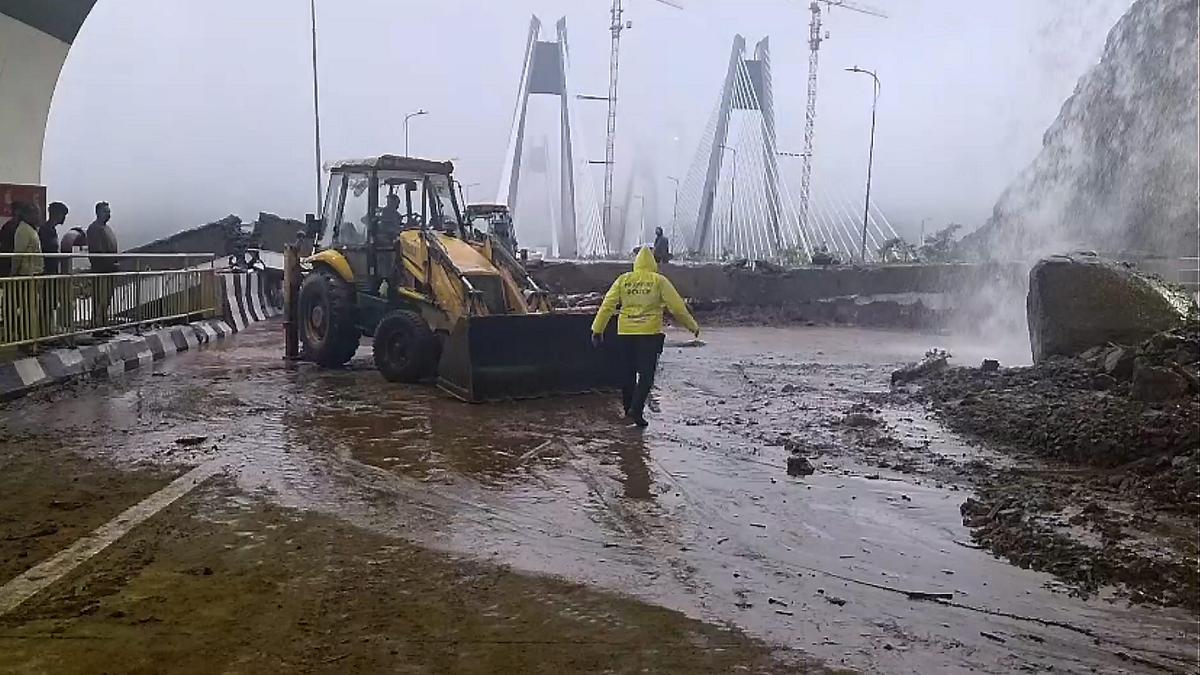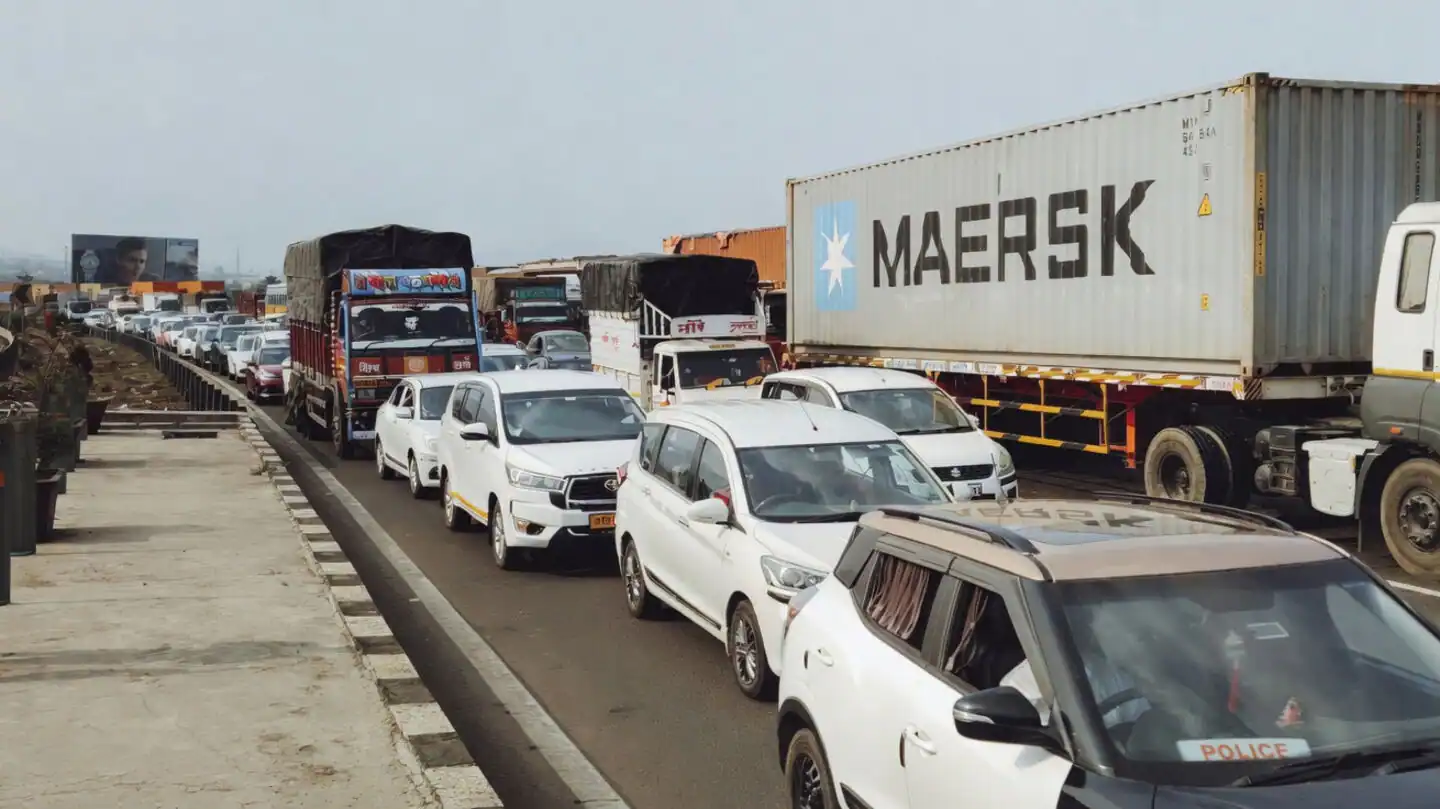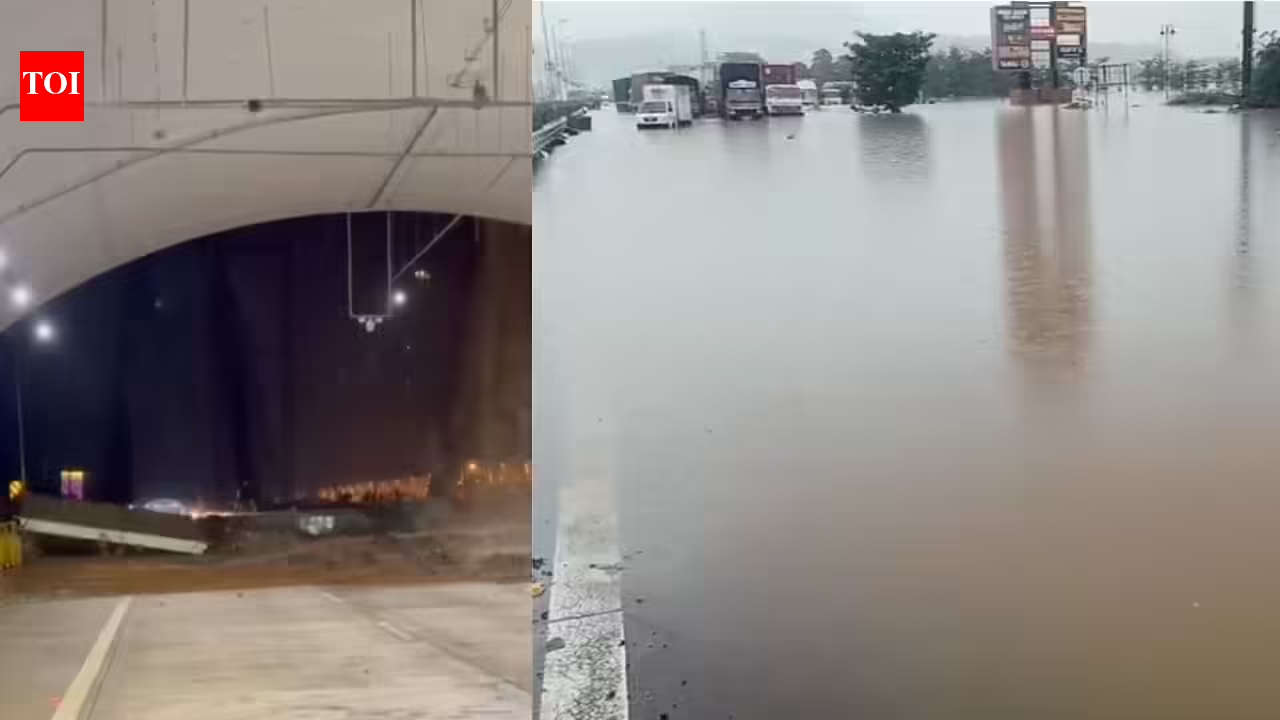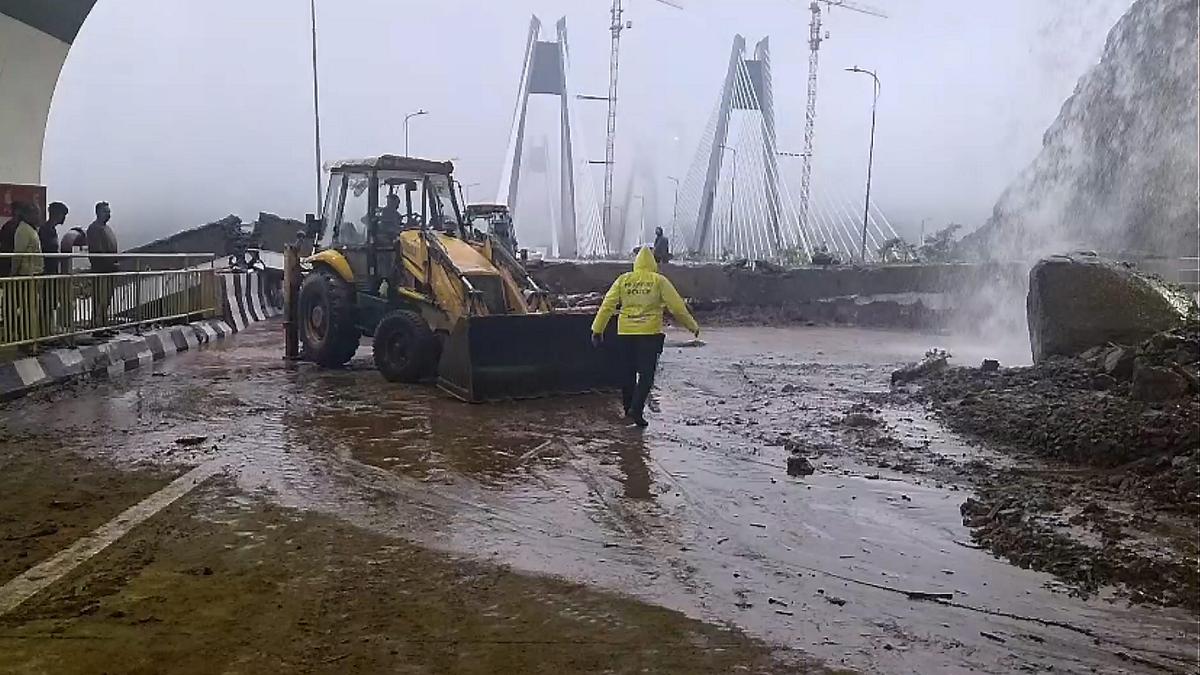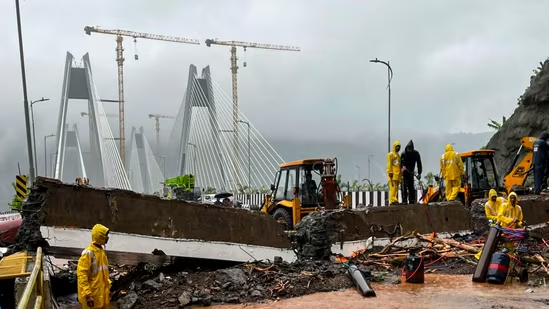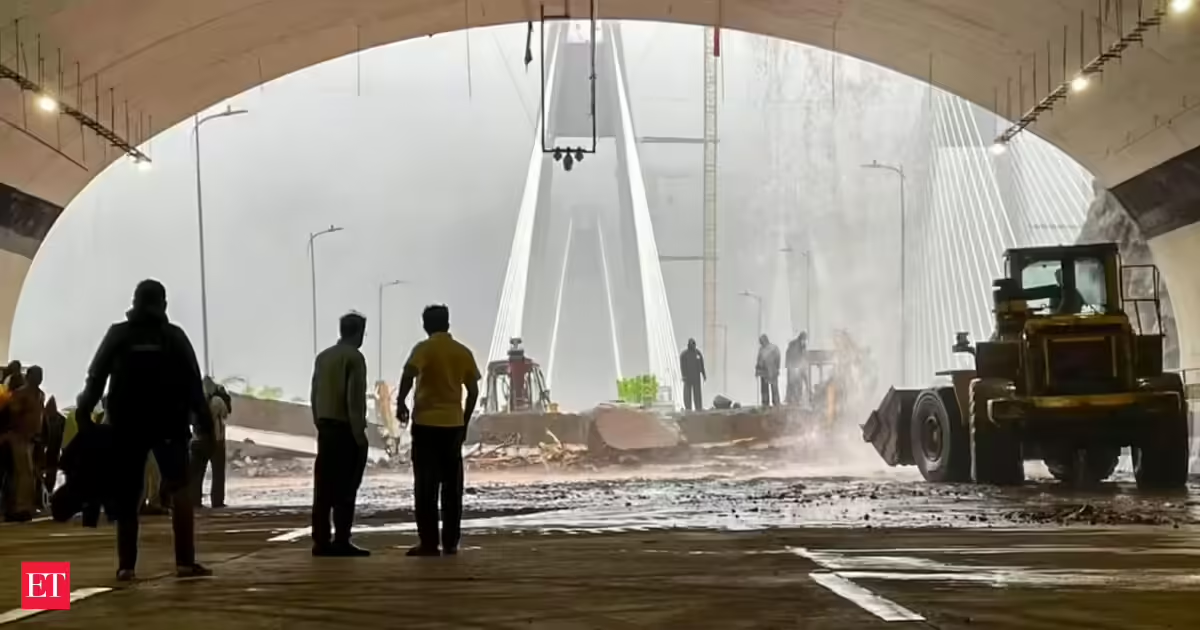
A landslide on the Mumbai-Pune Expressway's newly-built Missing Link corridor disrupted traffic on Monday, barely nine weeks after the Rs 6,695-crore stretch was inaugurated as a permanent fix for the route's worst bottleneck.The landslide occurred near the exit of Tunnel 2 on the Pune-to-Mumbai carriageway amid continuous heavy overnight rainfall, damaging a retaining wall and sending a heavy flow of mud, rocks and water onto the road, according to the State Highway Police.The Maharashtra State Road Development Corporation (MSRDC), in an official statement, said traffic had been diverted since 4 am "for safety reasons" after the landslide near the Tunnel 2 exit.Also read: After Delhi-Dehradun Expressway, potholes emerge on Rs 6,695-crore Pune-Mumbai Expressway just 2 months after inaugurationSuperintendent of Police (Traffic) Shivaji Pawar said the Pune-to-Mumbai carriageway of the Missing Link was "completely shut" following the landslide, while the Mumbai-to-Pune carriageway remained open with traffic moving slowly. He said commuters travelling from Pune should postpone their journey, and that those going from Mumbai to Pune should do so "only if absolutely necessary."The disruption coincided with the old Mumbai-Pune Highway (NH-48) also being shut after a tree fell on a power line, with authorities appealing to motorists to defer travel between the two cities altogether.No casualties were reported.Separately, heavy rainfall in the Karjat-Lonavala Bhor Ghat section also disrupted Mumbai-Pune rail traffic on Monday. Central Railway's Chief Public Relations Officer Swapnil Nila told PTI that landslides near Thakurwadi and between Khandala and Monkey Hill had affected all three lines in the ghat section, forcing several long-distance trains to be cancelled, diverted or regulated.Also read: 13 people dead as record-breaking rains batter MumbaiThe landslide came at the tail end of a spell the India Meteorological Department (IMD) had flagged days in advance. The IMD had issued a red alert for Mumbai, Thane, Raigad and Palghar districts for July 4 to 6, warning of heavy to very heavy rainfall and cautioning that conditions could disrupt public transport and cause "minor structural damage in some areas."The Brihanmumbai Municipal Corporation (BMC) had shut schools and colleges for the afternoon session as the alert took effect, and had urged residents to step out only if necessary. BMC data for the period showed some of the western suburbs recording over 140 mm of rainfall in a single day, with Bandra's H West ward office logging the highest at 150.6 mm.What is the Missing Link?The Missing Link is a 13.3-km stretch built to bypass the accident-prone 19.8-km Khandala ghat section between Khopoli and Sinhgad Institute. The corridor connects Khopoli in Raigad district with Kusgaon near Lonavala in Pune district.The new alignment was designed to shorten the Mumbai-Pune journey by nearly 6 km and cut travel time by 20 to 30 minutes, with a speed limit of up to 100 kmph. The corridor comprises two tunnels, one about 1.6 km long and the other roughly 8.9 km, along with two high-speed viaducts and a 183-metre cable-stayed bridge over Tiger Valley, described as the tallest bridge of its kind in the country. The longer tunnel was excavated nearly 180 metres below Lonavala Lake using the New Austrian Tunnelling Method.Timeline: Why it took nearly three decadesThe need for an alternative to the Khandala ghat section was first flagged by RITES in 1995, even before the original Mumbai-Pune Expressway was built. The Maharashtra Cabinet cleared the Missing Link project in 2017, construction began in 2019, and the timeline was subsequently pushed back by the Covid-19 pandemic and the engineering challenges of tunnelling through the Western Ghats terrain.At the May 1 inauguration, Chief Minister Devendra Fadnavis described the project as Maharashtra's new "connecting link," while MSRDC Managing Director Anilkumar Gaikwad said it would make Mumbai-Pune travel "quicker and more reliable" by removing one of the expressway's busiest chokepoints.The project is estimated to have cost approximately Rs 7,000 crore.The expressway it was built to fixAccording to MSRDC's own project records, the original Mumbai-Pune Expressway was first conceived in 1990, when the state government appointed RITES and UK-based Scott Wilson Kirkpatrick to conduct feasibility studies. RITES submitted its report in 1994, estimating the project's cost at Rs 1,146 crore.The Maharashtra government handed the construction to MSRDC in March 1997 on a Build-Operate-Transfer (BOT) basis, with a 30-year toll-collection window; environmental clearance came in October 1997 and forest clearance the following month.Also read: Mumbai rain: Train services suspended after landslides, Mumbai-Pune Expressway shut; helplines issuedMSRDC records state that roughly 400 people were being killed annually in accidents on the old Mumbai-Pune National Highway before the expressway was built, which was cited as the case for a new route. The expressway opened in phases between May 2000 and June 2000, with the Panvel Bypass completing the full 95-km stretch on March 1, 2002, making it, per MSRDC, India's first fully access-controlled, six-lane expressway. Including cost escalation, the original expressway's total project cost came to Rs 1,630 crore, MSRDC's records show, with five twin tunnels adding a further Rs 200 crore.Monday's landslide is the Missing Link's first major disruption since it opened, and comes during its first monsoon season since inauguration.
Nine weeks in, Mumbai-Pune Expressway's Missing Link partially shut as heavy rain triggers landslide
A recent landslide on the Mumbai-Pune Expressway's new Missing Link corridor, inaugurated just nine weeks ago, has caused significant traffic disruption. Heavy overnight rainfall led to mud and rock flow onto the Pune-to-Mumbai carriageway, forcing its complete closure. Commuters are advised to postpone travel between the cities as both the new link and the old highway face disruptions due to adverse weather conditions.
842 words~4 min read