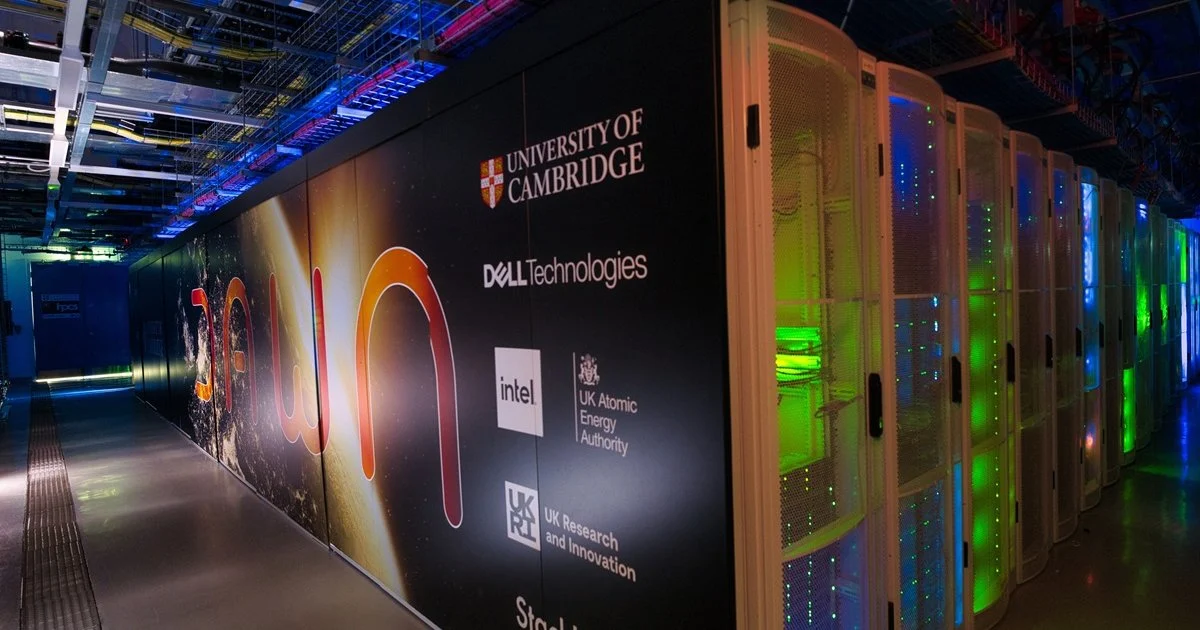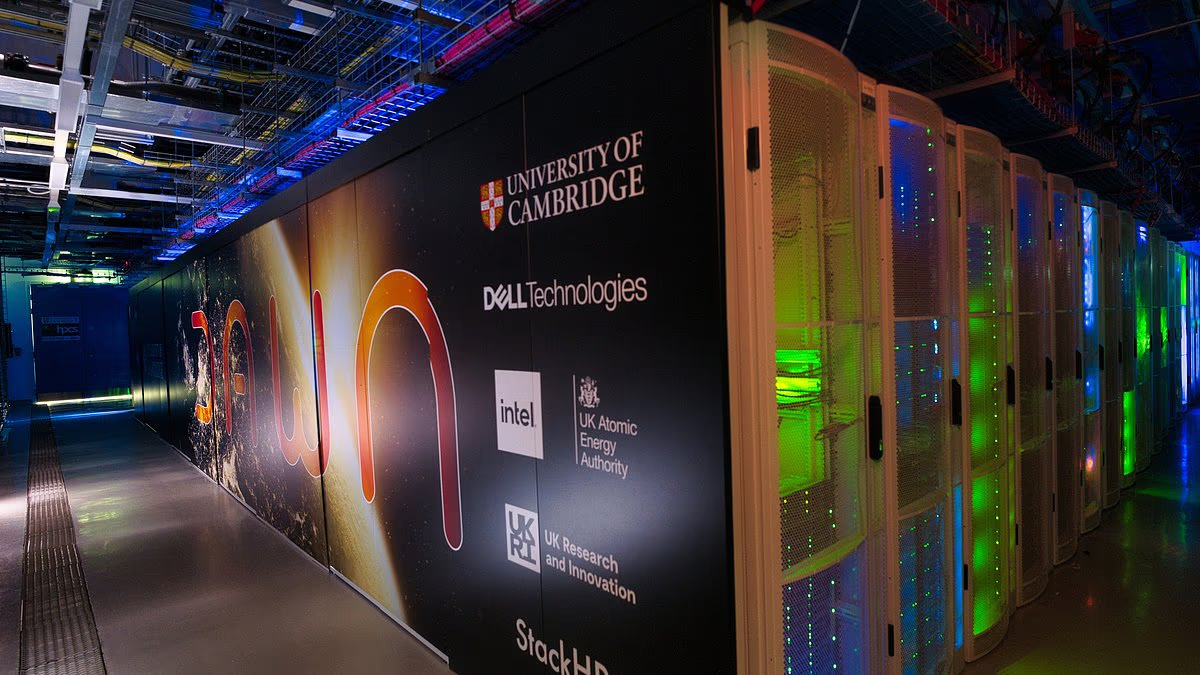
One of the UK's fastest artificial intelligence supercomputers has been offline for more than a week after last month's scorching heatwave caused it to shut down.Dawn, the multi-million-pound supercomputer owned by the University of Cambridge, was forced offline on June 27 when temperatures at the institution reached 30C.Access to the computer, which is used by scientists including cancer and climate researchers, is due to be restored on Monday, the university said.Last month was the hottest June on record for England and the second-warmest for the UK as a whole, according to provisional data from the Met Office.The UK's highest ever temperature for that month was set on June 26, with the 37.7C reading at Lingwood, Norfolk, far surpassing the previous high of 35.6C set in 1957 and matched by the infamous 1976 heatwave.It comes as the country prepared for its third heatwave of the year with schools cancelling sports days and allowing pupils to wear PE kits in lessons.The Met Office said it expected highs of between 31C and 34C each day between today and Sunday in London – with the hottest weather anticipated today and Thursday.There was no suggestion the latest heatwave could affect the Dawn computer, which was set to come back online as temperatures reached the high 20s on Monday morning. The Dawn supercomputer at the University of Cambridge has been offline for more than a weekLast week a Cambridge spokesman said 'technical issues during the hot weather' had caused the shutdown but added full cooling capacity had been restored.Staff at the West Cambridge data centre, which hosts Dawn, received a message to say a 'major IT incident' was the consequence of a 'failure' with the data centre's cooling system.Computer processors can be cooled using fans which circulate cool air over chips and circuit boards or through liquid-based methods.Lennard Lee, director of the University of Oxford's UK cancer vaccine and AI scientist and supercomputing project, told The Times: 'Dawn is offline. This means that our jobs are paused.'But he said no work had been lost as a result of the disruption.'There is no data loss and we aren't expecting to repeat the work.'The British Antarctic Survey has used Dawn to forecast changes in sea ice, while the supercomputer has also helped climate modelling.Scientists working on components of a potential personalised cancer vaccine have taken advantage of Dawn's computing power and the machine has been called a 'magic bullet' by Cambridge University because it can spot cancer in kidney scans. Dawn has supported more than 350 projects in the UK for free and was given a £36million boost in January to increase its power sixfoldSimon McIntosh-Smith, professor of high performance computing at the University of Bristol, said investing in supercomputers' cooling systems could be expensive.'You could design systems so they would cope with temperatures up to 50C, but that would be much more expensive,' he said.It can be 'a problem' for the UK when supercomputers go offline because they are 'vital resources', Professor McIntosh-Smith said, adding that more frequent extreme weather could risk the computers' performance.The firm which supplied Dawn's cooling technology insisted it did not malfunction.A spokeswoman for Legrand, the French owner of the UK firm USystems, which built the cooling systems, said they 'operated in accordance with their design specifications and performed as intended throughout the event'.Jonathan Hirst, of the University of Nottingham, said: 'It does seem that extreme heat is with us more often than anticipated even a few years ago.'He added more efficient programming and data management could help data centres avoid overheating during heatwaves in future.In January the Government said it would invest £36million in Dawn to boost its power sixfold.The supercomputer had already supported more than 350 projects for free and was used for public projects including reducing NHS waiting times.Dawn's next iteration will be known as Zenith, developed in collaboration with Dell, AMD and Stack HPC.Supercomputers in the UK have previously suffered heat-related shutdowns, with data centres owned by Google and Oracle coming offline during the sweltering weather of July 2022.
AI supercomputer used by climate researchers shuts down in heatwave
Dawn, the multi-million-pound supercomputer owned by the University of Cambridge , was forced offline on June 27 when temperatures at the institution reached 30C.
670 words~3 min read