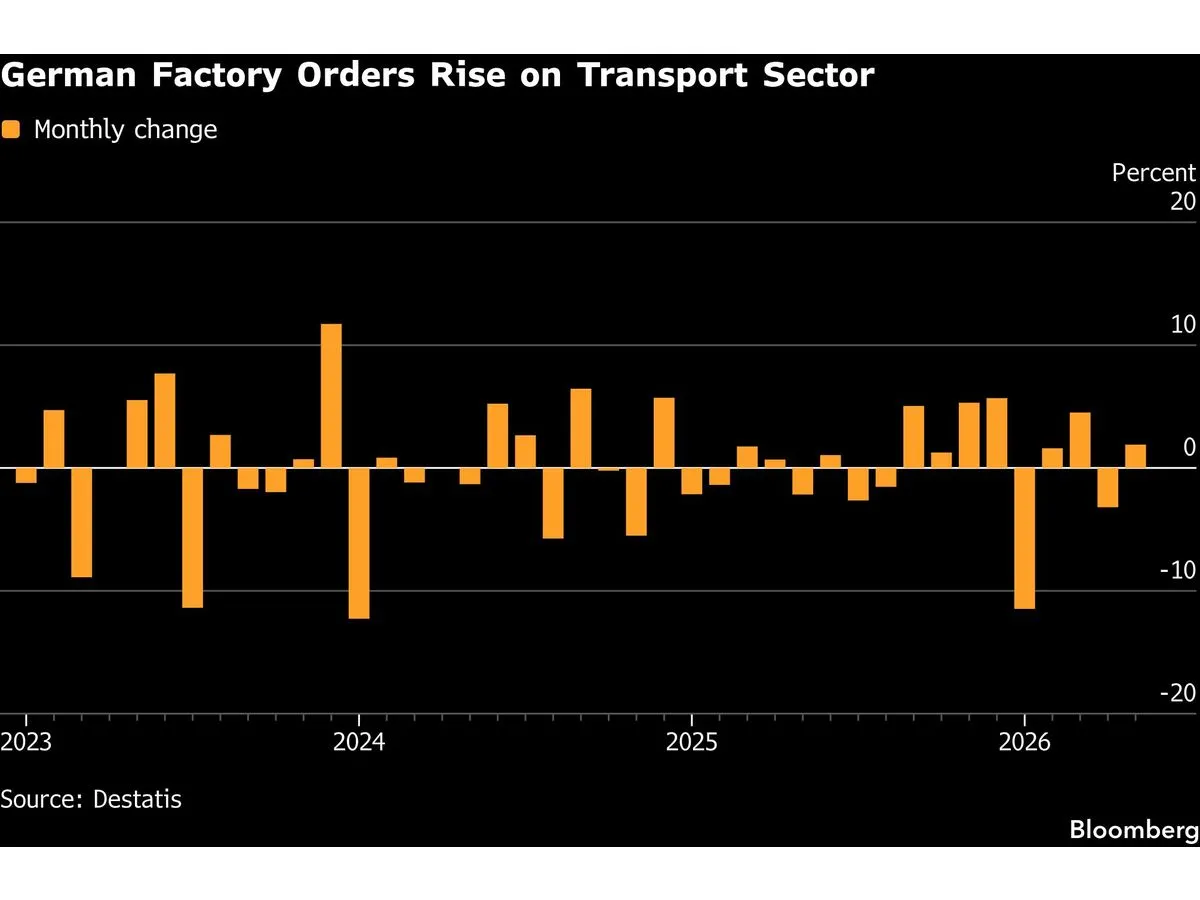
Skip to Content News Archives Economy Energy Oil & Gas Renewables Electric Vehicles Mining Commodities Agriculture Real Estate Mortgages Mortgage Rates Finance Banking Insurance Fintech Cryptocurrency Work Wealth Smart Money Wealth Management Investor Personal Finance Family Finance Retirement Taxes High Net Worth FP Comment Executive Women Puzzmo Newsletters Financial Times Business Essentials More Innovation Information Technology FP500 Podcasts Small Business Lives Told Tails Told Shopping Financial Post Store Obituaries Place a Notice Advertising Advertising With Us Advertising Solutions Postmedia Ad Manager Sponsorship Requests Classifieds Place a Classifieds ad Working Profile Settings My Subscriptions Saved Articles My Offers Newsletters Customer Service FAQ News Economy Energy Mining Real Estate Finance Work Wealth Investor FP Comment Executive Women Puzzmo Newsletters Financial Times Business Essentials HomePMN BusinessGerman Factory Orders Rebound as Iran-War Effects FadeGerman factory orders rebounded, encouraging news as the effect of the conflict in the Middle East on Europe’s biggest economy begins to fade.Author of the article: You can save this article by registering for free here. Or sign-in if you have an account.nuyg6{arxcmbn{0lz0su50px_media_dl_1.png Destatis(Bloomberg) — German factory orders rebounded, encouraging news as the effect of the conflict in the Middle East on Europe’s biggest economy begins to fade.Subscribe now to read the latest news in your city and across Canada.Exclusive articles from Barbara Shecter, Joe O'Connor, Gabriel Friedman, and others.Daily content from Financial Times, the world's leading global business publication.Unlimited online access to read articles from Financial Post, National Post and 15 news sites across Canada with one account.National Post ePaper, an electronic replica of the print edition to view on any device, share and comment on.Daily puzzles, including the New York Times Crossword.Subscribe now to read the latest news in your city and across Canada.Exclusive articles from Barbara Shecter, Joe O'Connor, Gabriel Friedman and others.Daily content from Financial Times, the world's leading global business publication.Unlimited online access to read articles from Financial Post, National Post and 15 news sites across Canada with one account.National Post ePaper, an electronic replica of the print edition to view on any device, share and comment on.Daily puzzles, including the New York Times Crossword.Create an account or sign in to continue with your reading experience.Access articles from across Canada with one account.Share your thoughts and join the conversation in the comments.Enjoy additional articles per month.Get email updates from your favourite authors.Create an account or sign in to continue with your reading experience.Access articles from across Canada with one accountShare your thoughts and join the conversation in the commentsEnjoy additional articles per monthGet email updates from your favourite authorsSign In or Create an AccountorDemand rose 1.9% in May from a month earlier, following a revised decrease of 3.2% in April. The result exceeds the 1.1% gain seen by economists in a Bloomberg survey.The rise was due to transport equipment including for the military, likely reflecting Germany’s upgrade of its armed forces. Without large-scale orders the increase would have been 1%, Destatis said. A less volatile three-month reading showed a decline of 0.2%.“New orders in the manufacturing sector appear to be resuming the upward trend that began in the second half of 2025,” the Economy Ministry said in an emailed statement. “However, the trend remains highly volatile due to large orders. Furthermore, geopolitical uncertainty will remain high until the peace negotiations between the U.S. and Iran are finally concluded.”Get the latest headlines, breaking news and columns.By signing up you consent to receive the above newsletter from Postmedia Network Inc.A welcome email is on its way. If you don't see it, please check your junk folder.The next issue of Top Stories will soon be in your inbox.We encountered an issue signing you up. Please try againThe report comes as Germany’s key manufacturers are struggling with US tariffs, weak demand in China and increased competition in Europe. Its economy had a good start to the year with 0.3% growth between January and March, but the Iran war and higher energy prices have weighed on consumers and businesses.Even so, business surveys suggest the factory sector expanded slightly in May and June, partly due to orders being timed to avoid rising energy prices. The Bundesbank predicts economic output probably stagnated in the second quarter.To shore up the economy, chancellor Friedrich Merz’s coalition announced a set of reforms on Thursday that includes attracting private capital. The government said it will also become more active in strategic industries and shield domestic capabilities.“The federal government’s reform package has brought progress on individual points, but no broad-based breakthrough,” said Joerg Kraemer, chief economist at Commerzbank. “We don’t expect a strong recovery in the coming months. On one hand, the Iran conflict still represents a source of uncertainty. On the other, companies continue to suffer from an erosion of the country’s attractiveness as a business location.”—With assistance from Kristian Siedenburg, Joel Rinneby and Harumi Ichikura.(Updates with Economy Ministry in fourth paragraph, analyst in last.) Join the Conversation This website uses cookies to personalize your content (including ads), and allows us to analyze our traffic. Read more about cookies here. By continuing to use our site, you agree to our Terms of Use and Privacy Policy.
German Factory Orders Rebound as Iran-War Effects Fade
German factory orders rebounded, encouraging news as the effect of the conflict in the Middle East on Europe’s biggest economy begins to fade.
849 words~4 min read